
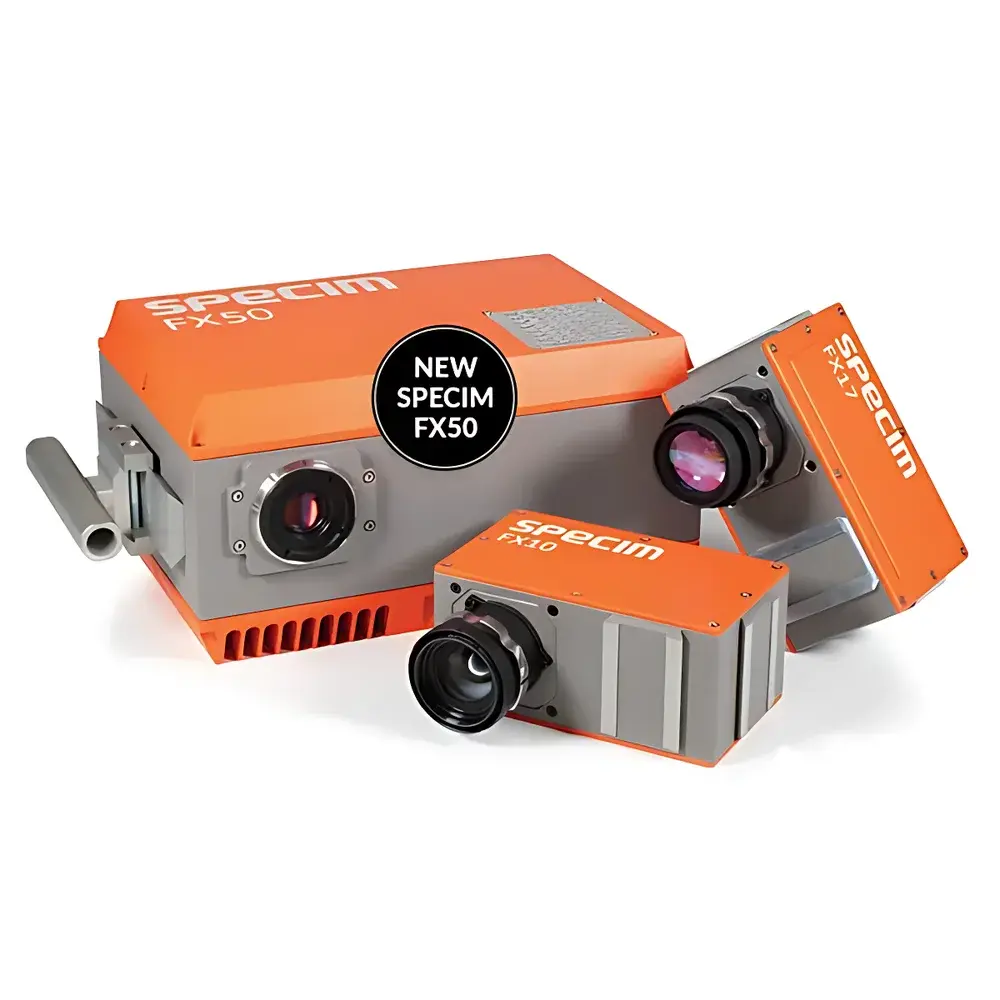
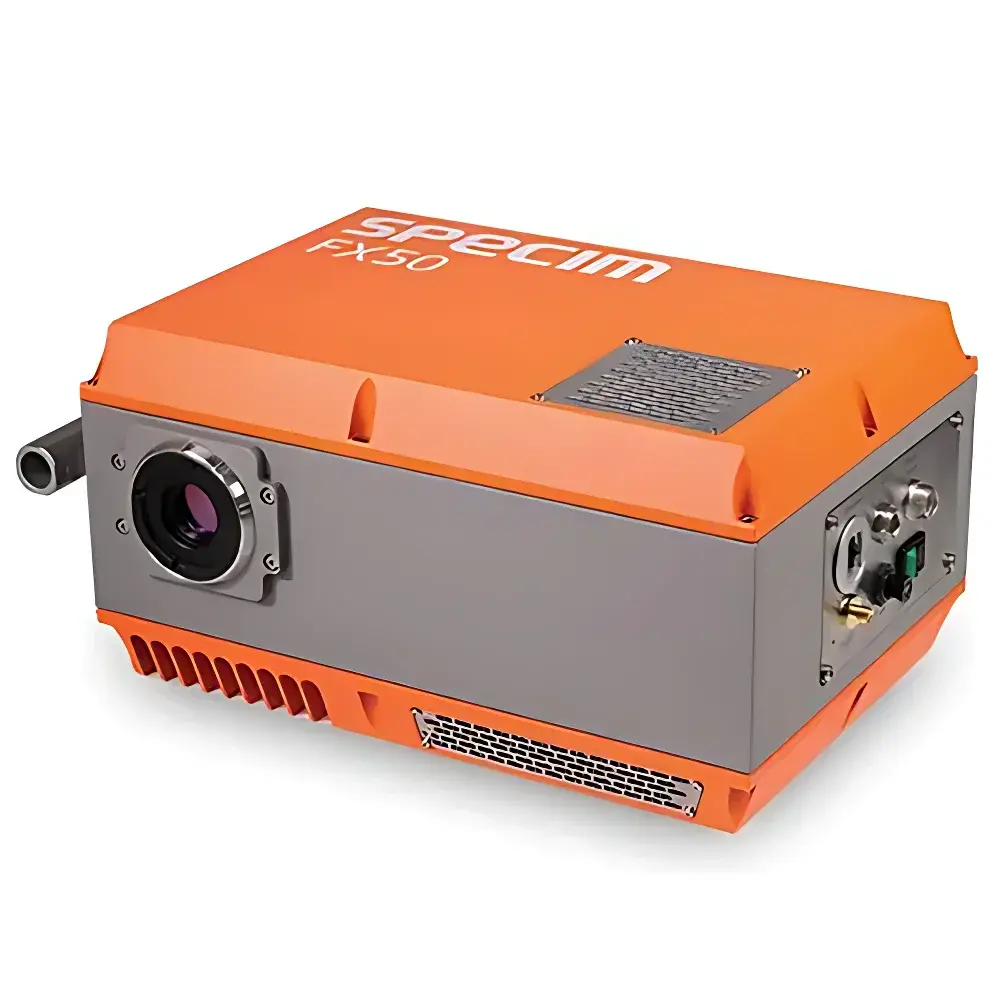
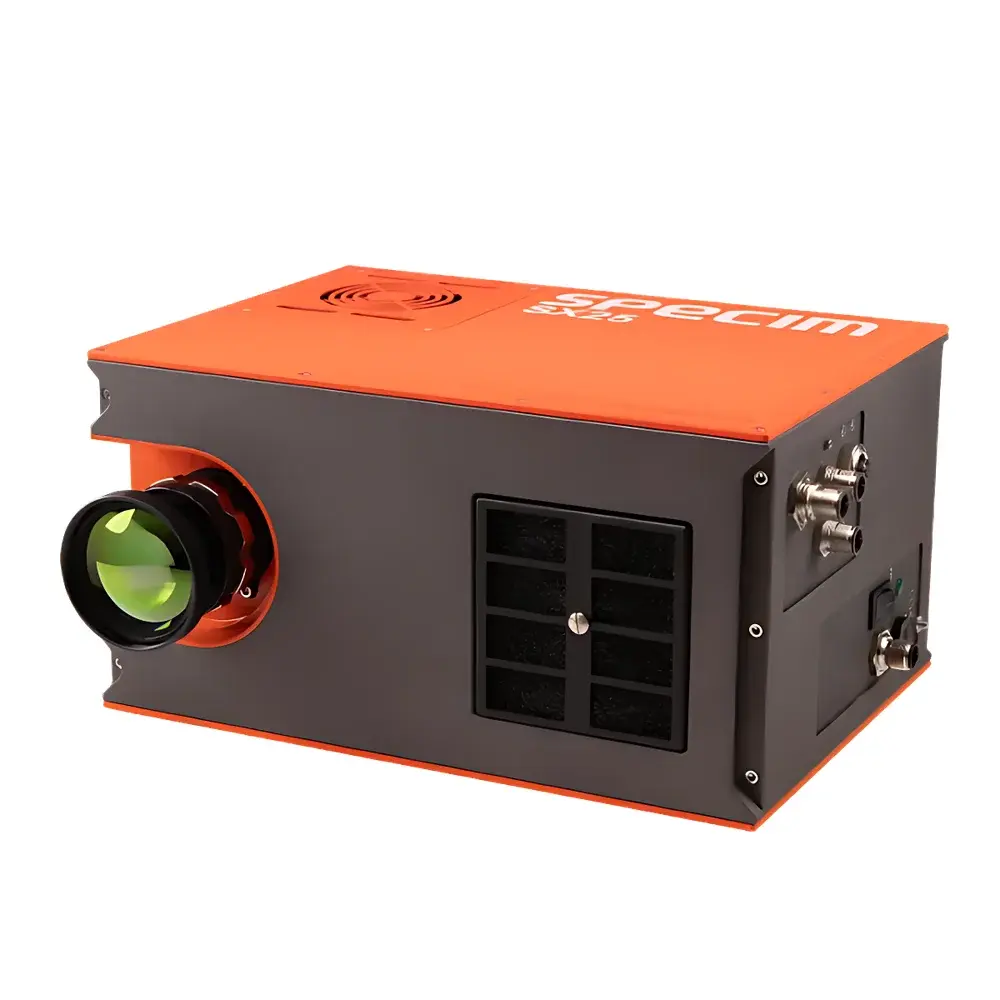
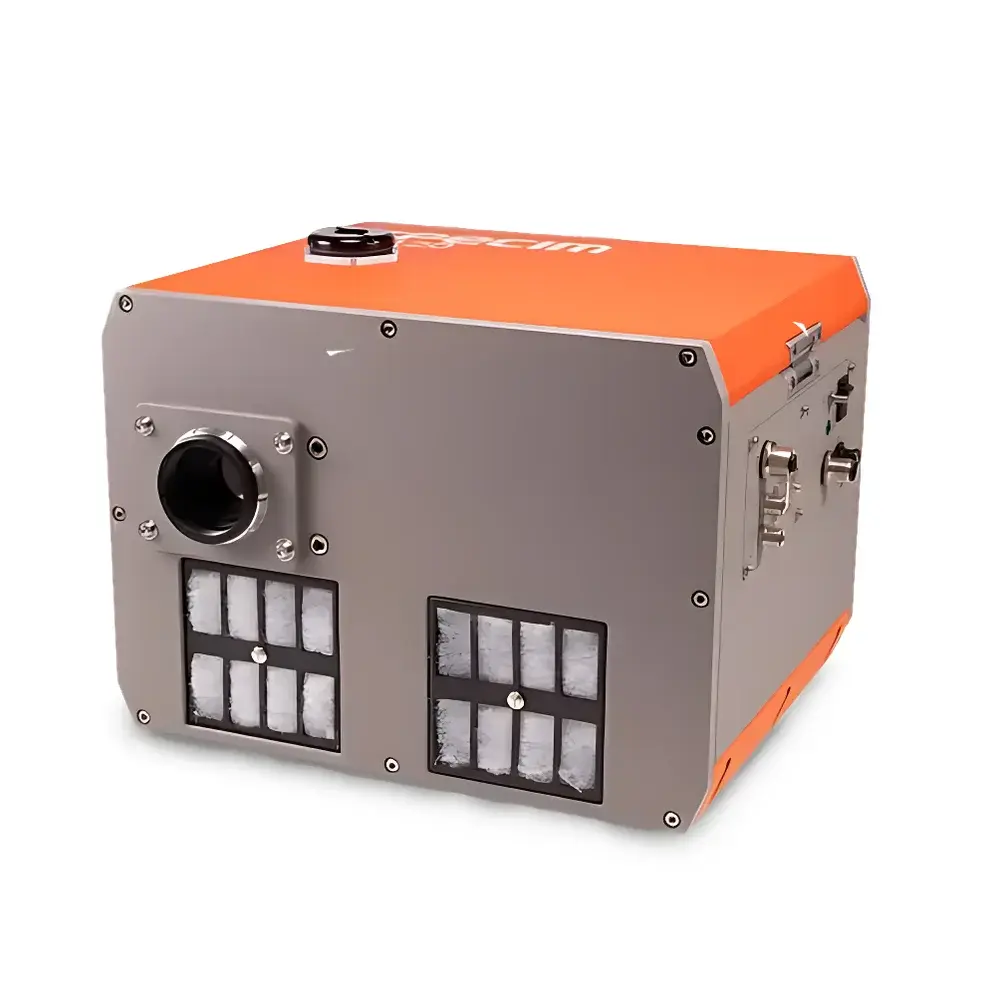
SPECIM FX Series Industrial Hyperspectral Cameras (FX50 / FX10 / FX17 / FX120 / SX25)
| Brand | SPECIM |
|---|---|
| Origin | Finland |
| Camera Type | Push-broom imaging spectrometer |
| Optical Design | Dispersive (transmissive prism-grating) |
| Mounting Flexibility | Ground-based & airborne deployment |
| Spectral Ranges | 400–1000 nm (FX10), 900–1700 nm (FX17), 960–2500 nm (SX25), 2.7–5.3 µm (FX50), 7.7–12.3 µm (FX120) |
| Spectral Resolution | 5.5 nm (FX10), 8 nm (FX17, SX25), 35 nm (FX10 – alternate specification) |
| Spatial Pixel Count | 1024 (FX10), 640 (FX17, FX50, SX25), 616 (FX120) |
| Pixel Size | 8 × 8 µm (FX10), 15 × 15 µm (FX17) |
| Field of View (TFOV) | 38° |
| Instantaneous Field of View (IFOV) | Configurable per lens |
| Frame Rate | 330 Hz (FX10 full spectrum), 670 Hz (FX17 full spectrum), 380 Hz (FX50), 162 Hz (SX25), 240 Hz (FX120) |
| Interface | GigE Vision & Camera Link |
| Calibration | Factory-applied spectral and radiometric calibration traceable to NIST standards |
| Operating Temperature | Thermally stabilized optics with internal non-uniformity correction |
Overview
The SPECIM FX Series industrial hyperspectral cameras are push-broom line-scan imaging spectrometers engineered for real-time, high-fidelity spectral data acquisition in demanding production environments. Based on dispersive optical architecture—utilizing high-efficiency transmissive prism-grating optics—the FX platform captures contiguous spectral bands across ultraviolet-visible-near-infrared (UV-VNIR), short-wave infrared (SWIR), mid-wave infrared (MWIR), and long-wave infrared (LWIR) domains. Unlike filter-based or tunable-filter systems, the FX series acquires full spectral information for every spatial pixel simultaneously during motion, ensuring spectral purity, minimal temporal drift, and high reproducibility across frames. Each model is thermally stabilized and factory-calibrated using traceable NIST-reference sources, enabling direct interchangeability within the same model family without recalibration—a critical requirement for 24/7 inline inspection systems subject to maintenance or redundancy protocols.
Key Features
- Push-broom acquisition architecture optimized for conveyor-based and drone-mounted industrial scanning applications
- Thermally regulated optical path with built-in non-uniformity correction (NUC) for stable radiometric performance across ambient temperature fluctuations
- GigE Vision and Camera Link interface options compliant with EMVA 1288 and GenICam standards, supporting seamless integration into existing machine vision frameworks
- Compact form factor (150 × 85 × 75 mm) and low mass (1.7 kg) facilitating installation in space-constrained OEM machinery
- Selectable region-of-interest (ROI) readout enabling frame rates up to 15,000 Hz—ideal for high-speed sorting and defect detection at line speeds exceeding 10 m/s
- Consistent spectral calibration across units: all FX10 units produce identical spectral response curves; same applies to FX17, FX50, etc., enabling plug-and-replace deployment
- F/1.7 aperture optics maximizing photon throughput—enabling reliable operation under low-intensity line illumination, reducing power and thermal load versus competing technologies
Sample Compatibility & Compliance
The FX series supports non-contact, non-destructive analysis of solid, granular, and semi-fluid materials across diverse industrial sectors. Its spectral coverage enables discrimination of chemically similar substances—e.g., black polymer types (ABS, PP, PE, PC, PS, PVC, HIPS) via MWIR vibrational absorption features—and identification of organic contaminants on metallic surfaces (oils, coolants, residues) without sample preparation. All models comply with CE marking requirements for electromagnetic compatibility (EMC Directive 2014/30/EU) and low-voltage safety (LVD Directive 2014/35/EU). The FX50 and FX120 meet RoHS 2011/65/EU and operate within IEC 60529 IP20 environmental protection ratings. Data integrity protocols align with GLP and GMP principles: raw sensor output includes embedded timestamping, exposure metadata, and calibration coefficients—enabling audit-ready traceability for regulated industries including pharmaceutical excipient verification and food safety screening.
Software & Data Management
SPECIM provides the proprietary INSIGHT software suite for real-time visualization, spectral library matching, and multivariate analysis (PCA, PLS-DA, SVM classification). The SDK supports C++, Python, MATLAB, and HALCON APIs, allowing full control over ROI definition, trigger synchronization, and streaming buffer management. Raw data is saved in standard ENVI-compatible BIL format with header files containing full radiometric and geometric metadata. For integration into MES or SCADA platforms, the cameras support TCP/IP-based command-and-control via ASCII protocol, and optional OPC UA server modules enable secure, time-synchronized data publishing to enterprise historians. All firmware updates are delivered via signed binary packages with SHA-256 hash verification, satisfying change control requirements under ISO 9001:2015 Clause 8.5.1.
Applications
- Industrial Sorting: Real-time identification and ejection of black plastics (FX50), mineral ores (FX50/SX25), wood species (FX10), and food contaminants (FX10/FX17)
- Process Monitoring: In-line detection of coating thickness uniformity, curing degree of composites, and thermal profile mapping (FX50 supports calibrated radiometric temperature measurement from 0–1000°C)
- Quality Assurance: Detection of surface defects, oxidation layers, lubricant residue, and foreign material in automotive and electronics manufacturing
- Agricultural & Food Inspection: Assessment of fruit bruising, grain moisture content, mycotoxin presence, and meat fat marbling using VNIR-SWIR spectral signatures
- Geoscientific Analysis: Core logging (SisuROCK integration), lithological differentiation (e.g., quartz vs. feldspar), and hydrocarbon seep detection (FX50/MWIR)
FAQ
What spectral calibration standards are applied during manufacturing?
All FX cameras undergo full spectral and radiometric calibration using NIST-traceable tungsten-halogen and blackbody sources. Wavelength accuracy is verified to ±0.5 nm (VNIR/SWIR) and ±2 nm (MWIR/LWIR); radiometric uncertainty is ≤5% across dynamic range.
Can FX cameras be synchronized with external lighting or motion stages?
Yes—hardware trigger inputs support TTL/RS-422 signals with sub-microsecond jitter; programmable exposure delay and strobe output enable precise coordination with line lights or encoder-driven conveyors.
Is radiometric calibration maintained after field replacement of lenses or filters?
Lens-specific calibration files are provided with each compatible lens option. Replacement requires loading the corresponding .cal file in INSIGHT or SDK—no re-sentencing or factory return is necessary.
Does the FX platform support FDA 21 CFR Part 11 compliance for pharmaceutical use?
While the camera itself is not a regulated medical device, its data output—including immutable metadata, user-access logs, and electronic signature-capable SDK—supports implementation of Part 11-compliant workflows when deployed within validated analytical systems.
How is thermal stability achieved in FX50 and FX120 for MWIR/LWIR operation?
Both models integrate thermoelectric coolers (TEC) maintaining detector substrate at −10°C ±0.2°C, coupled with internal micro-blackbody references for continuous non-uniformity correction—eliminating need for shutter-based NUC cycles during acquisition.
Related Products





