
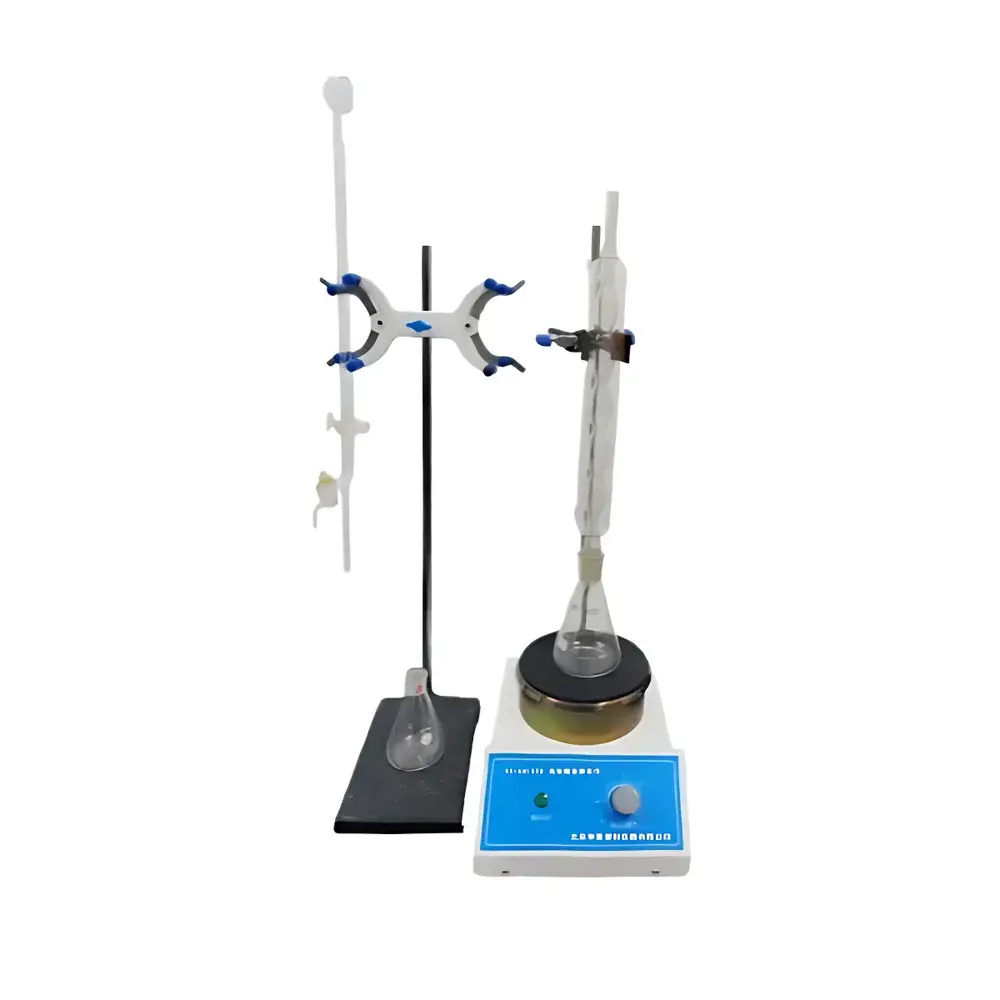
Spectra Invent HX-AN1825 Automated Acid Number Analyzer
| Brand | Spectra Invent |
|---|---|
| Origin | Beijing, China |
| Manufacturer Type | Authorized Distributor |
| Country of Origin | China |
| Model | HX-AN1825 |
| Price Range | USD 1,400 – 14,000 |
| Power Supply | AC (220 ± 10%) V, 50 Hz |
| Heating Power | 100–1000 W, continuously adjustable |
| Burette Resolution | 0.02 mL |
| Ambient Temperature Limit | ≤35 °C |
| Relative Humidity Limit | ≤85% RH |
| Max. Power Consumption | ≤1200 W |
| Dimensions (L×W×H) | 270 × 160 × 600 mm |
Overview
The Spectra Invent HX-AN1825 Automated Acid Number Analyzer is a dedicated benchtop instrument engineered for precise and reproducible determination of acid number (AN) and acid value in petroleum-based liquids—including unleaded gasoline, kerosene, diesel fuel, lubricating oils, and transformer oils—according to standardized titrimetric methodology. It operates on the principle of solvent extraction followed by potentiometric or visual endpoint titration: acidic components are first extracted from the sample using anhydrous ethanol under controlled heating and agitation, then quantitatively neutralized with standardized potassium hydroxide (KOH) or sodium hydroxide (NaOH) ethanol solution. The instrument integrates thermal regulation, burette dispensing, endpoint detection (via colorimetric indicator or optional pH electrode), and automated calculation per ASTM D974, ASTM D664, ISO 6618, GB/T 264, GB/T 258, and GB/T 7599. Designed for routine QC laboratories in power generation, refinery operations, petrochemical R&D, and third-party testing facilities, the HX-AN1825 delivers traceable, GLP-compliant results without requiring operator intervention during titration cycles.
Key Features
- Continuously adjustable heating module (100–1000 W) with digital temperature monitoring ensures consistent ethanol reflux conditions across diverse sample matrices, minimizing volatility-related error.
- High-precision glass burette calibrated to 0.02 mL graduation, coupled with micro-stepper motor drive for repeatable reagent delivery and volumetric accuracy within ±0.03 mL per titration.
- Dual-mode endpoint detection: standard phenolphthalein-based visual endpoint verification supported by optional integrated pH electrode input for potentiometric titration (compatible with standard laboratory pH meters).
- Robust aluminum-alloy chassis and vertical column architecture minimize vibration-induced drift; compact footprint (270 × 160 × 600 mm) optimizes bench space in high-throughput labs.
- Compliance-ready design: supports manual recordkeeping per ISO/IEC 17025 requirements; full audit trail capability when paired with external LIMS or validated spreadsheet templates.
- Thermal safety interlock system automatically deactivates heating if ambient temperature exceeds 35 °C or relative humidity surpasses 85% RH—preventing condensation-induced electrical hazards.
Sample Compatibility & Compliance
The HX-AN1825 accommodates liquid hydrocarbon samples ranging from low-viscosity naphtha fractions to mid-range distillates (e.g., jet fuel, diesel) and heavier base oils. It is not intended for water-miscible solvents, highly viscous bitumens (>500 cSt at 40 °C), or samples containing suspended particulates without prior filtration (per ASTM D4176). All operational procedures align with mandatory test methods referenced in national and international regulatory frameworks: GB/T 264 (petroleum products—determination of acid number), GB/T 258 (gasoline and kerosene—acid value), and GB/T 7599 (electrical insulating oils—acid number). For export-oriented users, method equivalence to ASTM D974 (color-indicator titration) and ASTM D664 (potentiometric titration) is documented in the instrument’s technical validation report. The system meets CE marking requirements for electromagnetic compatibility (EN 61326-1) and low-voltage safety (EN 61010-1).
Software & Data Management
The HX-AN1825 operates in standalone mode with embedded firmware controlling heating profiles, titrant delivery sequencing, and real-time volume tracking. No proprietary software installation is required; however, it supports RS-232 serial output (optional USB-to-serial adapter) for direct data logging into validated Excel templates or LIMS platforms. Each analysis generates a timestamped result record including sample ID, titrant concentration, blank correction, final acid number (mg KOH/g), and operator ID field—enabling full traceability per FDA 21 CFR Part 11 Annex 11 principles when used with appropriate procedural controls. Calibration logs, maintenance history, and environmental condition stamps (temperature/humidity) are retained in non-volatile memory for internal QA audits.
Applications
- Power industry: Monitoring acid number progression in turbine and transformer insulating oils to assess oxidation stability and schedule oil reclamation.
- Petroleum refining: In-process quality control of middle distillates during hydrotreating and fractionation to ensure compliance with product specifications (e.g., ASTM D975, EN 590).
- Chemical manufacturing: Verification of acid scavenger efficacy in polymerization catalyst systems and post-reaction neutralization validation.
- Railway maintenance depots: Field-deployable verification of diesel fuel acidity following long-term storage or biodiesel blending.
- Environmental testing labs: Quantification of organic acid content in weathered crude oil samples for biodegradation studies (per ISO 16232).
FAQ
What standards does the HX-AN1825 directly support?
It is configured and validated for GB/T 264, GB/T 258, and GB/T 7599. Method equivalence documentation for ASTM D974 and ASTM D664 is available upon request.
Can the instrument perform potentiometric titration without modification?
Yes—when connected to a certified pH meter via the auxiliary analog input port, the system accepts real-time mV signals for automatic endpoint recognition.
Is calibration verification required before each batch of samples?
Per ISO/IEC 17025, a system suitability check (blank titration + certified reference material) is recommended before daily use and after every 10 samples.
What maintenance intervals are specified for the heating module and burette?
Heating element resistance should be verified quarterly; burette piston seals require replacement every 12 months or after 500 titrations—whichever occurs first.
Does the device meet requirements for GMP-regulated environments?
While the hardware supports GMP-aligned workflows (audit trails, access control via operator ID), formal GMP validation must be performed by the end-user’s QA department per ICH Q7 Annex 19.





