
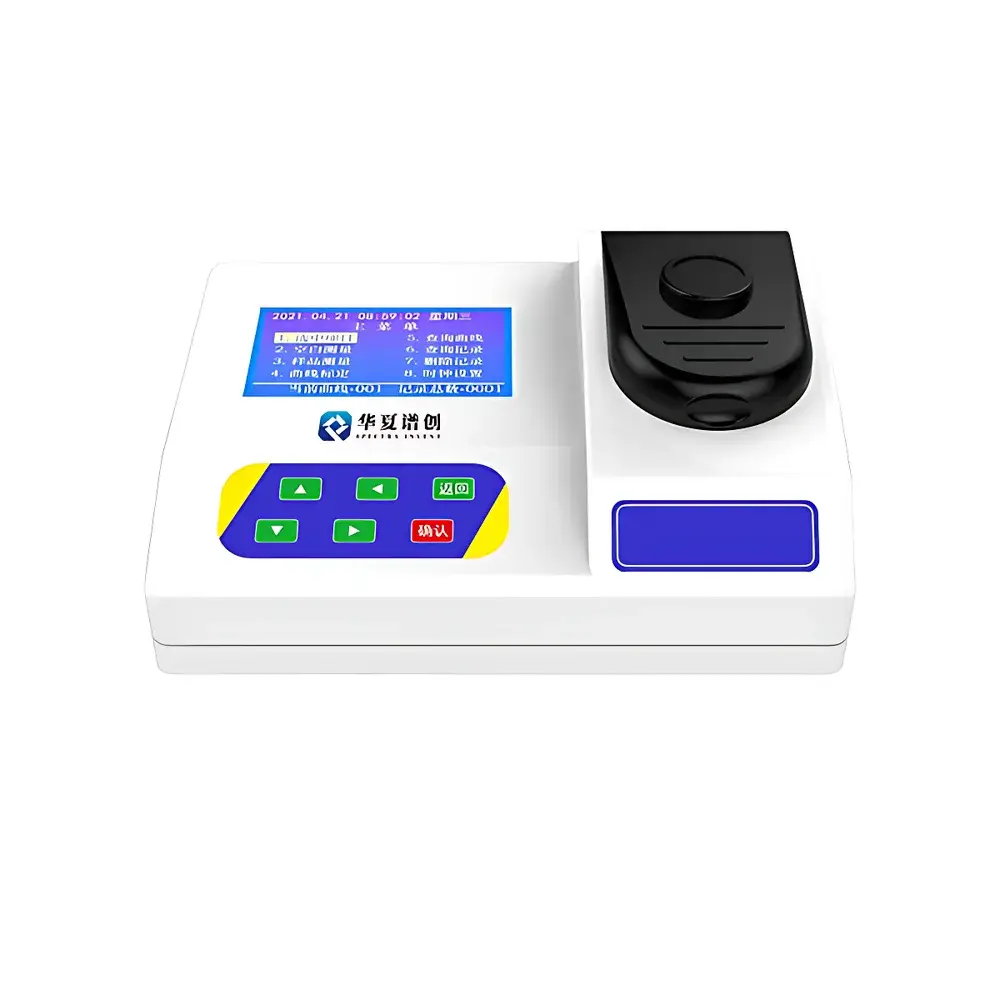
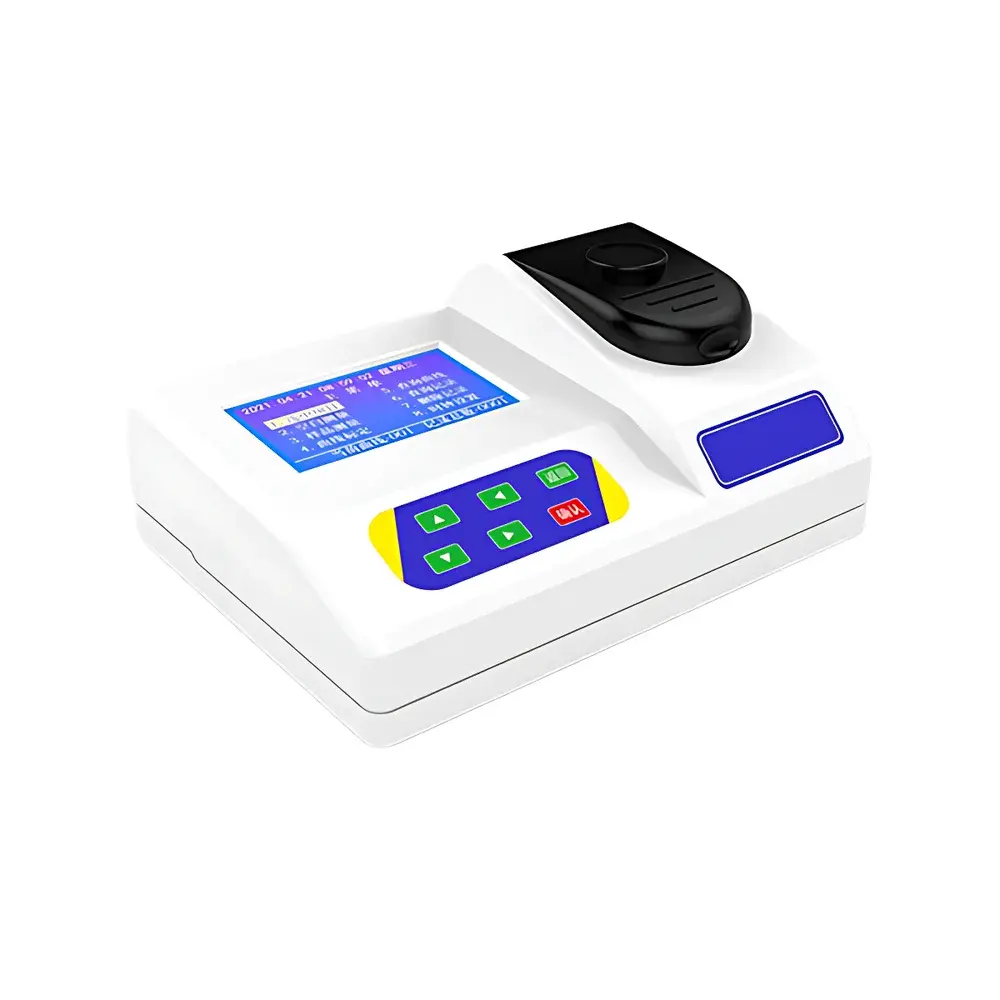
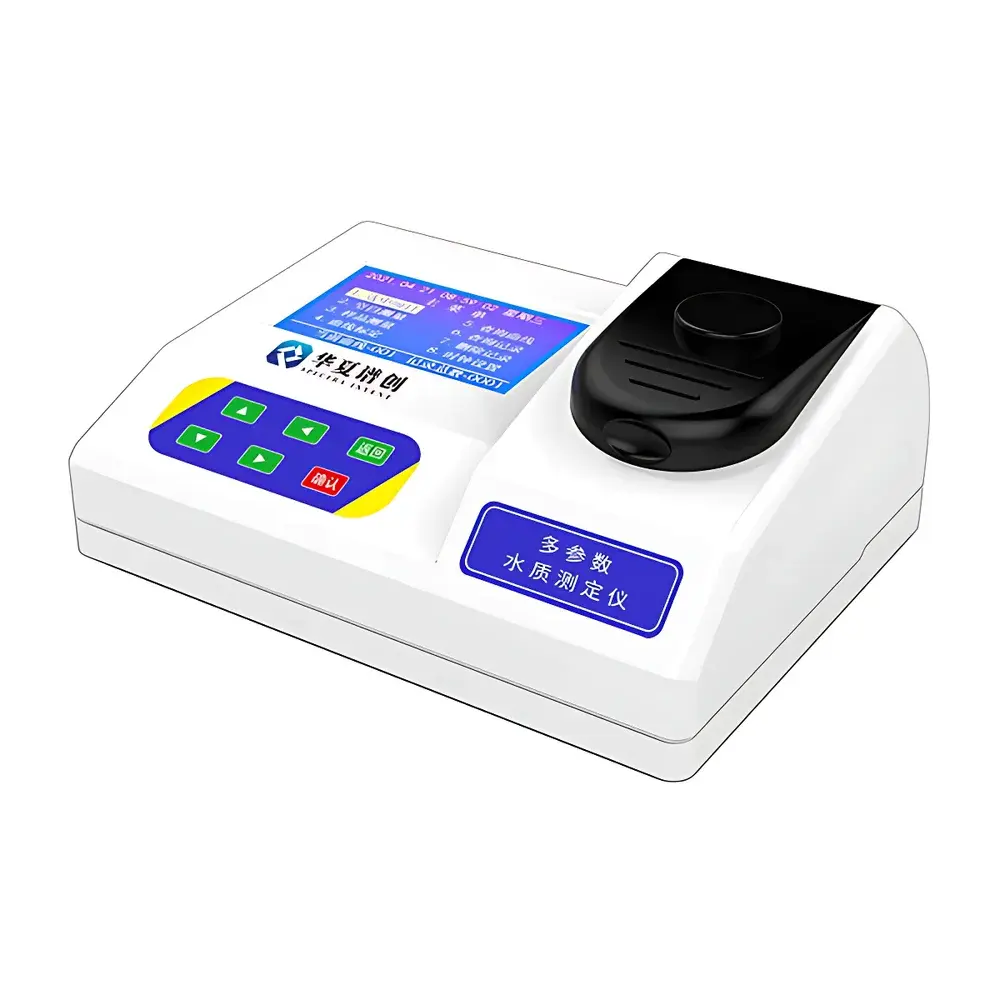
Spectra Invent HXEMP-4B Multi-Parameter Water Quality Analyzer
| Brand | Spectra Invent |
|---|---|
| Model | HXEMP-4B |
| Origin | Zhejiang, China |
| Instrument Type | Benchtop Laboratory Water Quality Analyzer |
| Primary Measurement Principle | Colorimetric Spectrophotometry (Visible Range, 420–650 nm) |
| Key Parameters | COD (Cr method, low/high range), Ammonia-N (dual-range), CODMn, Free/Total Chlorine, Chlorine Dioxide, Sulfate, Nitrate-N, Phosphate, Nitrite-N, Sulfide, Fluoride, Cyanide, Bromide, Formaldehyde, Volatile Phenols, Hydrazine, Aniline Derivatives — all via pre-calibrated, EPA- and ISO-compliant colorimetric methods |
| Accuracy | ±5% of reading or ±0.05–0.2 mg/L (depending on parameter and range) |
| Compliance | Designed to support ASTM D1253, ISO 8467, ISO 7890, ISO 6777, USP <643>, and Chinese HJ Standards (e.g., HJ/T 399–2007, HJ 535–2009, HJ 536–2009) |
Overview
The Spectra Invent HXEMP-4B Multi-Parameter Water Quality Analyzer is a benchtop spectrophotometric platform engineered for precise, repeatable quantification of up to 45 water quality parameters in laboratory environments. It operates on the principle of visible-light absorbance spectroscopy (420–650 nm), utilizing pre-optimized, factory-calibrated reaction chemistries aligned with internationally recognized analytical protocols—including U.S. EPA Method 410.4 (COD), ISO 7890-3 (ammonia), ISO 8467 (permanganate index), and ASTM D1253 (residual chlorine). The system integrates a dual-beam optical path, temperature-stabilized cuvette holder, and drift-compensated photodiode array detector to ensure high reproducibility across batched analyses. Designed explicitly for regulatory-compliant environmental testing, it supports routine analysis of surface water, wastewater effluents, drinking water sources, and industrial process streams—delivering data traceable to NIST-traceable standards and suitable for inclusion in GLP/GMP documentation workflows.
Key Features
- Benchtop modular architecture with integrated touchscreen interface (7-inch capacitive LCD) and embedded microprocessor control
- Pre-programmed assay protocols for 45 parameters—including dual-range detection for COD (5–200 mg/L and 200–2000 mg/L), ammonia-N (0.02–5.00 mg/L and 100–1000 mg/L), free/total chlorine, chlorine dioxide, nitrate-N, phosphate, sulfide, fluoride, cyanide, and volatile phenols
- Auto-zero and auto-blank compensation routines to minimize operator-induced variability
- Cuvette-based measurement system compatible with standard 10-mm, 25-mm, and 50-mm rectangular quartz or high-transmission plastic cells
- Onboard calibration verification using certified reference standards (traceable to NIST SRM 2135a and equivalent)
- Internal memory storage for ≥10,000 test records with timestamp, operator ID, and method version metadata
- RS232 and USB host/device ports for direct connection to LIMS or external printers; optional Ethernet module available for network integration
Sample Compatibility & Compliance
The HXEMP-4B accepts clarified, filtered, or centrifuged aqueous samples with turbidity ≤5 NTU and suspended solids <10 mg/L. Sample volume requirements range from 1.0 mL (for high-sensitivity assays such as fluoride or cyanide) to 25 mL (for COD digestion protocols). All reagent kits are supplied in sealed, desiccated vials with lot-specific certificate of analysis and stability data per ICH Q5C guidelines. The analyzer complies with functional requirements outlined in ISO/IEC 17025:2017 for testing laboratories and supports audit-ready data integrity through configurable user access levels (admin/operator/reader), electronic signature capability, and 21 CFR Part 11–compliant audit trail generation when paired with Spectra Invent’s AquaLog™ Data Manager software.
Software & Data Management
AquaLog™ Data Manager (v4.2+) is the validated software suite for instrument control, method management, and report generation. It enables creation of custom test templates, automated QC flagging (e.g., blank absorbance drift >0.02 AU, calibration slope deviation >±3%), and export of results in CSV, PDF, or XML formats compliant with LIMS ingestion schemas (ASTM E1384, HL7). Audit trails record all critical events—including method edits, calibration updates, result overrides, and user logins—with immutable timestamps and cryptographic hashing. Data backups are encrypted and stored locally or on secure cloud endpoints (AWS GovCloud or Azure HIPAA-compliant instances) per client-defined retention policies.
Applications
- Regulatory compliance monitoring for municipal wastewater treatment plants (EPA NPDES permit reporting)
- Drinking water safety verification per WHO Guidelines and EU Directive 98/83/EC
- Industrial pretreatment verification for electroplating, pharmaceutical, and food processing facilities
- Environmental impact assessment (EIA) field lab support for baseline and post-intervention sampling
- Academic and research laboratory instruction in analytical environmental chemistry (including method validation exercises per ISO 5725)
- Third-party certification labs performing ISO/IEC 17025-accredited testing for ISO 14001 EMS audits
FAQ
Does the HXEMP-4B meet EPA or ISO method equivalency requirements?
Yes—the instrument’s optical configuration, reagent formulations, and procedural logic are validated against EPA Methods 410.4, 350.1, 365.2, and ISO standards 7890-3, 8467, and 6777. Full method equivalency documentation is provided with each shipment.
Can the system be used for field-deployable analysis?
No—the HXEMP-4B is designed exclusively for controlled laboratory environments. For portable applications, Spectra Invent recommends the HXEMP-4B-Lite variant with integrated battery and ruggedized housing.
Is method validation support available?
Yes—Spectra Invent provides IQ/OQ/PQ protocol templates, linearity/ruggedness/robustness study guides, and on-site validation assistance by ISO 17025-accredited application scientists.
What reagent shelf life can be expected?
Unopened reagent kits maintain performance for ≥24 months at 2–8°C; opened vials retain stability for ≥30 days under refrigerated, desiccated conditions, verified via daily system suitability checks.
How is data integrity ensured during multi-user operation?
Role-based access control, mandatory electronic signatures for result release, and tamper-evident audit logs comply with 21 CFR Part 11 Annex 11 and EU GMP Annex 11 requirements.
Related Products







