
SPG MN-20 Internal-Pressure Membrane Emulsifier
| Brand | SPG |
|---|---|
| Origin | Japan |
| Model | MN-20 |
| Membrane Dimensions | Φ10 × L20 mm |
| Effective Membrane Length | 10 mm |
| Applicable Pore Size | ≥ 0.3 µm |
| Max Operating Pressure | 300 kPa |
| Continuous Phase Volume | 8–200 mL |
| Dispersed Phase Volume | 2–10 mL |
Overview
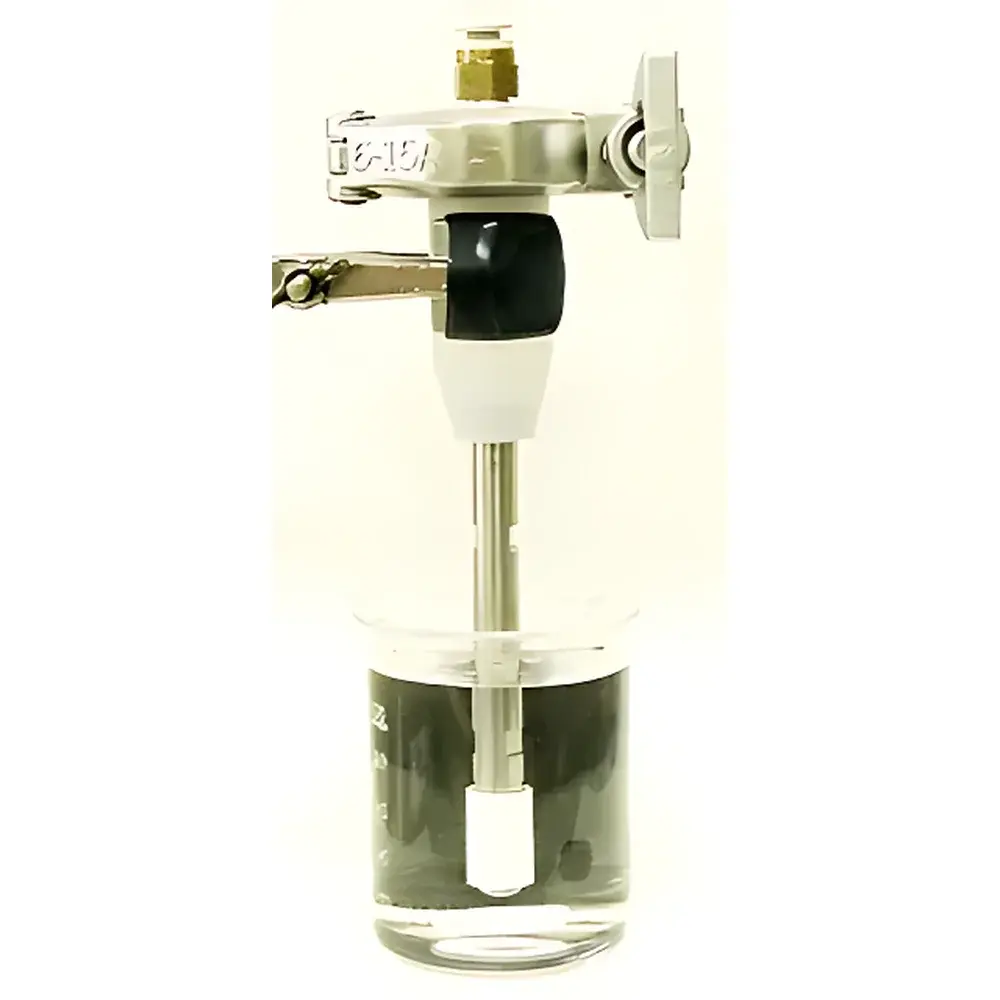
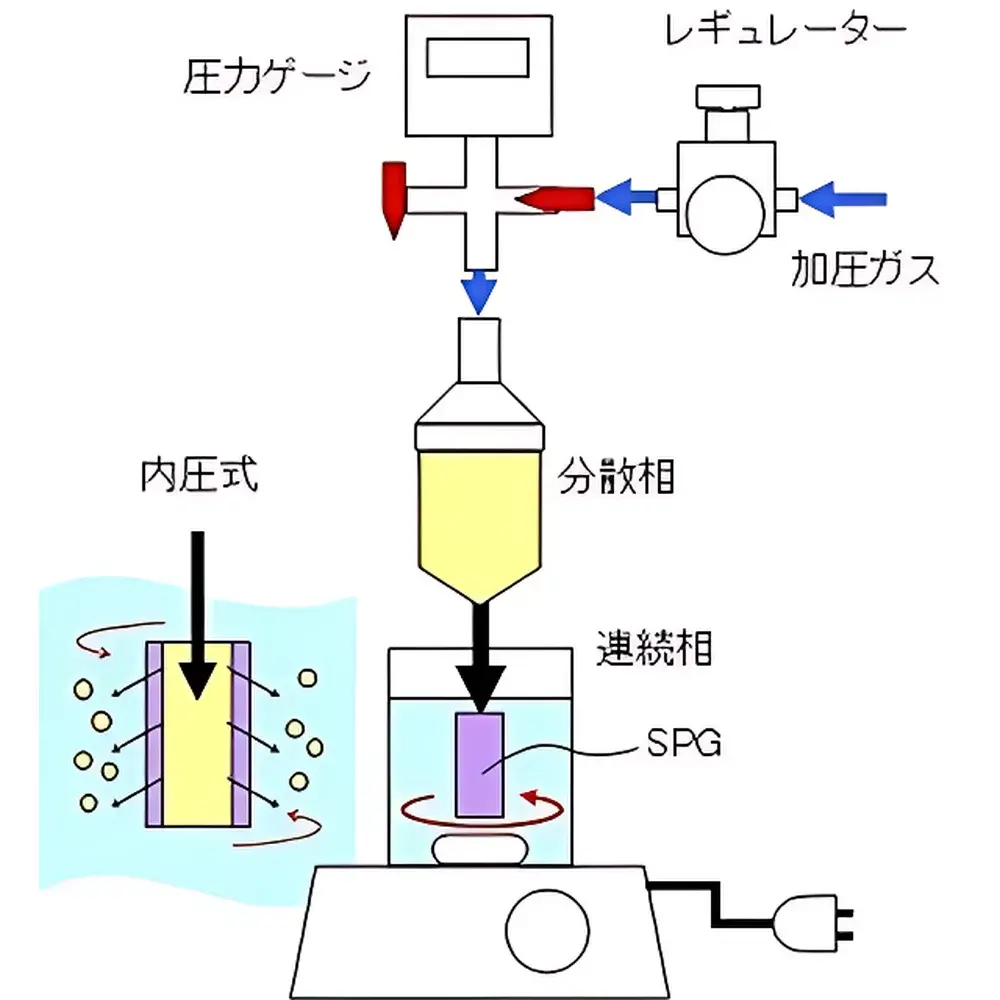
The SPG MN-20 Internal-Pressure Membrane Emulsifier is a precision-engineered laboratory-scale device designed for the controlled generation of monodisperse emulsions and micro/nano-droplets via membrane emulsification. Unlike conventional high-shear homogenizers or ultrasonic processors, this system operates on the principle of pressure-driven displacement of dispersed phase through a uniform, interconnected porous structure—specifically, Shirasu Porous Glass (SPG) membrane. In the internal-pressure configuration, the dispersed phase is introduced into the lumen of the cylindrical SPG membrane (Φ10 × L20 mm), while the continuous phase surrounds the outer surface. Nitrogen gas applies regulated pressure directly to the internal dispersed phase, forcing it through the precisely defined pores (≥ 0.3 µm) into the stirred continuous phase. This hydrodynamic mechanism enables exceptional droplet size control, narrow polydispersity (typically PDI < 0.15 under optimized conditions), and minimal mechanical degradation of sensitive actives—making it ideal for pharmaceutical nanoemulsions, functional food delivery systems, and catalyst precursor suspensions.
Key Features
- Internal-pressure architecture ensures direct, uniform force application on the dispersed phase—eliminating dead-volume stagnation and enhancing reproducibility across replicate runs.
- Shirasu Porous Glass (SPG) membrane with certified pore uniformity and chemical resistance to organic solvents, aqueous buffers, and mild acids/bases (pH 2–11).
- Integrated magnetic stirring of the continuous phase (external vessel) provides gentle yet effective shear control without introducing metallic contamination or seal wear.
- Compact benchtop design with modular gas regulation: stainless steel pressure regulator, digital pressure gauge (0–300 kPa full scale), and needle valve for fine-tuned flow rate modulation.
- Quick-release membrane holder enables rapid SPG cartridge replacement and cleaning—supporting multi-product campaigns with minimal cross-contamination risk.
- Transparent reaction vessel (borosilicate glass) allows real-time visual monitoring of emulsion formation, phase separation behavior, and membrane wetting dynamics.
Sample Compatibility & Compliance
The MN-20 accommodates a broad range of dispersed and continuous phase combinations, including water-in-oil (W/O), oil-in-water (O/W), and multiple emulsions (e.g., W/O/W). Compatible dispersed phases include low-viscosity oils (e.g., Miglyol 812, Capryol PGMC), polymer solutions (PLGA, chitosan), and aqueous drug suspensions. Continuous phases may be aqueous surfactant solutions (e.g., Tween 80, SDS), biopolymer matrices (sodium alginate, whey protein isolate), or non-aqueous media (silicone oils, perfluorocarbons). The system complies with fundamental requirements for GLP-aligned experimental documentation: pressure and volume parameters are manually recorded in standardized lab notebooks; optional integration with external data loggers supports traceable time-stamped acquisition. While not intrinsically 21 CFR Part 11 compliant, its operational simplicity facilitates audit-ready procedural SOPs and batch record consistency.
Software & Data Management
The MN-20 is a manually operated, hardware-only platform—no embedded firmware or proprietary software is included. This design prioritizes operational transparency, maintenance accessibility, and long-term compatibility with evolving laboratory IT infrastructure. Users retain full control over data capture: pressure profiles can be logged via external digital manometers; droplet size distribution is typically characterized post-run using laser diffraction (e.g., Malvern Mastersizer) or dynamic light scattering (DLS). Experimental metadata—including membrane lot number, phase composition, pressure setpoint, stirring speed, and collection time—is structured in accordance with ISO/IEC 17025 documentation best practices. For automated workflows, the unit’s pneumatic interface (¼” NPT inlet) and standardized vessel geometry support third-party integration with programmable pressure controllers and fraction collectors.
Applications
- Preformulation development of lipid nanoparticles (LNPs) and polymeric nanocarriers for mRNA delivery and peptide therapeutics.
- Routine production of calibration standards for particle sizing instrumentation (ISO 22412, USP <729>).
- Controlled synthesis of monodisperse microcapsules for encapsulation of probiotics, enzymes, or volatile flavors.
- Fundamental studies of interfacial rheology and Marangoni effects during membrane-based droplet formation.
- Scale-down modeling for industrial SPG membrane emulsification processes (e.g., pilot-scale MN-100 or production MN-500 systems).
FAQ
What is the maximum recommended operating pressure for the MN-20, and how is overpressure prevented?
The absolute maximum safe operating pressure is 300 kPa. A calibrated stainless steel pressure regulator with integrated relief vent is required upstream; users must verify regulator calibration annually per ISO 6789.
Can the SPG membrane be cleaned and reused? If so, what is the validated cleaning protocol?
Yes—membranes are reusable after solvent rinsing (e.g., ethanol → acetone → deionized water) and drying under nitrogen. Thermal regeneration at 450 °C for 2 h restores hydrophilicity for aqueous systems; validation via contact angle measurement is recommended before critical use.
Is the MN-20 suitable for sterile processing or aseptic emulsion preparation?
Not inherently. Sterility requires pre-sterilization of all wetted parts (autoclave at 121 °C, 20 min) and operation within a laminar flow hood. The glass vessel and SPG housing are autoclavable; membrane integrity must be confirmed post-sterilization via bubble point test.
How does pore size selection affect droplet diameter and polydispersity?
Droplet diameter correlates linearly with nominal pore size under constant pressure and interfacial tension. Polydispersity is minimized when pore size distribution (PSD) is ≤ ±5% and membrane surface is fully wetted prior to pressurization.
What stirring speed range is typical for the external magnetic stirrer during emulsification?
Optimal speeds range from 200–600 rpm depending on continuous phase viscosity and target droplet size; higher speeds reduce coalescence but may induce secondary breakup above ~700 rpm.
Related Products



