
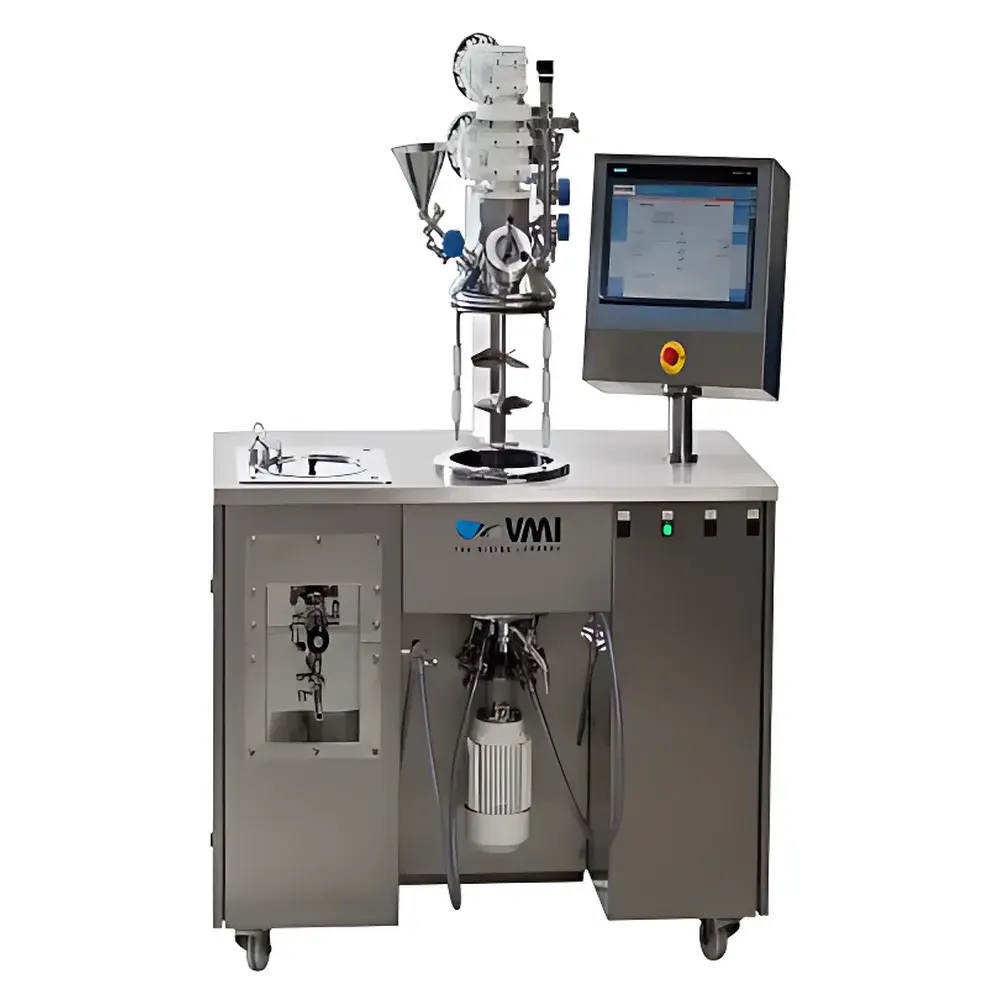

VMI Trilab Pilot-Scale Vacuum Homogenizer & Emulsifier
| Brand | VMI |
|---|---|
| Origin | France |
| Model | Trilab |
| Instrument Type | Probe-Rotor High-Shear Homogenizer |
| Dimensions (W×D×H) | 998×447×430 mm |
| Processing Capacity | 50–3300 mL |
| Vacuum Range | −0.96 barg |
| Pressure Rating | 0.5 barg (standard), up to 2 barg (optional) |
| Max Operating Temperature | 100 °C (standard), 130 °C (optional) |
| Tank Material | 316L Stainless Steel |
| Power Supply | 400 V / 50 Hz / 3-phase + N + PE |
| Air Supply | 0.5 bar (tank pressurization), 6 bar (pneumatic actuators) |
| Compliance | EU ATEX (optional), CIP-capable (optional), GLP/GMP-ready architecture |
Overview
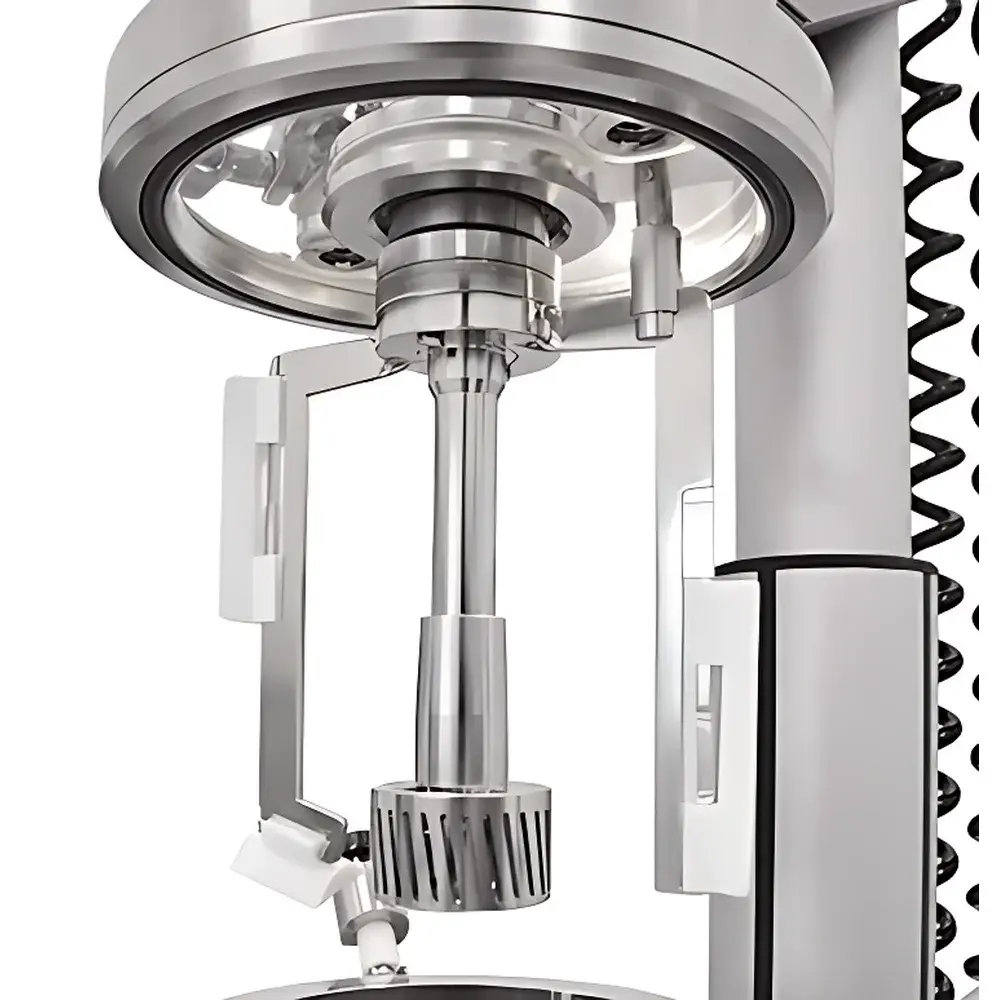
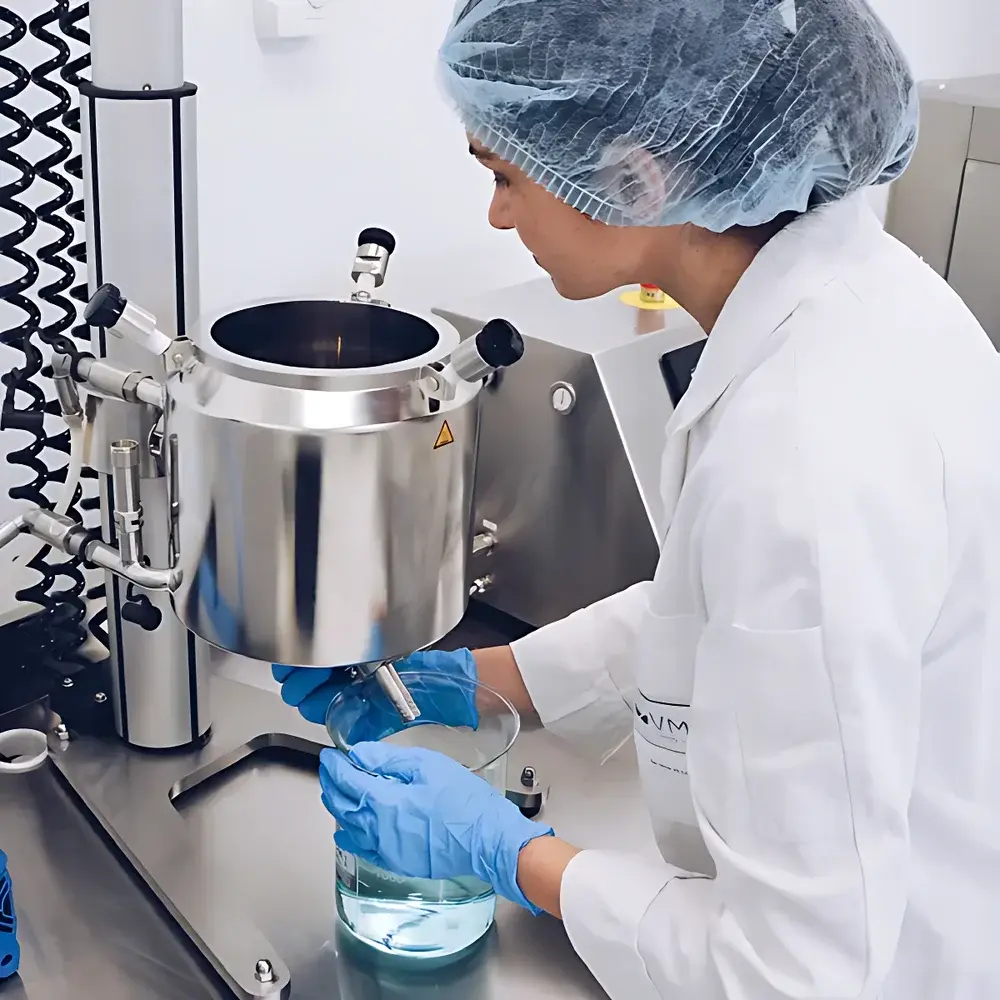
The VMI Trilab is a pilot-scale, vacuum-capable homogenizer and emulsifier engineered for formulation development, process transfer, and small-batch production in pharmaceutical, cosmetic, and fine chemical laboratories. It operates on the principle of high-shear rotor-stator homogenization under controlled vacuum and temperature conditions—enabling precise dispersion, particle size reduction, interfacial stabilization, and air elimination during emulsion and semi-solid preparation. Unlike benchtop homogenizers, the Trilab integrates three independent coaxial agitators—central low-speed anchor, high-speed rotor-stator homogenizer, and peripheral scraper-equipped stirrer—to establish simultaneous bulk mixing, localized shear, and wall scraping. This tri-functional architecture ensures uniform thermal distribution, eliminates dead zones, prevents material adhesion, and supports reproducible processing of thermosensitive or highly viscous formulations (e.g., ointments, creams, microsphere suspensions, API suspensions). Designed as a bridge between R&D (Multilab series) and full-scale production (Trimix series), the Trilab allows direct scale-up of rotor-stator geometry, tip speed, shear rate profiles, and vacuum/temperature ramp protocols—minimizing requalification effort during tech transfer.
Key Features
- Triple-agitation system: Independent central anchor (reversible, low-speed), high-shear rotor-stator homogenizer (tip speeds up to 35 m/s), and peripheral scraper agitator—all synchronized via programmable logic controller (PLC)
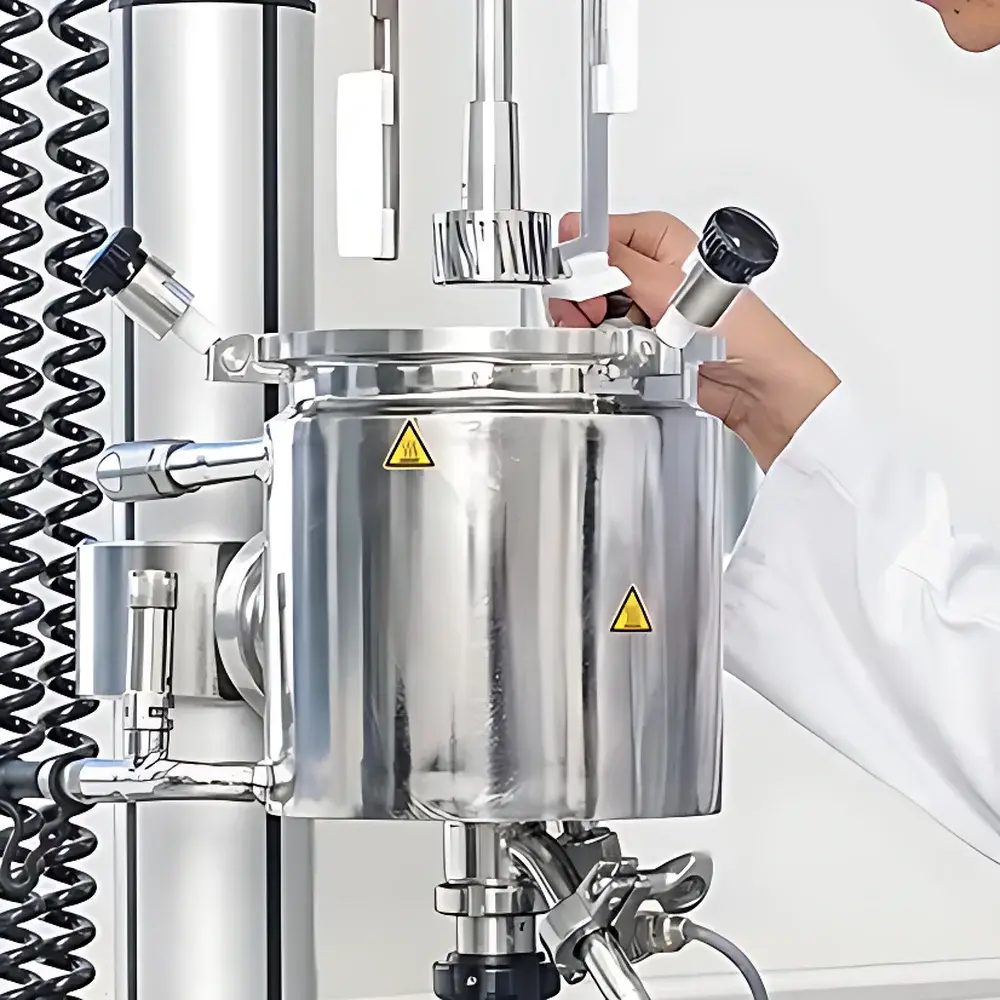
- Double-jacketed 316L stainless steel vessel with integrated heating (electric or steam), vacuum (−0.96 barg), and pressure (0.5–2.0 barg) capability
- Touchscreen HMI with recipe-based control: Predefined process steps (vacuum draw, heating ramp, homogenization cycle, cooling hold) with adjustable setpoints and dwell times
- Modular feed system: Separate pneumatic valves for vacuum-assisted powder and liquid introduction—eliminating dust exposure and ensuring controlled wetting
- Movable base with casters and electrically actuated lid lift—optimized for lab mobility and ergonomic operation in ISO Class 5–8 environments
- CIP-ready design: Smooth internal welds (Ra ≤ 0.8 µm), drainable geometry, optional spray ball integration, and IP65-rated electrical cabinet
Sample Compatibility & Compliance
The Trilab processes aqueous and non-aqueous systems across wide rheological ranges—from low-viscosity emulsions (50,000 mPa·s)—including oil-in-water and water-in-oil emulsions, hydrophilic/hydrophobic suspensions, polymer dispersions, and API-loaded nanosuspensions. Its vacuum-assisted deaeration reduces entrapped air to <0.5% v/v, critical for stability testing per ICH Q5C and USP . The system meets mechanical safety requirements per EN ISO 12100 and can be configured to comply with ATEX Directive 2014/34/EU (Zone 2/22) when handling flammable solvents. All electronic controls support audit trail generation, electronic signatures, and data integrity per FDA 21 CFR Part 11 and EU Annex 11—enabling use in GLP and GMP-regulated development workflows.
Software & Data Management
The embedded PLC-driven control system records timestamped values for temperature (±0.3 °C), vacuum (±0.005 barg), agitation speed (±1 rpm), power consumption, and lid position at user-defined intervals (1–30 s). Process data—including phase transitions, deviation alarms, and manual interventions—are stored in CSV- and PDF-exportable format with SHA-256 hash verification. Optional traceability module integrates real-time batch ID assignment, operator login tracking, and change history logging. Remote diagnostics via secure modem connection allow VMI-certified engineers to perform firmware updates and fault analysis without onsite visits—reducing downtime and supporting continuous process verification (CPV).
Applications
- Pharmaceutical: Development of topical creams, ointments, gels, microemulsions, and nanosuspensions; excipient compatibility screening; stability-indicating formulation studies
- Biotechnology: Liposome and polymeric nanoparticle synthesis under inert atmosphere; protein-containing emulsions requiring low-foaming homogenization
- Personal Care: Silicone-based emulsions, sunscreens, anti-aging serums, and color cosmetics with pigment dispersion down to <5 µm D90
- Fine Chemicals: Catalyst slurries, specialty wax dispersions, conductive polymer pastes, and reactive monomer emulsions
- Food & Nutraceuticals: Functional ingredient emulsions (omega-3, curcumin), probiotic suspensions, and clean-label fat replacers
FAQ
Can the Trilab be validated for GMP manufacturing?
Yes—the system supports IQ/OQ documentation packages, meets ASME BPE surface finish standards, and provides full electronic record retention required for FDA and EMA submissions.
What is the smallest batch volume that maintains homogenization efficiency?
For consistent particle size reduction and air removal, minimum working volume is 30% of vessel capacity (i.e., ≥3 L in 10 L model); below this, vortex formation and uneven shear distribution may occur.
How does the Trilab ensure temperature uniformity during high-viscosity processing?
Dual-zone jacketed heating, coupled with scraper agitator contact and real-time RTD feedback from three vessel locations (top/mid/bottom), maintains ΔT ≤ ±1.5 °C across the entire batch.
Is rotor-stator geometry interchangeable with VMI’s Trimix production systems?
Yes—Trilab uses identical stator orifice patterns, rotor tip diameters, and clearance tolerances as Trimix industrial units, enabling direct translation of tip speed (m/s), energy input (kWh/kg), and residence time distributions.
Does the system support automated cleaning validation?
With optional CIP skid integration and conductivity/pH probe inputs, the Trilab can execute and document rinse cycle conductivity profiles per ASTM E3127-18, generating pass/fail reports aligned with PDA TR29.
Related Products



