


SPIP Surface Topography Analysis Software
| Brand | SPIP |
|---|---|
| Origin | USA |
| Model | 6.0.14 |
| Distribution Type | Authorized Distributor |
| Import Status | Imported |
| Pricing | Available Upon Request |
Overview
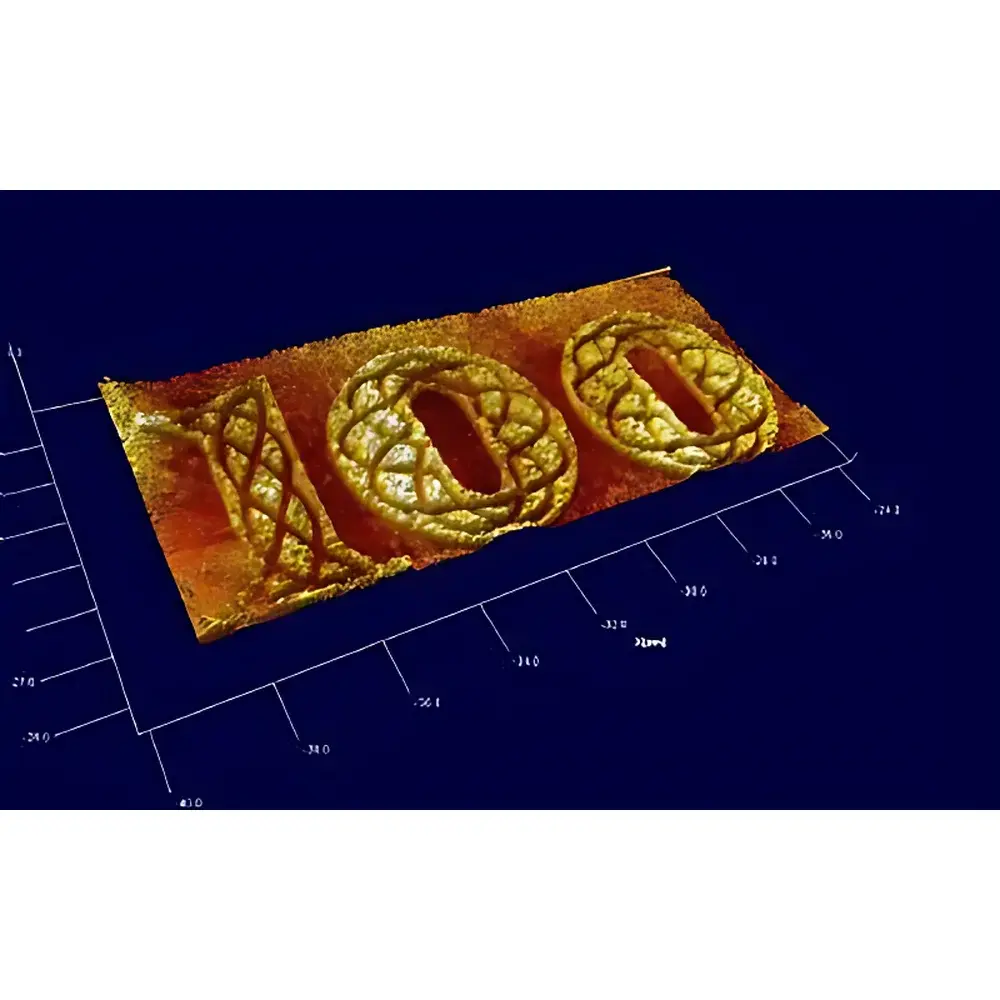
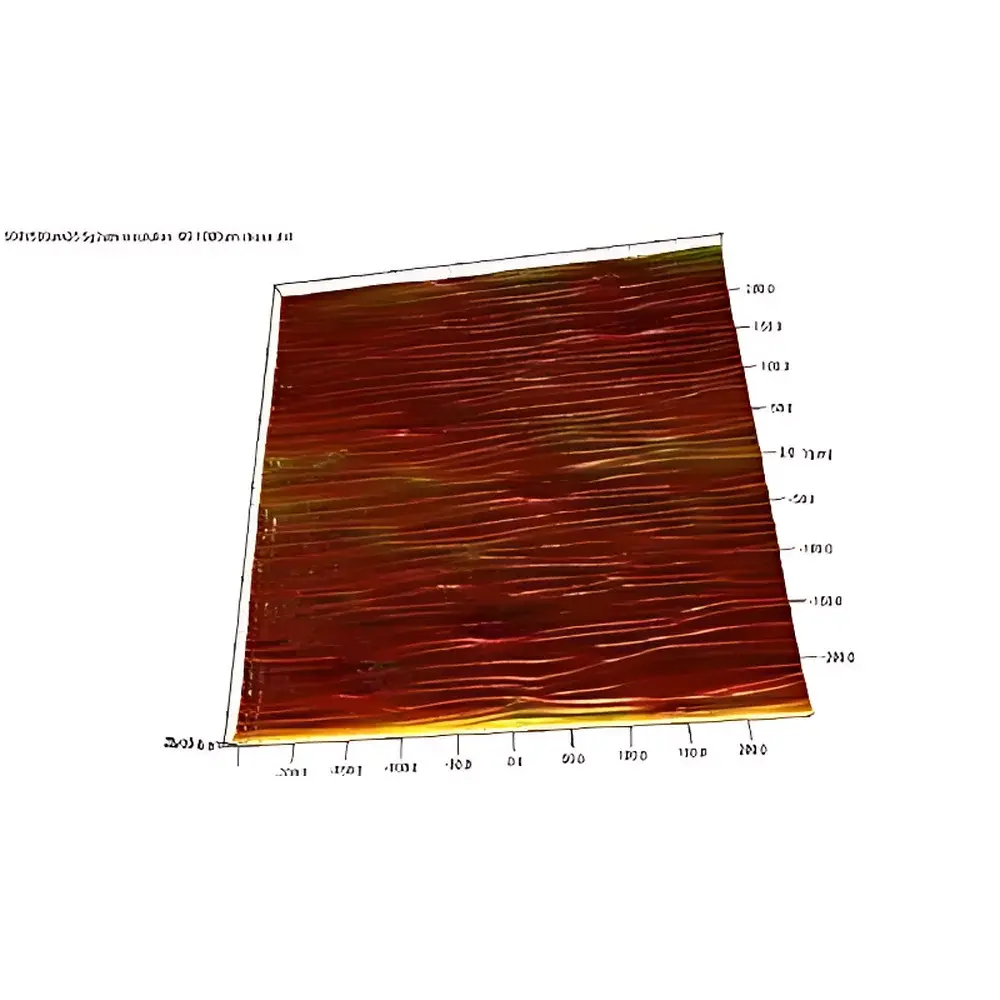
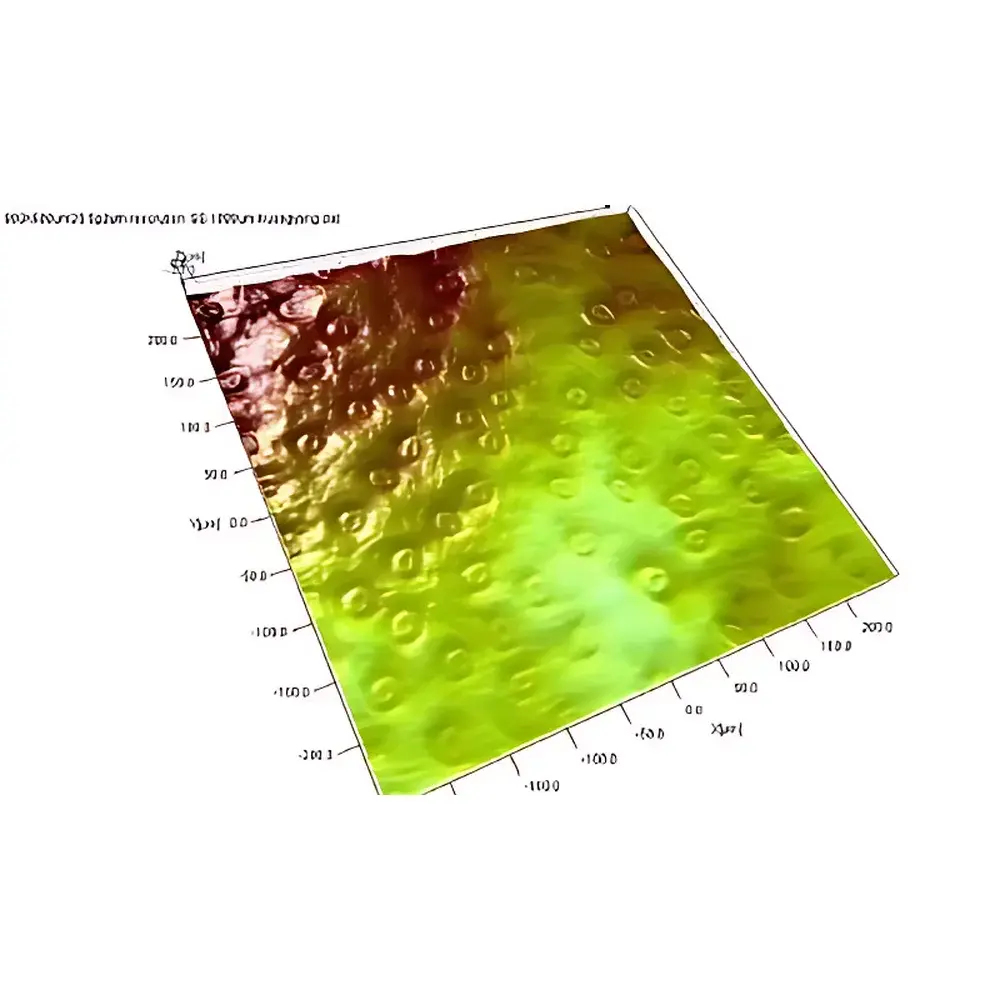
SPIP (Scanning Probe Image Processor) is a professional-grade, modular surface topography analysis software platform engineered for quantitative metrology and nanoscale image processing across diverse microscopy modalities. Developed by Image Metrology A/S and distributed globally from its U.S. headquarters, SPIP 6.0.14 implements rigorous mathematical algorithms rooted in surface metrology standards (ISO 25178, ISO 4287, ASME B46.1) to deliver traceable, reproducible surface characterization. Unlike generic image editors, SPIP operates on calibrated height maps—preserving dimensional integrity through pixel-to-nanometer scaling, z-axis linearity correction, and instrument-specific noise modeling. Its core architecture supports both batch-mode statistical analysis and interactive single-image refinement, enabling users to transition seamlessly from raw scan data to publication-ready metrics including Sa, Sq, Sz, Sdr, and functional parameters such as bearing ratio (Abbott-Firestone curve) and power spectral density (PSD). Designed for compliance-driven environments, SPIP maintains full audit trail logging for all processing steps, satisfying GLP/GMP documentation requirements in semiconductor process control and medical device surface validation.
Key Features
- Multi-instrument data compatibility: native support for SPM (AFM, STM), SEM, TEM, white-light interferometry (WLI), confocal laser scanning microscopy (CLSM), optical profilometry, and 3D areal surface topography instruments.
- Modular architecture: base module includes file import/export (over 80 formats), planar and polynomial leveling, tilt correction, filtering (Gaussian, median, FFT-based), roughness parameter calculation per ISO 25178-2, and cross-section profiling.
- Thirteen optional modules extend functionality: Noise Reduction (adaptive Wiener filtering), Grain Analysis (morphological segmentation), Particle Analysis (ISO 13322-2 compliant), 3D Reconstruction (stereo-pair alignment), Tip Convolution Modeling, and Batch Processing with scripting (Python API).
- Calibration-aware workflow: integrated calibration database for probe tip geometry, scanner nonlinearity, and detector sensitivity—ensuring metrological traceability from acquisition to report.
- Report generation engine: export customizable PDF/HTML reports with embedded metadata, measurement uncertainty estimates, and version-controlled processing history.
Sample Compatibility & Compliance
SPIP processes height-field datasets generated by commercial and research-grade instrumentation—including Bruker, Keysight, Park Systems, Zygo, Sensofar, and Nanomap platforms. It accepts proprietary binary formats (e.g., .spm, .ibw, .wsx, .czi, .tif with embedded calibration headers) and standard TIFF/RAW with user-defined scale metadata. All surface parameters comply with ISO 25178 series for areal surface texture, ISO 4287 for profile-based roughness, and ASTM E2921 for AFM tip characterization. The software supports FDA 21 CFR Part 11–compliant electronic signatures and audit trails when deployed in regulated QC laboratories, with configurable user roles, password-protected method templates, and immutable log export.
Software & Data Management
SPIP 6.0.14 runs on Windows 10/11 (64-bit) and leverages multi-threaded CPU acceleration for large-volume dataset handling (up to 20,000 × 20,000 pixel arrays). Data management includes hierarchical project organization, metadata tagging (instrument model, operator ID, environmental conditions), and DICOM-compliant export for integration into LIMS or ELN systems. The Python SDK enables automated pipeline development—e.g., linking SPIP analysis to statistical process control (SPC) dashboards or machine learning feature extraction workflows. Version-controlled method files (.spmth) ensure inter-laboratory reproducibility, while encrypted backup archives preserve processing lineage for regulatory inspection.
Applications
SPIP serves as the analytical backbone in semiconductor wafer defect review (nanoscale pit/scratch quantification), MEMS surface uniformity assessment, biomaterial scaffold topography mapping (cell adhesion correlation studies), optical component scratch certification (MIL-PRF-13830B), and additive manufacturing powder bed characterization. Academic users apply it in tribology (wear track volume loss), corrosion science (pitting depth distribution), and soft matter physics (polymer domain height statistics). Its cross-platform interoperability makes it indispensable for comparative metrology studies where data originates from multiple instrument vendors or facility-sharing consortia.
FAQ
Does SPIP support real-time analysis during instrument acquisition?
No—SPIP is an offline post-processing platform. It does not interface directly with hardware controllers but accepts exported scan files with full calibration metadata.
Can SPIP import and analyze SEM secondary electron images for topographic reconstruction?
Yes, provided the SEM system exports height-mapped data (e.g., via stereo-photogrammetry plugins or dedicated topography modes); conventional SE/BSE images require external height inference tools.
Is batch processing available for ISO 25178 parameter extraction across hundreds of samples?
Yes—using the Batch Module and Python scripting, users can automate parameter extraction, statistical summarization, and outlier flagging per defined acceptance criteria.
Does SPIP provide uncertainty estimation for calculated roughness parameters?
Yes—uncertainty propagation is implemented per GUM (JCGM 100:2018) principles, incorporating scanner calibration uncertainty, noise floor, and sampling interval effects.
Are software updates and technical support included with perpetual licenses?
Maintenance contracts (annual) include version upgrades, priority email support, and access to the SPIP User Forum and webinar training library.



