
Stresstech Camscan Portable Magnetic Barkhausen Noise (MBN) Analyzer for Camshaft Grinding Burn Detection
| Key | Brand: Stresstech Oy |
|---|---|
| Origin | Finland |
| Model | Camscan |
| Power Supply | 90–260 VAC, 49–61 Hz, single-phase |
| Max Inrush Current | 40 A @ 115 VAC / 80 A @ 230 VAC |
| Max Power Consumption (battery charging) | 150 VA |
| Normal Max Power Consumption | 100 VA |
| Magnetization Frequency Range | 1.0–1000 Hz |
| Magnetization Voltage Range | 0–16 V |
| Signal Analysis Filter Bands | 10–70 kHz, 70–200 kHz, 200–450 kHz |
| Channel Configuration | Single-channel (expandable architecture) |
| Compliance | Designed for ISO 20022-1, ASTM E3022, and EN 10204 Type 3.1 documentation support |
Overview
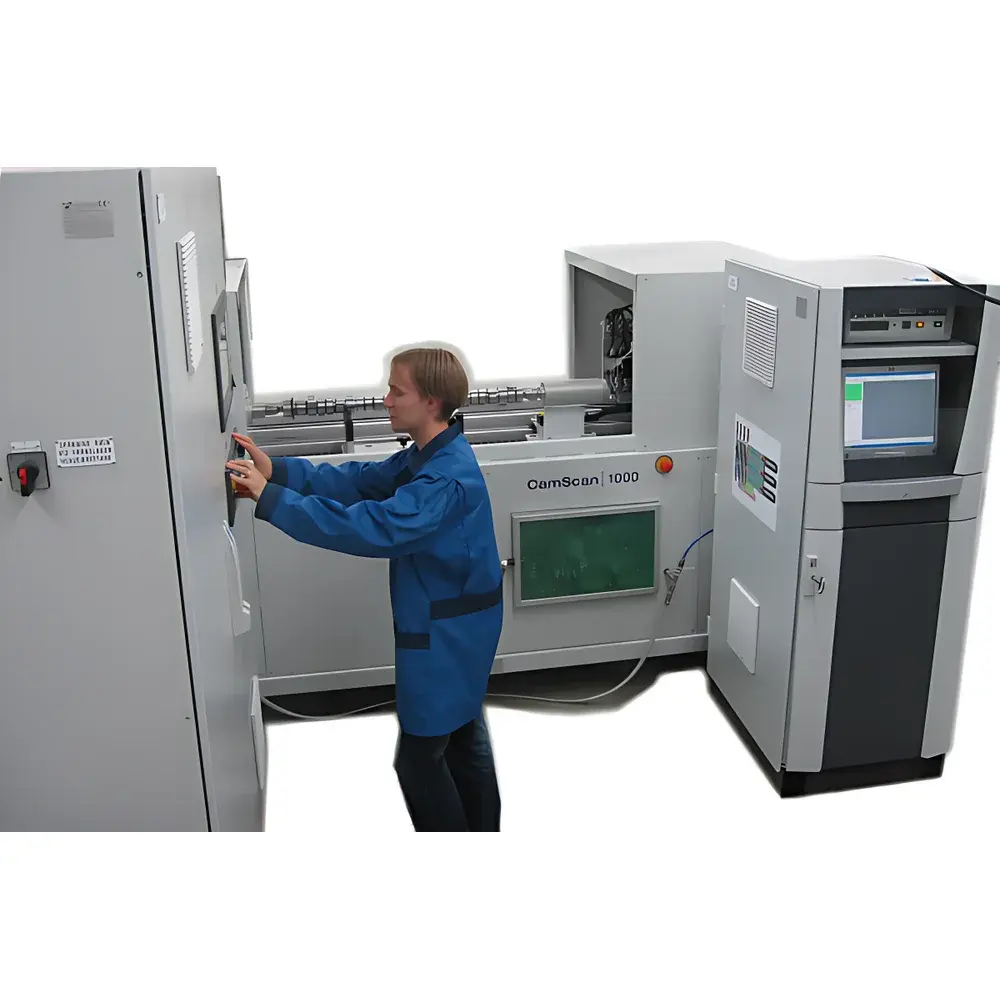
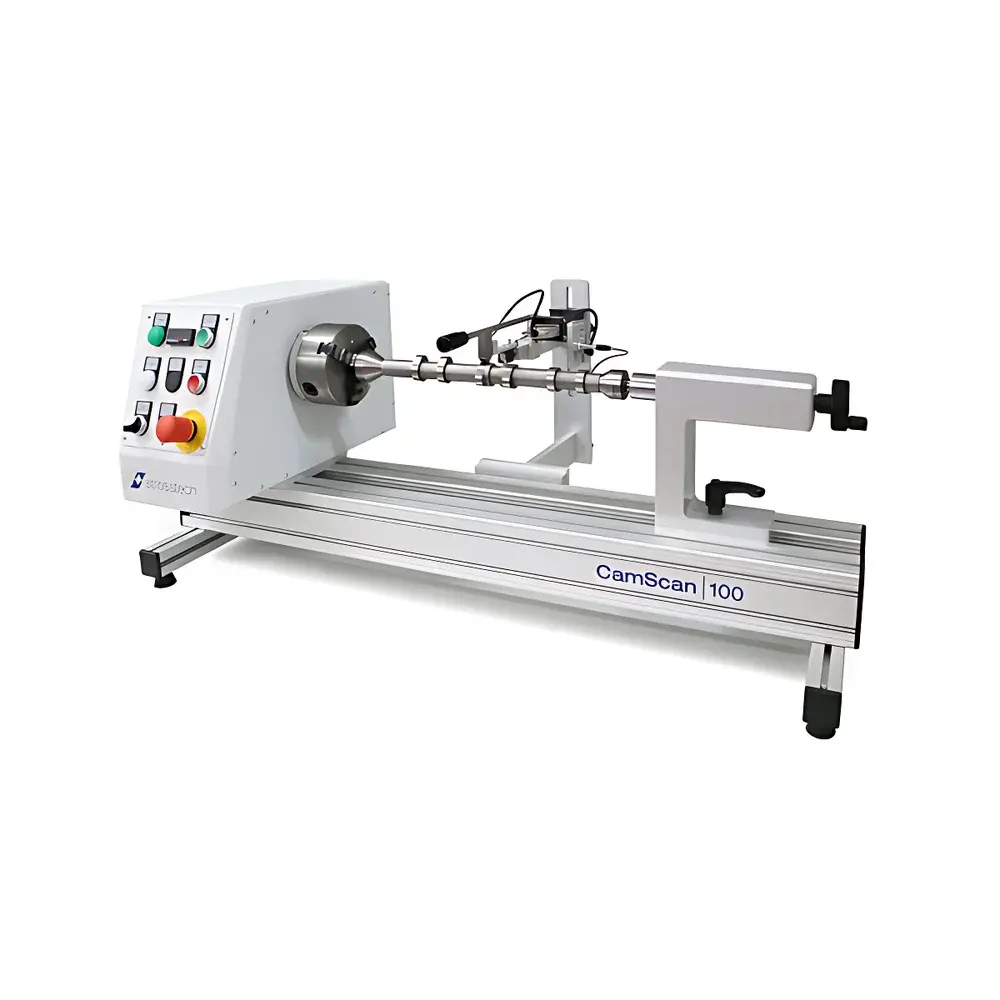
The Stresstech Camscan is a portable, precision-engineered Magnetic Barkhausen Noise (MBN) analyzer specifically designed for non-destructive detection of grinding-induced thermal damage—commonly referred to as “grinding burn”—on hardened steel camshafts and other critical rotating components. Unlike destructive acid etching or time-intensive metallographic examination, the Camscan leverages the physics of magnetic domain wall dynamics: localized microstructural changes caused by excessive heat during grinding alter the material’s magnetic permeability and coercivity, generating quantifiable MBN signal anomalies. These variations are captured in real time using high-sensitivity electromagnetic probes, enabling rapid, repeatable, and operator-independent assessment directly on the shop floor or in QC laboratories. The system is calibrated for case-hardened steels (e.g., 16MnCr5, 20MnCr5, 18CrNiMo7-6) with typical case depths of 0.5–2.0 mm and surface hardness ranging from 58–65 HRC.
Key Features
- True portable architecture with integrated battery option—enabling full functionality without mains dependency during line-side inspection.
- Multi-band spectral analysis across three configurable frequency windows (10–70 kHz, 70–200 kHz, 200–450 kHz) to isolate subsurface microstructural gradients associated with tempering, rehardening, or untempered martensite.
- Adjustable magnetization parameters: continuous control of excitation frequency (1.0–1000 Hz) and peak voltage (0–16 V) ensures optimal signal-to-noise ratio across varying geometries and material conditions.
- Real-time signal visualization with configurable pass/fail thresholds—supporting both absolute amplitude limits and differential comparison against reference parts or master samples.
- Ruggedized industrial housing rated IP54 for resistance to coolant mist, dust, and mechanical shock in high-volume manufacturing environments.
- Single-channel base configuration with field-upgradable hardware architecture for future integration of multi-probe arrays or synchronized position tracking (e.g., rotary encoder input).
Sample Compatibility & Compliance
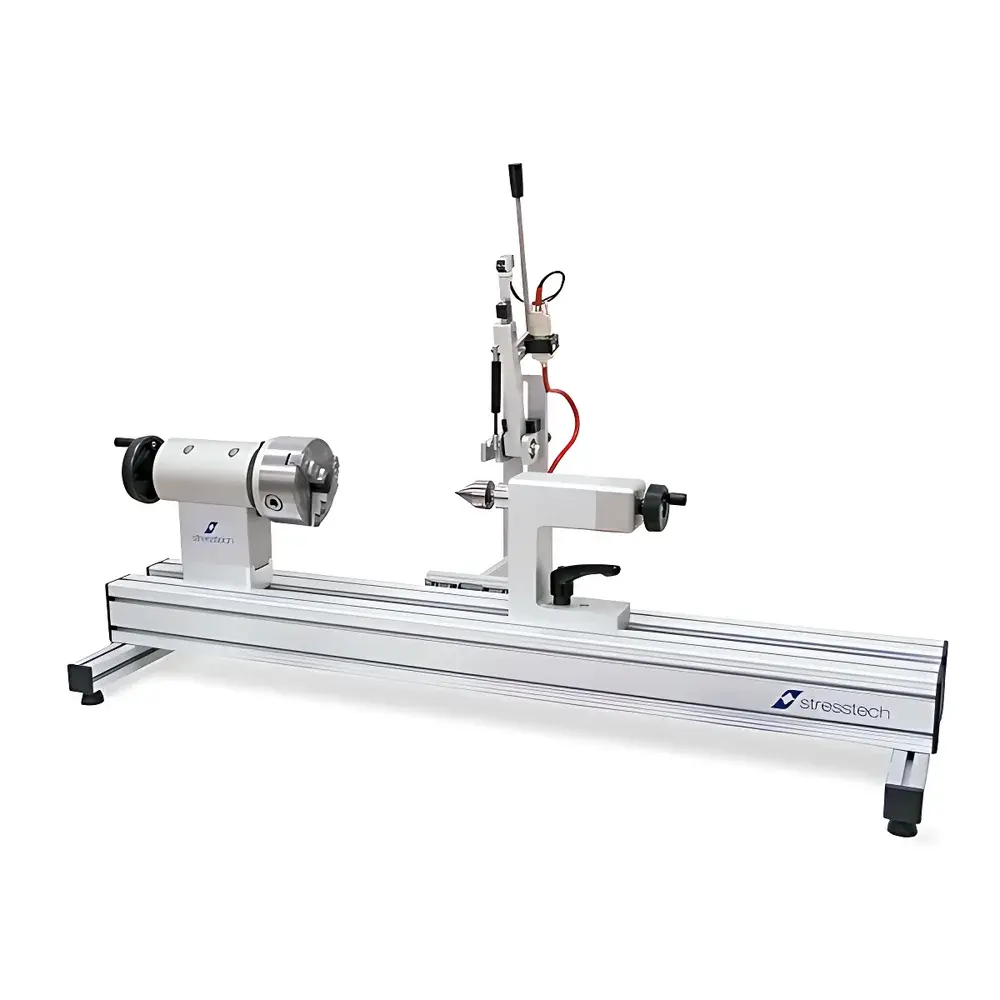
The Camscan is validated for use on cylindrical, lobed, and asymmetrical camshaft profiles with diameters from 30 mm to 200 mm and lobe radii down to 3 mm. Probe interchangeability supports flat, curved, and contoured surfaces via standardized spring-loaded sensor heads (e.g., S-type, C-type, and custom contour-matched variants). All measurement protocols align with industry-accepted standards for MBN-based burn detection, including ASTM E3022 (Standard Practice for Nondestructive Evaluation of Surface Integrity of Ground Components Using Magnetic Barkhausen Noise), ISO 20022-1 (Non-destructive testing — Magnetic particle testing — Part 1: General principles), and Volkswagen PV 2050 / GM W3173 specifications for powertrain component acceptance. Full traceability is maintained through embedded calibration certificate logging and GLP-compliant audit trails.
Software & Data Management
The Camscan operates with Stresstech’s proprietary WinView software suite, providing intuitive waveform acquisition, spectral mapping, statistical process control (SPC) charting, and automated report generation (PDF/CSV). Data files include raw time-domain signals, RMS amplitude envelopes, frequency-domain FFT spectra, and positional metadata when synchronized with external encoders. Software enforces 21 CFR Part 11 compliance through electronic signatures, role-based access control, and immutable audit logs—including user actions, parameter changes, and calibration events. Exported datasets integrate natively with enterprise MES/QMS platforms (e.g., Siemens Opcenter, ETQ Reliance) via OPC UA or RESTful API interfaces.
Applications
- Final inspection of ground camshafts prior to engine assembly to prevent premature cam lobe failure due to subsurface microcracking.
- In-process monitoring during CNC grinding cycles to dynamically adjust wheel dressing intervals, coolant flow, or feed rates based on real-time MBN trend analysis.
- Root cause analysis of batch failures linked to thermal overload—correlating MBN signatures with metallurgical cross-sections and hardness profiles.
- Verification of heat treatment consistency across batches of induction-hardened or carburized components such as crankshafts, gears, and bearing races.
- Supplier qualification audits where objective, quantitative evidence of surface integrity is required per OEM technical specifications (e.g., Ford WSS-M2P143-A, BMW GS 95024).
FAQ
What materials can the Camscan inspect?
The system is optimized for ferromagnetic, case-hardened steels commonly used in powertrain applications. It is not suitable for austenitic stainless steels, aluminum alloys, titanium, or non-magnetic coatings.
Does the Camscan require surface preparation before testing?
No chemical cleaning or abrasive finishing is needed. Light oil films or residual coolant are acceptable; however, thick rust, paint, or phosphate coatings must be removed to ensure reliable magnetic coupling.
How is measurement repeatability ensured across operators and shifts?
WinView supports standardized probe placement templates, automatic zero-point compensation, and reference-sample normalization routines—reducing inter-operator variability to < ±3% RMS amplitude deviation under controlled environmental conditions.
Is the Camscan certified for use in regulated industries?
Yes—the instrument design, firmware, and software comply with IEC 61326-1 (EMC for industrial environments) and IEC 61010-1 (safety requirements for electrical equipment). Calibration certificates are issued per ISO/IEC 17025-accredited procedures.
Can historical data be archived and retrieved for long-term trend analysis?
All measurement sessions are stored with timestamp, operator ID, part serial number, and environmental metadata. Database backups support SQL Server or SQLite formats, enabling longitudinal SPC modeling over multi-year production campaigns.




