
Stresstech Oy Camscan Surface Integrity Analyzer for Camshaft Grinding Burn Detection
| Key | Brand: Stresstech Oy |
|---|---|
| Origin | Finland |
| Model | Camscan |
| Power Supply | 90–260 VAC, 49–61 Hz, single-phase |
| Max Inrush Current (cold start) | 40 A @ 115 VAC / 80 A @ 230 VAC |
| Max Power Consumption (battery charging) | 150 VA |
| Typical Operating Power | 100 VA |
| Magnetization Frequency Range | 1.0–1000 Hz |
| Magnetization Voltage | 0–16 V |
| Analysis Filter Bands | 10–70 kHz, 70–200 kHz, 200–450 kHz |
| Channel Configuration | Single-channel (standard), optional multi-channel upgrade |
| Compliance | CE, RoHS, EN 61326-1 (EMC for industrial environments) |
Overview
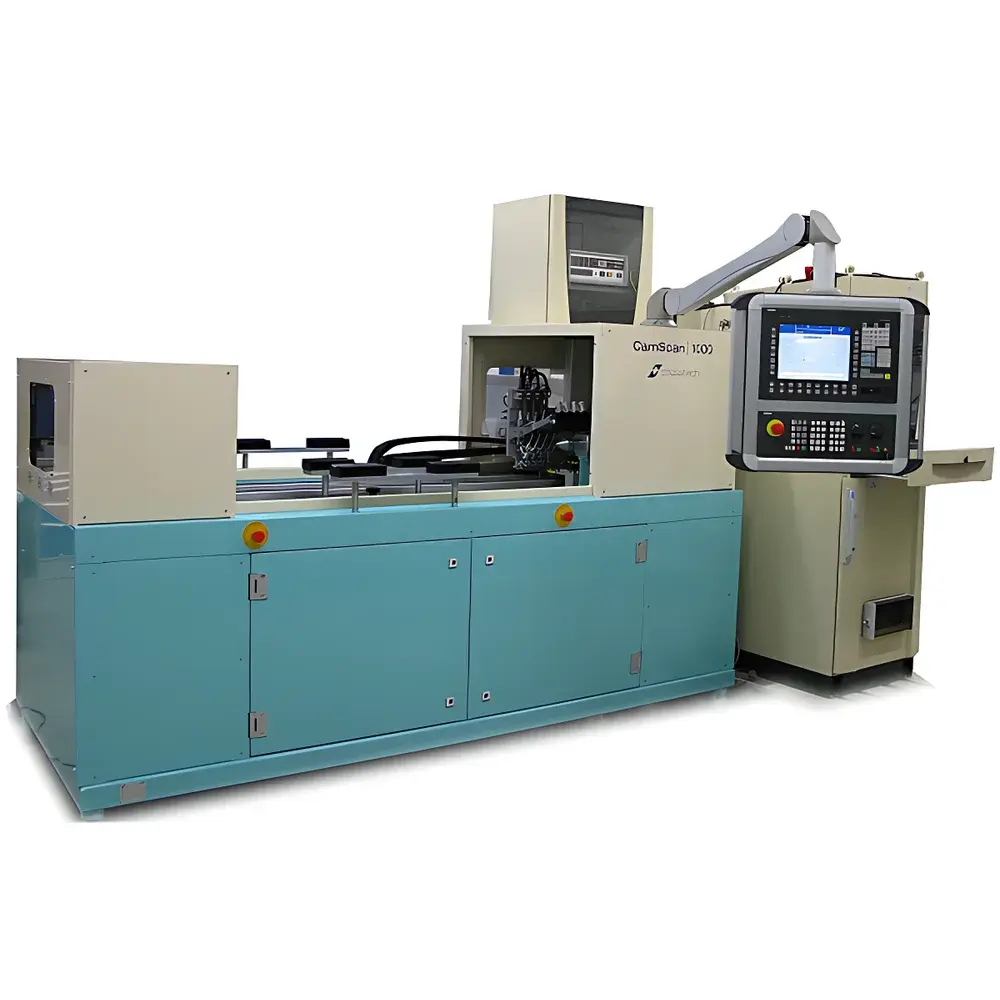
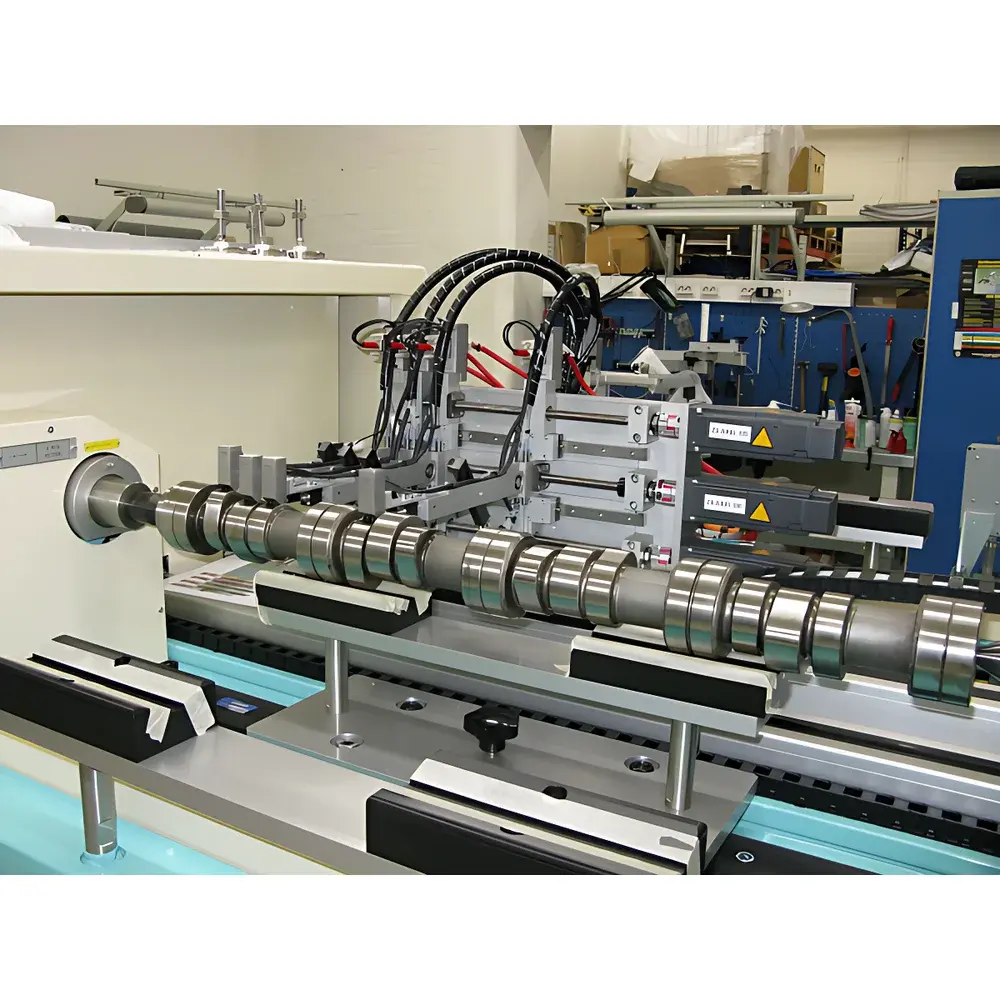
The Stresstech Oy Camscan Surface Integrity Analyzer is a dedicated electromagnetic non-destructive testing (NDT) instrument engineered for the reliable detection of grinding-induced thermal damage—commonly referred to as “grinding burn”—on case-hardened steel components such as camshafts, crankshafts, gears, and bearing races. Unlike conventional metallographic or acid-etch inspection methods, the Camscan employs the magnetic Barkhausen noise (MBN) principle: it applies a controlled alternating magnetic field to the surface and measures the stochastic voltage pulses generated by irreversible domain wall movements in stressed or thermally altered microstructures. This physical phenomenon exhibits high sensitivity to subsurface microstructural changes—including residual stress gradients, martensite decomposition, and tempering-induced softening—making it uniquely suited for verifying post-grinding integrity without material removal or chemical exposure.
Key Features
- Non-contact, non-destructive evaluation: eliminates need for destructive etching, sectioning, or surface preparation.
- Real-time, on-line or off-line inspection capability: supports integration into production lines or lab-based quality audits.
- Multi-band spectral analysis: three configurable filter ranges (10–70 kHz, 70–200 kHz, 200–450 kHz) enable differentiation between shallow surface burns and deeper heat-affected zones.
- Adjustable magnetization parameters: precise control over frequency (1.0–1000 Hz) and peak voltage (0–16 V) ensures optimal excitation across diverse part geometries and material conditions.
- Single-channel architecture with scalable multi-channel expansion: maintains signal fidelity while allowing parallel inspection of multiple locations or axes.
- Ruggedized industrial design: IP54-rated enclosure, reinforced probe cabling, and thermal management suitable for shop-floor deployment near CNC grinders and heat-treatment lines.
Sample Compatibility & Compliance
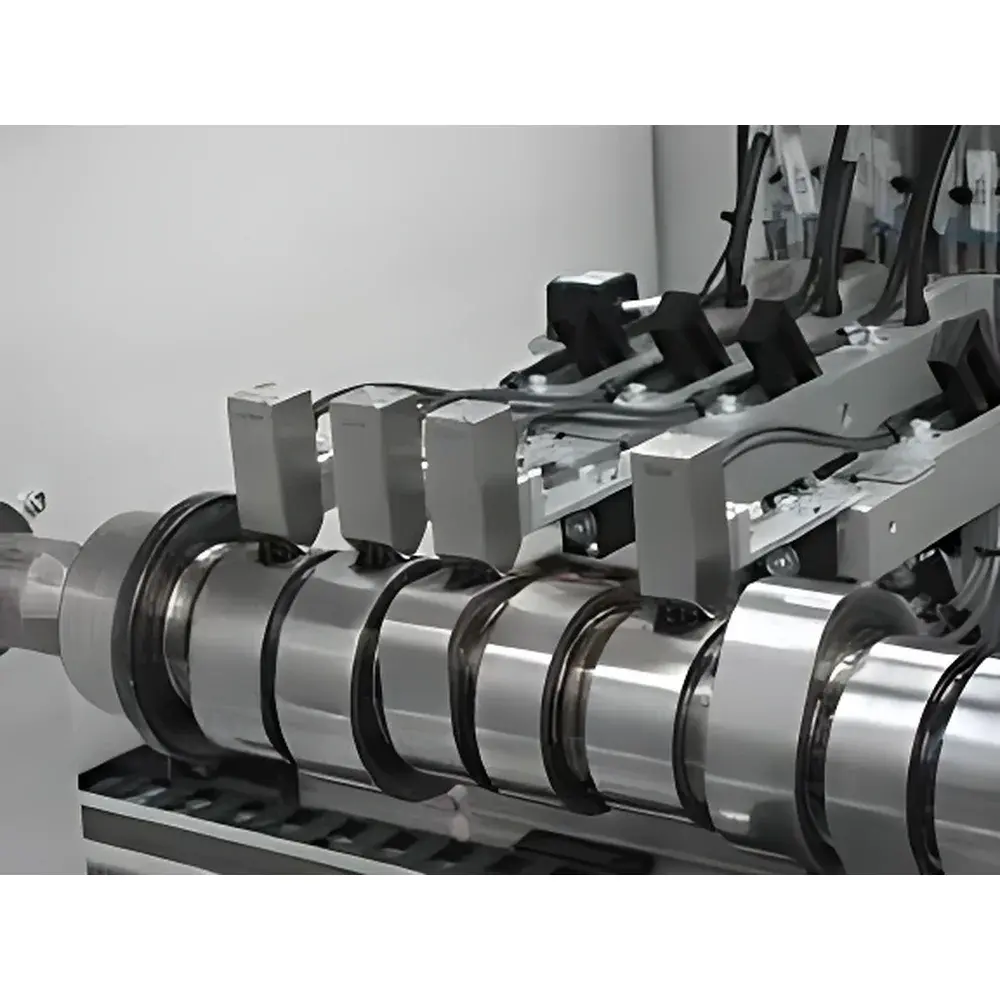
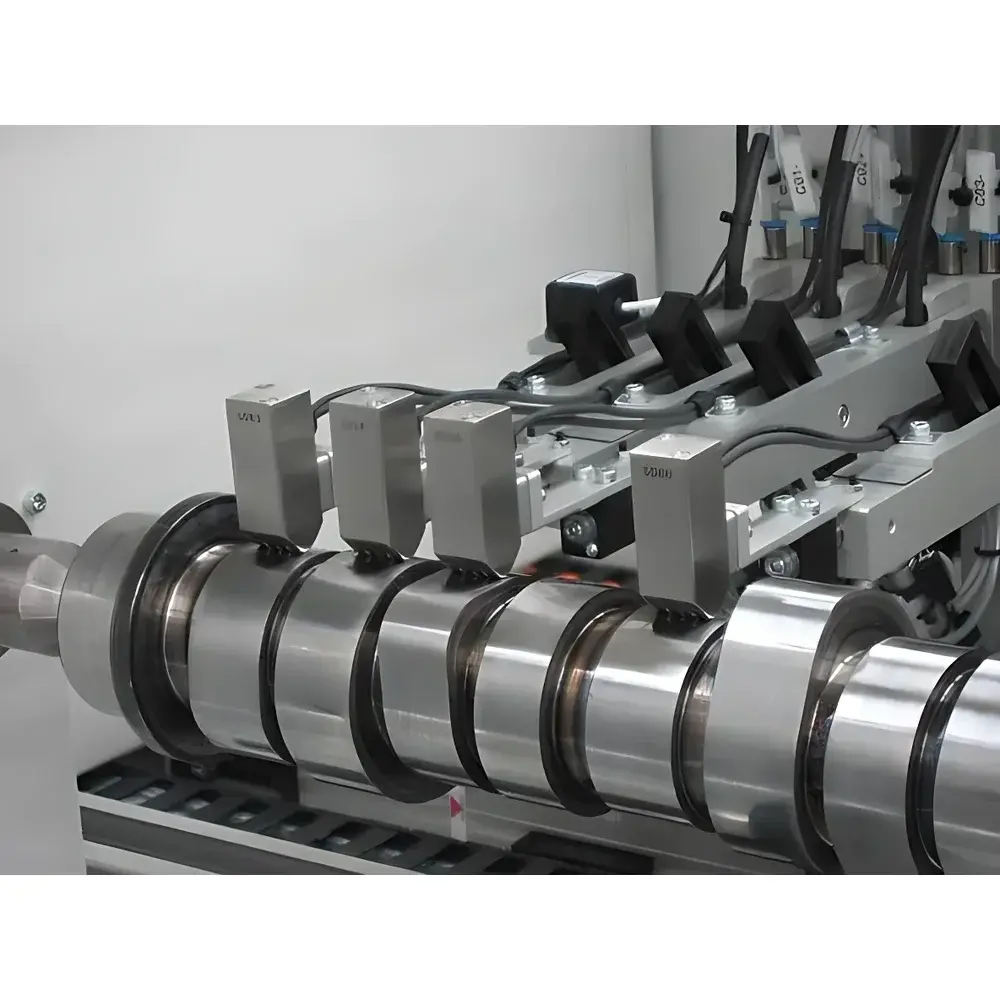
The Camscan is optimized for ferromagnetic, case-hardened steels (e.g., 16MnCr5, 20MnCr5, 100Cr6) with hardness ≥ 55 HRC in the surface layer. Its modular probe system includes flat, curved, and contour-following sensors—enabling consistent coupling on cam lobes, journals, and complex profiles. The analyzer complies with EN 1369 (magnetic particle testing standards), EN ISO 10893-13 (NDT of steel tubes using MBN), and meets electromagnetic compatibility requirements per EN 61326-1 for industrial environments. Data acquisition and reporting support audit-ready traceability under GLP and GMP frameworks, including timestamped measurement logs, operator ID tagging, and configuration version tracking.
Software & Data Management
The Camscan operates with Stresstech’s proprietary WinView software, providing real-time waveform visualization, spectral envelope analysis, and statistical process monitoring (SPC). Measurement data are stored in vendor-neutral CSV and XML formats, compatible with enterprise MES and QMS platforms (e.g., Siemens Opcenter, ETQ Reliance). Software features include user-defined alarm thresholds per channel, pass/fail classification based on reference signatures, and automated report generation compliant with ISO/IEC 17025 documentation requirements. Optional FDA 21 CFR Part 11 compliance package enables electronic signatures, audit trails, and role-based access control for regulated manufacturing environments.
Applications
- Verification of grinding process stability in automotive powertrain component manufacturing.
- Detection of overheating during cylindrical, centerless, or profile grinding operations.
- Post-heat-treatment validation of case depth uniformity and core-to-surface transition integrity.
- Root cause analysis of premature fatigue failure in rotating components.
- Supplier qualification and incoming material inspection per OEM specifications (e.g., Ford WSS-M2P156-A, GM GMW14872).
- Support for AI-driven predictive maintenance models using longitudinal MBN trend data.
FAQ
How does the Camscan distinguish grinding burn from residual stress alone?
It analyzes both amplitude and spectral distribution of Barkhausen noise; burn zones exhibit characteristic shifts toward lower-frequency energy dominance and increased pulse density due to microstructural softening.
Can the Camscan be used on coated or painted parts?
No—non-conductive coatings thicker than ~20 µm attenuate the magnetic field; surface cleaning to bare metal is required prior to measurement.
Is calibration traceable to national standards?
Yes—Stresstech provides NIST-traceable calibration certificates for probe sensitivity and system linearity, updated annually or after repair.
What is the typical measurement repeatability under controlled conditions?
Within ±3% coefficient of variation (CV) for identical locations on homogenous reference samples, per ISO 5725-2 precision guidelines.
Does the system require external cooling or compressed air?
No—passive thermal design and convection cooling eliminate auxiliary utilities, supporting standalone operation in temperature-stable environments (10–40 °C).





