
Stresstech Oy XSTRESS 3000 Portable X-Ray Residual Stress Analyzer
| Brand | Stresstech Oy |
|---|---|
| Origin | Finland |
| Model | XSTRESS 3000 |
| Type | Portable X-ray Diffraction (XRD)-Based Residual Stress Analyzer |
| Measurement Geometry | Modified ψ-tilt (symmetrical side-inclination) |
| Detector | Dual 512-channel solid-state linear imaging detector |
| Standard ψ-angle range | –45° to +45° |
| Optional extended ψ-range | –45° to +60° |
| Φ-rotation | Optional |
| Motion control | Computer-driven high-precision DC servo motors |
| Cooling | Integrated closed-loop water cooling system with heat exchanger and recirculating chiller |
| Radiation safety | Fully compliant with IEC 61010-1, IEC 62471, and EN 61331-1 for industrial X-ray equipment |
| Regulatory status | CE-marked, Class 1 radiation device under EU Directive 2013/59/Euratom |
Overview
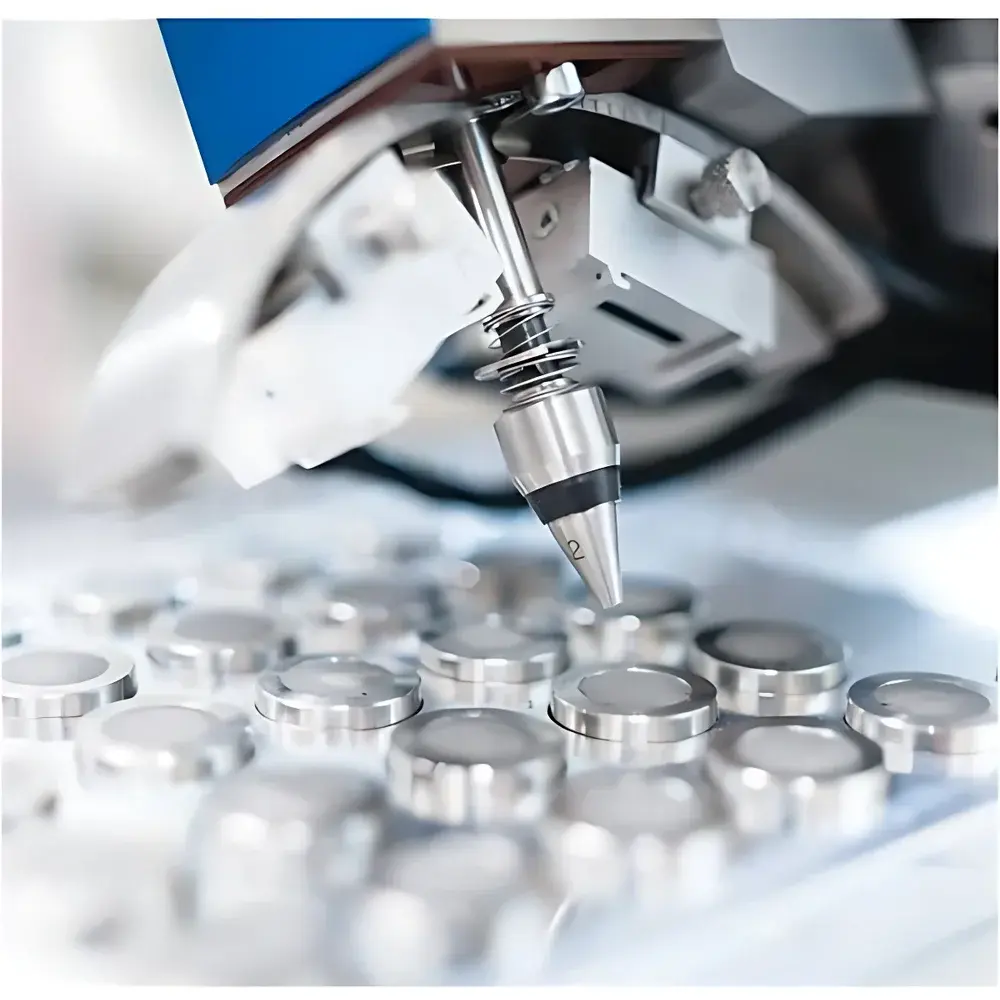
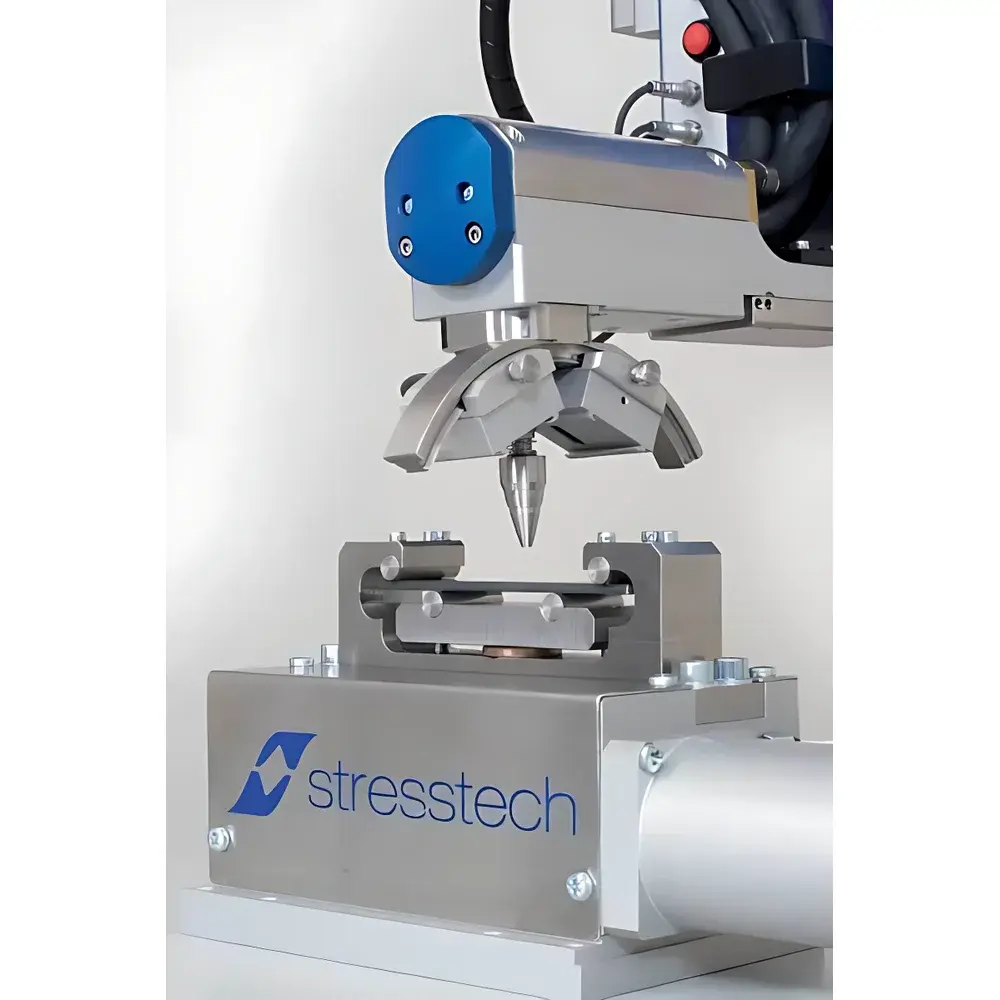
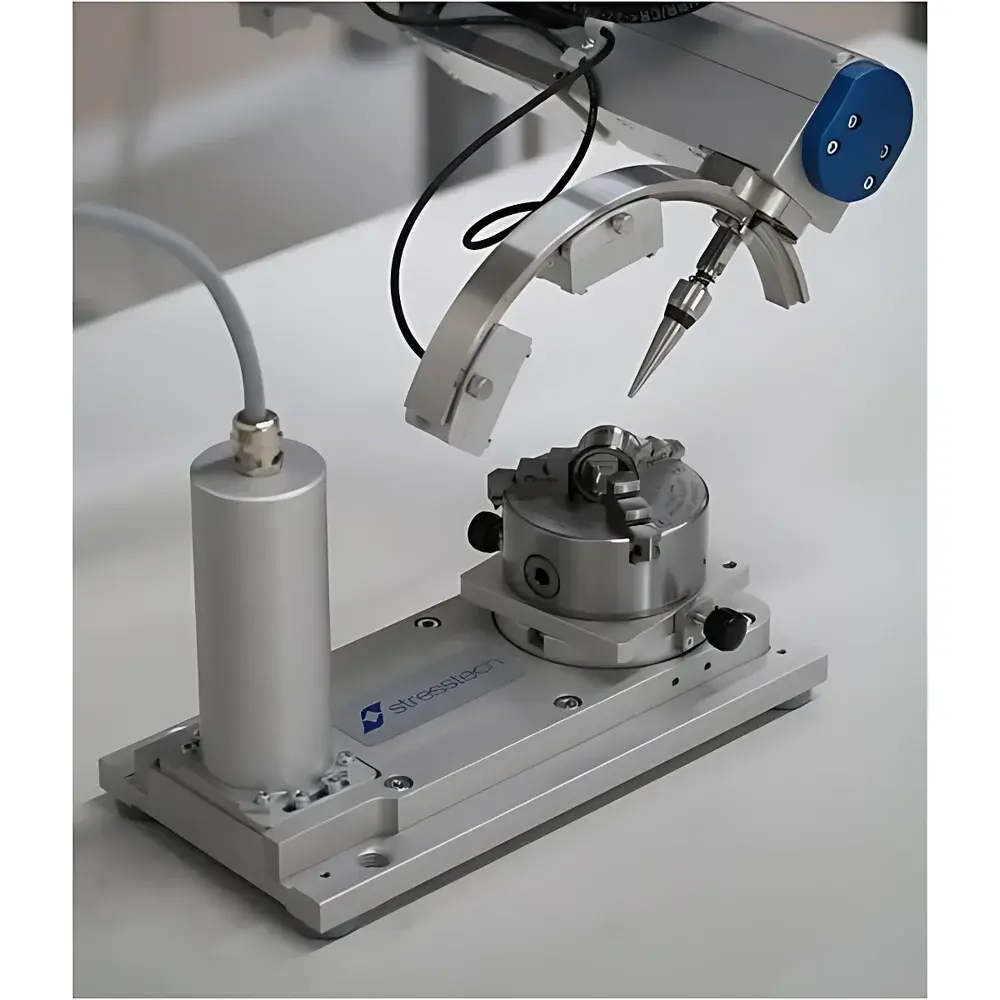
The Stresstech Oy XSTRESS 3000 is a field-deployable, high-precision X-ray diffraction (XRD)-based residual stress analyzer engineered for non-destructive evaluation of macroscopic lattice strain in polycrystalline metallic components. It operates on the fundamental principle of Bragg’s law, measuring angular shifts in the (hkl) diffraction peak position induced by elastic lattice distortion—directly proportional to residual stress via the material-specific X-ray elastic constants (XECs). Unlike laboratory-based XRD systems requiring vacuum chambers or complex sample alignment, the XSTRESS 3000 employs a compact goniometer (G2) with modified ψ-tilt geometry—optimized for surface-normal stress mapping on curved, large-scale, or in-situ industrial parts. Its solid-state linear detector architecture enables direct X-ray photon-to-electrical signal conversion without scintillation loss, delivering superior signal-to-noise ratio and measurement reproducibility (±5–10 MPa typical for steel, depending on grain size and texture). Designed for integration into production QA/QC workflows, it supports rapid point measurements (<60 s per data point) and automated grid mapping across complex geometries including gears, crankshafts, bearing races, pressure vessel welds, and aerospace landing gear.
Key Features
- Compact G2 goniometer with dual 512-channel linear solid-state detectors for simultaneous symmetric detection—eliminating mechanical repositioning delays and enhancing angular resolution.
- Computer-controlled DC servo motor drive system ensuring sub-arcminute positioning accuracy and repeatable ψ-tilt (–45° to +45° standard; extendable to +60°) and optional Φ-rotation for full stress tensor determination.
- Integrated high-stability microfocus X-ray source with water-cooled high-voltage generator (≤50 kV, ≤1 mA), thermally regulated via closed-loop recirculating chiller and heat exchanger—enabling continuous operation without thermal drift.
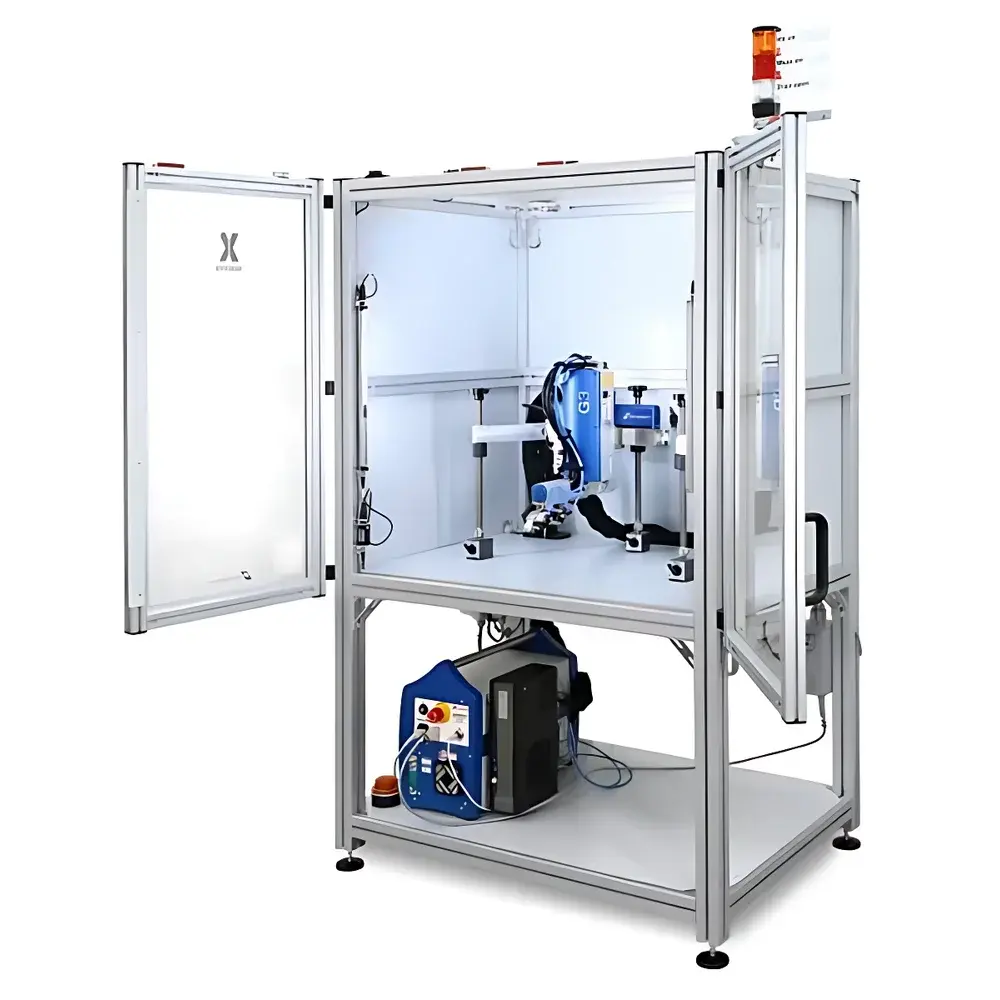
- Modular radiation shielding architecture compliant with EN 61331-1 and IEC 61010-1, featuring redundant safety interlocks, beam shutter control, and real-time dose monitoring—certified as Class 1 radiation equipment per EU 2013/59/Euratom.
- Field-rugged portable enclosure (IP54-rated) with integrated battery option, ergonomic handling frame, and quick-mount fixtures for on-site use in foundries, heat-treatment lines, and maintenance hangars.
Sample Compatibility & Compliance
The XSTRESS 3000 is validated for ferrous and non-ferrous alloys including carbon steels, stainless steels, titanium alloys (e.g., Ti-6Al-4V), nickel-based superalloys (e.g., Inconel 718), and aluminum alloys (e.g., 7075-T6). Surface preparation requirements are minimal: grinding or electropolishing to Ra < 0.8 µm is recommended for optimal diffraction intensity. The system complies with ASTM E915-22 (“Standard Test Method for Verifying the Alignment of X-Ray Diffraction Instrumentation for Residual Stress Measurement”) and ISO 21943:2020 (“Non-destructive testing — X-ray diffraction methods for residual stress analysis”). Data acquisition and reporting support GLP/GMP traceability requirements, including user authentication, electronic signatures, and audit trail logging aligned with FDA 21 CFR Part 11 principles.
Software & Data Management
Stresstech’s proprietary WinXstress software provides full instrument control, real-time diffraction pattern visualization, peak fitting (Pseudo-Voigt profile), stress calculation (sin²ψ method), and tensor decomposition. Raw data (2θ vs. intensity) is stored in vendor-neutral ASCII format; processed results export to CSV, Excel, or XML for integration with MES or SPC platforms. Software includes built-in calibration wizards for detector tilt correction, beam center validation, and XEC database management (pre-loaded with >120 materials per ASTM E915 Annex A1). All measurement sessions generate timestamped metadata logs—including operator ID, environmental temperature/humidity, collimator ID, and exposure parameters—for regulatory documentation.
Applications
- Verification of stress relief efficacy after welding, shot peening, roller burnishing, or induction hardening.
- Root cause analysis of premature fatigue failure in rotating components (e.g., camshafts, turbine blades).
- In-process monitoring of thermal distortion during heat treatment cycles (quenching, tempering, carburizing).
- Qualification of surface integrity in additive-manufactured metal parts post-HIP or machining.
- Residual stress profiling across weld fusion zones and heat-affected zones (HAZ) per AWS D1.1 and ASME BPVC Section VIII requirements.
- Correlation studies between residual stress state and corrosion cracking susceptibility (e.g., SCC in austenitic stainless steels).
FAQ
What crystallographic planes does the XSTRESS 3000 typically measure for common engineering alloys?
It commonly uses Fe {211} (for ferritic steels), Cr {220} (for stainless steels), Ti {310} (for titanium alloys), and Al {311} (for aluminum alloys)—selected based on diffraction intensity, peak separation, and minimal preferred orientation effects.
Can the system perform through-thickness stress profiling?
No—the XSTRESS 3000 is a surface-sensitive technique (penetration depth ~10–30 µm for Cu-Kα on steel); subsurface profiling requires electrolytic layer removal or incremental milling combined with repeated XRD measurement.
Is operator radiation safety training required?
Yes—users must complete certified radiation safety training per national regulations (e.g., NRC or equivalent); the system includes dose rate indicators and automatic beam shutdown but does not eliminate regulatory compliance obligations.
Does the system support automated grid scanning on curved surfaces?
Yes—via optional motorized XYZ stages and CAD-guided path planning using imported STEP/IGES models, enabling contour-following stress mapping on cylindrical or spherical geometries.
How is calibration traceability maintained?
Annual calibration is performed using NIST-traceable reference samples (e.g., stress-free silicon powder or certified stressed steel standards); calibration certificates include uncertainty budgets per ISO/IEC 17025 requirements.



