
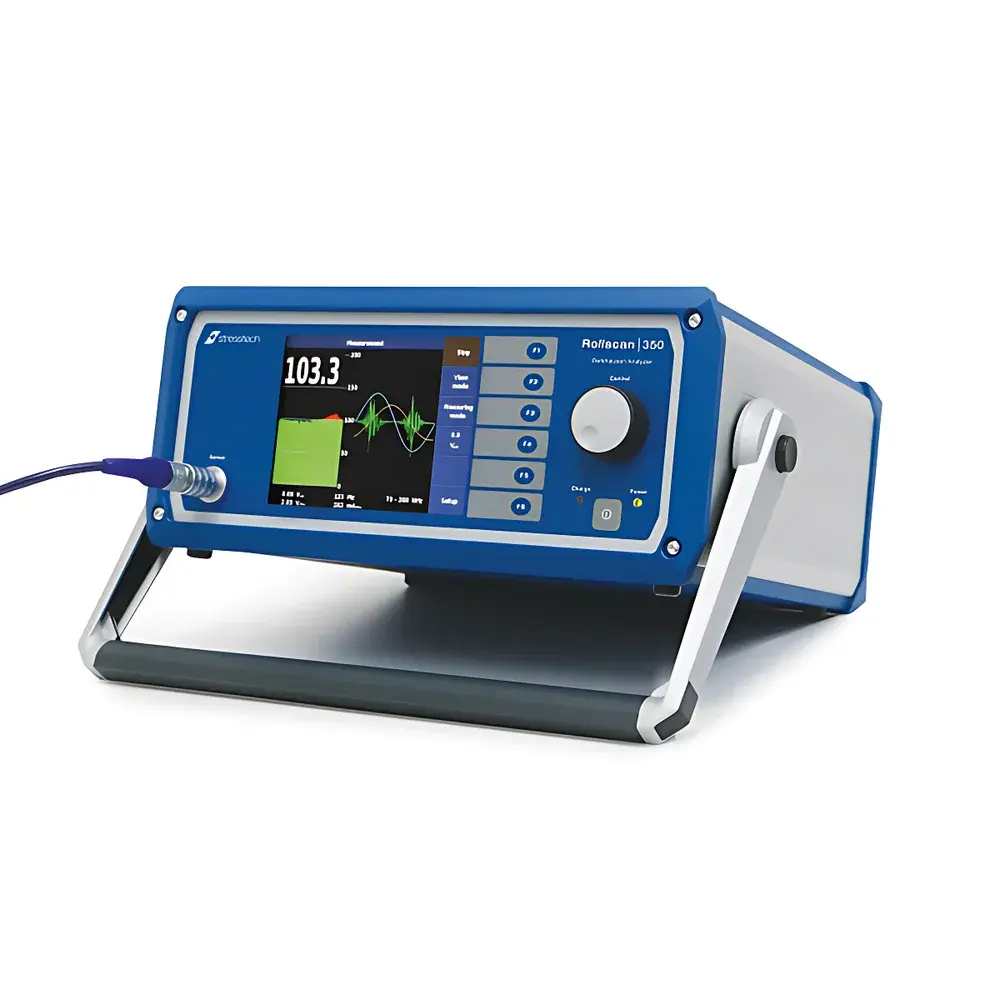
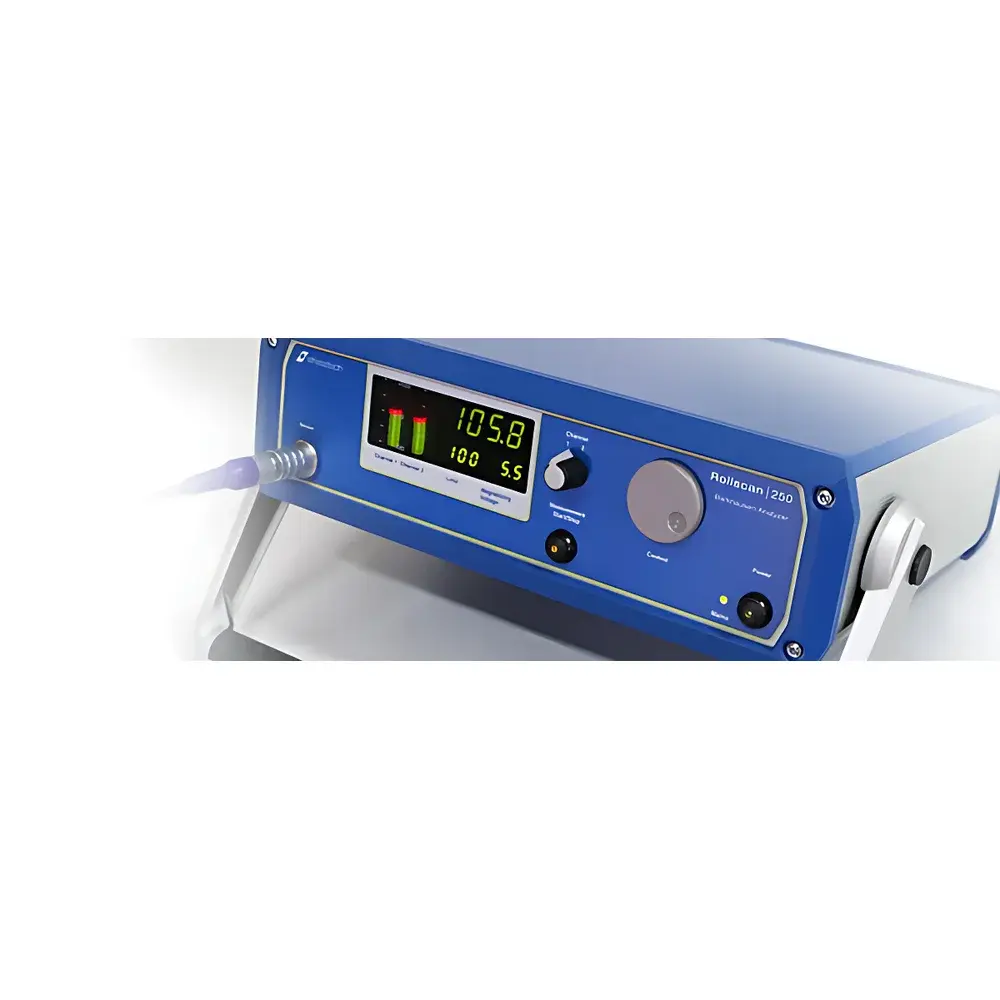
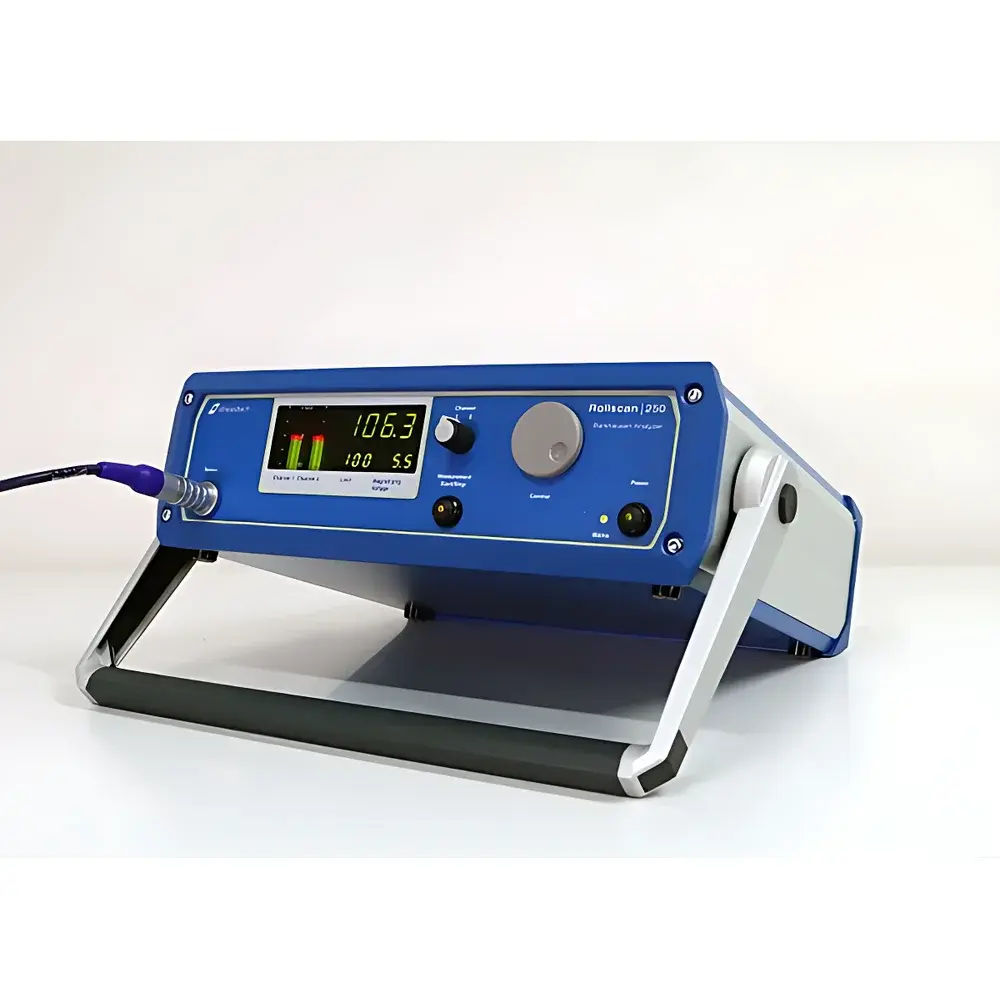
Stresstech Rollscan 250 Gear Grinding Burn Detection System
| Brand | Stresstech Oy |
|---|---|
| Country of Origin | Finland |
| Model | Rollscan 250 |
| Detection Principle | Barkhausen Noise Analysis (BNA) |
| Channel Configuration | Single- or Multi-Channel |
| Software Platform | EasyGear v4.x |
| Compliance | ISO 28178, ASTM E3169, EN 10327 (applicable to surface integrity assessment), CE, RoHS |
| Operating Environment | Lab, QC Floor, and Production Line (IP54-rated portable unit) |
Overview
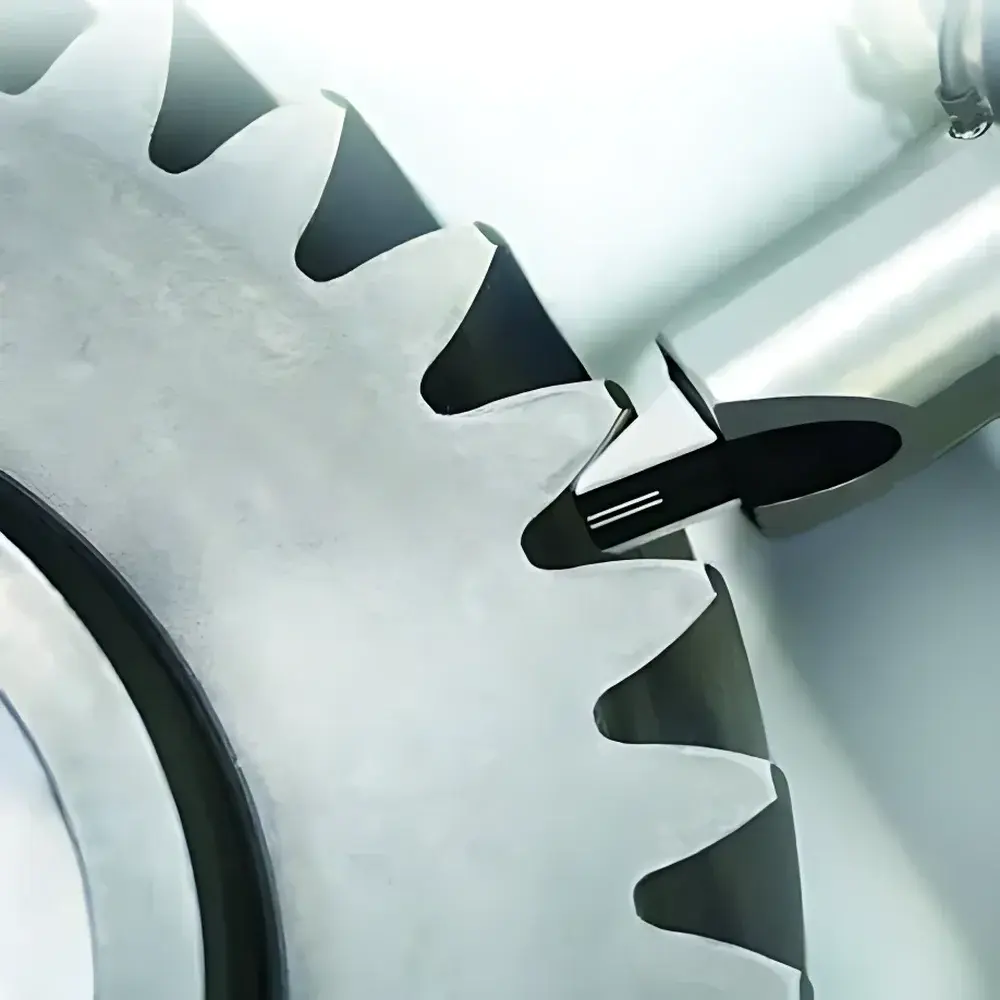
The Stresstech Rollscan 250 Gear Grinding Burn Detection System is a precision-engineered, non-destructive testing (NDT) instrument designed specifically for the quantitative assessment of grinding-induced surface damage in case-hardened gears and other ferromagnetic components. It operates on the physical principle of Barkhausen Noise Analysis (BNA), which detects irreversible magnetic domain wall movements triggered by microstructural alterations—such as untempered martensite, residual tensile stress gradients, and microcracking—that occur during aggressive grinding or inadequate coolant application. Unlike destructive acid etching or time-consuming metallography, the Rollscan 250 delivers repeatable, objective pass/fail classification or graded burn severity evaluation within seconds per measurement point—enabling real-time quality gate enforcement at final inspection or in-process monitoring.
Key Features
- Proprietary high-sensitivity BNA probe architecture with interchangeable sensor heads (e.g., flat, curved, gear-tooth-specific, and miniature contour probes) for optimal coupling on complex geometries including spur, helical, bevel, and worm gears.
- Real-time signal processing engine supporting both amplitude-based and frequency-domain spectral analysis (FFT-based feature extraction) to distinguish between mild thermal softening and severe grinding burn.
- Configurable multi-channel acquisition (up to 4 channels standard, expandable) for simultaneous multi-point scanning or differential comparison across tooth flanks, root fillets, and pitch lines.
- Integrated hardware control panel featuring dedicated function keys: lamp test, emergency stop, measurement abort, system reset, power toggle, and door-open indicator—designed for robust operation in industrial environments.
- Tool-free sensor hot-swapping via standardized LEMO connectors; no recalibration required after probe replacement, ensuring operational continuity during high-volume production shifts.
- Embedded calibration verification routine compliant with ISO/IEC 17025 traceability requirements, supporting periodic performance validation without external reference standards.
Sample Compatibility & Compliance
The Rollscan 250 is validated for use on case-hardened steels (e.g., 18CrNiMo7-6, 20MnCr5, AISI 8620) with typical case depths from 0.3 mm to 2.5 mm and surface hardness ranging from 58–67 HRC. It accommodates gear modules from 0.5 to 12, pressure angles up to 30°, and tooth counts ≥12. All measurements adhere to the technical framework outlined in ASTM E3169 (“Standard Practice for Nondestructive Evaluation of Surface Integrity of Ground Ferromagnetic Components Using Magnetic Barkhausen Emission”) and align with the surface integrity assessment criteria referenced in ISO 28178 (“Non-destructive testing — Residual stress measurement — Electromagnetic methods”). The system meets CE marking requirements under the EU Machinery Directive 2006/42/EC and EMC Directive 2014/30/EU, and conforms to RoHS 2011/65/EU restrictions on hazardous substances.
Software & Data Management
Controlled exclusively via the Stresstech EasyGear software platform (v4.3+), the Rollscan 250 supports fully programmable measurement sequences—including automated positioning via optional encoder-integrated fixtures or robotic interfaces. Measurement data are timestamped, geotagged with probe location metadata, and stored in encrypted .sgd binary format compliant with FDA 21 CFR Part 11 requirements for electronic records and signatures. Audit trails log all user actions, parameter changes, and calibration events. Export options include CSV, XML, and PDF reports with embedded spectral plots, statistical summaries (mean, std dev, Cp/Cpk), and customizable pass/fail overlays aligned with internal process capability limits or customer-specific acceptance criteria (e.g., OEM Tier-1 automotive specifications).
Applications
- Final inspection of transmission gears, differential pinions, and steering rack components in automotive and aerospace supply chains.
- In-line verification post-grinding to prevent downstream fatigue failures caused by subsurface white-layer formation.
- Process validation and optimization of grinding parameters (wheel speed, feed rate, coolant flow) through correlation of BNA signatures with residual stress profiles measured by complementary X-ray diffraction (XRD) systems.
- Root cause analysis of field returns involving premature pitting, spalling, or scuffing—by correlating localized burn zones with contact stress maps.
- Qualification of new heat-treatment batches where microstructural consistency must be verified prior to machining.
FAQ
Does the Rollscan 250 require surface preparation before measurement?
No—measurements are performed directly on finished, cleaned surfaces; no polishing, etching, or coating removal is necessary.
Can it detect subsurface burn beyond the hardened case layer?
No—the BNA signal originates primarily from the near-surface region (typically ≤ 100 µm depth); deeper defects require complementary ultrasonic or eddy current methods.
Is operator certification required to operate the system?
Yes—Stresstech provides Level 2 NDT training per ISO 9712, and system deployment includes documented procedure qualification per customer’s internal QA protocols.
How often does the system require recalibration?
Annual verification against certified reference specimens is recommended; daily functional checks using the built-in lamp test and noise floor validation ensure ongoing measurement reliability.
Is remote support available for troubleshooting?
Yes—Stresstech offers secure remote desktop access via TLS-encrypted connection for firmware updates, diagnostic logging, and real-time engineering consultation.





