
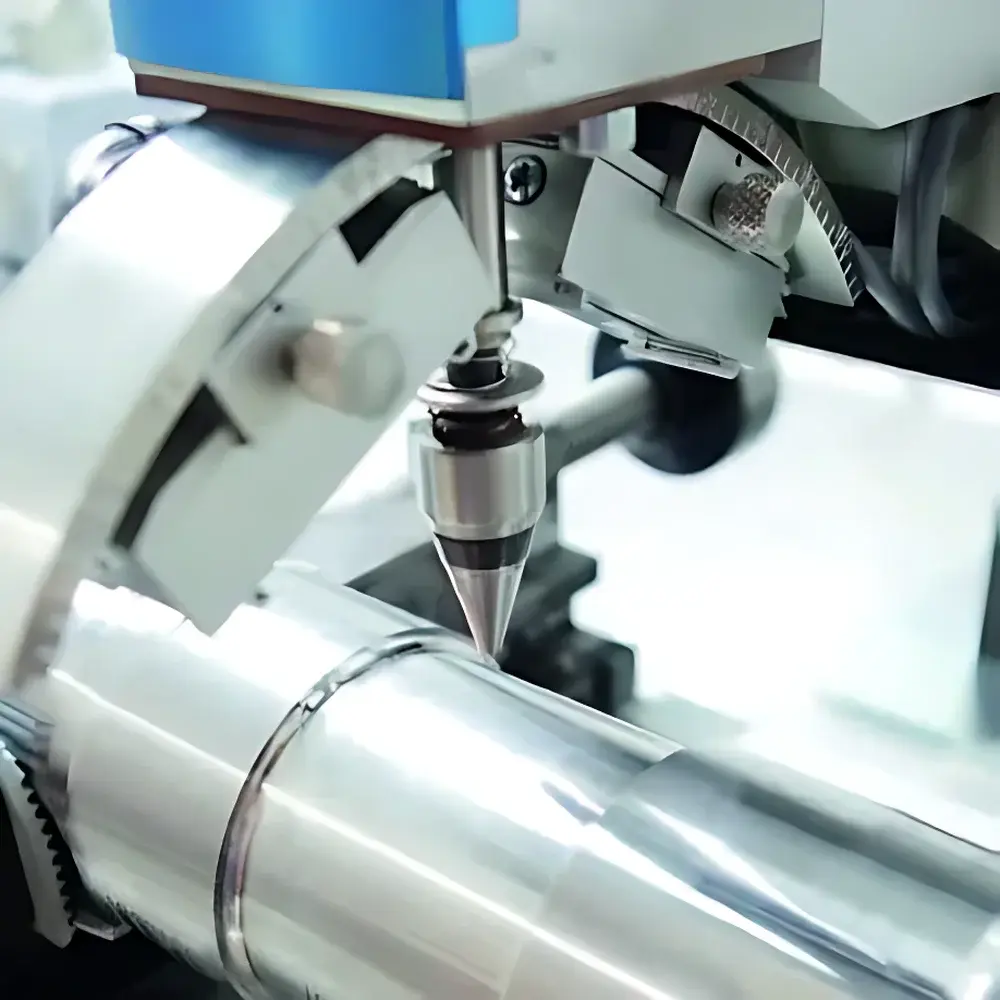
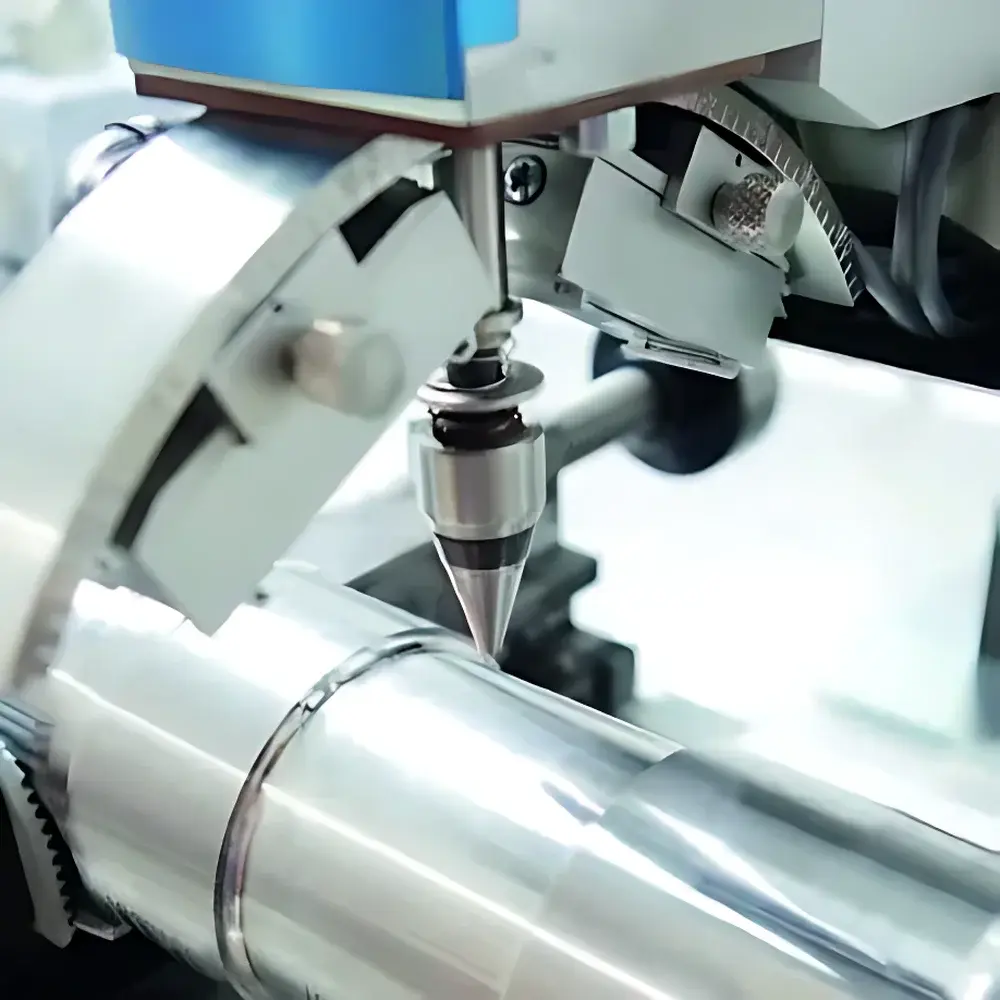
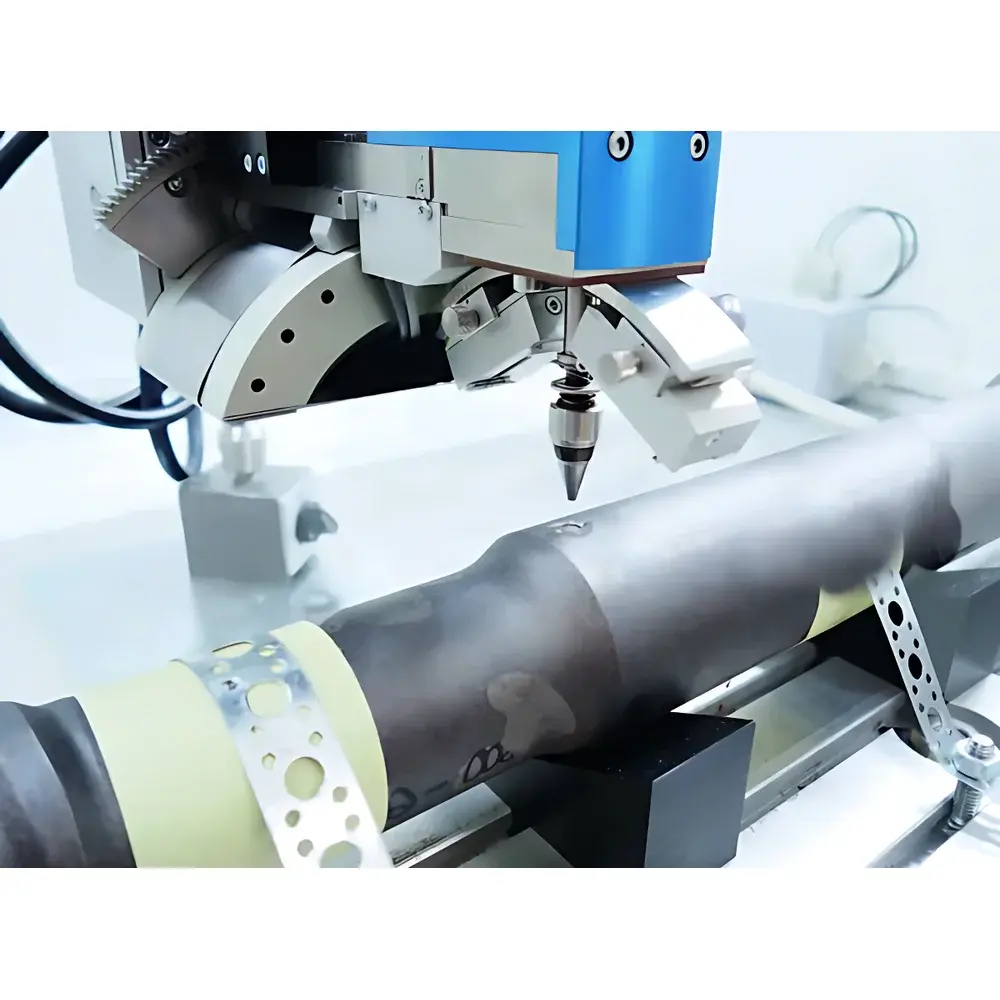
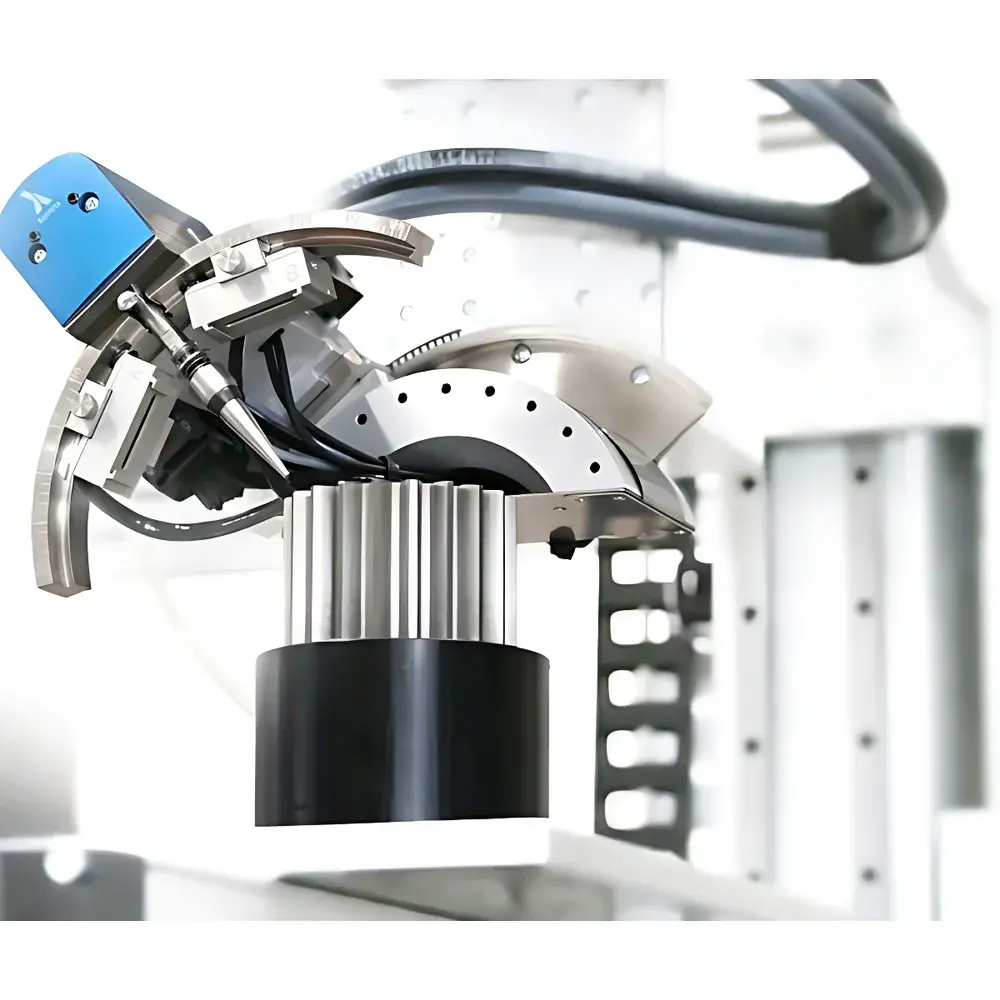
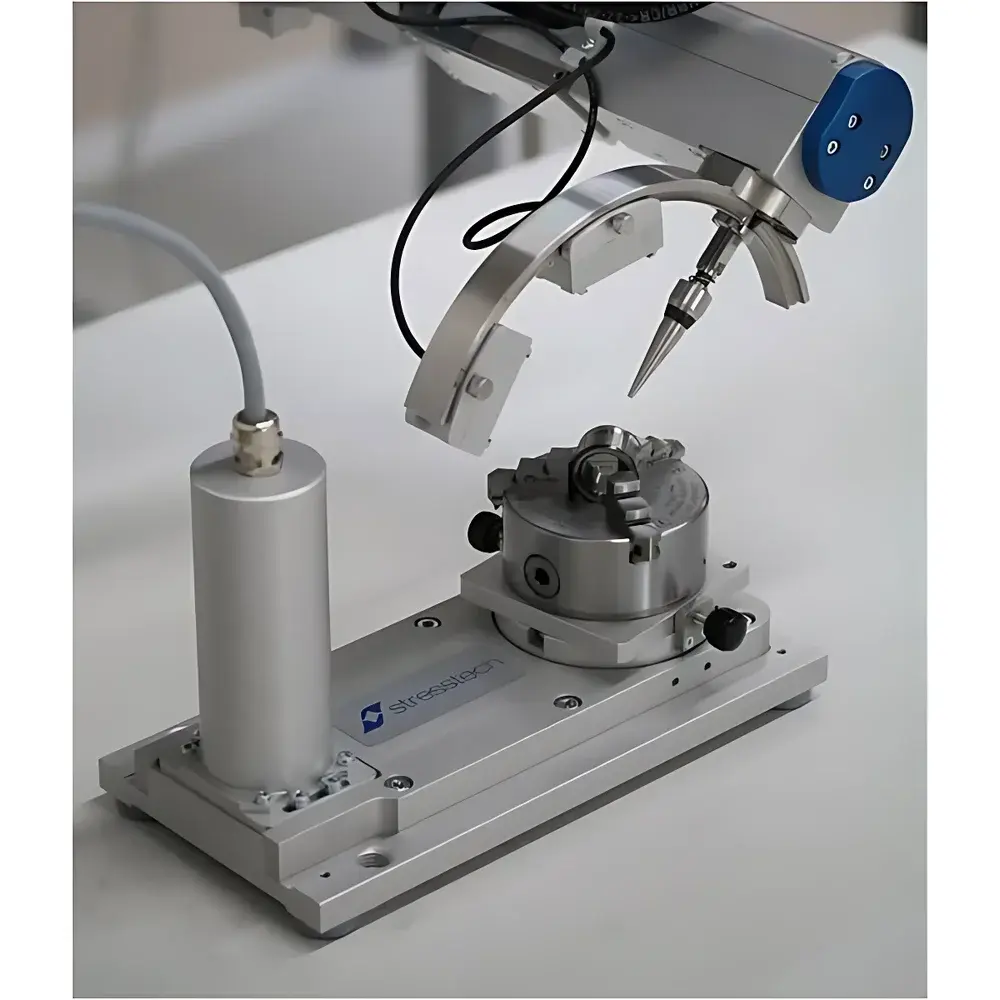
Stresstech XStress 3000 Portable X-Ray Residual Stress Analyzer
| Brand | Stresstech Oy |
|---|---|
| Origin | Finland |
| Model | XStress 3000 |
| Type | Portable X-ray Diffraction (XRD)-Based Residual Stress Analyzer |
| Compliance | ISO 21940, ASTM E915, EN 15305, GD&T-aligned measurement methodology |
| Detector | High-resolution 2D imaging plate or CCD-based detector (configurable) |
| X-ray Source | Cr-Kα or Co-Kα microfocus tube (field-replaceable) |
| Measurement Geometry | Sin²ψ method with automated ψ-tilt stage (±45° range) |
| Data Acquisition | Real-time diffraction pattern capture with peak fitting (Pseudo-Voigt profile), full-pattern Rietveld-assisted analysis optional |
| Software Platform | Stresstech WinXstress v6.x with audit trail, user access levels, and 21 CFR Part 11–compliant electronic signature support |
Overview
The Stresstech XStress 3000 is a portable, laboratory-grade X-ray diffraction (XRD) instrument engineered for non-destructive, quantitative determination of residual stress in polycrystalline metallic components. It operates on the fundamental principle of lattice strain measurement via angular shift (Δ2θ) of Bragg diffraction peaks under controlled sin²ψ tilting geometry — a method standardized in ASTM E915, ISO 21940, and EN 15305. Unlike destructive techniques such as hole-drilling or layer removal, the XStress 3000 delivers surface and near-surface stress data (typically 5–30 µm depth, depending on material and radiation) without altering part integrity. Its modular design integrates a microfocus X-ray source (Cr-Kα or Co-Kα), precision motorized goniometer with ±45° ψ-tilt capability, and high-sensitivity 2D detector — all calibrated to NIST-traceable reference standards. The system is optimized for field deployment in production floors, heat-treatment lines, and maintenance workshops, while maintaining metrological rigor required for quality-critical sectors including aerospace, power generation, and nuclear component manufacturing.
Key Features
- Portable, ruggedized chassis with integrated battery operation (up to 4 hours continuous use) and IP54-rated enclosure for shop-floor resilience
- Automated sin²ψ data acquisition with real-time diffraction pattern visualization and on-the-fly peak centroid calculation
- Dual-source compatibility: Swappable Cr-Kα (for Fe, Ni, Co alloys) and Co-Kα (for Ti, Al, Mg alloys) tubes — selected based on optimal diffraction angle separation and absorption characteristics
- Full compliance with ISO/IEC 17025 calibration traceability; factory-certified angular accuracy ±0.01° 2θ, strain resolution < 20 µε
- Motorized sample positioning stage with XYZ translation and rotational alignment aids for complex geometries (e.g., gear teeth, cam lobes, pipe welds)
- Embedded thermal management and beam filtration to minimize Bremsstrahlung background and ensure stable tube output over extended measurements
Sample Compatibility & Compliance
The XStress 3000 accommodates ferrous and non-ferrous engineering alloys including but not limited to AISI 4140, Inconel 718, Ti-6Al-4V, AA7075, and duplex stainless steels. It supports curved, inclined, and recessed surfaces through adjustable incidence angle control and custom collimator sets (0.5 mm to 2.0 mm diameter). All measurement protocols adhere to ASTM E915-22 (Standard Test Method for Verifying the Alignment of X-Ray Diffraction Instrumentation for Residual Stress Measurement) and EN 15305:2022 (Non-destructive testing — Test method for residual stress analysis by X-ray diffraction). The system meets GLP and GMP documentation requirements: raw diffraction images, metadata logs (including tube voltage/current, exposure time, ψ-angle, ambient temperature/humidity), and processed stress tensors are stored with immutable timestamps and operator IDs.
Software & Data Management
WinXstress v6.x provides a validated, multi-user software environment compliant with FDA 21 CFR Part 11. Core capabilities include automated peak search and refinement using pseudo-Voigt profile fitting, stress tensor calculation (σ₁₁, σ₂₂, τ₁₂) with uncertainty propagation per GUM (JCGM 100:2018), and export to CSV, XML, or industry-standard ASME B&PV Code Section XI-compatible formats. Audit trails record every parameter change, report generation, and user login/logout event. Role-based access control supports three tiers: Operator (measurement execution only), Supervisor (report approval), and Administrator (system configuration and calibration management). Raw data archives are encrypted and compatible with enterprise LIMS integration via OPC UA or RESTful API.
Applications
The XStress 3000 serves as a primary metrology tool across high-integrity manufacturing workflows. In aerospace, it verifies stress states in turbine disk rims post-machining and shot-peened landing gear components. Automotive suppliers deploy it for inline monitoring of crankshaft fillet stresses after induction hardening and bearing raceway compressive stress validation. In additive manufacturing, it quantifies build-direction anisotropy and heat-treatment efficacy in Ti-6Al-4V lattice structures. Power plant operators use it for in-service inspection of steam generator tubes and weld overlays in ASME Section III Class 1 components. Research institutions apply it to correlate laser shock peening parameters with subsurface stress gradients in nickel-based superalloys.
FAQ
What crystallographic planes does the XStress 3000 measure?
It measures lattice strain from dominant diffraction reflections — typically (211) for ferritic steels, (311) for austenitic stainless steels, and (111)/(200) for aluminum and titanium alloys — selected based on material-specific structure factor and peak intensity.
Can it measure residual stress at depths beyond the surface?
Yes — by combining variable-energy X-ray excitation (via tube kV adjustment) and selective collimation, effective penetration depth can be tuned between ~5 µm (for high-Z materials with Cr-Kα) and ~25 µm (for low-Z alloys with Co-Kα); electrolytic layer removal may be used for stepwise subsurface profiling.
Is on-site calibration required before each measurement?
No — the system includes internal reference standard (Si powder) for daily verification; full recalibration per ISO 21940 Annex C is recommended every 6 months or after mechanical shock events.
Does it support automated reporting for ISO 9001 quality records?
Yes — WinXstress generates PDF reports with embedded digital signatures, revision-controlled templates, and traceable links to raw diffraction frames and calibration certificates.
How is radiation safety managed during field operation?
The unit incorporates interlocked shuttering, real-time dose rate monitoring (< 1 µSv/h at 5 cm), and complies with IEC 61000-6-4 EMC and IEC 62471 photobiological safety standards; no regulatory licensing is required for typical industrial use in EU/US jurisdictions.






