
Stresstech Xstress 3000 X-Ray Diffraction Residual Stress Analyzer
| Brand | Stresstech Oy |
|---|---|
| Origin | Finland |
| Model | Xstress 3000 |
| Cooling | Air-cooled (no water cooling required) |
| Portability | Hand-carried, field-deployable |
| Measurement Principle | Sin²ψ X-ray diffraction (XRD) |
| Compliance | Designed for ISO 21940, ASTM E915, and EN 15305-compliant residual stress evaluation |
| Data Access | Real-time in-measurement data access via embedded Windows-based controller |
Overview
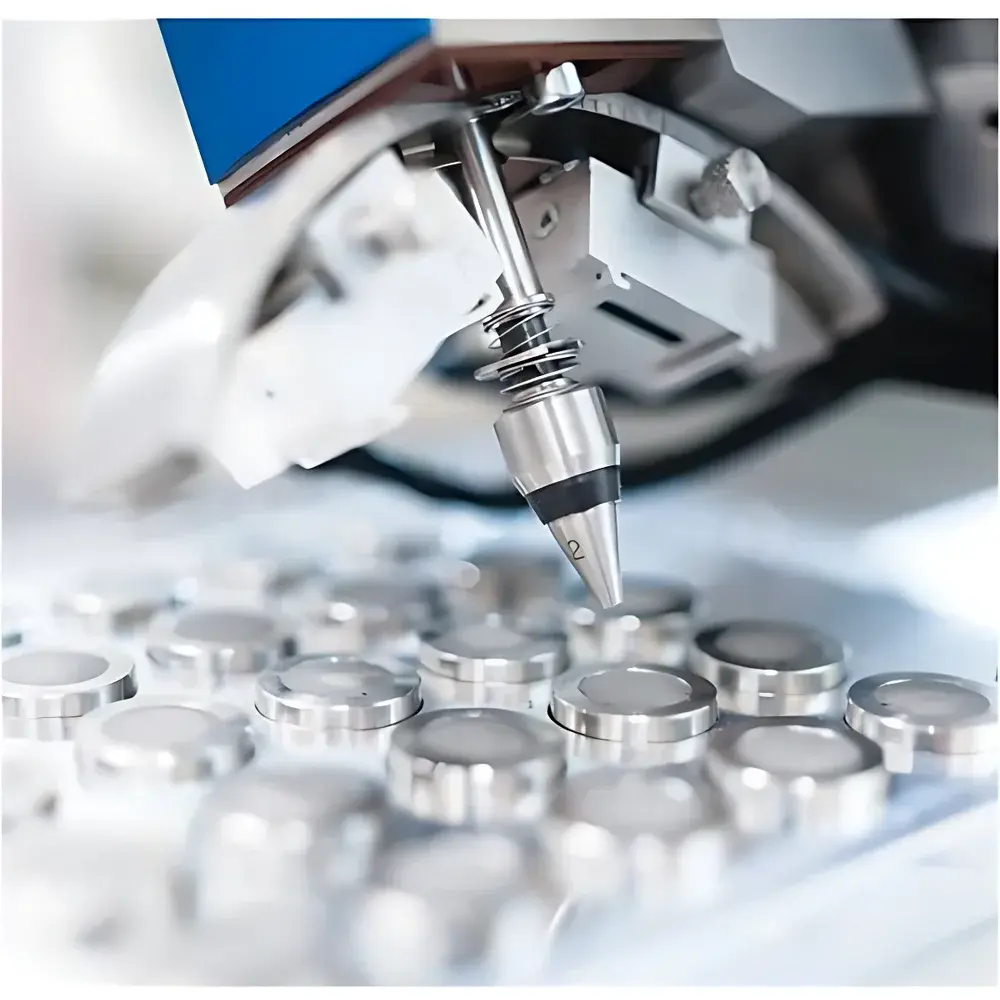
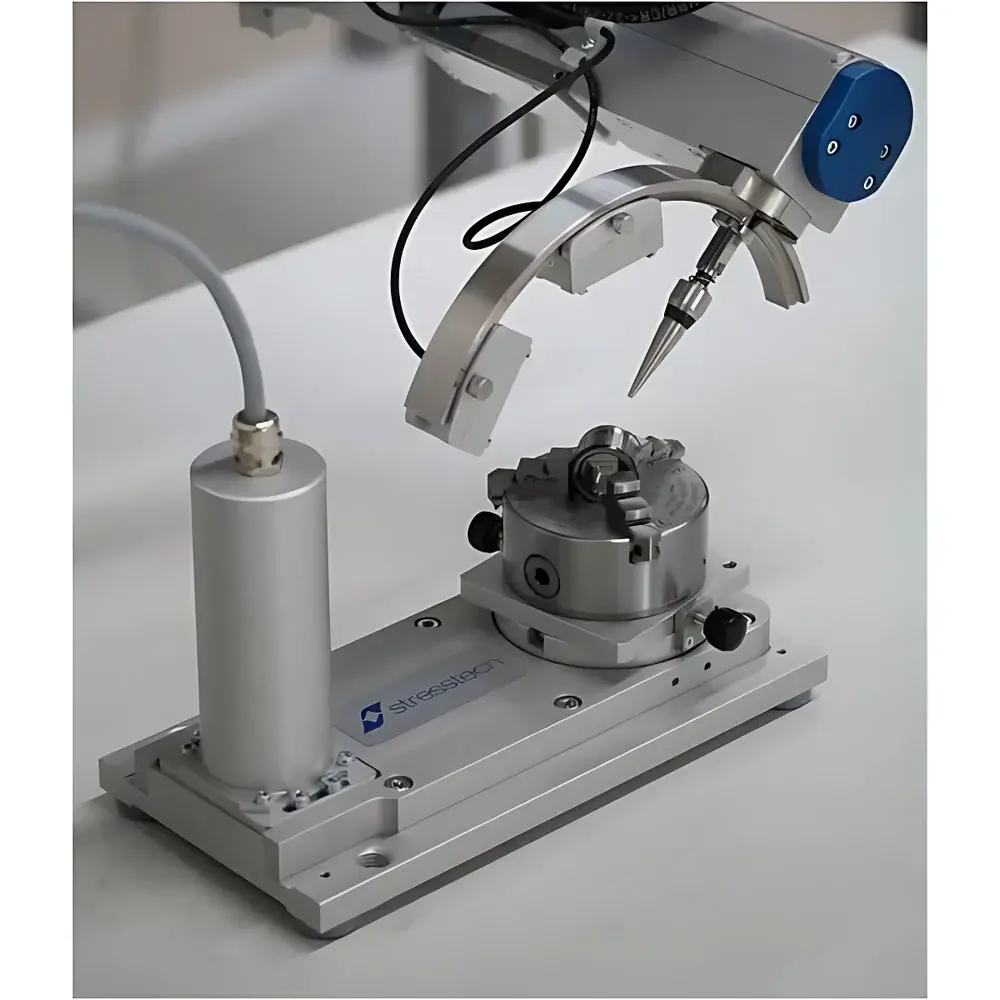
The Stresstech Xstress 3000 is a portable, air-cooled X-ray diffraction (XRD) residual stress analyzer engineered for quantitative, non-destructive determination of macroscopic residual stresses in polycrystalline metallic components. It operates on the well-established sin²ψ method, measuring lattice strain via angular shifts in Bragg diffraction peaks—typically using Cr-Kα or Co-Kα radiation—to calculate stress states according to Hooke’s law and elastic constants of the material. Unlike laboratory-bound diffractometers, the Xstress 3000 integrates a compact goniometer with motorized ψ-tilt and precise θ/2θ alignment, enabling rapid, point-specific stress mapping directly on production floors, maintenance bays, or remote field sites. Its design eliminates dependency on external water cooling, vibration-isolated optical paths, and real-time embedded Windows processing ensure operational robustness under variable ambient conditions—from controlled metrology labs to outdoor industrial environments.
Key Features
- Integrated high-stability X-ray tube (Cr or Co anode) with air-cooled thermal management—no external chiller or plumbing required.
- Motorized sin²ψ goniometer with <0.01° angular reproducibility, enabling precise lattice strain resolution down to ±10 MPa typical uncertainty (material- and geometry-dependent).
- Automatic laser-assisted sample positioning and real-time focus adjustment—compensates for surface curvature and standoff distance variations without manual recalibration.
- Embedded Intel-based controller running Windows OS, supporting direct USB/Ethernet connectivity and full in-session data access—including live diffraction pattern viewing, peak fitting, and stress tensor calculation.
- Lightweight modular architecture (<22 kg total system mass), foldable tripod mount, and ruggedized transport case with shock-absorbing corner brackets for safe transit.
- Self-calibrating optical alignment routine and automated intensity optimization reduce operator dependency and support GLP-aligned measurement protocols.
Sample Compatibility & Compliance
The Xstress 3000 accommodates ferrous and non-ferrous alloys—including steels, titanium, nickel superalloys, aluminum, and cast irons—across a wide range of surface finishes (machined, ground, shot-peened, welded, or thermally treated). Surface preparation may include mechanical grinding or electrolytic polishing (when depth-profiling is required), with standard measurement spot sizes ranging from 1–3 mm diameter. The system complies with international standards governing residual stress measurement: ASTM E915 (Standard Test Method for Verifying the Alignment of X-Ray Diffraction Instrumentation for Residual Stress Measurement), ISO 21940 (Mechanical vibration – Rotor balancing – Vocabulary), and EN 15305 (Non-destructive testing – Test method for residual stress analysis by X-ray diffraction). All measurement sequences generate audit-ready logs including exposure parameters, calibration timestamps, and raw intensity files—supporting FDA 21 CFR Part 11 compliance when deployed in regulated manufacturing environments.
Software & Data Management
Stresstech’s proprietary Xstress software provides a unified interface for instrument control, data acquisition, peak analysis (using pseudo-Voigt or Pearson VII fitting), and stress tensor computation (including σ₁, σ₂, σ₃ and principal direction outputs). Raw .raw and processed .xrdml files are natively exportable for third-party analysis (e.g., MATLAB, CrystalMaker, or Maud). Software supports batch reporting with customizable templates aligned to internal QA documentation or customer-specific formats. All user actions—including parameter changes, calibration events, and file exports—are timestamped and logged with operator ID, satisfying traceability requirements under ISO/IEC 17025 and GMP/GLP frameworks. Remote diagnostics and firmware updates are enabled via secure HTTPS connection without requiring onsite service visits.
Applications
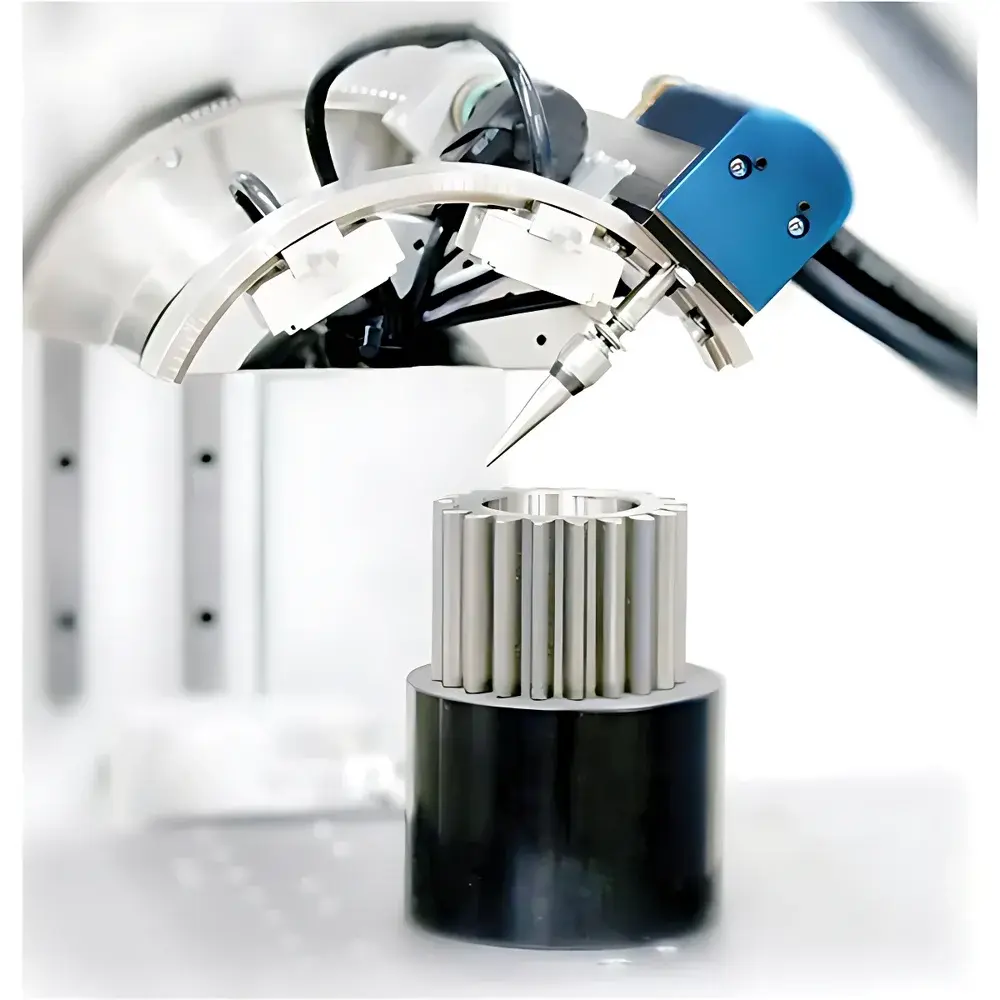
The Xstress 3000 is routinely deployed in aerospace component verification (e.g., turbine disks, landing gear), automotive powertrain quality assurance (crankshafts, camshafts, gear teeth), heavy machinery integrity assessment (rolling mill rolls, pressure vessel welds), and additive manufacturing post-process validation. Its portability enables on-site verification after heat treatment, shot peening, roller burnishing, or welding—critical for detecting stress-induced distortion or premature fatigue initiation. When coupled with electrolytic polishing units, it supports incremental stress-depth profiling up to ~100 µm—providing empirical input for finite element modeling and life prediction algorithms.
FAQ
Is water cooling required for continuous operation?
No—the Xstress 3000 uses forced-air thermal management and is certified for uninterrupted operation up to 8 hours at ambient temperatures ≤35°C.
What safety certifications does the system hold?
It complies with IEC 61000-6-3 (EMC emission limits), IEC 61000-6-2 (immunity), and carries CE marking per EU Directive 2013/35/EU for electromagnetic fields and 2014/30/EU for EMC.
Can measurements be performed on curved or irregular surfaces?
Yes—the auto-focusing laser and dynamic ψ-tilt compensation enable reliable stress quantification on radii as small as 25 mm, provided surface roughness remains below Ra 3.2 µm.
Does the system support residual austenite quantification?
Yes—via integrated phase analysis routines using Rietveld refinement or reference intensity ratio (RIR) methods on multi-peak acquisitions (e.g., γ-Fe vs α-Fe in hardened steels).
What is the typical setup time from unpacking to first measurement?
Under standard conditions, mechanical leveling, laser alignment, and tube warm-up require ≤10 minutes; no external utilities beyond a single 100–240 V AC outlet are needed.




