
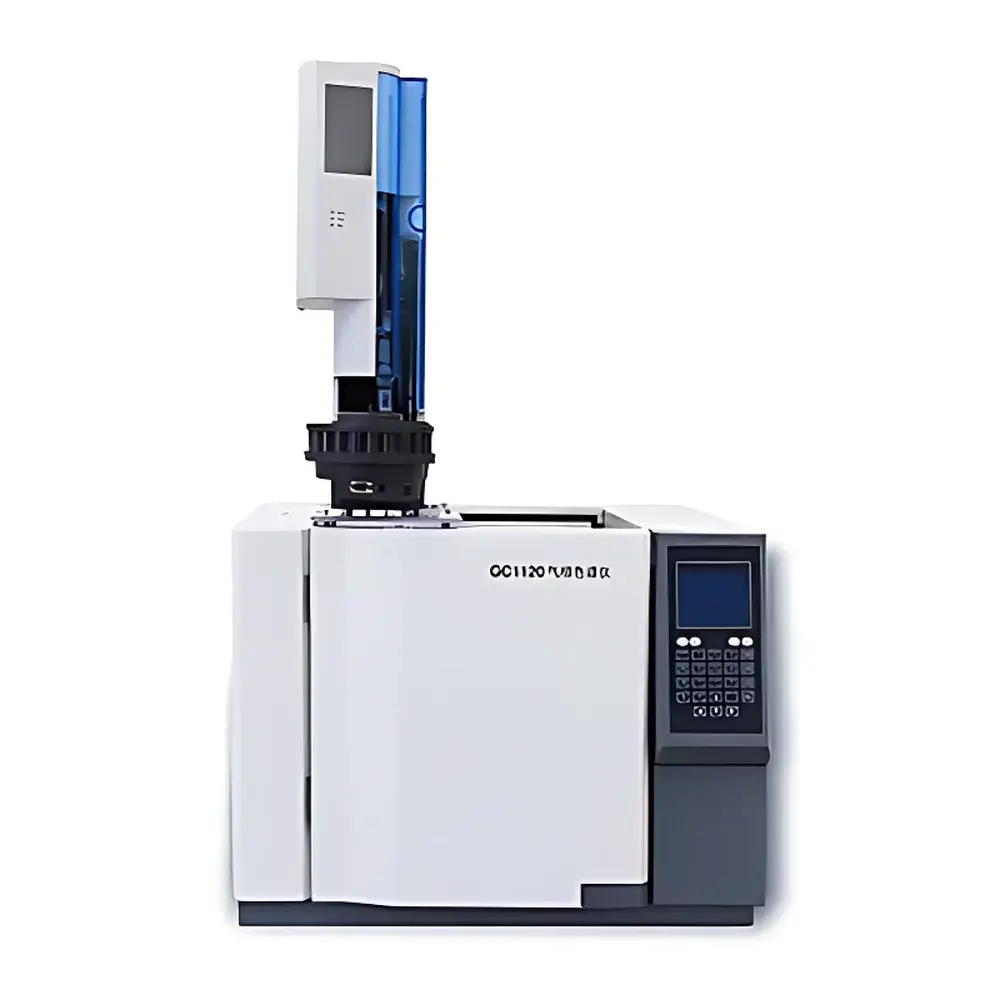
Sunny Hengping GC1120 Gas Chromatograph
| Brand | Sunny Hengping Instrument |
|---|---|
| Origin | Shanghai, China |
| Manufacturer Type | Original Equipment Manufacturer (OEM) |
| Regional Classification | Domestic (China-made) |
| Model | GC1120 |
| Instrument Type | Laboratory Gas Chromatograph |
| Application Scope | General-purpose |
| Oven Temperature Range | Ambient +7 °C to 400 °C |
| Oven Ramp Rate | 0–40 °C/min |
| Oven Cool-down Rate | 250 °C to 50 °C in ≤7 min |
| Carrier Gas Flow Range & Control | 0–200 mL/min |
| Carrier Gas Pressure Range & Control | 0–0.3 MPa |
| Injector Maximum Operating Temperature | 420 °C |
| Injector Pressure Setting Range | 0–0.3 MPa |
| Injector Total Flow Setting Range | 0–200 mL/min |
Overview
The Sunny Hengping GC1120 is a benchtop laboratory gas chromatograph engineered for precision, reliability, and operational flexibility in routine and research-grade volatile organic compound (VOC) analysis. Based on the fundamental principle of differential partitioning between a mobile phase (inert carrier gas) and a stationary phase (capillary or packed column), the GC1120 separates complex mixtures by exploiting differences in analyte volatility and polarity. Its modular architecture supports dual-column configurations—including simultaneous capillary and packed column operation—and accommodates up to three independently temperature-controlled detectors (FID, TCD, ECD, FPD, NPD, or PID), enabling multi-detection strategies without hardware reconfiguration. Designed for compliance with internationally recognized analytical workflows, the system meets foundational requirements for method validation under ISO/IEC 17025 and supports traceable data acquisition aligned with GLP and GMP documentation practices.
Key Features
- 6-zone independent temperature control system with ±0.05 °C stability; maximum setpoint of 400 °C for oven, injector, and detector zones
- 10-step, 11-platform programmable temperature ramping (0.1–40 °C/min), with automatic oven cooling via motorized rear door—achieving 250 °C → 50 °C in ≤7 minutes
- Dual-stabilized pneumatic system: carrier gas flow regulated via precision pressure and flow controllers (0–0.3 MPa / 0–200 mL/min); auxiliary gases (H₂, air) managed through digital-calibrated needle valves and pressure regulators
- Modular inlet design supporting up to three simultaneous inlets: PIP (packed column injector) with column-head injection capability and optional 6-port valve for gaseous samples; SPL (split/splitless capillary injector) with septum purge, back-pressure regulation, and make-up gas control
- Integrated digital flow monitoring module (optional) displays real-time carrier and split flows—up to four channels—with auto-storage of flow parameters for method reproducibility and audit readiness
- High-resolution 7-inch TFT LCD with full Chinese menu interface, displaying real-time oven/injector/detector temperatures, program curves, baseline signals, and retention times—all on a single screen
Sample Compatibility & Compliance
The GC1120 is validated for universal sample types including hydrocarbons, halogenated organics, pesticides, residual solvents, environmental VOCs, and pharmaceutical impurities. It accepts standard 0.53 mm ID wide-bore and narrow-bore fused-silica capillary columns, as well as stainless-steel or glass packed columns (2–4 mm ID). The system complies with ASTM D3612 (oil analysis), USP (residual solvents), and EPA Method 8021B (halogenated hydrocarbons). All detector modules are constructed to meet IEC 61010-1 safety standards, and firmware supports user-defined audit trails, electronic signatures, and data integrity controls consistent with FDA 21 CFR Part 11 when paired with validated chromatography data systems (CDS).
Software & Data Management
The GC1120 operates via embedded firmware with optional PC-based reverse-control software and analog/digital acquisition board. Real-time instrument control includes zone temperature programming, detector configuration (polarity, current, attenuation), flow parameter adjustment, and live chromatogram preview. Data acquisition supports dual-channel (expandable to multi-channel) high-speed sampling at ≥10 Hz, baseline correction algorithms, five quantitative methods (external standard, internal standard, normalization, standard addition, area% ), peak integration with customizable slope/drift thresholds, and customizable report generation (PDF/CSV/XLS export). All raw and processed data files are timestamped, versioned, and stored with metadata including method name, operator ID, instrument serial number, and calibration status—ensuring full traceability for regulatory submissions.
Applications
- Environmental testing: BTEX, PAHs, chlorinated solvents in soil/water per EPA SW-846 Methods
- Pharmaceutical QC: Residual solvents in APIs per ICH Q3C guidelines
- Food safety: Pesticide multiresidue screening using ECD/FID dual detection
- Petrochemical analysis: Hydrocarbon type analysis (PIONA) and simulated distillation (SimDis)
- Forensic toxicology: Volatile substance identification (ethanol, acetone, isopropanol) in biological matrices
- Materials science: Outgassing profiling of polymers and adhesives under thermal desorption conditions
FAQ
Does the GC1120 support unattended overnight operation?
Yes—the system includes automated shutdown protocols, overtemperature cut-off, and power-fail recovery mode that restores pre-interruption method parameters upon reboot.
Can the GC1120 be integrated into a LIMS environment?
When used with compliant CDS software, it exports ASTM E1394-compliant .CDF files and supports ODBC connectivity for direct LIMS ingestion.
Is method transfer possible from other GC platforms?
Retention time alignment and flow calibration tools are built-in; column dimension and carrier gas viscosity compensation tables allow cross-platform method portability with minimal re-optimization.
What maintenance intervals are recommended for detector components?
FID jet cleaning every 200 injections; TCD filament inspection every 6 months; ECD Ni-63 source replacement every 2–3 years depending on usage intensity and sample matrix cleanliness.
Does the instrument meet CE or UL certification requirements for export?
The GC1120 conforms to EN 61326-1 (EMC) and EN 61010-1 (safety); CE marking is available upon request for EU-bound units with appropriate conformity documentation.






