
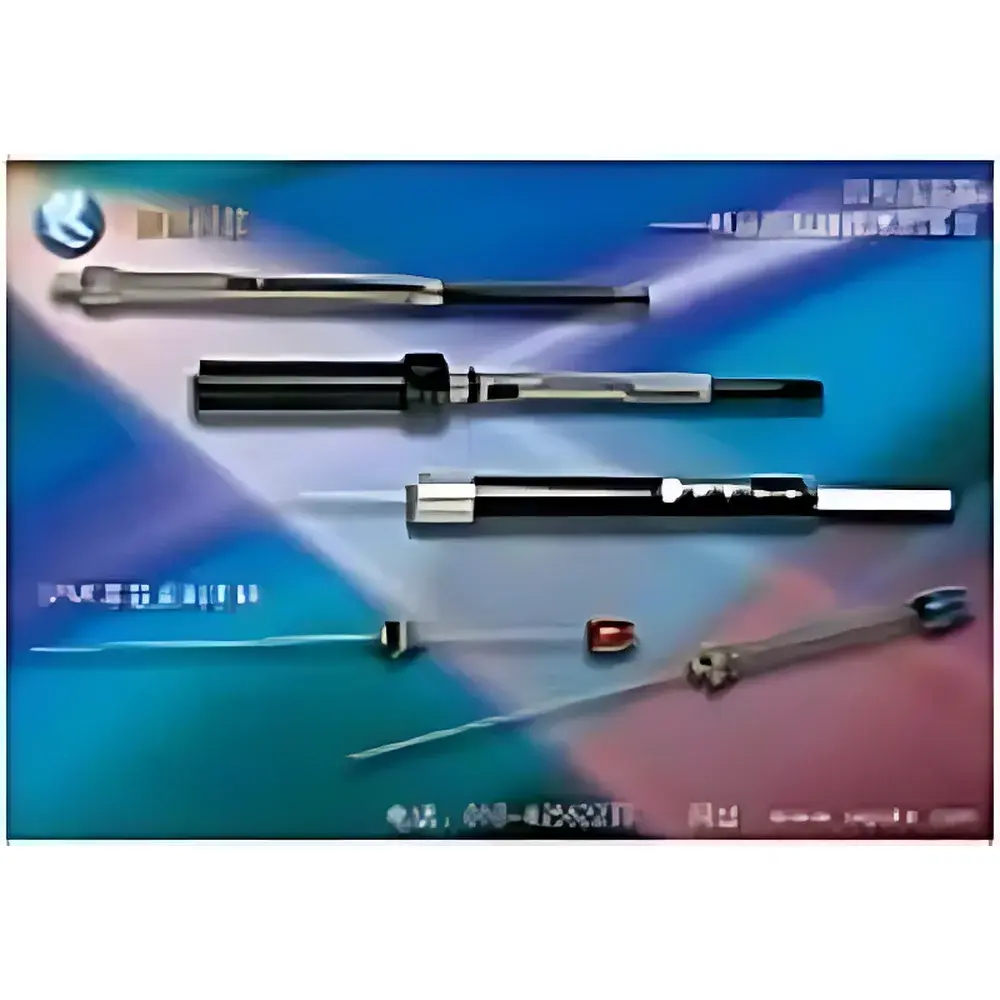
Supelco Solid Phase Microextraction (SPME) Devices
| Brand | Supelco |
|---|---|
| Origin | USA |
| Product Type | Imported Laboratory Extraction Tool |
| Model Range | Multiple Fiber Coating & Geometry Configurations |
| Pricing | Available Upon Request |
Overview
Supelco Solid Phase Microextraction (SPME) is a solvent-free, miniaturized sample preparation technique developed by Sigma-Aldrich’s Supelco division and first commercialized in the early 1990s. Recognized with the R&D 100 Award at Pittcon 1994, SPME integrates sampling, extraction, concentration, and direct instrumental introduction into a single, robust step—eliminating liquid-liquid extraction, solid-phase extraction cartridges, and derivatization in many applications. The technique operates on the principle of equilibrium partitioning between a sample matrix (liquid, headspace, or solid) and a thin film of stationary phase coated onto a fused-silica fiber. Analytes adsorb or absorb onto the coating based on polarity, volatility, and molecular weight; subsequent thermal desorption in the injection port of a gas chromatograph (GC), GC–MS, LC, or LC–MS system releases them for separation and detection. Its microscale geometry, absence of solvents, and compatibility with automated platforms make SPME especially valuable for high-throughput, trace-level analysis under regulated laboratory environments.
Key Features
- Patented fused-silica fiber architecture with precise, reproducible coating thickness and uniformity—engineered for long-term stability and batch-to-batch consistency
- Stainless-steel needle housing enables full retraction of the fiber during storage and insertion, minimizing contamination and mechanical damage
- Modular holder design supports both manual and automated operation (e.g., compatible with PAL/CTC autosamplers)
- No solvent consumption, no glassware cleanup, and negligible carryover—reducing operational costs and environmental impact
- Thermal desorption compatibility with standard GC inlet liners and split/splitless injectors without hardware modification
- Fiber coatings available in multiple chemistries—including polydimethylsiloxane (PDMS), carboxen/PDMS, divinylbenzene/CAR/PDMS (DVB/CAR/PDMS), polyacrylate (PA), and stable isotope-labeled variants for method validation
Sample Compatibility & Compliance
SPME accommodates diverse matrices: aqueous solutions (e.g., wastewater, urine, plasma), headspace vapors (e.g., VOCs, sulfur compounds), semi-solid tissues (via direct immersion or headspace), and polymers (using thermal desorption or solvent-assisted headspace). It complies with widely cited analytical guidelines including EPA Method 8260D (VOCs in water and soil), ASTM D7713 (headspace SPME for residual solvents in pharmaceuticals), and USP (residual solvents in drug substances). When implemented with audit-trail-enabled autosamplers and validated SOPs, SPME workflows support GLP and GMP requirements—including FDA 21 CFR Part 11 compliance when paired with compliant LIMS or chromatography data systems (CDS).
Software & Data Management
While SPME itself is a hardware-based sampling tool, its integration into modern analytical workflows relies on instrument control software (e.g., Agilent MassHunter, Thermo Chromeleon, Waters Empower) for method scheduling, fiber conditioning cycles, thermal desorption parameters, and sequence logging. All SPME fiber usage—including exposure time, temperature, agitation mode, and desorption conditions—is traceable within chromatographic acquisition logs. Supelco provides comprehensive application notes with validated methods, calibration protocols, and uncertainty estimation frameworks aligned with ISO/IEC 17025 principles.
Applications
- Environmental monitoring: quantification of BTEX, PAHs, chlorinated hydrocarbons, and odorants in surface water, groundwater, and ambient air
- Clinical toxicology: rapid screening of drugs of abuse (e.g., opioids, benzodiazepines, amphetamines) in whole blood, serum, and urine
- Pharmaceutical quality control: residual solvent profiling (e.g., methanol, dichloromethane, toluene) per ICH Q3C guidelines
- Food and flavor analysis: volatile compound profiling in dairy, coffee, wine, and essential oils using headspace-SPME/GC–MS
- Forensic chemistry: trace evidence recovery from fabrics, adhesives, and fire debris via non-destructive fiber contact or headspace sampling
- Polymer science: migration studies of plasticizers, antioxidants, and monomers from packaging materials into food simulants
FAQ
What determines the optimal SPME fiber coating for my analyte?
Selection depends primarily on analyte polarity and volatility. Non-polar coatings (e.g., 100 µm PDMS) favor non-polar, volatile compounds; polar coatings (e.g., 85 µm PA) enhance extraction of polar, semi-volatile species. Mixed-phase coatings (e.g., 50/30 µm DVB/CAR/PDMS) broaden dynamic range for complex mixtures.
Can SPME fibers be reused, and how many extractions are typical?
Yes—fibers are designed for repeated use. Lifetime varies with matrix cleanliness and thermal stress; under routine QC conditions, 50–100 extractions per fiber are achievable with proper conditioning and blank monitoring.
Is SPME compatible with LC–MS without derivatization?
Yes—direct desorption is not feasible in LC, but solvent desorption (e.g., into acetonitrile or methanol) followed by large-volume injection or online trapping enables sensitive LC–MS coupling for thermally labile or non-volatile analytes.
How does SPME compare to traditional solid-phase extraction (SPE)?
SPME eliminates cartridge conditioning, elution solvents, and evaporation steps—reducing analysis time by >50% and minimizing analyst exposure to hazardous solvents while improving precision (RSD <8% for replicate extractions in optimized protocols).



