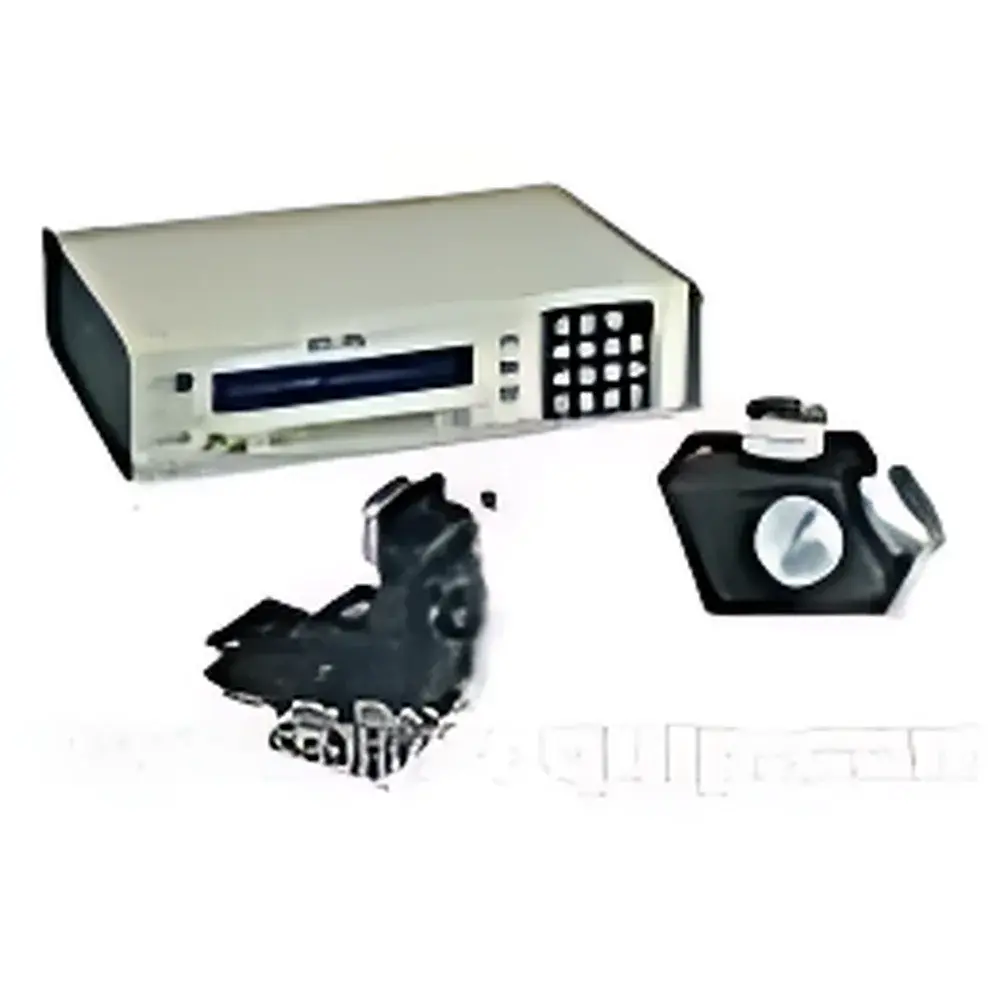
Sutter MP225 Motorized Micromanipulator
| Brand | Sutter |
|---|---|
| Origin | USA |
| Model | MP225 |
| Movement Axes | X, Y, Z, and Oblique (4-axis) |
| Resolution | 0.0625–2.0 µm/step (selectable) |
| Maximum Travel | 25.4 mm per axis |
| Minimum Step Size | 0.04 µm (high-resolution mode) |
| Maximum Speed | ≥ 2.9 mm/sec |
| Thermal Drift Stability | ≤ 10 nm/h at 24°C |
| Drive Mechanism | Precision Lead-Screw Actuation |
| Position Display | Real-time LCD readout in micrometers |
| Return-to-Home Function | Yes |
| Motion Modes | Continuous, Stepped, Joystick, FSR Piezo Assist, ROE200 Rotary Encoder Control |
| Programmability | Multi-step motion sequences supported |
| Compatibility | Universal mounting for upright & inverted microscopes |
| Compliance | Designed for GLP/GMP-aligned electrophysiology workflows requiring traceable positioning and audit-ready operation |
Overview
The Sutter MP225 Motorized Micromanipulator is a high-stability, four-axis electromechanical positioning system engineered specifically for demanding intracellular electrophysiology applications—including whole-cell patch-clamp, sharp-electrode impalement, and single-cell microinjection. Unlike hydraulic or purely mechanical manipulators, the MP225 employs closed-loop, lead-screw-driven DC motor actuation with integrated optical encoders to deliver sub-micron repeatability and negligible thermal drift (<10 nm/h at 24°C). Its design inherits core architecture from the flagship MP-285 platform—retaining precision mechanics, robust vibration isolation, and deterministic motion control—while streamlining functionality to prioritize essential membrane physiology tasks. The system operates on the principle of digitally regulated linear translation: each axis (X, Y, Z, and oblique) is independently driven by a high-torque, low-backlash motor assembly, enabling synchronized, programmable approach trajectories critical for reliable gigaseal formation and stable long-duration recordings.
Key Features
- Four-degree-of-freedom motion: Independent, calibrated control over X, Y, Z, and oblique (tilt-coupled) axes—enabling precise electrode angulation for optimal cell access.
- Adjustable step resolution: Six discrete step sizes (0.0625, 0.125, 0.25, 0.5, 1.0, and 2.0 µm/step), with high-resolution mode supporting ≤0.04 µm minimum incremental displacement.
- Real-time positional feedback: Backlit LCD display continuously reports absolute position (in µm) for all active axes—essential for documentation, protocol replication, and troubleshooting.
- Dual-input control interface: Full integration with the MP200 controller and ROE200 rotary encoder dial; also supports optional FSR-based piezoelectric assist and analog joystick input for intuitive fine-tuning.
- Rapid homing capability: One-button return-to-zero function restores pre-defined reference coordinates—minimizing setup time between experiments.
- Programmable multi-step sequences: Onboard memory stores complex motion profiles (e.g., coarse approach → fine positioning → seal formation → voltage ramp), reducing manual intervention during automated protocols.
- Universal microscope compatibility: Modular mounting brackets accommodate standard dovetail, cage-system, and custom-stage configurations across Zeiss, Nikon, Olympus, and Leica platforms.
Sample Compatibility & Compliance
The MP225 is validated for use with glass micropipettes (1–5 MΩ tip resistance), borosilicate and quartz electrodes, and coated metal probes. Its mechanical rigidity and low resonance frequency ensure minimal coupling of stage vibration into electrode tip displacement—critical when targeting neurons, oocytes, cardiomyocytes, or stem-cell-derived organoids. From a regulatory standpoint, the system supports Good Laboratory Practice (GLP) and current Good Manufacturing Practice (cGMP) workflows through deterministic motion logging, user-accessible calibration records, and reproducible coordinate referencing. While not FDA-cleared as a medical device, its design aligns with ISO 13485 principles for research-grade instrumentation used in preclinical safety pharmacology (ICH S7B) and neurotoxicity assessment. All firmware operations are timestamped and non-volatile—facilitating audit trails required under 21 CFR Part 11 for laboratories engaged in IND-enabling studies.
Software & Data Management
The MP225 operates autonomously via the MP200 controller but integrates seamlessly with third-party acquisition software (e.g., pCLAMP, Axograph, PatchMaster) through TTL-triggered I/O and RS-232 serial communication. Position data can be streamed synchronously with electrophysiological signals, enabling post-hoc correlation of seal resistance, capacitance transients, and spatial trajectory. Firmware updates are performed via USB, with version history retained in internal flash memory. No proprietary cloud dependency exists—data sovereignty remains fully under user control. Calibration parameters (e.g., steps-per-micron, backlash compensation) are stored per-axis and persist across power cycles, ensuring measurement continuity without recalibration between sessions.
Applications
- Whole-cell and perforated-patch clamp recordings in acute brain slices, cultured neurons, and iPSC-derived neuronal models.
- Intracellular dye loading and biolistic delivery in developmental biology assays.
- Single-cell CRISPR/Cas9 microinjection in zebrafish embryos and mouse oocytes.
- Combined optogenetic stimulation and simultaneous patch recording using integrated LED/light-guide interfaces.
- Long-term (>6 hr) stable recordings from astrocytes and microglia in live-tissue imaging chambers.
- High-throughput screening of ion channel modulators where positional consistency directly impacts success rate.
FAQ
Is the MP225 compatible with inverted microscopes?
Yes—the MP225 features adjustable vertical travel and modular base plates that support both upright and inverted configurations, including motorized focus-coupled setups.
Can motion sequences be saved and recalled across sessions?
Yes—up to 16 user-defined multi-axis programs can be stored in non-volatile memory and executed via front-panel buttons or external TTL triggers.
Does the system support temperature-controlled environments?
The MP225 maintains specified stability (≤10 nm/h drift) within ambient ranges of 20–26°C; for incubator-mounted applications, optional thermal shielding kits are available to mitigate convective airflow effects.
What maintenance is required for long-term accuracy?
No routine lubrication or recalibration is needed; periodic verification using a certified laser interferometer (recommended annually) ensures continued compliance with published resolution and linearity specifications.
How does the MP225 differ from the MP-285?
The MP225 omits advanced features such as dual-manipulator synchronization, analog voltage-controlled velocity profiling, and Ethernet-based remote management—making it optimized for single-manipulator, cost-sensitive electrophysiology labs without sacrificing core precision or reliability.