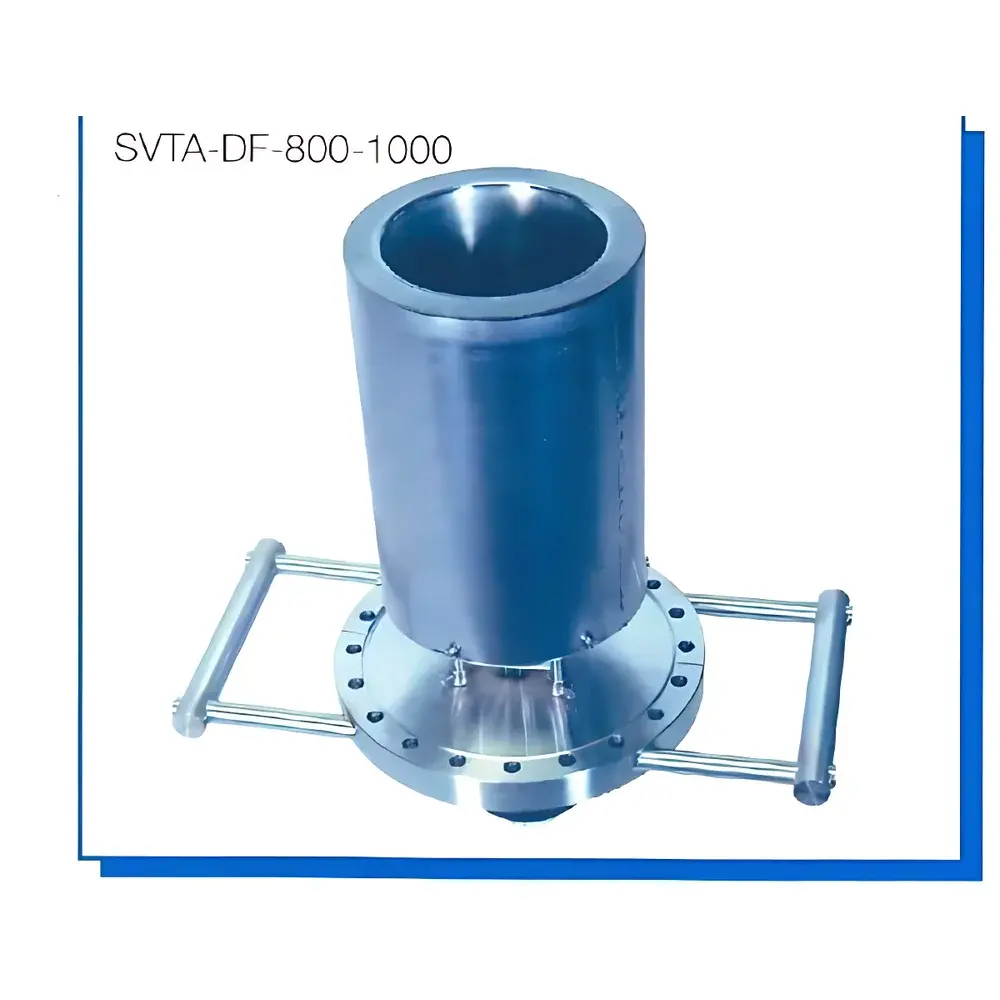
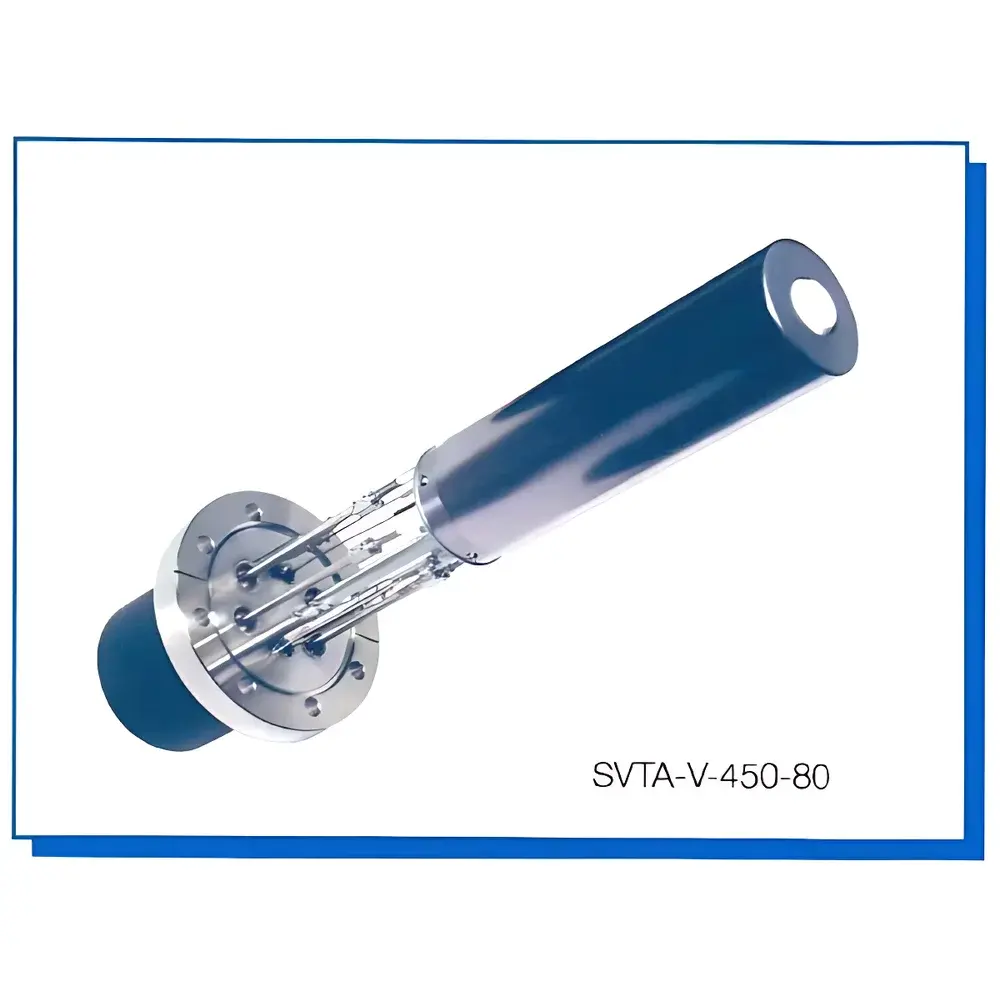
SVT Associates SVTA-DF / SVTA-LTDF / SVTA-V / SVTA-EXCEL Production-Grade Thermal Evaporation Sources
| Key | Brand: SVT Associates |
|---|---|
| Origin | USA |
| Model Variants | SVTA-DF, SVTA-LTDF, SVTA-V, SVTA-EXCEL |
| Temperature Stability | ±0.1 °C |
| Temperature Repeatability | ±0.1 °C |
| Crucible Capacities | 60 cc to 1,000 cc |
| Max Operating Temp (SVTA-DF) | 1,600 °C |
| Max Operating Temp (SVTA-EXCEL) | 600 °C |
| Flange Types | DN63 CF (4.5″), DN100 CF (6.0″), DN150 CF (8.0″) |
| In-Chamber Length | 10–14″ (standard 12″) |
| Bakeout Temperature | 200 °C |
| Thermocouple Types | Type K (<1,000 °C), Type C (≥1,000 °C) |
| Filament Connectors | Amphenol ring-type |
| Thermocouple Connectors | Omega subminiature |
Overview
SVT Associates’ production-grade thermal evaporation sources are engineered for high-reliability physical vapor deposition (PVD) in ultra-high vacuum (UHV) environments—specifically optimized for molecular beam epitaxy (MBE), organic light-emitting diode (OLED) fabrication, and thin-film photovoltaic (PV) manufacturing. These sources operate on resistive heating principles, utilizing precisely wound, ultra-pure filament assemblies to achieve uniform, controllable thermal gradients across crucible loads. Each source is designed to maintain stable, repeatable evaporation rates under sustained duty cycles—critical for process transfer from R&D to pilot-line or full-scale production. With over two decades of MBE system integration experience, SVT’s thermal sources incorporate robust mechanical architecture, low-outgassing materials, and factory-calibrated temperature feedback loops compliant with semiconductor-grade vacuum integrity requirements (≤1×10⁻¹⁰ Torr base pressure compatibility).
Key Features
- Four purpose-engineered model families: SVTA-DF (dual-filament, high-temp metals/oxides), SVTA-LTDF (low-temperature dual-filament for sensitive chalcogenides), SVTA-V (Viking-style, optimized for Ga/In with enhanced thermal symmetry), and SVTA-EXCEL (low-mass, low-inertia design for organics and thermally labile compounds).
- Ultra-stable temperature control: ±0.1 °C stability and repeatability enabled by closed-loop PID regulation, calibrated Type K (≤1,000 °C) or Type C (≥1,000 °C) thermocouples, and low-drift filament power supplies.
- Crucible capacity range from 60 cc to 1,000 cc, supporting both small-batch R&D and high-throughput production runs—each configured with geometry-optimized thermal profiles to minimize thermal gradients and maximize material utilization efficiency.
- Vacuum-compatible construction using OFHC copper housings, molybdenum or tungsten filaments, and all-metal (no epoxy or ceramic binder) assembly—ensuring zero hydrocarbon contamination and full compatibility with UHV bakeout up to 200 °C.
- Standardized ConFlat (CF) interface options: DN63 (4.5″) for 60–85 cc variants; DN100 (6.0″) for 150–500 cc; DN150 (8.0″) for 1,000 cc—enabling seamless integration into existing MBE, sputtering, or multi-source co-evaporation chambers.
Sample Compatibility & Compliance
SVT thermal evaporation sources accommodate a broad spectrum of evaporation materials—including elemental metals (Al, Ag, Au, Cr, Ni), III–V precursors (Ga, In, As), II–VI compounds (ZnS, CdTe), chalcogenides (S, Se, Te), alkali halides (CsI), and organic semiconductors (Alq3, NPB, TPD). All internal wetted surfaces are fabricated from ultra-high-purity (99.999% min.) metals and undergo rigorous pre-shipment leak testing, outgassing characterization, and thermal performance mapping per ASTM E1557 and ISO 14644-1 Class 4 cleanroom handling protocols. The sources meet SEMI S2/S8 safety guidelines and support GLP/GMP-compliant process documentation when integrated with SVT’s optional digital I/O modules for audit-trail-capable temperature logging.
Software & Data Management
While standalone operation is supported via analog voltage input (0–10 V) and thermocouple feedback, SVT sources integrate natively with industry-standard MBE control platforms—including Riber EVO, SPECS SPECTRUM, and custom LabVIEW-based DAQ systems—via RS-232, Ethernet/IP, or Modbus TCP interfaces (optional). Firmware supports programmable ramp/soak profiles, real-time emissivity-compensated temperature correction, and event-triggered data capture synchronized with shutter actuation and mass spectrometer signals. All operational parameters—including filament current, setpoint deviation, and thermocouple health status—are logged with timestamped metadata compliant with FDA 21 CFR Part 11 requirements when paired with validated third-party SCADA software.
Applications
- High-yield OLED display manufacturing: Precise, low-fluctuation evaporation of small-molecule organics and host-dopant blends for RGB pixel definition and tandem stack formation.
- Compound semiconductor MBE: Stable delivery of Ga, In, and As fluxes for InGaAs, GaN, and AlGaN heterostructures used in high-electron-mobility transistors (HEMTs) and laser diodes.
- Perovskite and thin-film PV R&D: Controlled co-evaporation of PbI2/MAI or CsBr/FAI precursors with sub-monolayer reproducibility for phase-pure absorber layer growth.
- Optical coating and sensor fabrication: Uniform deposition of interference filters, anti-reflective layers (MgF2, SiO2), and catalytic metal films (Pt, Pd) on MEMS substrates.
FAQ
What vacuum compatibility specifications do SVT thermal sources meet?
All models are rated for continuous operation in UHV environments down to 1×10⁻¹¹ Torr and withstand standard chamber bakeouts at 200 °C without performance degradation or outgassing spikes.
Can SVT sources be retrofitted into non-SVT MBE systems?
Yes—mechanical and electrical interfaces follow SEMI-standard CF flange dimensions and 0–10 V analog control conventions, enabling drop-in replacement in most commercial and custom-built MBE platforms.
How is temperature calibration verified prior to shipment?
Each unit undergoes full thermal mapping across its specified operating range using NIST-traceable blackbody reference standards and dual-wavelength pyrometry, with calibration certificates provided for traceability.
Are custom crucible geometries available?
Yes—SVT offers bespoke crucible shapes (e.g., conical, annular, multi-pocket) and tailored filament winding patterns to optimize beam uniformity and directional flux for specific substrate configurations.
Do these sources support automated process recipes in production environments?
When equipped with digital interface modules, they fully support recipe-driven operation—including automatic power ramping, interlocked shutter synchronization, and fault-condition shutdown per ISO 13849-1 Category 3 safety architecture.