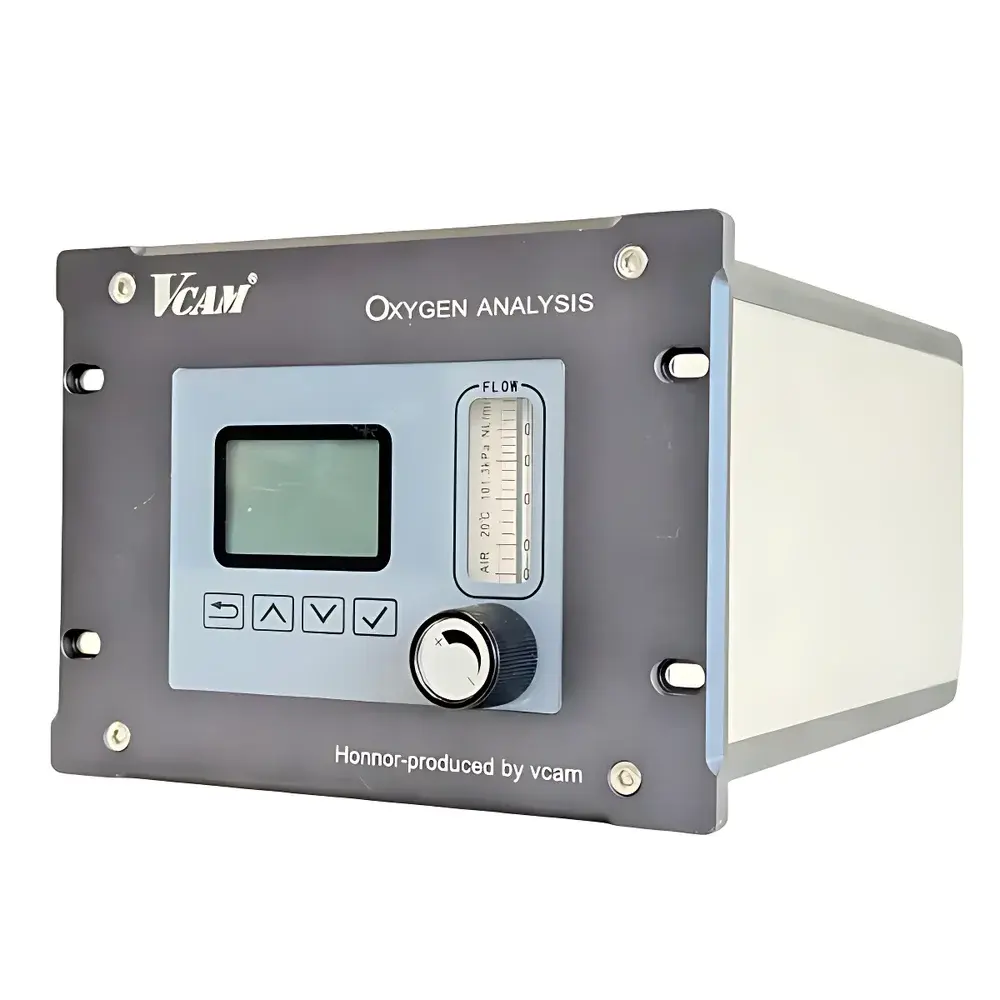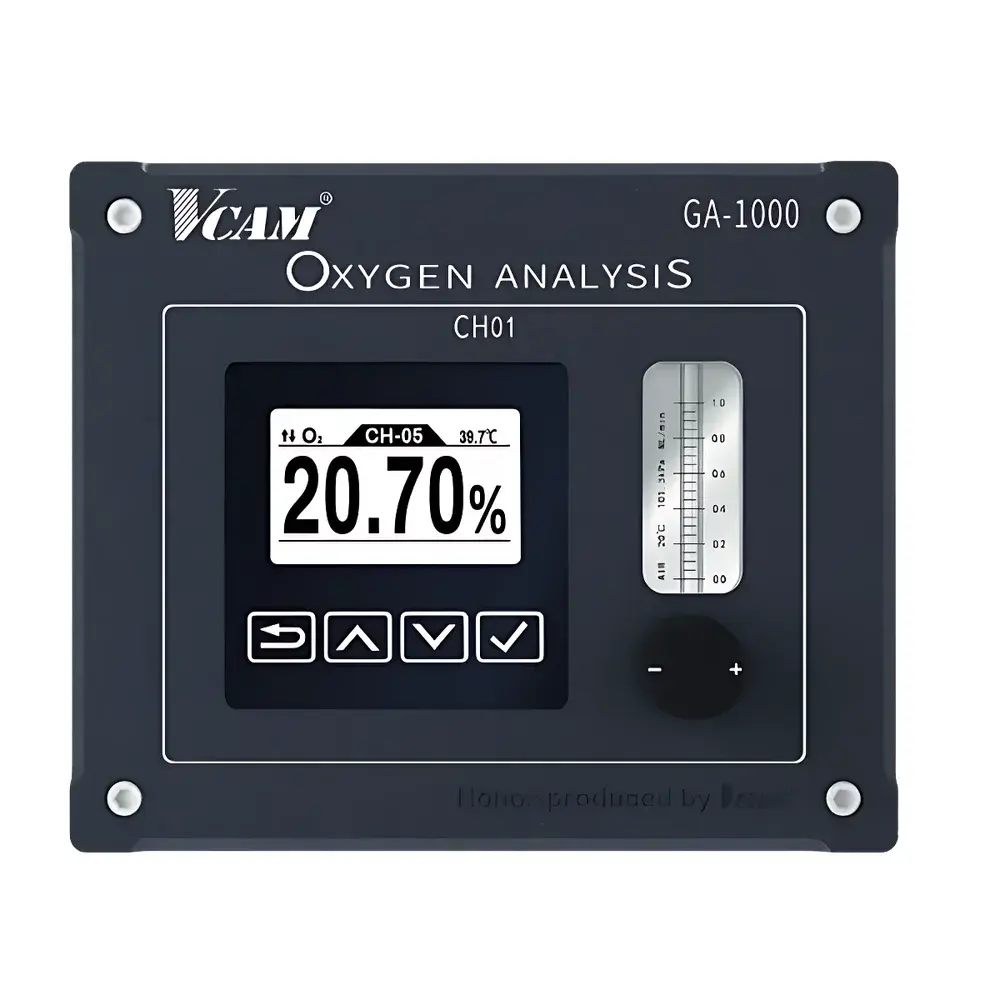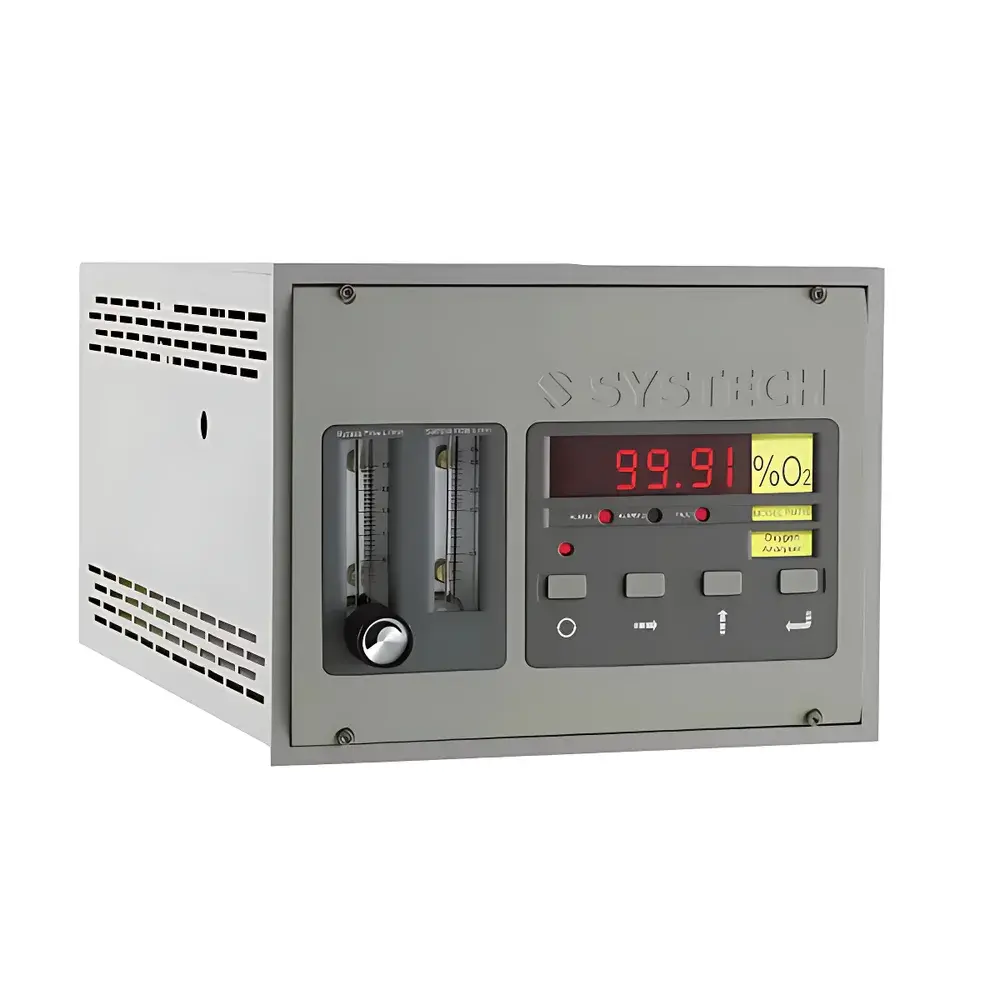
SYSTECH Model 911 Oxygen Analyzer
| Origin | USA |
|---|---|
| Manufacturer Type | Authorized Distributor |
| Origin Category | Imported |
| Model | Model 911 |
| Price Range | USD $6,800 – $13,600 (FOB) |
| Measurement Principle | Electrochemical (Galvanic Cell) |
| Sensor Life | Typically 2–3 years (field-replaceable) |
| Enclosure Rating | NEMA 4X equivalent |
| Hazardous Area Certification | UL Class I, Div. II, Groups C & D |
Overview
The SYSTECH Model 911 Oxygen Analyzer is a high-stability, electrochemical (galvanic cell) oxygen detection system engineered for continuous, low-level O₂ monitoring in inert gas streams, purge environments, and controlled-atmosphere industrial processes. Unlike paramagnetic or zirconia-based analyzers, the Model 911 employs a temperature-compensated, self-powered galvanic sensor that generates a current proportional to partial pressure of oxygen—eliminating the need for external bias voltage, zero gas, or reference gas supply. Its measurement architecture delivers intrinsic immunity to hydrocarbons, CO₂, NOₓ, SO₂, and other oxidizing or reducing interferents common in semiconductor purge lines, heat-treating furnaces, pharmaceutical nitrogen blankets, and laser cutting gas supplies. Designed for deployment in Class I, Division II, Groups C & D hazardous locations, the analyzer operates reliably across ambient temperatures from 0 °C to 45 °C with minimal thermal drift—validated by its ±3% full-scale daily temperature coefficient.
Key Features
- True zero-gas-free operation: No requirement for calibration gas during routine use; optional span calibration supported via front-panel gas port
- Front-access sensor chamber: Tool-free, direct panel-mounted sensor replacement—reducing downtime and enabling field maintenance without disassembly
- Dual analog outputs: Isolated 4–20 mA (HART-compatible) and buffered 0–1 VDC signals, both independently scalable to any user-selected range
- Two fully configurable alarm relays: SPDT C-contact relays (3 A @ 100 VAC), programmable for high/low O₂ thresholds with adjustable hysteresis
- RFI-hardened electronics: Meets EN 61326-1 (industrial EMC) and FCC Part 15 Subpart B requirements for electromagnetic compatibility
- Flow-insensitive measurement: Validated performance across sample flow rates from 0.1 to 5 L/min—no critical orifice or pressure regulation required
- Low-power design: <5 W consumption at 100–230 VAC, 50/60 Hz; suitable for integration into PLC-controlled cabinets with limited thermal budget
Sample Compatibility & Compliance
The Model 911 accepts sample gas via a 316 stainless steel ¼” compression fitting and routes it through a nickel-plated brass manifold and sensor block—materials selected for corrosion resistance in dry, non-condensing inert gas applications. It is compatible with nitrogen, argon, helium, hydrogen, and CO₂-based process streams containing trace oxygen (0–1 ppm to 25% v/v). The analyzer complies with UL 61010-1 (Safety Requirements for Electrical Equipment for Measurement, Control, and Laboratory Use) and carries CSA certification for Class I, Div. II, Groups C & D hazardous locations. While not intrinsically safe, its enclosure meets NEMA 4X environmental protection standards for dust-tight and water-resistant operation. For regulated industries, the device supports audit-ready calibration logging when paired with SYSTECH’s optional DataLogger Pro software—facilitating adherence to FDA 21 CFR Part 11 (electronic records/signatures) and ISO 9001/14001 quality management documentation protocols.
Software & Data Management
The Model 911 features bidirectional RS-232 serial communication (ASCII protocol) for remote configuration, real-time data streaming, and firmware updates. When connected to a host PC running SYSTECH’s free Configuration Utility, users can adjust span calibration points, configure alarm setpoints, assign output scaling, and export timestamped O₂ concentration logs in CSV format. The utility supports automated calibration event tagging and stores up to 10,000 historical readings locally. For enterprise integration, the isolated 4–20 mA output is compatible with standard DCS/SCADA systems, while Modbus RTU support is available via optional RS-485 adapter module—enabling centralized monitoring across multi-analyzer networks in large-scale manufacturing facilities.
Applications
- Pharmaceutical packaging: Monitoring residual O₂ in nitrogen-purged blister packs and vial headspaces per USP and ASTM F2714
- Semiconductor fabrication: Verifying ultra-low O₂ (<10 ppb) in bulk nitrogen delivery lines prior to wafer processing tools
- Heat treatment: Controlling furnace atmospheres during annealing, brazing, and sintering where oxygen contamination degrades metallurgical integrity
- Laser cutting assist gas: Ensuring O₂ purity in high-pressure nitrogen or argon streams used to prevent oxidation of cut edges
- Food packaging: Validating modified atmosphere packaging (MAP) gas mixtures for shelf-life extension compliance with ISO 22000
- Research laboratories: Stable background O₂ measurement in gloveboxes, vacuum chambers, and inert-gas synthesis reactors
FAQ
Does the Model 911 require zero gas for calibration?
No. The galvanic sensor is inherently zero-stable and does not require zero gas. Only span calibration (using certified O₂-in-N₂ standard gas) is necessary for trace-range verification.
Can the analyzer operate in high-humidity sample streams?
It is rated for non-condensing environments only. For wet gas applications, an inline membrane dryer or chilled mirror dew point controller must be installed upstream.
What is the typical sensor lifetime under continuous operation?
Under normal conditions (ambient temperature, <10 ppm O₂ exposure), the sensor provides 24–36 months of stable performance before sensitivity decay exceeds specification limits.
Is the 4–20 mA output intrinsically safe?
No—the output is isolated but not IS-rated. For hazardous area installations, it must be connected through an approved safety barrier compliant with IEC 60079-11.
How often should span calibration be performed?
SYSTECH recommends quarterly span checks for critical applications; semi-annual for general-purpose monitoring. Calibration frequency may be extended based on historical stability data per ISO/IEC 17025 guidelines.