
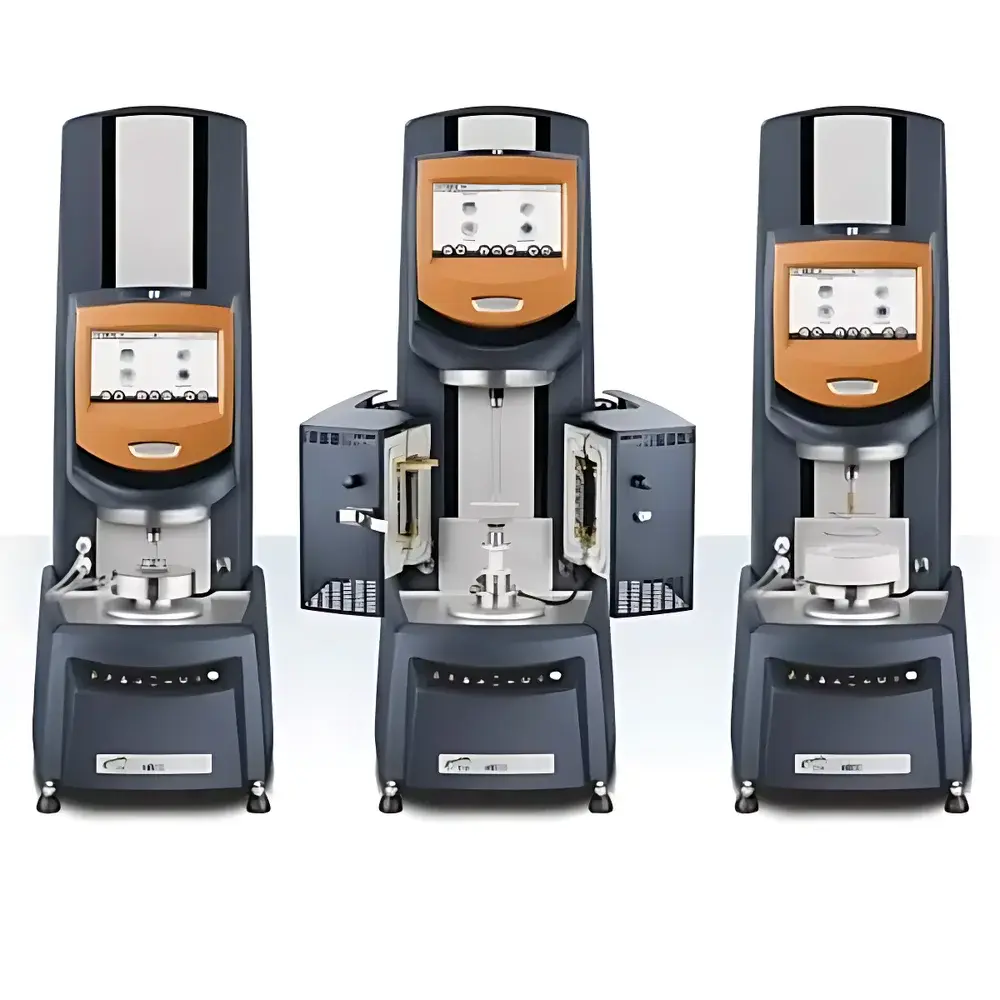
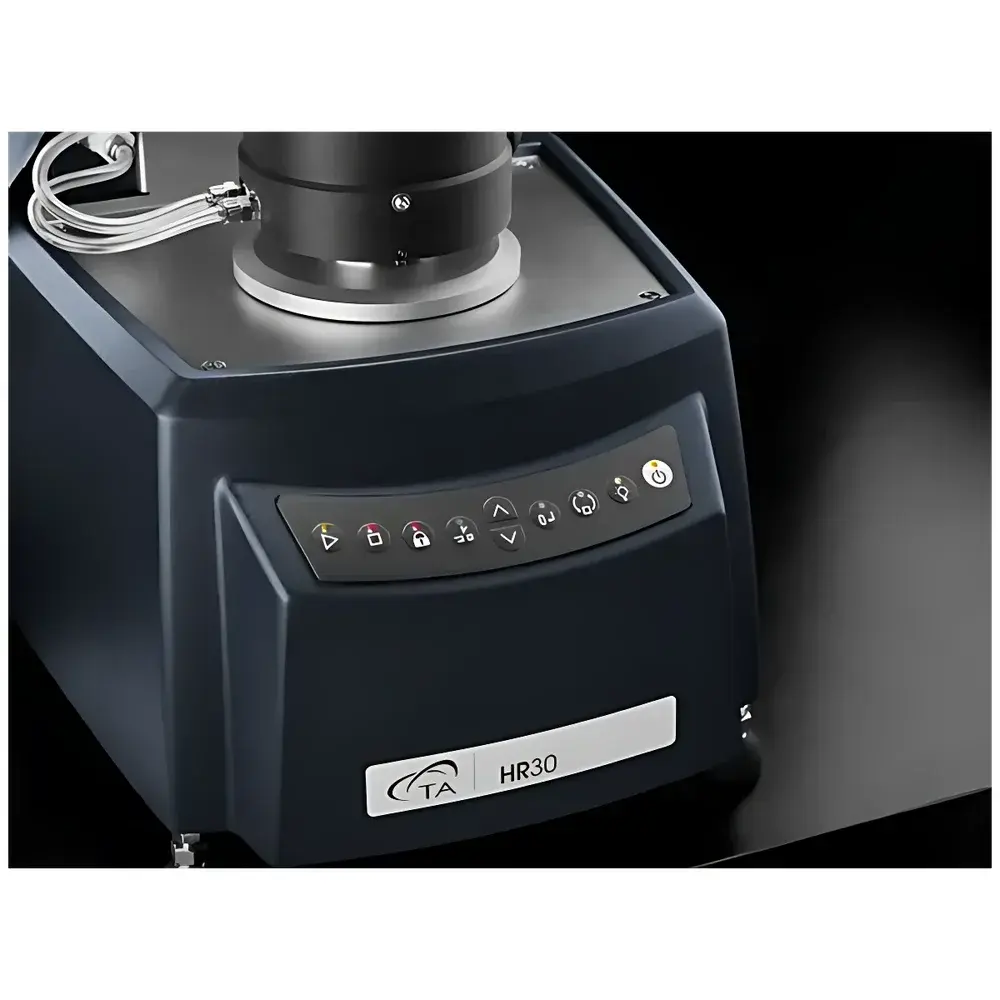
TA Instruments Discovery HR 30 Hybrid Rheometer
| Brand | TA Instruments |
|---|---|
| Origin | USA |
| Manufacturer Type | Authorized Distributor |
| Origin Category | Imported |
| Model | Discovery HR 30 |
| Instrument Type | Rotational Rheometer |
| Motor Bearing | Magnetic Levitation Thrust Bearing |
| Temperature Range | −40 to 200 °C |
| Frequency Range | 1.0 × 10⁻⁷ to 100 Hz |
| Minimum Angular Velocity | 0 rad/s |
| Maximum Torque | 200 mN·m |
| Maximum Angular Velocity | 300 rad/s |
| Torque Resolution | 0.05 nN·m |
Overview
The TA Instruments Discovery HR 30 Hybrid Rheometer is an advanced rotational rheometer engineered for high-fidelity viscoelastic characterization across a broad spectrum of materials—from low-viscosity solvents and polymer melts to highly filled composites and biological gels. Built upon a hybrid force rebalance transducer architecture, it combines the precision of electromagnetic torque measurement with the stability of air-bearing-supported geometry alignment. This design enables true zero-torque baseline operation (0 rad/s), essential for static yield stress determination, creep recovery analysis, and ultra-low-shear-rate viscosity profiling. The instrument operates on Couette and parallel-plate geometries under controlled shear, oscillatory, and extensional deformation modes—supporting both steady-state and dynamic mechanical spectroscopy (DMS) protocols in compliance with ASTM D4440, ISO 6721-10, and ISO 3219 standards.
Key Features
- Magnetic levitation thrust bearing system: Eliminates mechanical contact between rotor and stator, reducing friction-induced noise and enabling sub-nN·m torque resolution and long-term angular velocity stability—even at ultra-low frequencies down to 1.0 × 10⁻⁷ Hz.
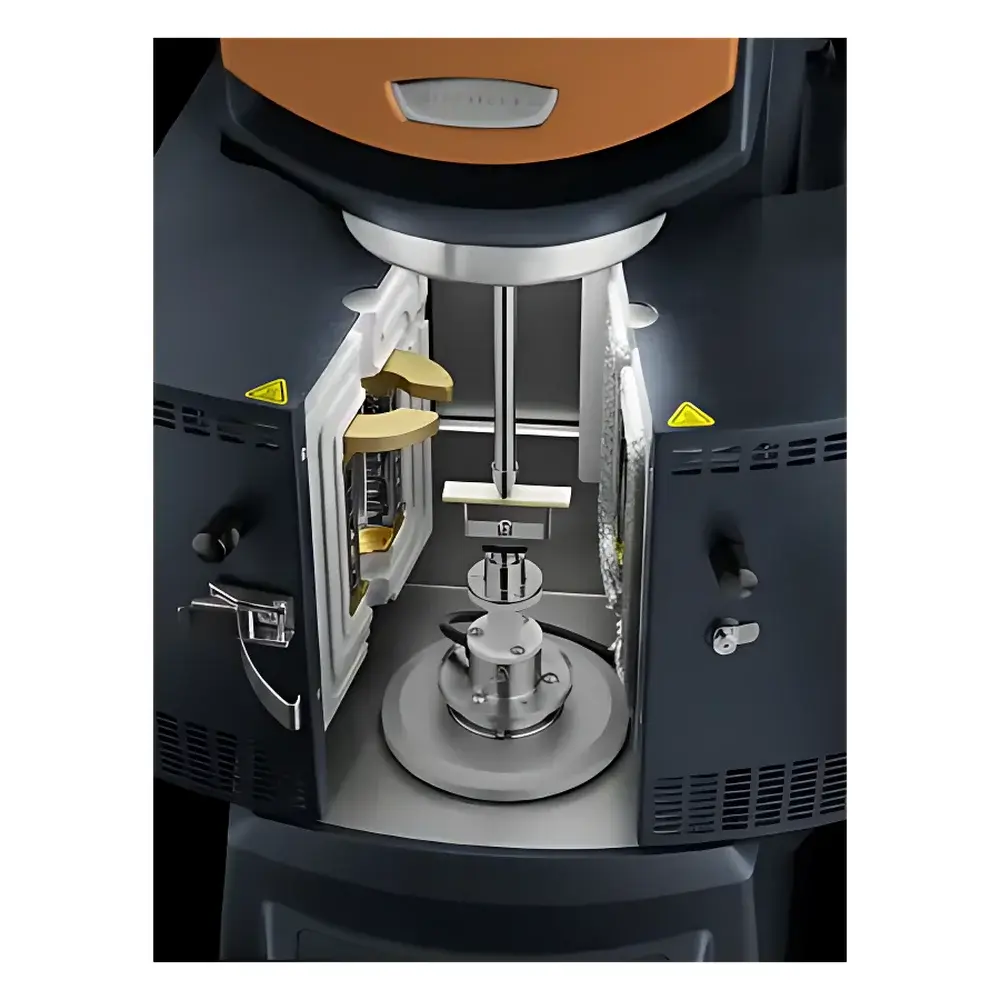
- Wide operational envelope: Supports temperature-controlled testing from −40 °C (using Peltier or cryogenic cooling) to 200 °C (via convection oven or electrically heated fixtures), compatible with solvent-resistant environmental chambers and humidity-controlled enclosures.
- High-dynamic-range torque transduction: Delivers 200 mN·m maximum torque with 0.05 nN·m resolution—enabling seamless transition from weak gel structure quantification to high-shear processing simulation without geometry change.
- True stationary mode capability: Zero-angular-velocity operation allows direct measurement of yield stress via controlled-stress ramping and time-dependent structural recovery after flow cessation.
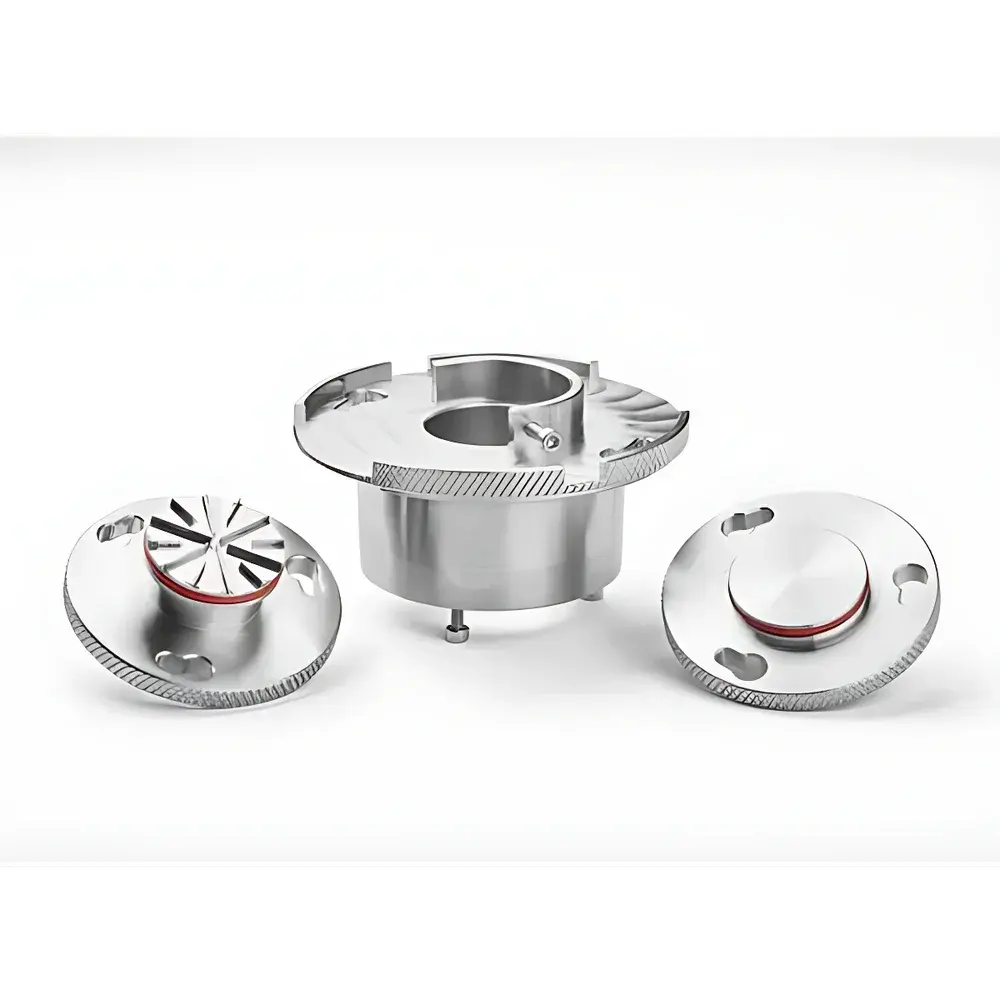
- Modular geometry interface: Accepts standard cone-and-plate, parallel-plate, vane, serrated, and custom tooling—each calibrated traceably to NIST-traceable reference oils and certified SRM standards.
Sample Compatibility & Compliance
The Discovery HR 30 accommodates samples ranging from 0.1 mL (micro-rheology with 4 mm parallel plate) to >50 mL (large-volume cup-and-bob configurations). It supports non-Newtonian fluid characterization—including thixotropy, shear-thinning, viscoelastic hysteresis, and time–temperature superposition (TTS)—with full audit trail logging per FDA 21 CFR Part 11 requirements when paired with TRIOS software in validated mode. All thermal control modules comply with IEC 61000-4 electromagnetic compatibility standards, while mechanical safety interlocks meet ISO 13857 and ANSI B11.19 specifications. Routine calibration verification follows ASTM D2196 and ISO 16520 procedures using certified viscosity standards (e.g., Cannon N47, N1000).
Software & Data Management
Controlled exclusively by TA Instruments’ TRIOS software suite (v10.x or later), the HR 30 integrates real-time data acquisition, automated method sequencing, and GLP-compliant reporting. TRIOS provides built-in models for Cox-Merz equivalence validation, Williams-Landel-Ferry (WLF) fitting, and Cole-Cole plot generation. Raw torque/strain/time datasets are stored in HDF5 format with embedded metadata (operator ID, instrument serial, calibration certificate hash, ambient conditions). Electronic signatures, role-based access control, and immutable audit logs support GMP environments and regulatory submissions. Optional TRIOS Connect enables secure cloud synchronization and remote monitoring via TLS 1.3–encrypted API endpoints.
Applications
- Quality control of thermoplastic resins and reactive adhesives during formulation development
- Rheological mapping of pharmaceutical suspensions and injectable hydrogels under physiological shear profiles
- Yield stress quantification of drilling muds and cement pastes for oilfield and construction applications
- Time-resolved structural breakdown/recovery of food emulsions and dairy gels during oral processing simulation
- Fundamental study of soft glassy materials, colloidal glasses, and jammed granular systems via creep-recovery and LAOS protocols
FAQ
What distinguishes the HR 30 from other rotational rheometers in the Discovery series?
The HR 30 features an upgraded magnetic levitation thrust bearing and enhanced torque transducer electronics, delivering improved low-torque sensitivity and extended low-frequency response compared to earlier HR models—making it optimal for weak gel and microstructure evolution studies.
Is the instrument suitable for rheo-optical or rheo-SALS experiments?
Yes—the base platform includes optical access ports aligned with standard rheometer geometry axes; optional laser alignment kits and fiber-coupled detector mounts enable integration with small-angle light scattering (SALS), FTIR, or Raman modules.
Can the HR 30 perform extensional rheology?
Not natively; however, it supports interchangeable fixtures such as the SER universal testing platform (sold separately) for uniaxial extensional measurements up to Hencky strain ε = 5.
How often does the torque sensor require recalibration?
TA Instruments recommends annual factory recalibration with NIST-traceable torque standards; field verification using certified reference oils is advised before each critical test campaign.
Does TRIOS software support automated ASTM/ISO method execution?
Yes—TRIOS includes preconfigured templates for ASTM D4440 (dynamic shear), ISO 6721-10 (dynamic mechanical analysis), and USP (rheological evaluation of semisolids), all with editable parameter constraints and pass/fail logic.



