
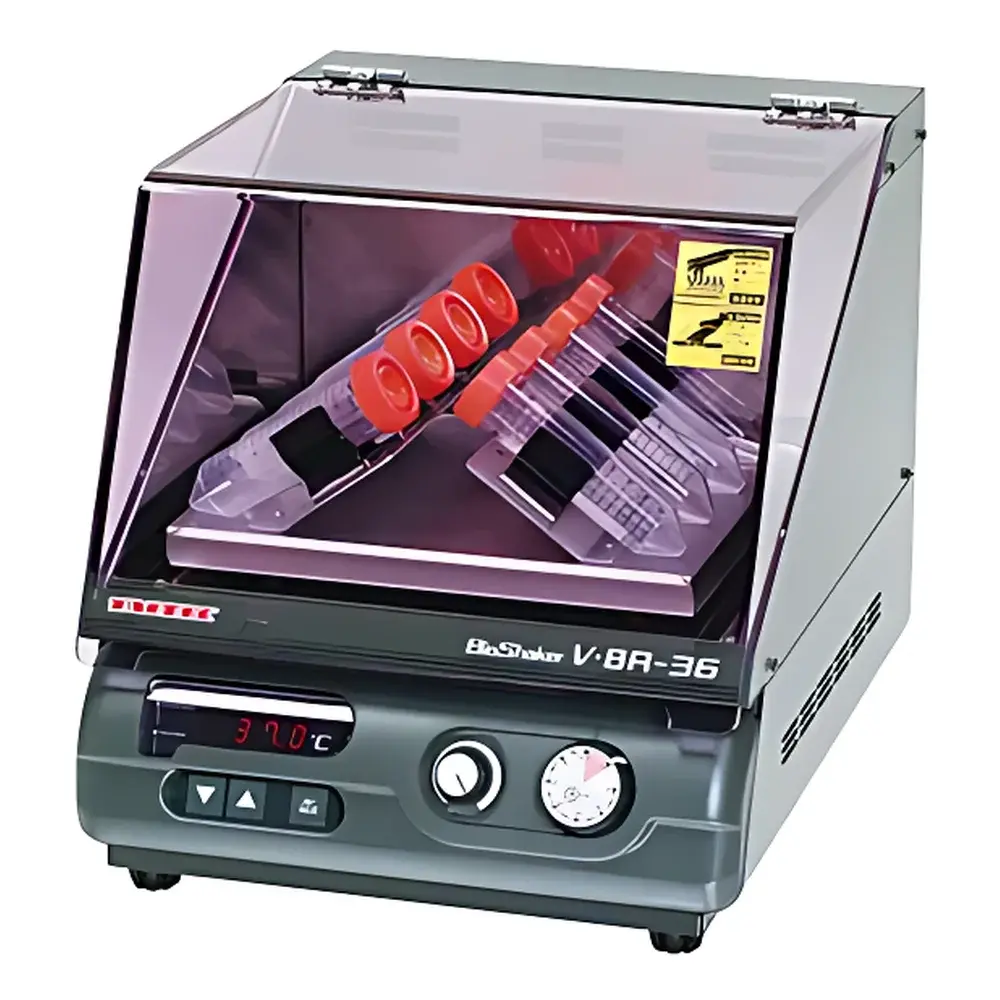
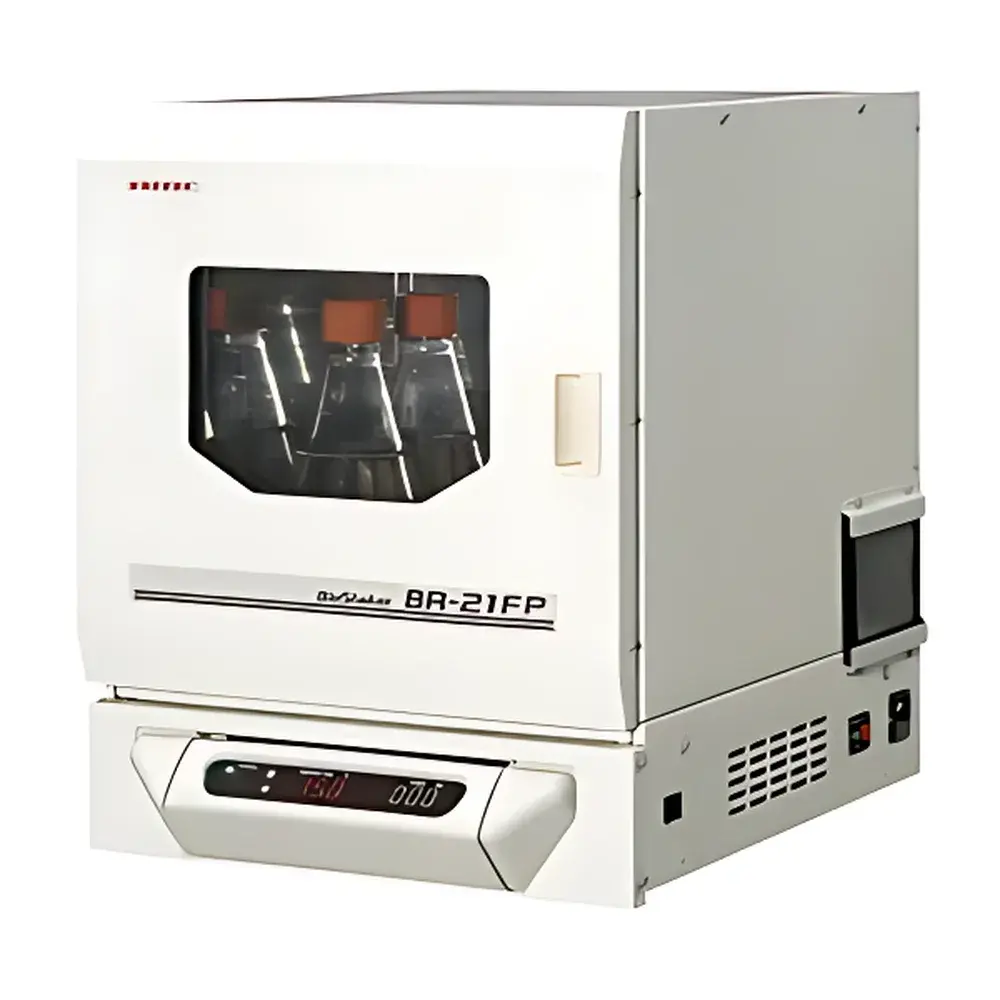
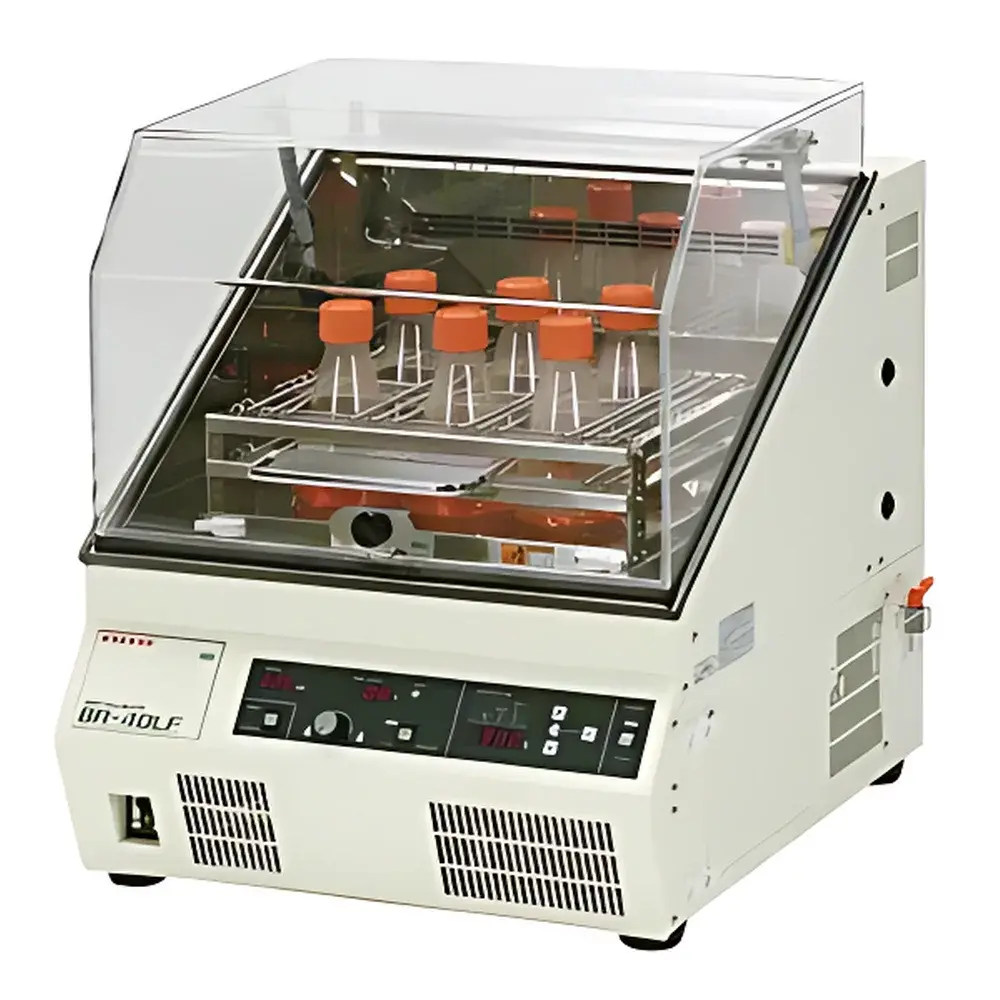
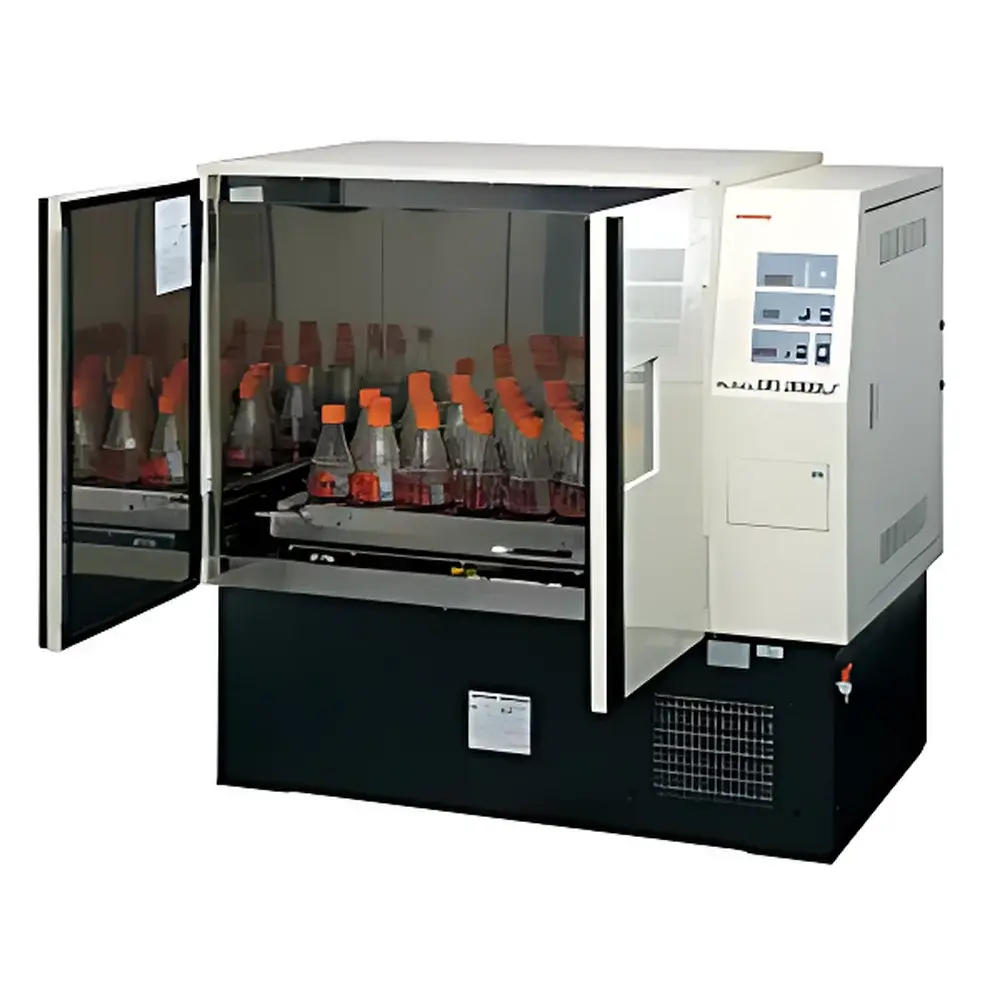
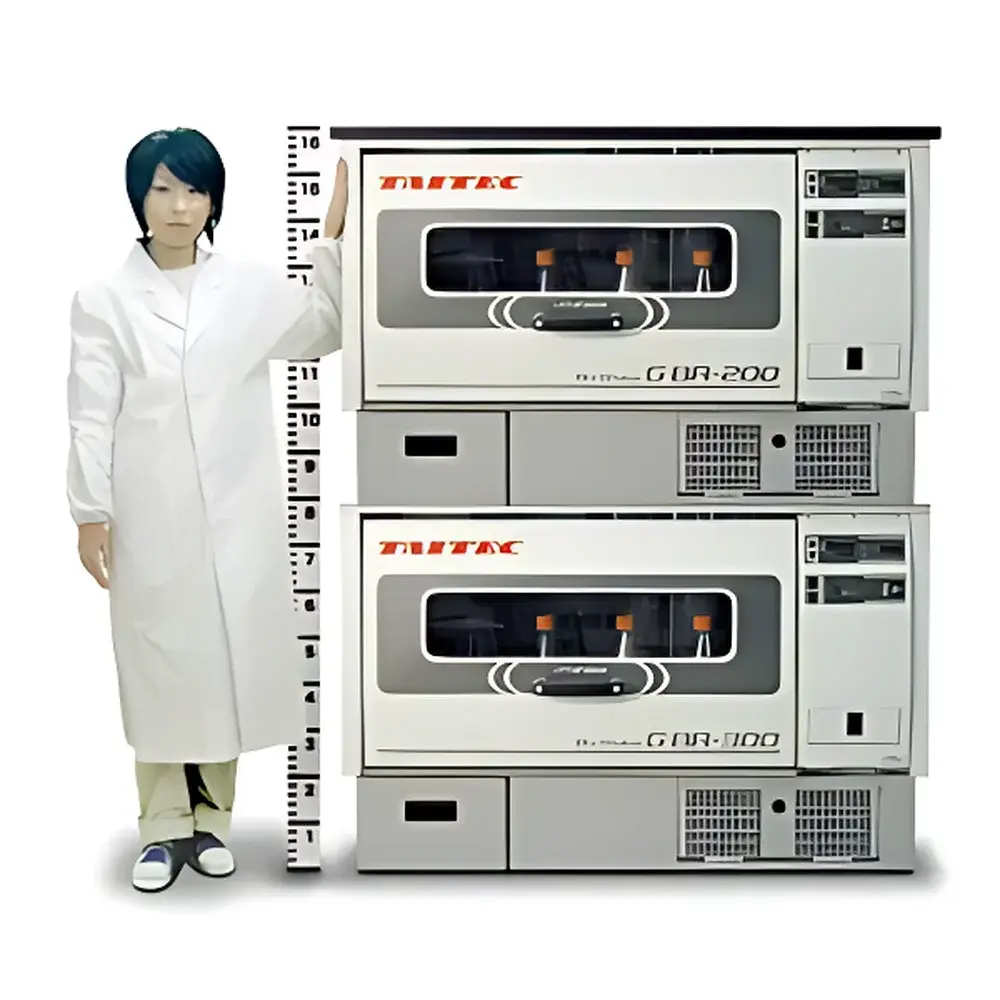
TAITEC BR Series Temperature-Controlled Orbital and Reciprocating Shaking Incubators
| Brand | TAITEC |
|---|---|
| Origin | Japan |
| Model | BR Series |
| Temperature Range | +4 °C to +100 °C |
| Oscillation Modes | Orbital, Reciprocating, or Switchable |
| Speed Range | 20–500 rpm |
| Amplitude | 10–50 mm |
| Timer Range | 0–99 h 59 min |
| Platform Capacity | Up to 64 × 500 mL flasks |
| Compliance | Designed for GLP-compliant labs, compatible with ISO 17025 workflows and USP <1058> analytical instrument qualification protocols |
Overview
The TAITEC BR Series represents a family of precision-engineered temperature-controlled shaking incubators developed in Japan for rigorous life science research and bioprocess development. These instruments operate on the principle of controlled orbital or reciprocating motion within a thermally regulated air-jacketed chamber, enabling simultaneous temperature stabilization and mechanical agitation—critical for aerobic microbial growth, suspension cell culture, solubilization studies, and biochemical reaction kinetics. Unlike generic shakers, the BR Series integrates vibration-damping architecture, patented dynamic balance technology (Patent Pending), and multi-zone thermal uniformity control to ensure reproducible physiological conditions across diverse vessel formats—from microcentrifuge tubes to 500 mL Erlenmeyer flasks. Each model is calibrated to maintain ±0.3 °C temperature accuracy at setpoint across the full operating range (+4 °C to +100 °C), with rapid cool-down capability enabled by high-efficiency Peltier-assisted or compressor-based cooling systems depending on configuration.
Key Features
- Switchable oscillation modes: Select between orbital (circular) and reciprocating (linear) motion via intuitive front-panel interface—enabling optimization for oxygen transfer efficiency (orbital) or shear-sensitive cultures (reciprocating).
- Patented dynamic balancing system: Maintains platform stability even at maximum speed (up to 500 rpm), eliminating lateral drift and minimizing transmitted vibration to adjacent instrumentation.
- Modular stacking design: BR-2x and BR-4x models support vertical stacking (up to two units) without requiring additional structural reinforcement—ideal for space-constrained BSL-2 labs or core facility environments.
- Front-access door configuration (FP/UM/FH variants): Allows placement beneath standard lab benches; accommodates integration into automated workflows with minimal footprint disruption.
- Dual-layer vibration isolation (BR-3000LF & BR-300LF models): Incorporates independent motor-driven platforms with adjustable phase offset to suppress resonant coupling during high-load operations.
- Programmable timer with auto-restart: Supports uninterrupted long-term experiments up to 99 hours 59 minutes; retains settings after power interruption per IEC 61000-4-11 compliance.
Sample Compatibility & Compliance
The BR Series supports standardized laboratory vessels including 0.2–50 mL microtubes, 15–50 mL conical tubes, 100–500 mL Erlenmeyer flasks, and custom-sized culture plates. Platform dimensions scale from 290 × 250 mm (BR-21FP) to 800 × 600 mm (BR-3000LF), with configurable clamps and universal adapter inserts ensuring secure retention under variable g-force loads. All units are manufactured in accordance with JIS B 7952 (Japanese Industrial Standard for incubators) and meet electromagnetic compatibility requirements per EN 61326-1. For regulated environments, optional audit-trail-enabled firmware (v3.2+) supports 21 CFR Part 11-compliant electronic records when paired with TAITEC’s LabLink™ software suite.
Software & Data Management
TAITEC LabLink™ software provides remote monitoring, real-time parameter logging (temperature, speed, amplitude, elapsed time), and export-ready CSV reports traceable to NIST-traceable calibration certificates. The system supports scheduled profile execution—including ramp-hold-cool sequences—and generates automatic deviation alerts based on user-defined thresholds. Data integrity is enforced through role-based access control (RBAC), encrypted local storage, and optional integration with LIMS platforms via RESTful API. Firmware updates are delivered via signed binary packages verified using SHA-256 checksums—ensuring chain-of-custody continuity throughout the instrument lifecycle.
Applications
- Microbial cultivation: High-yield propagation of E. coli, yeast, bacilli, and thermophiles (e.g., Geobacillus stearothermophilus) across defined thermal windows (+4 °C to +100 °C).
- Suspension cell expansion: Insect (Sf9, Sf21) and mammalian (CHO, HEK293) cells maintained under low-shear reciprocating motion to minimize membrane stress.
- Biophysical solubilization: Accelerated dissolution kinetics of poorly water-soluble compounds using high-frequency agitation (up to 500 rpm) combined with precise thermal ramping.
- Phage amplification & lysogeny studies: Controlled aeration and temperature cycling essential for lytic cycle synchronization.
- Plant tissue and algal culture: Light-integrated BR-LF models (with 0–200 µmol/m²/s PAR output) enable photobioreactor-grade experiments under programmable diurnal cycles.
FAQ
What is the minimum operating temperature for refrigerated BR models?
Refrigerated variants (e.g., BR-40LF, BR-300LF) achieve stable operation down to +4 °C using compressor-based cooling; non-refrigerated models begin at ambient +5 °C.
Can orbital and reciprocating modes be programmed within a single experiment?
Yes—switchable-mode models (BR-23, BR-43, BR-300LF) allow sequential phase programming: e.g., initial orbital aeration followed by reciprocating harvest agitation.
Is calibration documentation provided with each unit?
Each BR Series instrument ships with a factory-issued calibration certificate covering temperature uniformity (±0.3 °C), speed accuracy (±1 rpm), and timer fidelity (±0.1%), traceable to JCSS-accredited standards.
How is thermal uniformity validated across large platforms like BR-3000LF?
TAITEC performs 9-point thermal mapping per ISO 17025 Annex A.3 prior to shipment; users may replicate validation using included PT100 probe ports and LabLink™ mapping utilities.
Are replacement platforms available for different vessel configurations?
Yes—modular platform kits (part numbers ending in -CLAMP, -TUBE, -FLASK) are available separately and certified for mechanical resonance compatibility with original motor assemblies.




