
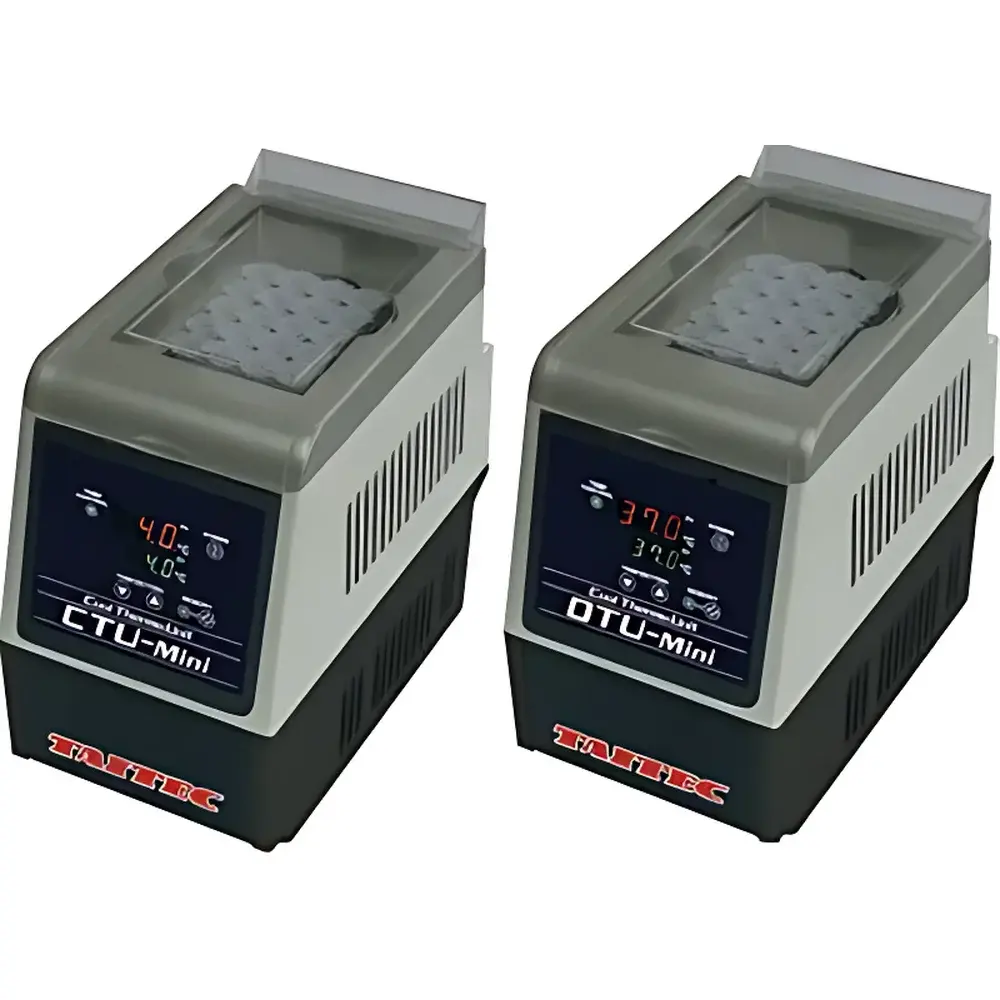
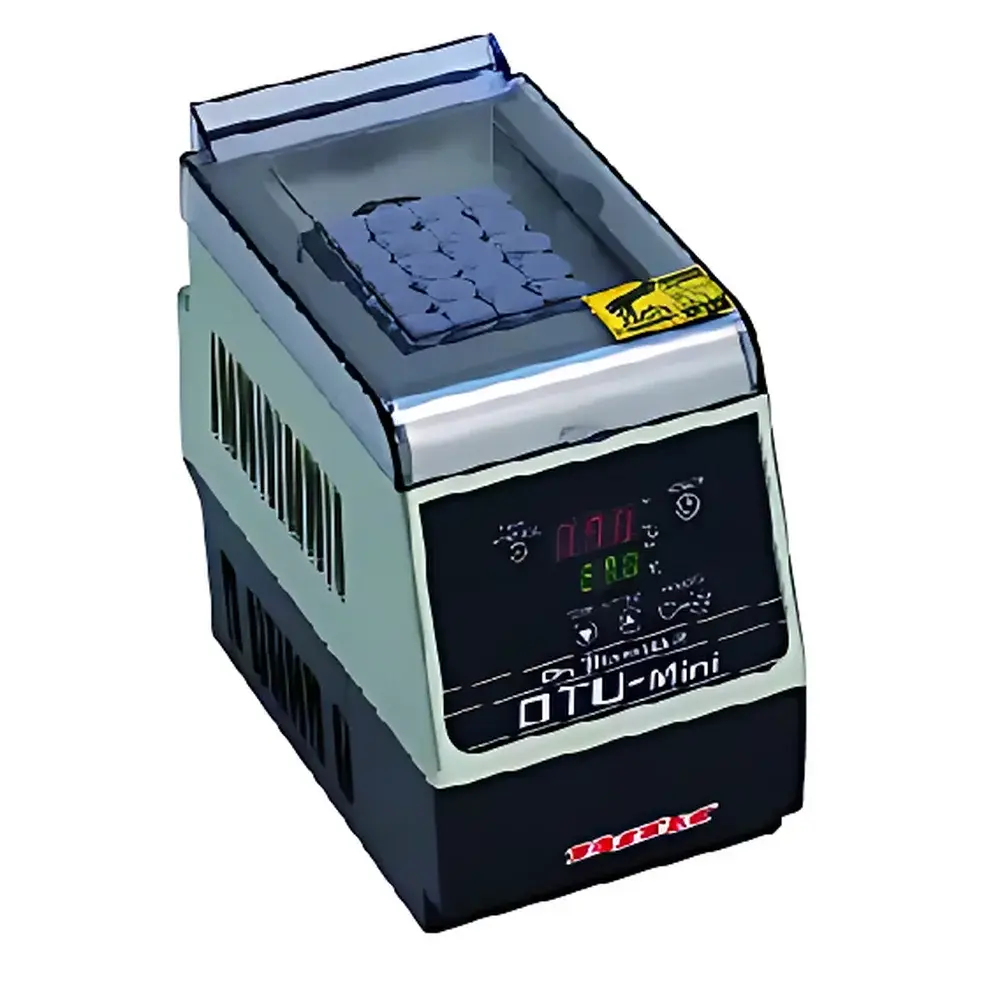
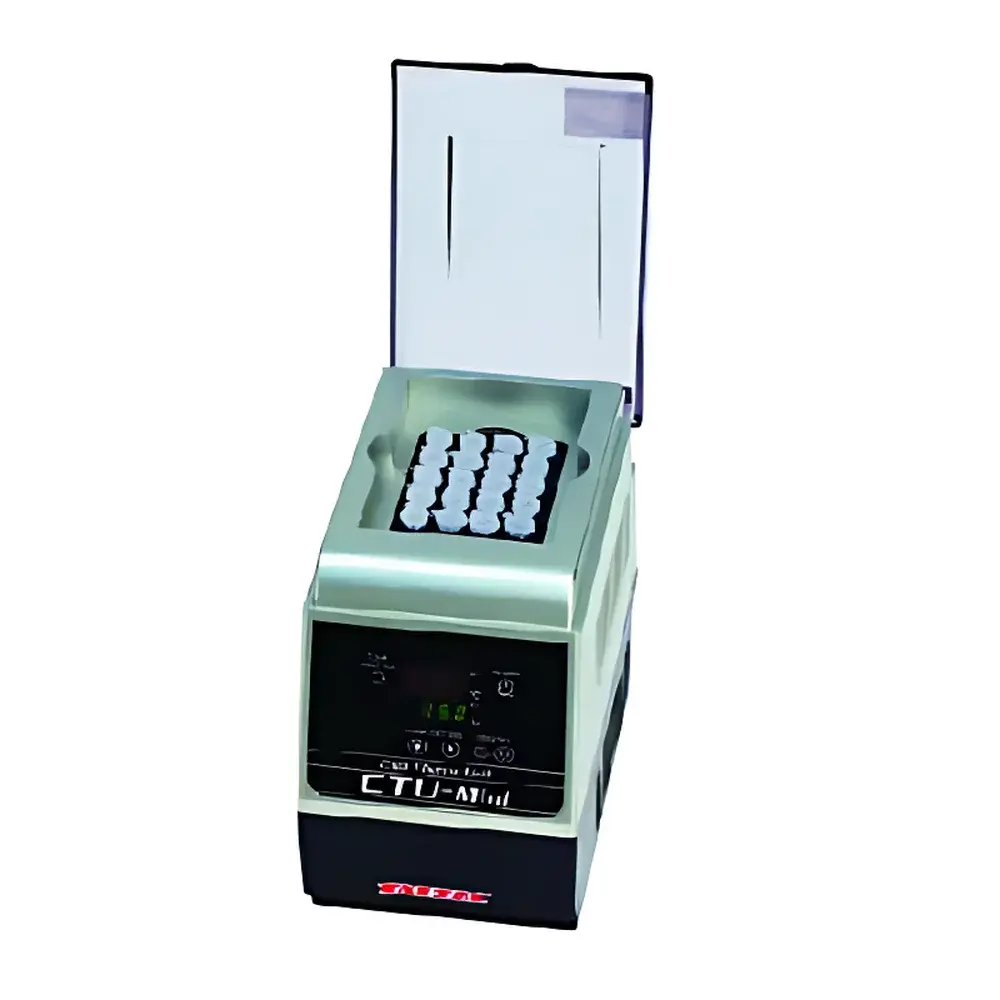
Taitec DTU-mini and CTU-mini Peltier-Driven Compact Metal Block Heaters
| Brand | Taitec |
|---|---|
| Origin | Japan |
| Model | DTU-mini, CTU-mini |
| Temperature Range | 0°C to 105°C (CTU-mini) |
| Temperature Accuracy | ±0.2°C |
| Heating/Cooling Time | ≤15 min (to 105°C from ambient) |
| Dimensions | 128 × 215 × 190 mm (H×W×D) |
| Net Weight | 1.6 kg |
| Temperature Setting Resolution | 0.1°C |
| Control Method | Dual-mode Peltier (CTU-mini), Resistive Heating with Fan Cooling (DTU-mini) |
| Safety Features | Over-temperature/under-temperature protection, sensor fault detection, fuse, memory error monitoring, automatic shutdown on thermal anomaly |
Overview
The Taitec DTU-mini and CTU-mini are compact, high-precision Peltier-driven metal block heaters engineered for reproducible thermal control in molecular biology, clinical diagnostics, and quality control laboratories. Unlike traditional water baths or dry-block ovens, these units employ solid-state thermoelectric (Peltier) technology—enabling bidirectional temperature regulation without refrigerants or external chillers. The CTU-mini achieves active cooling down to 0°C while maintaining heating up to 105°C; the DTU-mini operates in a heating-only mode with enhanced stability starting at ambient +3°C. Both models utilize aluminum heating blocks with precisely machined wells to ensure uniform thermal transfer across sample vessels. Their ultra-compact footprint (B6 book size) minimizes benchtop occupancy while delivering laboratory-grade accuracy (±0.2°C) and rapid thermal transitions—critical for time-sensitive protocols such as enzyme kinetics, nucleic acid denaturation, ligation, and ELISA incubation.
Key Features
- Two platform variants optimized for distinct thermal requirements: CTU-mini supports full-range heating and cooling (0–105°C); DTU-mini delivers high-stability heating from ambient +3°C to 105°C with lower power consumption.
- Advanced Peltier architecture enables precise, drift-free temperature control with ≤0.2°C deviation across the operating range—validated per ISO/IEC 17025 traceable calibration procedures.
- Intuitive digital interface with dual-display mode (setpoint/current temperature), 0.1°C resolution, and one-user memory slot for frequently used protocols—reducing operator error and setup time.
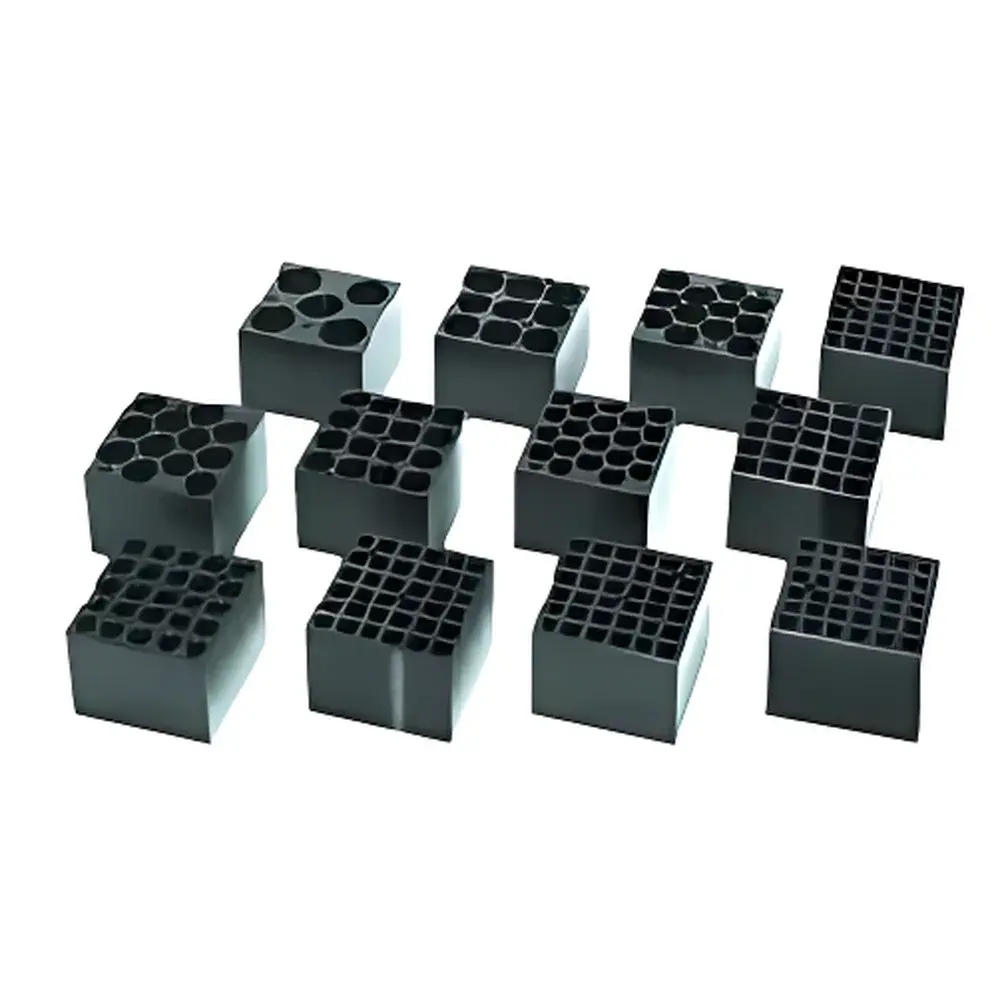
- Modular half-block design accommodates diverse vessel formats: microcentrifuge tubes (0.2–2.0 mL), cryovials, 15 mL conical tubes, and standard 96-well microplates—all via interchangeable, precision-machined aluminum inserts.
- Robust safety system includes redundant thermal sensors, auto-shutdown on over-temperature/under-temperature events, fuse protection, and real-time fault logging—ensuring compliance with IEC 61010-1 for laboratory electrical equipment.
- Benchtop footprint reduced by 60% versus legacy Taitec units—measuring only 128 × 215 × 190 mm (H×W×D) and weighing just 1.6 kg (excluding blocks)—ideal for shared instrumentation spaces or mobile lab configurations.
Sample Compatibility & Compliance
The DTU-mini and CTU-mini support standardized laboratory consumables through a comprehensive family of certified half-blocks (e.g., B-1120A for twenty 1.5 mL tubes; B-0001 for single 96-well plate). All aluminum blocks are anodized for corrosion resistance and thermal homogeneity. Units comply with electromagnetic compatibility (EMC) directives (EN 61326-1) and safety standards (EN 61010-1). While not inherently 21 CFR Part 11 compliant, audit-ready operation is achievable when integrated with validated LIMS or ELN systems that enforce electronic signature, change control, and audit trail requirements. Temperature performance meets ASTM E2202-20 criteria for thermal uniformity in dry-block calibrators.
Software & Data Management
These units operate as standalone instruments with no embedded software or network connectivity. Temperature setpoints, current readings, and alarm status are displayed locally on a high-contrast LED screen. For regulated environments requiring data integrity, external validation protocols—including IQ/OQ documentation, periodic verification using NIST-traceable thermistors, and manual logbook entries—are recommended. Optional third-party data loggers (e.g., Omega OM-DAQPRO-5300) may be interfaced via analog output (if equipped) to capture time-stamped thermal profiles for GLP/GMP audits.
Applications
- Thermal denaturation and renaturation of DNA/RNA in PCR prep workflows.
- Enzyme-catalyzed reactions requiring strict thermal control (e.g., restriction digests, ligations, phosphorylations).
- ELISA and immunoassay incubation steps where consistent dwell time and temperature directly impact signal-to-noise ratio.
- Cell lysis optimization and protein solubilization studies under controlled thermal ramping.
- Stability testing of biologics and reference standards at defined storage temperatures (e.g., 4°C, 37°C, 56°C).
- Calibration support for pipettes and thermometers using stable, homogeneous thermal zones.
FAQ
What is the difference between the CTU-mini and DTU-mini models?
The CTU-mini uses dual-mode Peltier elements for both heating and active cooling (0–105°C), while the DTU-mini employs resistive heating with passive fan-assisted cooling and operates from ambient +3°C to 105°C.
Can the unit maintain temperature during extended overnight incubations?
Yes—both models feature low-drift thermal regulation with continuous feedback control; however, uninterrupted AC power and stable ambient conditions (<25°C) are required for optimal 16-hour stability.
Are replacement blocks supplied with NIST-traceable calibration certificates?
Standard blocks are supplied without certificates; certified calibration services (including block uniformity mapping and probe verification) are available through Taitec-authorized service centers upon request.
Is the device compatible with ISO 15197-compliant glucose assay protocols?
Yes—the ±0.2°C accuracy and rapid stabilization meet the thermal tolerance requirements specified in ISO 15197:2013 Annex C for point-of-care test incubation.
Does the unit support programmable ramping or multi-step temperature profiles?
No—these are single-setpoint instruments designed for static incubation; gradient or time-programmed profiles require external controllers or higher-tier platforms such as the Taitec TempCore series.



