
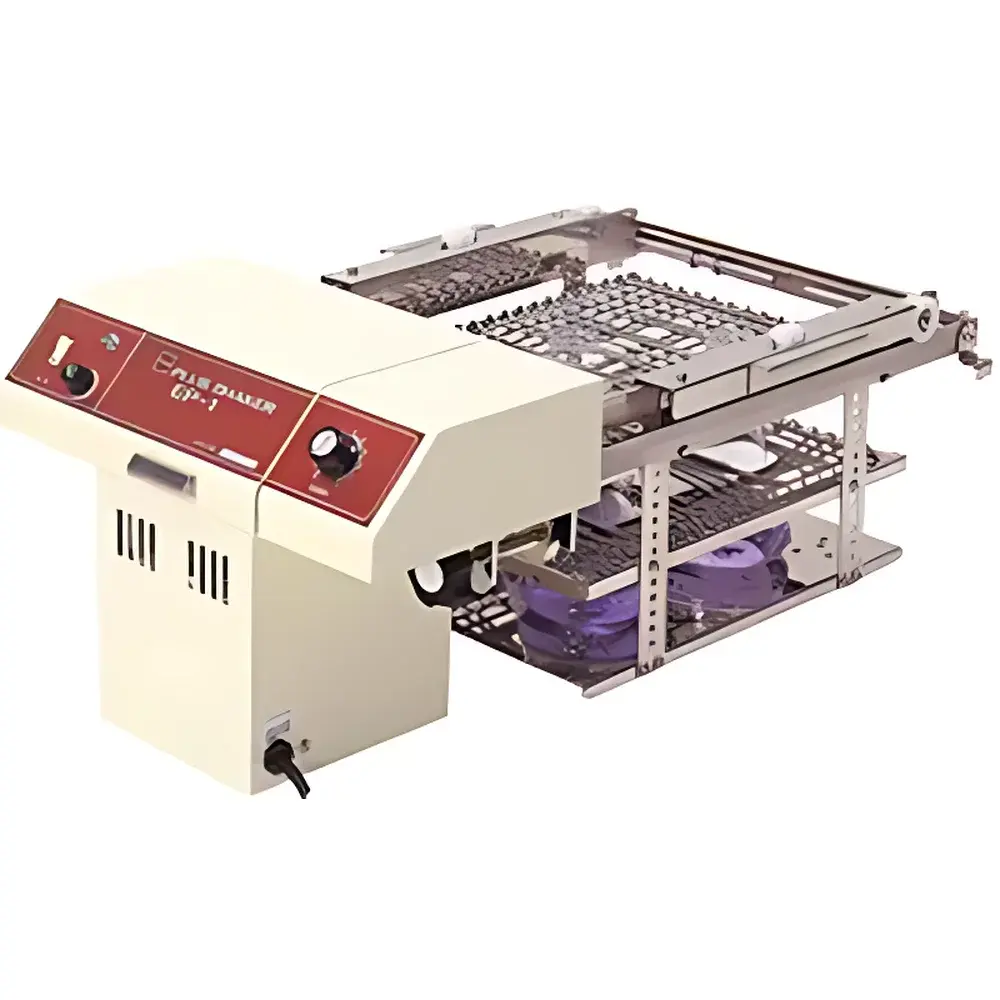
TAITEC EP-1 Combined Orbital Shaking Water Bath
| Brand | TAITEC |
|---|---|
| Origin | Japan |
| Model | EP-1 |
| Instrument Type | Water Bath Shaker / Reciprocating Incubator Shaker |
| Oscillation Mode | Reciprocating |
| Speed Range | 20–160 rpm |
| Amplitude | 0–30 mm (continuously adjustable) |
| Platform Dimensions | 275 × 315 mm |
| Bath Internal Dimensions | 280 × 395 × 140 mm (W × D × H) |
| External Dimensions / Weight | 330 × 575 × 250 mm / ~14 kg |
| Power Supply | AC 100 V, 1 A |
| Max Operating Temperature | ≤80 °C (≤70 °C with plastic bath) |
Overview
The TAITEC EP-1 Combined Orbital Shaking Water Bath is a precision-engineered laboratory instrument designed to deliver synchronized temperature-controlled incubation and reciprocating agitation in a single compact unit. Unlike conventional shakers or standalone water baths, the EP-1 integrates a thermally stable bath chamber with a mechanically isolated oscillating platform—enabling simultaneous control of thermal environment and mechanical stimulation critical for reproducible biological assays. Its operation is based on a linear reciprocating motion drive system, optimized for low-vibration, high-stability shaking across a wide speed range (20–160 rpm), making it suitable for applications requiring gentle yet consistent mixing, such as microbial growth kinetics, enzymatic reaction profiling, nucleic acid hybridization, and cell-based assay development. The unit is not equipped with integrated heating or refrigeration; instead, it is intended for use with external thermostatic circulators or pre-conditioned water baths—ensuring compatibility with existing lab infrastructure and adherence to ISO/IEC 17025-compliant temperature traceability protocols when paired with calibrated external sources.
Key Features
- Four-point adjustable support system ensures rigid, vibration-dampened mounting directly onto standard laboratory water baths—minimizing energy transfer and enhancing mechanical stability during extended operation.
- Modular spring-grid platform with height-adjustable tiers accommodates a broad range of vessel formats including test tubes (13–25 mm), flasks (50–500 mL), microplates, and custom cuvettes; optional clamping fixtures (sold separately) enable secure fixation of irregular or low-profile containers.
- Continuously variable amplitude control (0–30 mm) allows fine-tuned optimization of shear stress and mass transfer rates—critical for oxygen-sensitive cultures or viscous reaction mixtures.
- Robust aluminum-alloy frame and corrosion-resistant stainless-steel components ensure long-term durability in humid, aqueous environments typical of molecular biology and fermentation labs.
- Compact footprint (330 × 575 × 250 mm) and lightweight design (~14 kg) facilitate easy integration into biosafety cabinets, cold rooms, or multi-instrument workstations without compromising accessibility or serviceability.
Sample Compatibility & Compliance
The EP-1 supports routine use with glass, polypropylene, and polycarbonate vessels up to 50 mm in thickness when mounted with optional clamps. Its open-bath architecture permits direct immersion of samples in temperature-controlled liquid media, enabling precise thermal equilibration per ASTM E2912–21 (Standard Practice for Calibration of Laboratory Water Baths). While the EP-1 itself does not incorporate active temperature regulation, its mechanical design conforms to IEC 61000-6-2 (immunity) and IEC 61000-6-4 (emission) standards for laboratory equipment. When operated within specified ambient conditions (15–30 °C, <80% RH) and paired with validated external temperature controllers, the system supports GLP and GMP-aligned workflows—including documentation of shaker parameters (speed, amplitude, duration) via external loggers compliant with FDA 21 CFR Part 11 requirements.
Software & Data Management
The TAITEC EP-1 operates as a stand-alone electromechanical device with no embedded firmware, touchscreen interface, or digital connectivity. All operational parameters—including oscillation speed and amplitude—are set manually via front-panel dials. This analog architecture eliminates software validation burdens and ensures deterministic behavior under regulated environments where firmware updates or cybersecurity risks are prohibited. Users are advised to record operational settings using paper-based or LIMS-integrated electronic lab notebooks (ELNs) that maintain audit trails per ISO/IEC 17025 Clause 7.11. Optional third-party USB data loggers (e.g., Omega OM-DAQPRO-5300) may be deployed to capture real-time RPM and positional feedback when traceable kinetic data is required.
Applications
- Escherichia coli and other bacterial culture expansion under controlled agitation and thermal conditions—supporting OD600 consistency and plasmid yield reproducibility.
- Enzyme kinetics studies requiring uniform substrate dispersion and minimized thermal gradient effects across multi-well reaction arrays.
- Membrane hybridization (Southern/Northern blotting), where low-shear, continuous rocking prevents membrane damage while ensuring uniform probe binding.
- Antibody-antigen binding assays in solution-phase immunochemistry, particularly for low-abundance targets sensitive to turbulent mixing.
- Pre-incubation of PCR master mixes and restriction digests prior to thermal cycling—reducing condensation artifacts and improving reaction homogeneity.
FAQ
Does the EP-1 include built-in heating or cooling functionality?
No. The EP-1 is a mechanical shaker module designed for integration with external thermostatic water baths or circulating chillers.
Can the EP-1 be used outside of a water bath?
Yes—when fitted with optional support feet (TAITEC P/N: SF-EP), it functions as a high-stability benchtop reciprocating shaker independent of liquid media.
What is the maximum recommended operating temperature for the unit?
The EP-1 must be operated at ambient temperatures below +80 °C; if used with a plastic bath insert, the upper limit is reduced to +70 °C to prevent material deformation.
Is the oscillation motion orbital or reciprocating?
The EP-1 employs a linear reciprocating motion—not orbital—providing directional shear profiles ideal for sedimentation-sensitive applications.
Are calibration certificates available for speed and amplitude verification?
TAITEC provides factory calibration reports upon request; users may perform in-house verification using NIST-traceable tachometers and dial indicators per ISO/IEC 17025 Section 6.5.



