
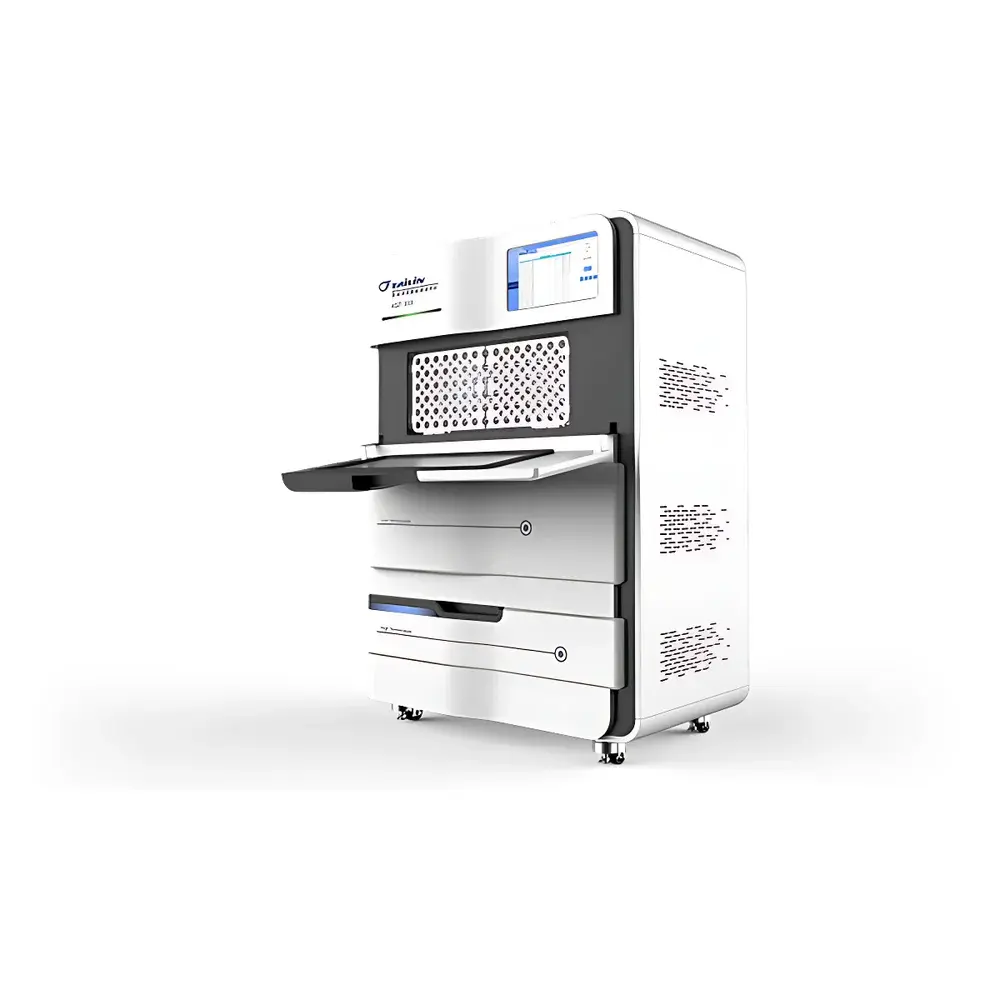
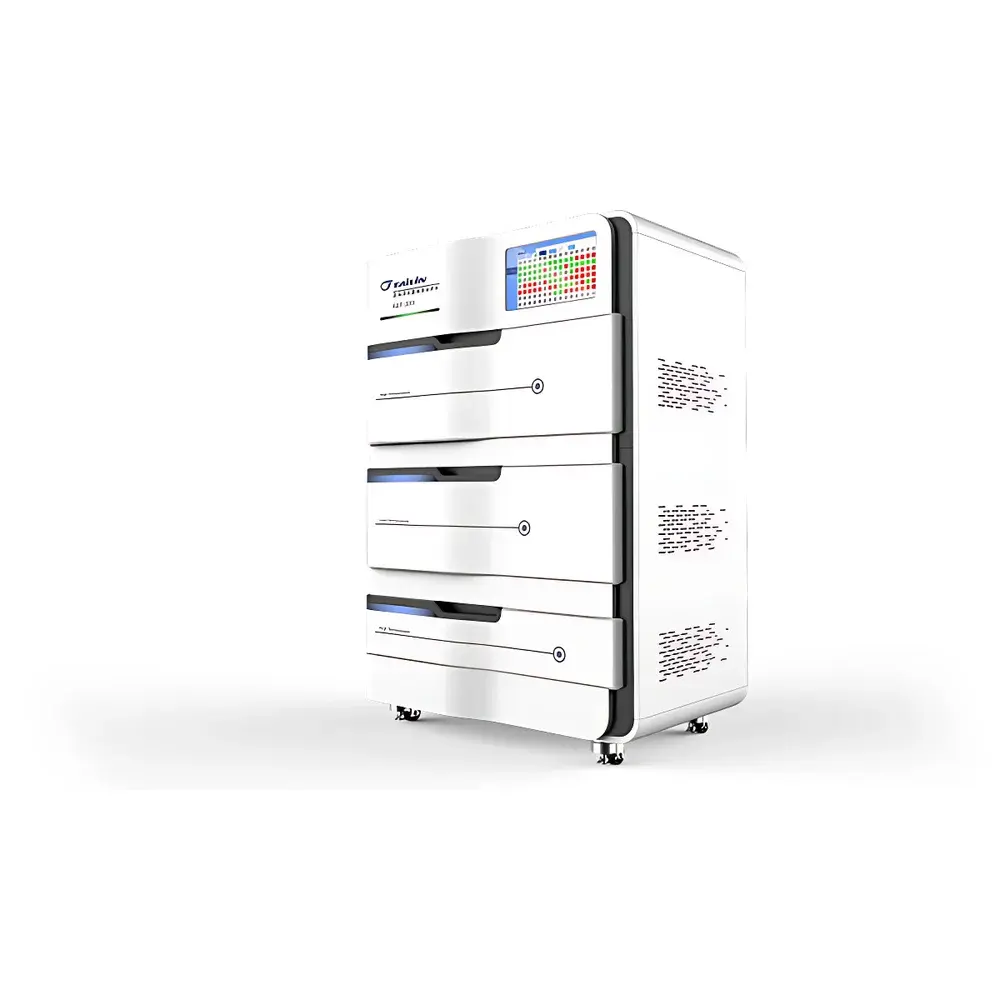
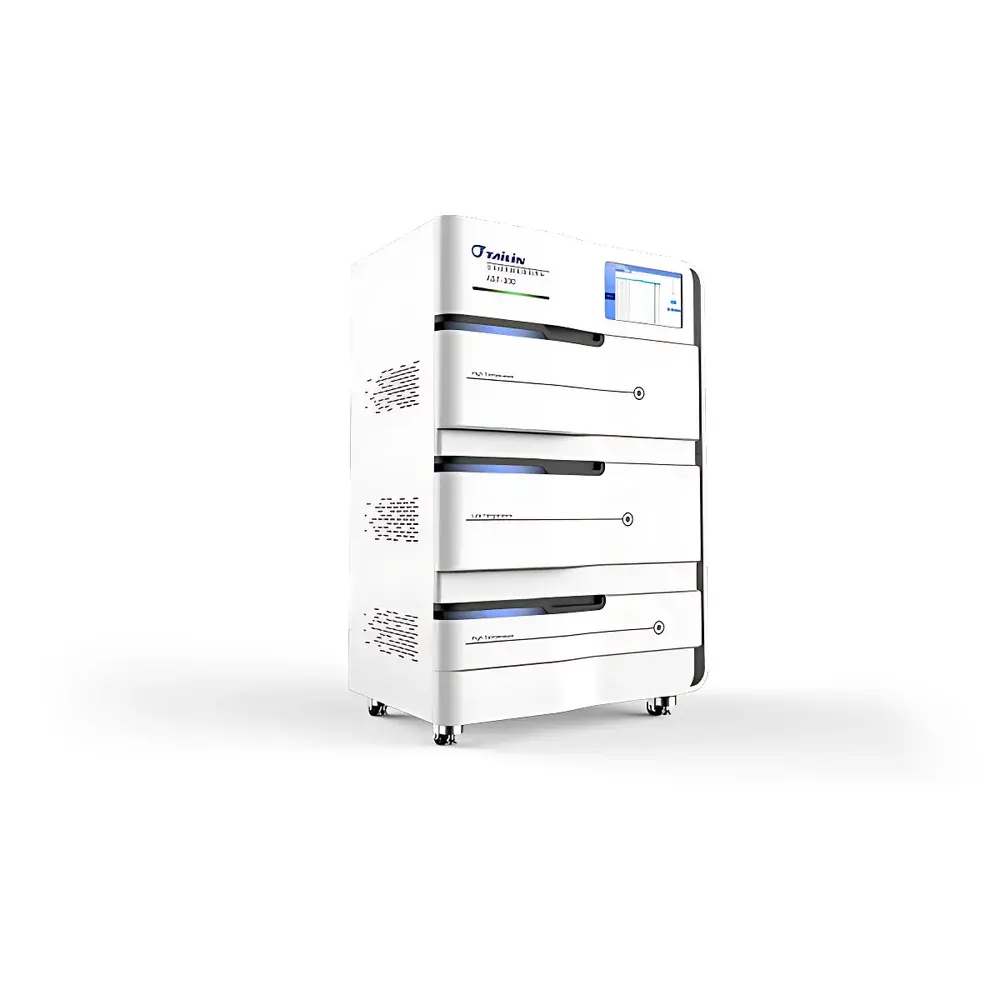
TECHLEAD® AST-300 Automated Sterility Testing System
| Brand | TECHLEAD® |
|---|---|
| Manufacturer | Tailin Biotechnology Co., Ltd. |
| Origin | Zhejiang, China |
| Model | AST-300 |
| Type | Fully Automated Sterility Testing Incubation & Detection System |
| Regulatory Alignment | USP <1223>, EP 5.1.6, ChP 2020 <9201>, FDA 21 CFR Part 11 |
| Temperature Control Zones | Three independent incubation chambers (30–37 °C and 20–25 °C) |
| Detection Time | As low as 8 hours for positive identification |
| Detection Limit | ≤5 CFU per test unit |
| Microbial Coverage | Bacteria, yeasts, and molds |
| Data Integrity | Audit-trail enabled, electronic signature compliant, ALCOA+ principles implemented |
| Method Compatibility | Direct inoculation method |
Overview
The TECHLEAD® AST-300 Automated Sterility Testing System is an engineered solution for rapid, objective, and regulatory-compliant sterility assurance in pharmaceutical, biotechnology, and contract manufacturing environments. Unlike conventional membrane filtration or direct inoculation methods requiring manual colony enumeration after 14 days of incubation, the AST-300 employs real-time optical density monitoring combined with multi-parameter kinetic growth algorithms to detect microbial metabolic activity during incubation. This approach is grounded in the principle of early signal amplification—capturing subtle changes in turbidity, light scatter, and background noise profiles across defined spectral bands—to distinguish viable microbial proliferation from inert particulates or medium-related artifacts. The system is explicitly designed to support the transition from compendial sterility testing (USP , Ph. Eur. 5.1.6) to scientifically validated alternative methods, satisfying the evidentiary requirements outlined in USP , ChP 2020 , and ICH Q5C.
Key Features
- Three independently controlled incubation chambers enable simultaneous testing under pharmacopoeia-specified conditions: aerobic (30–37 °C), anaerobic (30–37 °C), and fungal (20–25 °C), eliminating cross-chamber thermal interference.
- Validated compatibility with official culture media—including Fluid Thioglycollate Medium (FTM) and Soybean–Casein Digest Medium (SCDM)—ensures seamless integration into existing QC workflows without revalidation of media preparation protocols.
- Optical detection module utilizes dual-wavelength transmission photometry with temperature-compensated calibration, delivering high reproducibility across instrument lifecycles and inter-laboratory deployments.
- Embedded algorithm suite includes adaptive baseline subtraction, dynamic thresholding, and multi-stage pattern recognition to minimize false positives while maintaining sensitivity at ≤5 CFU per test unit.
- FDA 21 CFR Part 11 compliance is achieved through role-based access control, electronic signatures with cryptographic binding, immutable audit trails, and full data retention history—including all parameter modifications, user actions, and system events.
- Automated report generation supports PDF/A-1a archival format with embedded metadata, facilitating regulatory submissions and internal quality audits aligned with ALCOA+ (Attributable, Legible, Contemporaneous, Original, Accurate, Complete, Consistent, Enduring, Available).
Sample Compatibility & Compliance
The AST-300 accepts standard sterile filtration assemblies, vials, syringes, and pre-filled containers up to 100 mL volume. It supports both direct inoculation and membrane filtration sample introduction pathways. All validation documentation—including Installation Qualification (IQ), Operational Qualification (OQ), and Performance Qualification (PQ) protocols—is supplied in English and conforms to ISO/IEC 17025 and ASTM E2577 standards for microbiological method verification. The system meets the scientific rigor required for regulatory acceptance under EMA’s Guideline on the Use of Alternative Methods for Sterility Testing and aligns with WHO Technical Report Series No. 1019 Annex 4 on rapid microbiological methods.
Software & Data Management
The TECHLEAD® SterilitySuite™ software platform operates on Windows 10 IoT Enterprise with TLS 1.2 encryption and SQL Server database architecture. It provides configurable user roles (Operator, Supervisor, Administrator), automated backup scheduling, and optional integration with LIMS via ASTM E1384-compliant HL7 or RESTful API endpoints. All raw sensor data—including time-stamped OD curves, chamber temperature logs, and algorithm decision flags—are retained for ≥25 years per GMP data retention policies. Electronic records are digitally signed using SHA-256 certificates and timestamped by NIST-traceable network time servers.
Applications
- Routine sterility release testing of final drug products, including injectables, ophthalmics, and biologics.
- Environmental monitoring program validation and investigation of sterility failures.
- Media fill simulation support with accelerated detection of low-level contamination events.
- Process validation studies requiring rapid feedback on aseptic processing robustness.
- Contract testing laboratories seeking scalable, auditable, and inspection-ready sterility platforms.
FAQ
Does the AST-300 replace pharmacopoeial sterility tests?
No—it serves as a scientifically validated alternative method per USP and must be formally qualified for each product and process prior to implementation.
Can the system be used for anaerobic organisms?
Yes—when configured with appropriate gas-tight vessels and reduced-oxygen media, the 30–37 °C chamber supports anaerobic bacterial detection.
Is method transfer between sites supported?
Yes—system qualification packages include site-specific PQ templates and cross-site correlation protocols compliant with ICH Q5C.
What training and documentation are provided?
Comprehensive GxP-aligned training modules, SOP templates, and full technical manuals—including risk assessments and cybersecurity hardening guides—are delivered with installation.
How is software update integrity verified?
All firmware and software updates undergo SHA-256 hash verification and require dual-authorized electronic signatures before deployment.



