
TeraSense Terahertz Optics Lenses
| Brand | TeraSense |
|---|---|
| Origin | Russia |
| Product Line | Terahertz Optics |
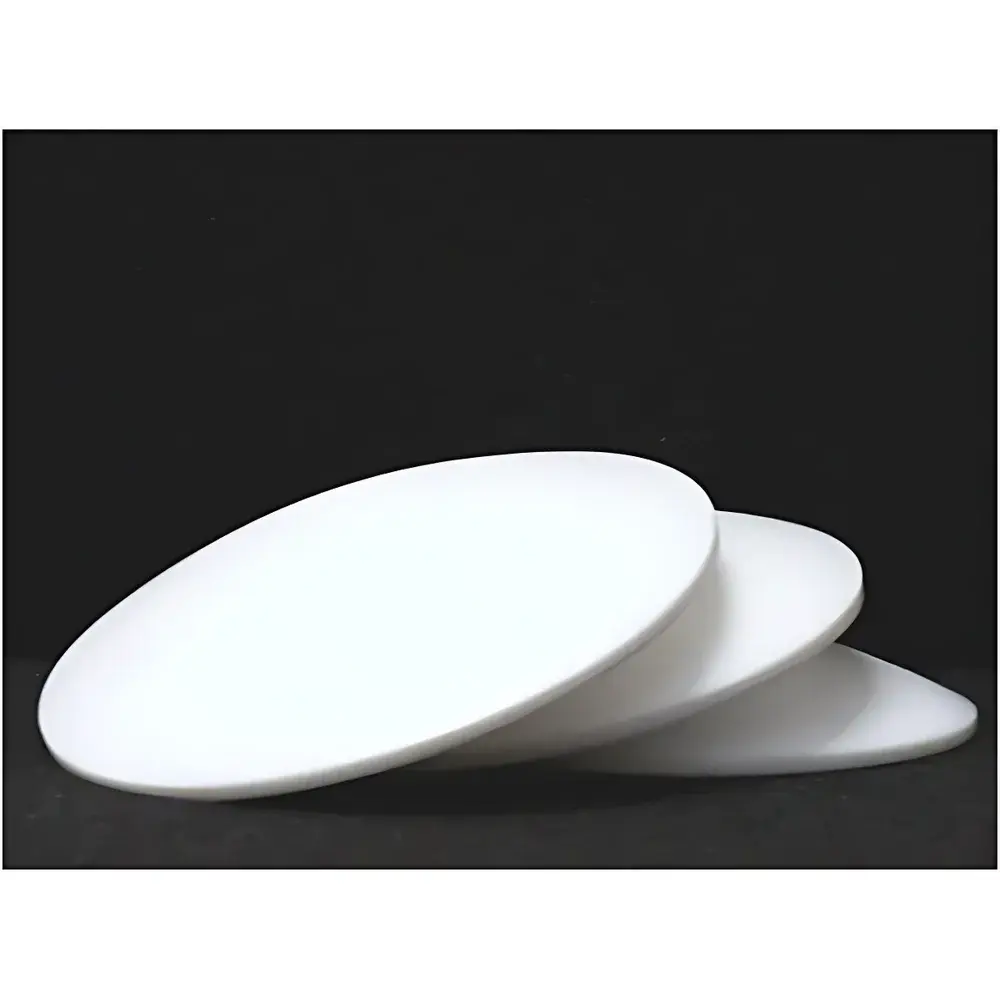
| Material Options | Polytetrafluoroethylene (PTFE) & Poly-4-methylpentene (TPX) |
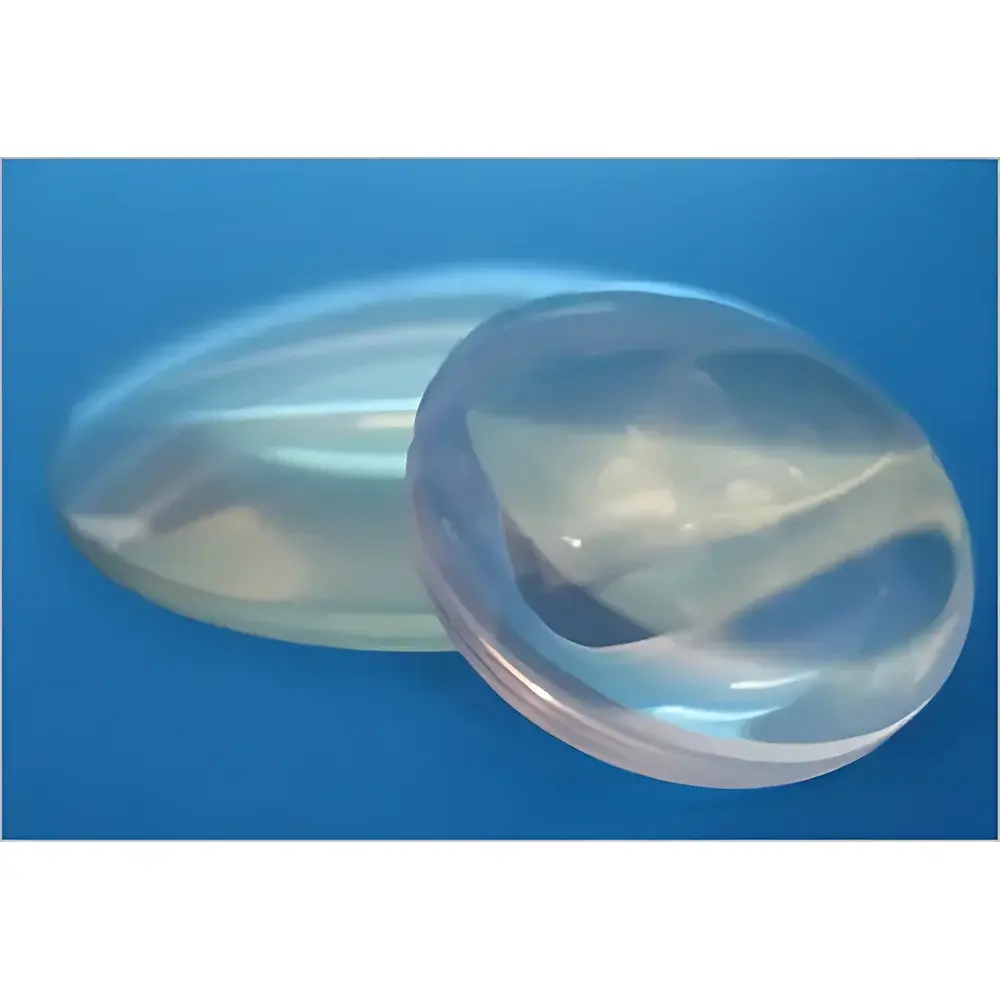
| Lens Types | Aspheric Plano-Convex, Biconvex, and Dual-Lens Focusing Systems |
| Available Diameters | 50–150 mm (PTFE), up to 100 mm (TPX) |
| Focal Lengths | 50–300 mm (single lenses), 165 mm (dual-lens system) |
| Surface Accuracy | ±0.1 mm (PTFE), ±0.01 mm (TPX) |
| Transmission Aperture | ≥80% (PTFE), ≥90% (TPX) |
| Surface Quality | 100/20 (PTFE), 80/50 (TPX, double-sided polished) |
| Refractive Index | ~1.4 @ 0.52 THz (PTFE), ~1.46 @ 0.1–3 THz (TPX) |
| Dielectric Constant | εᵣ ≈ 1.96 @ 520 GHz (PTFE) |
Overview
TeraSense Terahertz Optics Lenses are precision-engineered transmissive components designed for broadband operation across the 0.1–3 THz spectral range. These lenses leverage low-loss, low-dispersion polymer substrates—specifically polytetrafluoroethylene (PTFE) and poly-4-methylpentene (TPX)—to enable high-fidelity beam shaping, collimation, and focusing in time-domain spectroscopy (TDS), continuous-wave (CW) imaging, and free-space terahertz systems. Unlike conventional silica or silicon optics, which exhibit strong absorption or reflection losses above 100 GHz, PTFE and TPX possess exceptionally low dielectric constants (εᵣ ≈ 1.96 and ≈ 2.1, respectively) and minimal dispersion, resulting in transmission efficiencies exceeding 85% per surface in optimized configurations. The lenses are fabricated using diamond-turning and precision polishing techniques to meet stringent wavefront error and surface figure tolerances required for diffraction-limited performance in coherent THz applications.
Key Features
- Two-material platform: PTFE lenses optimized for mechanical robustness and thermal stability; TPX lenses engineered for superior surface accuracy and higher transmission uniformity
- Aspheric plano-convex and biconvex geometries reduce spherical aberration in focused-beam setups, supporting spot sizes down to <100 µm at 1 THz
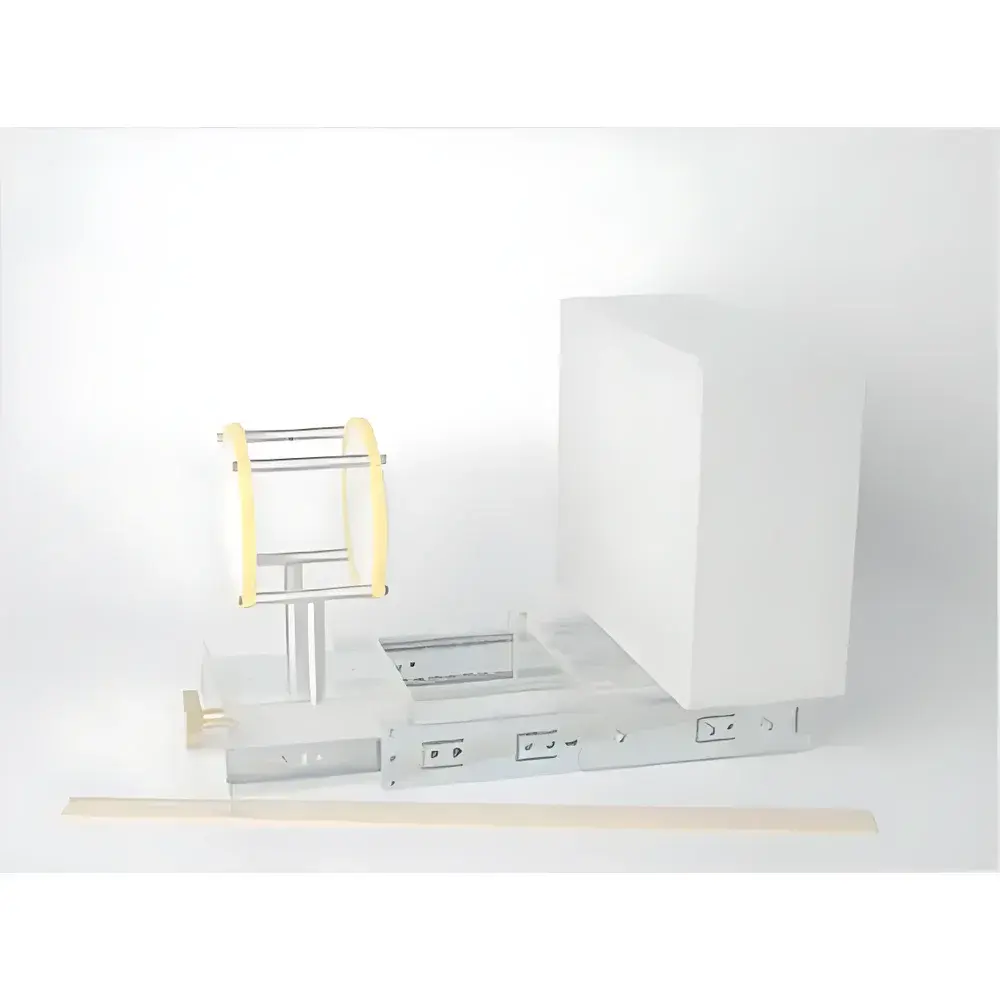
- Dual-lens focusing systems (120 mm clear aperture, 85 mm inter-lens spacing) provide achromatic-like correction over >100 GHz bandwidths
- Surface figure accuracy of ±0.01 mm (TPX) and ±0.1 mm (PTFE) ensures predictable phase front propagation and minimal wavefront distortion
- Scratch-dig specifications of 80/50 (TPX, double-side polished) and 100/20 (PTFE) comply with ISO 10110-7 standards for optical component surface quality
- Focal length tolerance of ±1% (TPX) and ±5% (PTFE) enables repeatable alignment in modular THz test benches and OEM integration
Sample Compatibility & Compliance
These lenses are compatible with standard THz sources including photoconductive antennas (PCAs), UTC-PDs, quantum cascade lasers (QCLs), and backward-wave oscillators (BWOs). They support both pulsed (femtosecond-laser-pumped) and CW excitation schemes without thermal lensing or nonlinear distortion. All lenses are manufactured under controlled cleanroom conditions (ISO Class 7) and undergo spectral transmission verification via Fourier-transform infrared (FTIR) spectrometry from 0.1 to 3 THz. Documentation includes material certification (ASTM D1435 for polymer aging resistance), refractive index traceability (NIST-traceable THz-TDS calibration), and RoHS-compliant material declarations. No hazardous substances per EU Directive 2011/65/EU are present in substrate or coating layers.
Software & Data Management
While the lenses themselves are passive optical elements, TeraSense provides optional Zemax OpticStudio-compatible .ZAR and .STEP files for ray-tracing integration into end-user optical design workflows. These models incorporate measured dispersion data (Sellmeier coefficients derived from THz-TDS measurements), surface irregularity maps, and realistic AR-coating layer stacks (where applicable). For GMP/GLP-regulated environments, lens serial numbers are logged in a secure audit trail database, supporting full traceability from raw material lot to final inspection report—including interferometric surface map archives and spectral transmission curves. Export documentation complies with EAR99 classification and includes ECCN 3A001.b.2.a for dual-use optical components.
Applications
- THz time-domain spectroscopy (TDS) beam delivery and sample illumination optics
- Real-time security screening systems requiring wide-field, low-aberration focusing
- Non-destructive testing (NDT) of polymer composites, pharmaceutical tablets, and aerospace foam insulation
- Terahertz near-field microscopy objective assemblies (when combined with hyperhemispherical TPX substrates)
- OEM integration into compact THz spectrometers and portable imaging platforms
- Calibration reference optics for THz power meter alignment and beam profiler validation
FAQ
Are these lenses anti-reflection coated?
Standard versions are uncoated; however, custom MgF₂ or multilayer polymer AR coatings (optimized for 0.3–1.5 THz) are available upon request with <5% residual reflectance per surface.
What is the damage threshold for pulsed THz systems?
For femtosecond-pumped PCA sources (<100 fs pulses, 80 MHz repetition rate), the maximum fluence is 0.5 mJ/cm² (PTFE) and 0.35 mJ/cm² (TPX) — verified via THz pulse energy monitoring before and after prolonged exposure.
Can I mount these lenses in standard SM1-threaded lens tubes?
Yes — all lenses with diameters ≤120 mm include optional SM1-compatible retaining rings and kinematic mounts compatible with Thorlabs and Newport optomechanical platforms.
Do you provide metrology reports for individual units?
Each shipped lens includes a certificate of conformance with interferometric surface map (Zygo Verifire), spectral transmission curve (0.1–3 THz), and dimensional inspection report (CMM-measured diameter, thickness, and center thickness deviation).
Is TPX suitable for vacuum environments?
TPX exhibits outgassing rates below 1×10⁻⁶ g/(m²·h) at 23°C per ASTM E595, making it qualified for UHV-compatible optical paths when baked to 60°C prior to chamber insertion.




