
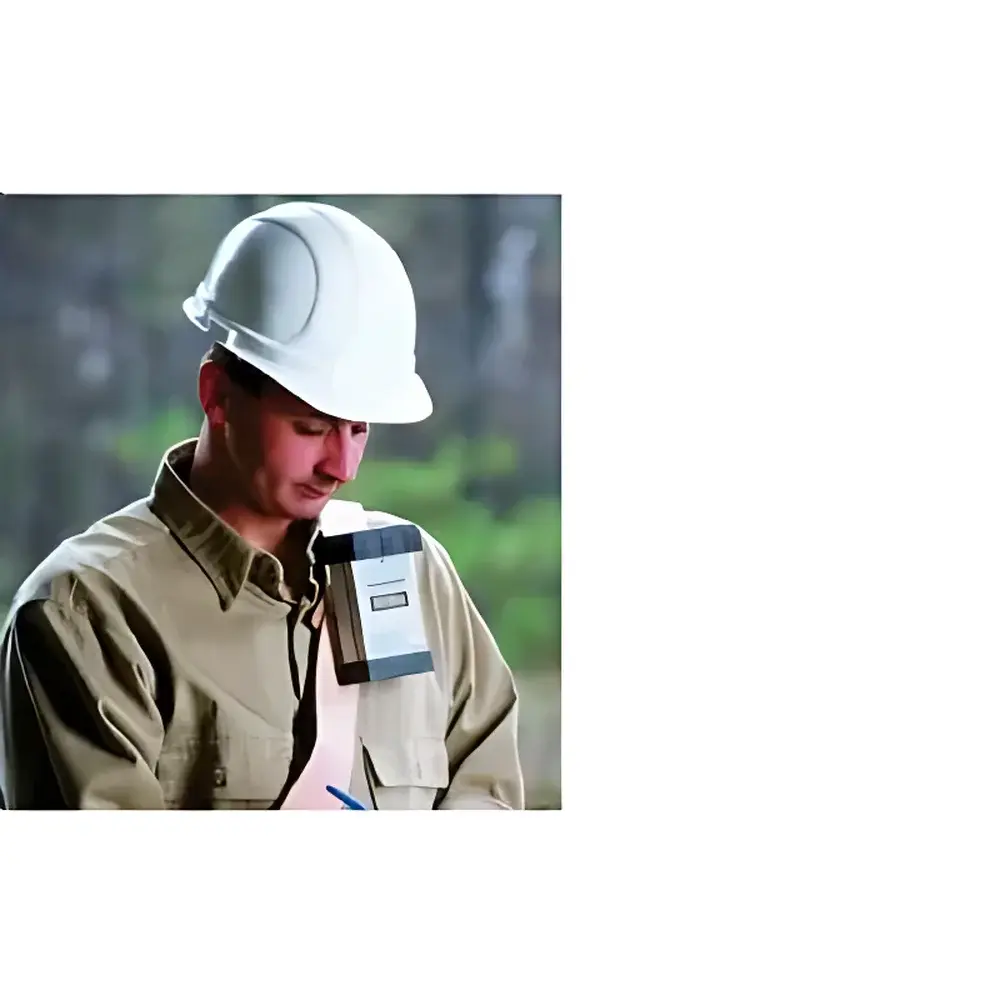
Thermo Fisher pDR-1000AN Passive Aerosol Monitor
| Brand | Thermo Fisher |
|---|---|
| Origin | USA |
| Manufacturer Type | Original Equipment Manufacturer (OEM) |
| Import Status | Imported |
| Model | pDR-1000AN |
| Measurement Principle | Optical Light Scattering (Forward Scatter at 50–90°) |
| Measured Parameters | PM₁₀, PM₂.₅ |
| Detection Range | 0.001–400 mg/m³ |
| Particle Size Response | 0.1–10 µm |
| Output | Analog Voltage & Digital Serial (RS-232), Optional Alarm Relay |
| Weight | 0.5 kg |
| Dimensions | Palm-sized (approx. 12.7 × 8.9 × 4.4 cm) |
| Power | AC Adapter or Optional Rechargeable Battery |
| Calibration Traceability | NIST-traceable gravimetric calibration using SAE test dust |
Overview
The Thermo Fisher pDR-1000AN Passive Aerosol Monitor is an optical light-scattering instrument engineered for real-time, continuous measurement of airborne particulate mass concentration in the respirable and thoracic size fractions. Unlike filter-based gravimetric methods—which require post-sampling laboratory analysis—the pDR-1000AN employs a robust forward-scatter photometric principle: aerosol particles passing through its detection chamber scatter near-infrared light (emitted by a pulsed LED) at angles between 50° and 90°; this scattered intensity is linearly proportional to mass concentration under controlled flow and calibration conditions. The optical architecture is optimized for particles ranging from 0.1 µm to 10 µm—encompassing both PM₂.₅ and PM₁₀ fractions—and demonstrates strong correlation with NIST-traceable gravimetric reference methods when calibrated against SAE test dust. Its passive sampling design eliminates moving parts (e.g., pumps, valves, or motors), ensuring long-term operational stability, minimal maintenance, and intrinsic suitability for personal exposure monitoring, fixed-site surveillance, and mobile environmental surveys.
Key Features
- Passive, pump-free operation: No internal sampling pump or mechanical actuation—reducing power consumption, noise, and failure points.
- Real-time response: Delivers second-scale concentration updates with audible alarm triggered upon user-defined threshold exceedance.
- Wide dynamic range: Auto-ranging capability from 0.001 to 400 mg/m³ supports applications from cleanroom-level monitoring to high-dust industrial environments.
- Palm-sized form factor (12.7 × 8.9 × 4.4 cm) and lightweight construction (0.5 kg) enable seamless integration into personal sampling protocols—e.g., belt- or shoulder-mounted deployment per ISO 7708 and ACGIH TLV® guidelines.
- Optical feedback-balanced sensing system ensures long-term signal stability and resistance to drift over extended field deployments.
- Integrated data logging: Stores time-stamped concentration records internally for later retrieval via RS-232 interface.
- NIST-traceable calibration: Factory-calibrated using gravimetric standards; field recalibration supported via side-by-side comparison with reference filter samplers (e.g., SKC IOM, GK2.69) and adjustment of instrument-specific calibration constants.
Sample Compatibility & Compliance
The pDR-1000AN is validated for use with ambient air, indoor workplace atmospheres, and controlled chamber environments containing smoke, dust, mist, and other polydisperse aerosols within the 0.1–10 µm aerodynamic diameter range. It complies with performance expectations outlined in ISO 16000-27 (indoor air—determination of airborne particle mass concentration), ASTM D6245 (standard guide for using indoor carbon dioxide concentrations to evaluate building ventilation), and OSHA Technical Manual Section II: Chapter 2 (sampling and analytical methods for particulates). While not a regulatory-grade reference method per EPA Method PS-1 or ISO 29463, it serves as a qualified screening and trend-monitoring tool aligned with GLP-aligned field studies, occupational hygiene assessments, and epidemiological cohort exposure characterization. Its analog/digital outputs support integration into SCADA systems and third-party data acquisition platforms compliant with FDA 21 CFR Part 11 audit trail requirements when paired with validated software configurations.
Software & Data Management
The included PC communication software enables bidirectional interaction: downloading logged datasets, configuring alarm thresholds, adjusting averaging intervals (1–60 seconds), and exporting CSV-formatted time-series files compatible with MATLAB, Python (Pandas), and industry-standard statistical packages. Firmware supports automatic self-checks of zero stability and calibration integrity at startup and during idle periods. All configuration changes and alarm events are timestamped and stored in non-volatile memory. Raw scatter voltage signals and processed mass concentration values are retained separately, permitting retrospective reprocessing with updated calibration factors—critical for longitudinal exposure reconstruction in toxicology and environmental health studies.
Applications
- Personal exposure assessment in mining, construction, foundry, and pharmaceutical manufacturing settings.
- Indoor air quality (IAQ) baseline surveys and intervention verification (e.g., HVAC upgrades, filtration efficacy testing).
- Mobile mapping of spatial aerosol gradients using handheld or vehicle-mounted configurations.
- Emergency response triage—rapid identification of elevated particulate zones during fire, demolition, or hazardous material incidents.
- Long-term unattended monitoring at remediation sites, landfill perimeters, or near traffic corridors.
- Supporting inhalation toxicology studies requiring time-resolved dose metrics correlated with activity diaries.
- Validation of computational fluid dynamics (CFD) models simulating aerosol dispersion in enclosed spaces.
FAQ
How does the pDR-1000AN differ from active-gravimetric samplers?
It provides real-time concentration data without filter collection or lab analysis—enabling immediate hazard recognition and adaptive sampling strategies.
Is the instrument suitable for regulatory compliance reporting?
No—it is not certified as a primary reference method under EPA or EU EN 12341, but it meets data quality objectives for screening, source identification, and exposure pattern analysis per AIHA RP-1 and NIOSH BC 6001 guidance.
Can it be used outdoors in rain or high humidity?
The standard unit is rated IP54; optional weatherproof enclosures and heated inlet kits are available for sustained outdoor deployment.
What is the recommended calibration frequency?
Annual factory recalibration is advised; field verification against co-located filter-based samplers should occur prior to critical studies or after mechanical shock or extreme temperature exposure.
Does the device support wireless data transmission?
Not natively—but RS-232 output can be interfaced with commercial cellular or LoRaWAN telemetry modules via third-party adapters configured for serial-to-IP bridging.
Related Products







