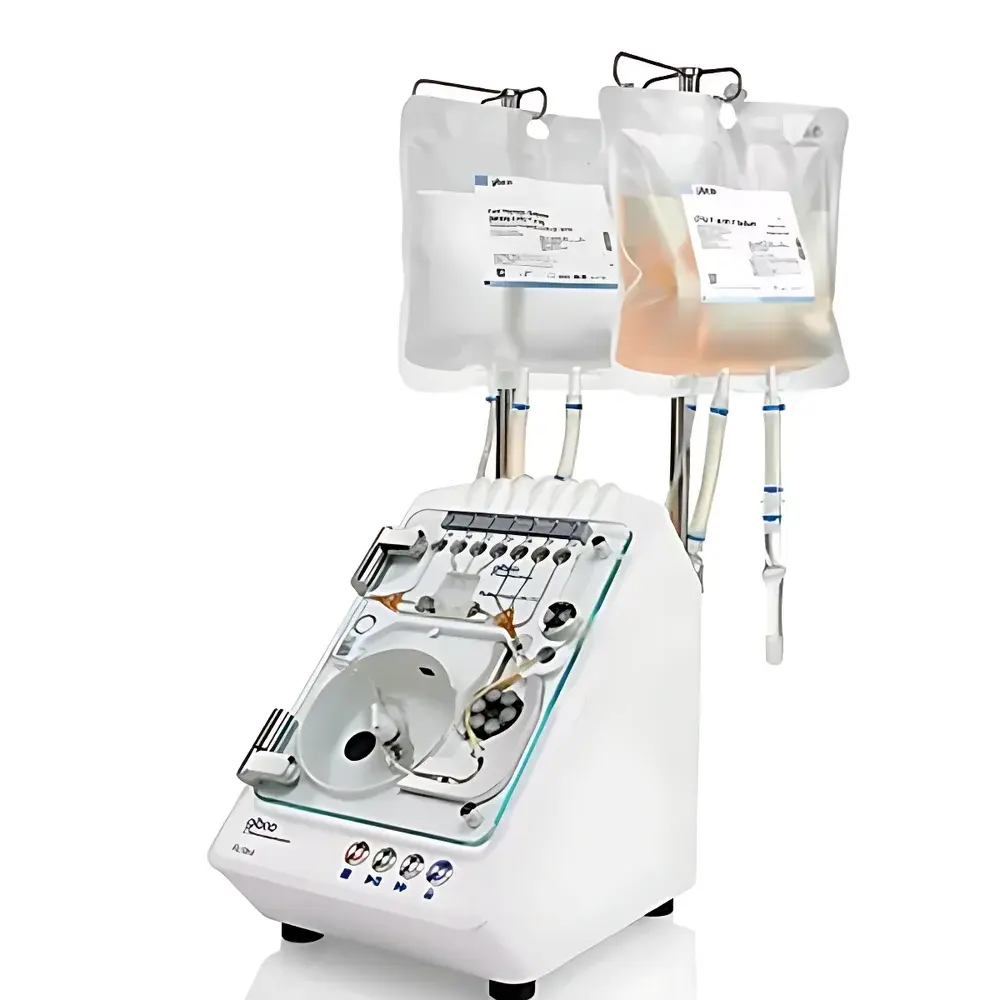
Thermo Fisher Scientific CTS Rotea Counter-Flow Centrifugation System
| Brand | Thermo Fisher Scientific |
|---|---|
| Origin | Shanghai, China |
| Manufacturer Type | Authorized Distributor |
| Product Origin | Domestic (China) |
| Model | CTS Rotea Counter-Flow Centrifugation System |
| Pricing | Available Upon Request |
Overview
The Thermo Fisher Scientific CTS Rotea Counter-Flow Centrifugation System is an automated, closed-process cell processing platform engineered for precision, scalability, and regulatory readiness in advanced therapy medicinal product (ATMP) development and manufacturing. It employs counter-flow centrifugation—a hydrodynamically controlled, continuous separation principle—where cells and process fluids move in opposing directions within a rotating chamber, enabling high-resolution density-based separation without reliance on fixed-density gradients or sedimentation time. Unlike conventional batch centrifuges, the Rotea system maintains laminar flow profiles and minimizes shear stress, preserving cell viability, phenotype integrity, and functional potency—critical parameters for autologous and allogeneic cell therapies including CAR-T, TCR-T, NK-cell, and mesenchymal stromal cell (MSC) products. Designed to operate within ISO Class 7 (or lower-grade) cleanroom environments, it reduces dependency on ultra-high-grade containment infrastructure by integrating gamma-irradiated, single-use, sterile fluid path kits compliant with USP particulate matter requirements and ISO 10993 biocompatibility standards.
Key Features
- Automated, closed-system operation with pre-validated, gamma-sterilized disposable kits—eliminating manual open transfers and minimizing contamination risk.
- Real-time, non-invasive process monitoring via integrated CellCam optical imaging module, enabling live visualization of cell layer formation, interface dynamics, and wash efficiency during separation.
- Onboard method generator with simulation mode: allows users to configure, test, and optimize protocols digitally prior to wet-run validation—reducing reagent consumption and experimental iteration time.
- Modular integration capability: supports seamless connection to upstream (e.g., bioreactors, cell harvest units) and downstream (e.g., fill-finish stations, cryopreservation modules) equipment via standard tubing interfaces and 3rd-party communication protocols (e.g., OPC UA).
- GMP-aligned architecture: includes full audit trail logging, electronic signatures per 21 CFR Part 11, and configurable user access levels aligned with ALCOA+ data integrity principles.
Sample Compatibility & Compliance
The CTS Rotea system processes a broad range of primary and cultured human cell types—including peripheral blood mononuclear cells (PBMCs), CD34+ hematopoietic progenitors, T lymphocytes, dendritic cells, and adherent MSCs—across volumes from 50 mL to 2 L per run. All fluid paths are constructed from USP Class VI-certified thermoplastic elastomers; kits undergo full endotoxin testing (<0.25 EU/mL) and sterility verification per ISO 11737-1. The system complies with ICH Q5A(R2) for viral clearance validation support, and its operational parameters align with ASTM F3196-16 (Standard Guide for Characterization of Cell Therapy Products) and ISO 20387:2018 (Biobanking requirements). Process documentation meets GLP and GMP expectations for clinical-stage and commercial-scale ATMP manufacturing.
Software & Data Management
The Rotea Control Software v3.x provides a validated, Windows-based interface supporting method creation, execution, and review. Each run generates a comprehensive electronic batch record (EBR) containing time-stamped sensor data (flow rate, RPM, temperature, pressure differential), image snapshots from CellCam, and operator annotations. Data export conforms to CSV and PDF/A-2 formats for archival; raw files are stored in encrypted SQLite databases with SHA-256 hashing. Integration with Thermo Fisher’s Connect Platform enables centralized fleet monitoring, remote diagnostics, and trend analysis across multiple instruments—facilitating continuous process verification (CPV) and quality-by-design (QbD) initiatives.
Applications
- Isolation and enrichment of PBMCs from leukapheresis or whole blood for downstream expansion and genetic modification.
- Buffer exchange and washing of activated T cells prior to transduction or formulation.
- Concentration and formulation of final drug product suspensions in cryoprotectant media for frozen storage.
- Removal of residual red blood cells, platelets, or culture debris following expansion in serum-free or xeno-free media.
- Process development and tech transfer between R&D, clinical manufacturing, and commercial GMP facilities using identical hardware, consumables, and SOPs.
FAQ
Is the CTS Rotea system suitable for use under current Good Manufacturing Practice (cGMP) conditions?
Yes—the system is designed and qualified for cGMP environments, with full traceability, audit trail functionality, and compatibility with validated Gibco CTS reagents and single-use kits.
Can the Rotea system be integrated into an existing automated cell therapy platform?
Yes—it supports standard analog/digital I/O, Modbus TCP, and OPC UA connectivity for interoperability with third-party automation systems and MES platforms.
What is the maximum viable cell concentration achievable post-processing?
Typical output concentrations range from 1×10⁷ to 5×10⁸ cells/mL depending on input volume, cell type, and selected kit configuration—validated per internal Thermo Fisher technical reports TR-CTS-ROTEA-2023-01 through -04.
Are software updates provided with regulatory documentation?
Yes—each major release includes a validated change control package, impact assessment, and updated IQ/OQ protocols available under NDA-controlled access.
Does the system support process analytical technology (PAT) frameworks?
Yes—CellCam imaging, real-time flow cytometry-compatible sampling ports (optional), and integrated pressure/temperature sensors enable PAT-compliant monitoring per FDA Guidance for Industry (2019).