
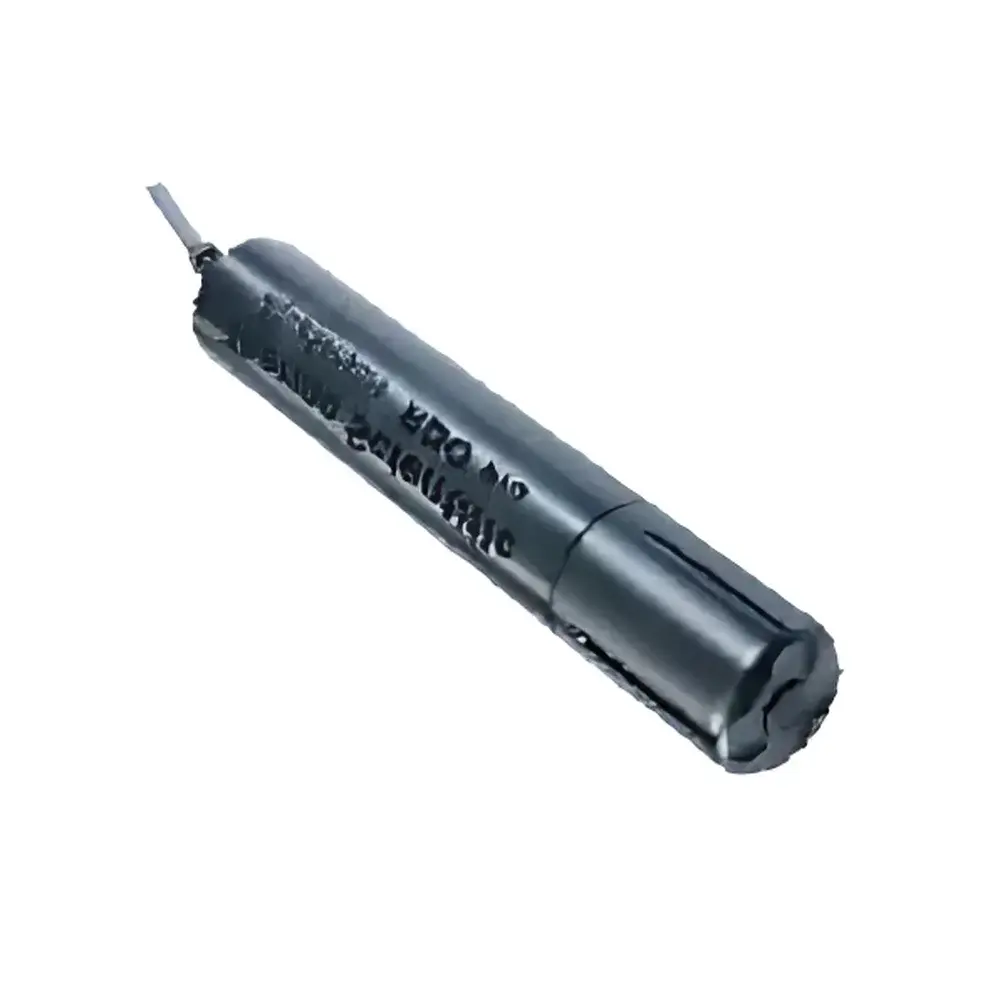
Thermo Scientific AquaPro RDO Fluorescent Dissolved Oxygen Analyzer
| Brand | Thermo Fisher |
|---|---|
| Origin | USA |
| Manufacturer | Thermo Fisher Scientific |
| Product Type | Imported |
| Model | Thermo Scientific AquaPro RDO |
| Instrument Category | Online Dissolved Oxygen Analyzer |
| Measurement Principle | Fluorescence Quenching |
| Range | 0–20 ppm / 0–200% saturation |
| Accuracy | ±0.1 ppm (≤8 ppm), ±0.2 ppm (8–20 ppm) |
| Repeatability | ±5% |
| Detection Limit | 0.01 ppm or 0.1% saturation |
| Maintenance Interval | Fluorescence Cap Replacement Every 2 Years |
| Certification | CE Marked |
| Regulatory Compliance | Designed for compliance with ISO 5814:2012 (Water quality — Determination of dissolved oxygen — Electrochemical probe method), ASTM D888-22 (Standard Test Methods for Dissolved Oxygen in Water), and supports GLP/GMP data integrity requirements |
Overview
The Thermo Scientific AquaPro RDO Fluorescent Dissolved Oxygen Analyzer is an online, process-grade analytical instrument engineered for continuous, high-stability measurement of dissolved oxygen (DO) concentration in aqueous environments. It employs the optical principle of fluorescence quenching—where molecular oxygen modulates the lifetime and intensity of a ruthenium-based fluorophore immobilized on a replaceable optical sensing cap. Unlike traditional Clark-type electrochemical sensors, the AquaPro RDO requires no oxygen-permeable membrane, no internal electrolyte solution, and exhibits zero galvanic drift or polarization delay. This architecture eliminates common failure modes associated with membrane fouling, electrolyte depletion, and cathode poisoning—particularly by hydrogen sulfide (H2S), which renders conventional amperometric sensors unreliable in wastewater, biogas scrubbers, or sulfate-reducing environments. The sensor operates across a wide dynamic range (0–20 ppm / 0–200% air saturation) with inherent immunity to pH fluctuations, CO2 interference, heavy metal ions, ammonia, chloride, sulfides, and sulfate—an advantage critical for long-term deployment in municipal wastewater treatment plants, aquaculture recirculation systems, industrial cooling water circuits, and bioprocess monitoring applications.
Key Features
- Fluorescence-based detection ensures stable, drift-free DO measurements without membrane replacement or electrolyte refilling.
- Optical sensing cap certified for 24-month operational life under typical environmental conditions—reducing scheduled maintenance frequency and total cost of ownership.
- CE-marked design compliant with EU Directive 2014/30/EU (EMC) and 2014/35/EU (LVD), suitable for installation in Zone 2 hazardous locations when paired with appropriate barrier systems.
- Integrated temperature compensation using a Pt1000 RTD sensor; automatic pressure correction via optional barometric sensor input.
- Rugged IP66-rated housing with stainless steel (316L) wetted parts and FKM-sealed optical interface for chemical resistance in aggressive wastewater matrices.
- Supports 4–20 mA analog output with HART® 7 protocol, Modbus RTU over RS-485, and optional Ethernet/IP or PROFINET for integration into SCADA and DCS platforms.
Sample Compatibility & Compliance
The AquaPro RDO is validated for use in raw influent, activated sludge, effluent, surface water, groundwater, and saline estuarine samples. Its optical chemistry demonstrates negligible cross-sensitivity to common interferents per ISO 5814:2012 Annex B, including H2S up to 5 mg/L, NH3-N up to 50 mg/L, Cl− up to 5,000 mg/L, and Fe2+/Cu2+ at concentrations typical of secondary treatment effluents. Calibration verification follows ASTM D888-22 Section 9.3 (Winkler titration reference method), and field validation protocols align with EPA Method 360.1 for regulatory reporting. Data logging meets FDA 21 CFR Part 11 requirements when used with Thermo Fisher’s optional AquaLink™ software suite, enabling electronic signatures, audit trails, and secure user access control.
Software & Data Management
The AquaPro RDO integrates natively with Thermo Fisher’s AquaLink™ Process Analytics Software (v3.2+), providing real-time trend visualization, automated calibration scheduling, alarm management (high/low DO thresholds, cap aging alerts), and export of timestamped CSV/Excel reports. All configuration changes, calibration events, and diagnostic logs are time-stamped and stored locally with SHA-256 hashing for integrity verification. Optional cloud connectivity via AquaLink Connect enables remote diagnostics, firmware updates, and predictive maintenance analytics based on cap photobleaching rate modeling.
Applications
- Municipal and industrial wastewater treatment: Aeration basin control, denitrification monitoring, and final effluent compliance reporting.
- Drinking water distribution: Residual oxygen profiling in clearwells and storage reservoirs to prevent biofilm regrowth.
- Aquaculture and hatchery operations: Real-time DO optimization for salmonid, shrimp, and tilapia production systems.
- Pharmaceutical bioreactors: Non-invasive, sterile-compatible DO monitoring during upstream processing (when installed in bypass loops with sanitary tri-clamp fittings).
- Environmental monitoring networks: Long-term deployment in rivers, lakes, and coastal zones where low-maintenance reliability is essential.
FAQ
Does the AquaPro RDO require zero-point or span calibration? How often?
Yes—two-point calibration (zero in sodium sulfite solution and span in air-saturated water) is recommended prior to initial commissioning and after cap replacement. Routine verification can be performed weekly using air-saturation checks; full recalibration is typically required only every 3–6 months depending on matrix fouling potential.
Can the sensor be installed in pressurized pipelines?
Yes—rated for continuous operation up to 6 bar (87 psi) with optional high-pressure flow cell (PN 9701-0123). Flow velocity must be maintained between 0.3–1.5 m/s to ensure representative sampling and avoid boundary layer artifacts.
Is the fluorescence cap compatible with CIP/SIP protocols?
The cap is not autoclavable or compatible with >80°C thermal sterilization. For sanitary applications, it is designed for installation in removable bypass assemblies that allow cap replacement without system shutdown.
What data security features support regulatory audits?
AquaLink™ software provides role-based access control, immutable audit trails for all parameter changes, electronic signature workflows, and encrypted local database storage—all aligned with ALCOA+ principles for GxP environments.
Related Products







