
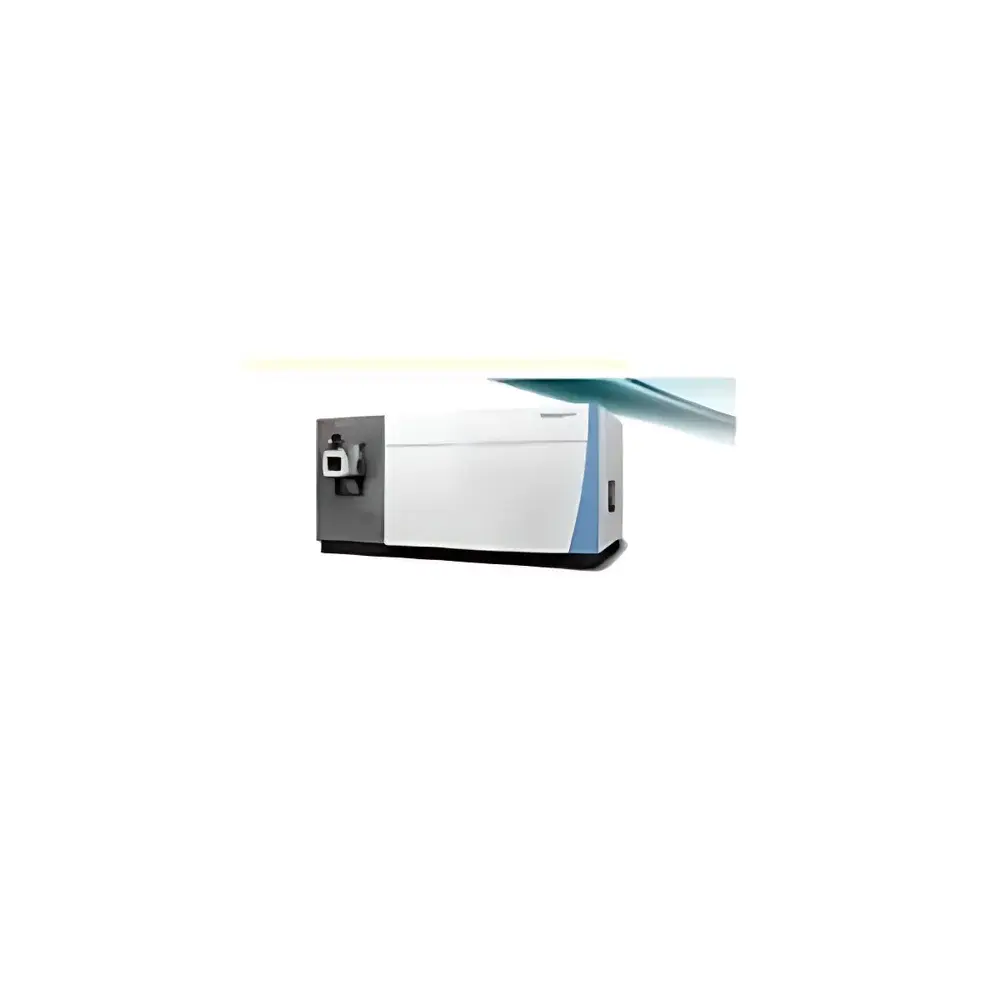
Thermo Scientific Orbitrap IQ-X Tribrid Mass Spectrometer
| Brand | Thermo Fisher |
|---|---|
| Origin | Shanghai, China |
| Manufacturer Type | Authorized Distributor |
| Product Origin | Domestic (China-manufactured under Thermo Fisher technology transfer) |
| Model | Orbitrap IQ-X Tribrid |
| Pricing | Available upon Request |
Overview
The Thermo Scientific Orbitrap IQ-X Tribrid Mass Spectrometer is a high-performance hybrid mass spectrometer engineered for deep structural characterization of small molecules, lipids, metabolites, and unknown compounds in complex matrices. Built upon the proven Tribrid architecture—integrating a high-transmission quadrupole mass filter, a fast-scanning linear ion trap (LIT), and a high-field Orbitrap mass analyzer—the system delivers simultaneous high sensitivity, high resolution, and versatile fragmentation capabilities within a single acquisition cycle. Its core measurement principle combines electrospray ionization (ESI) or atmospheric pressure chemical ionization (APCI) with parallelized MSn acquisition, enabling real-time decision-making based on spectral quality, intensity thresholds, and dynamic exclusion logic. Designed for laboratories operating under regulated environments—including pharmaceutical QC, academic metabolomics, and environmental contaminant screening—the IQ-X Tribrid supports trace-level detection, sub-ppm mass accuracy, and reproducible quantitation across diverse sample types.
Key Features
- Tribrid architecture: Coupled quadrupole–linear ion trap–Orbitrap configuration for simultaneous precursor selection, rapid MS/MS scanning, and high-resolution, high-mass-accuracy detection.
- Enhanced resolution option: Optional 1,000,000 FWHM resolution at m/z 200, improving isotopic fine structure resolution and enabling confident elemental composition assignment for unknowns.
- Intelligent acquisition: AcquireX workflow automates data-dependent and data-independent acquisition (DDA/DIA) across multiple collision energies and fragmentation modes—CID, HCD, and optional UVPD—within a single run.
- Automated ion source calibration: Integrated EASY-IC™ internal calibration source enables per-scan mass recalibration, delivering sustained sub-3 ppm mass error without manual intervention.
- Remote-ready ion source: Pre-aligned, plug-and-play source module with motorized gas and voltage control, supporting remote optimization and calibration via Thermo Scientific Chromeleon™ CDS software.
- Real-time spectral library matching: On-the-fly mzCloud™ integration enables immediate spectral similarity scoring during acquisition, triggering targeted MSn events based on match confidence thresholds.
Sample Compatibility & Compliance
The Orbitrap IQ-X Tribrid accepts samples introduced via standard ESI, APCI, or nano-ESI sources, and is fully compatible with Thermo Scientific Vanquish Duo UHPLC systems—including dual-gradient and heart-cutting 2D-LC configurations—as well as FAIMS Pro Duo differential mobility interfaces for enhanced isomeric separation. It complies with key regulatory frameworks for analytical instrumentation: data integrity features align with FDA 21 CFR Part 11 requirements (including electronic signatures, audit trails, and user-access controls); acquisition and processing workflows support GLP/GMP documentation standards; and method validation protocols conform to ICH Q2(R2) and USP guidelines. Instrument qualification documentation (IQ/OQ/PQ) templates are provided in accordance with ISO/IEC 17025:2017 recommendations for testing and calibration laboratories.
Software & Data Management
Data acquisition and instrument control are managed through Thermo Scientific Chromeleon Chromatography Data System (CDS) v7.3 or later, offering validated multi-user environments with role-based permissions and full audit trail logging. Compound Discoverer 3.3+ provides automated peak detection, alignment, formula prediction, pathway mapping, and statistical analysis—fully integrated with mzCloud’s >1 million reference spectra and mzVault™ secure spectral archiving. All raw data files (.raw) are stored in open-format Thermo Xcalibur-compatible containers, ensuring long-term accessibility and third-party software interoperability (e.g., Skyline, MS-DIAL, OpenMS). Data export supports .mzML and .mgf formats for FAIR-compliant sharing and deposition into public repositories such as MetaboLights or GNPS.
Applications
- Small molecule identification and structural elucidation in drug metabolism studies (e.g., phase I/II metabolite profiling)
- Lipidomics: Class-specific lipid identification, sn-position determination, and double-bond localization using UVPD-enabled workflows
- Environmental analysis: Screening and confirmation of emerging contaminants (e.g., PFAS, pesticides, pharmaceutical residues) in water and soil extracts
- Natural products chemistry: Dereplication of plant extracts and marine isolates via molecular networking and spectral library matching
- Quality control of synthetic intermediates and final APIs, including impurity profiling and degradation product identification
FAQ
Is the Orbitrap IQ-X Tribrid manufactured in the USA?
No. This instrument is produced in Thermo Fisher’s Shanghai manufacturing facility under strict technology transfer protocols and global quality system alignment (ISO 9001 and ISO 13485 certified). Final system assembly, performance verification, and factory acceptance testing follow the same specifications as US- and EU-built units.
Does the system support 21 CFR Part 11 compliance out of the box?
Yes—when deployed with Chromeleon CDS v7.3+ in validated configuration, the system includes electronic signature management, immutable audit trails, and configurable user roles required for regulated environments.
Can I use third-party LC systems with this mass spectrometer?
Yes. The IQ-X Tribrid features standard analog/digital I/O and API-compatible drivers for integration with non-Thermo UHPLC systems, though optimal performance and full feature access (e.g., synchronized gradient control, FAIMS voltage modulation) are guaranteed only with Vanquish platforms.
What is the typical mass accuracy achieved during routine operation?
Under standard ESI conditions with internal calibration enabled, mass accuracy remains ≤ 2 ppm RMS for >95% of peaks across the 100–2000 m/z range over 48-hour continuous operation.
Is UVPD available as a field-upgradable option?
Yes. UV photodissociation is offered as an optional add-on module (Cat. No. UV-PD-IQX-1), requiring installation by Thermo-certified field service engineers and subsequent system requalification.
Related Products





