
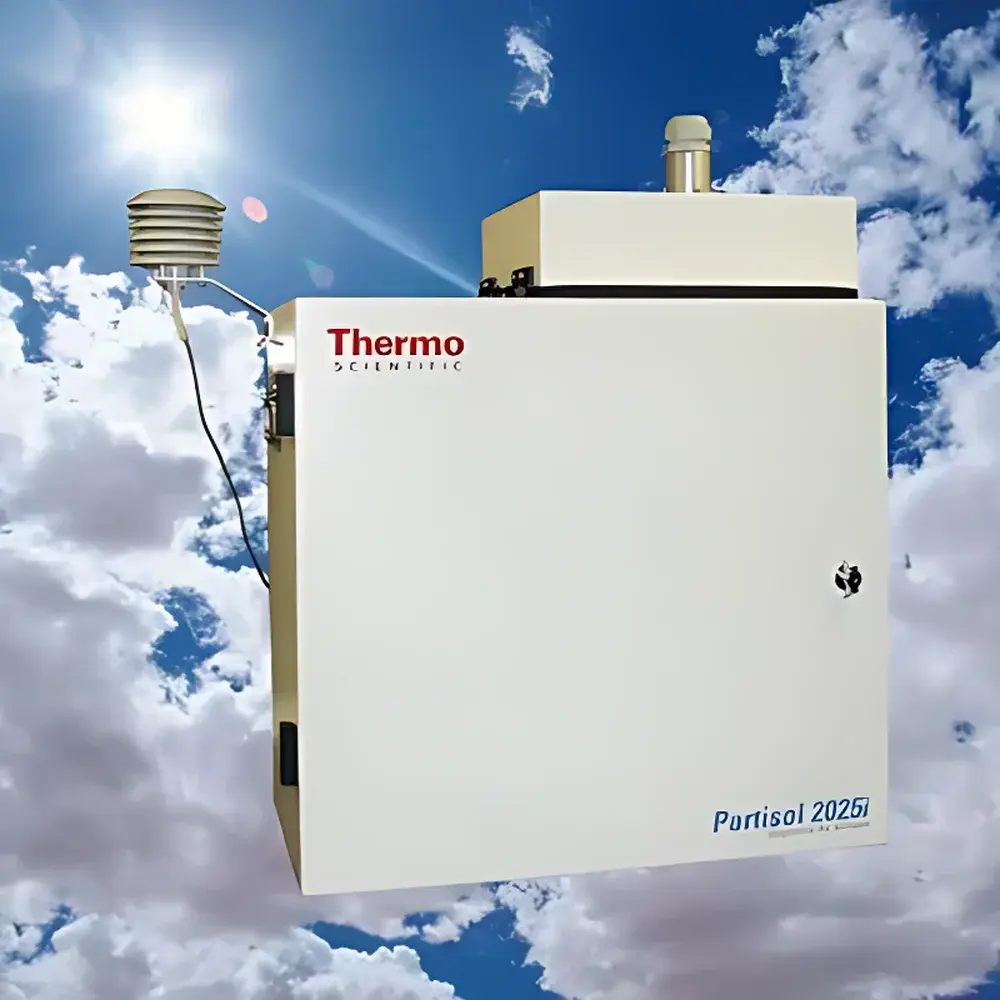

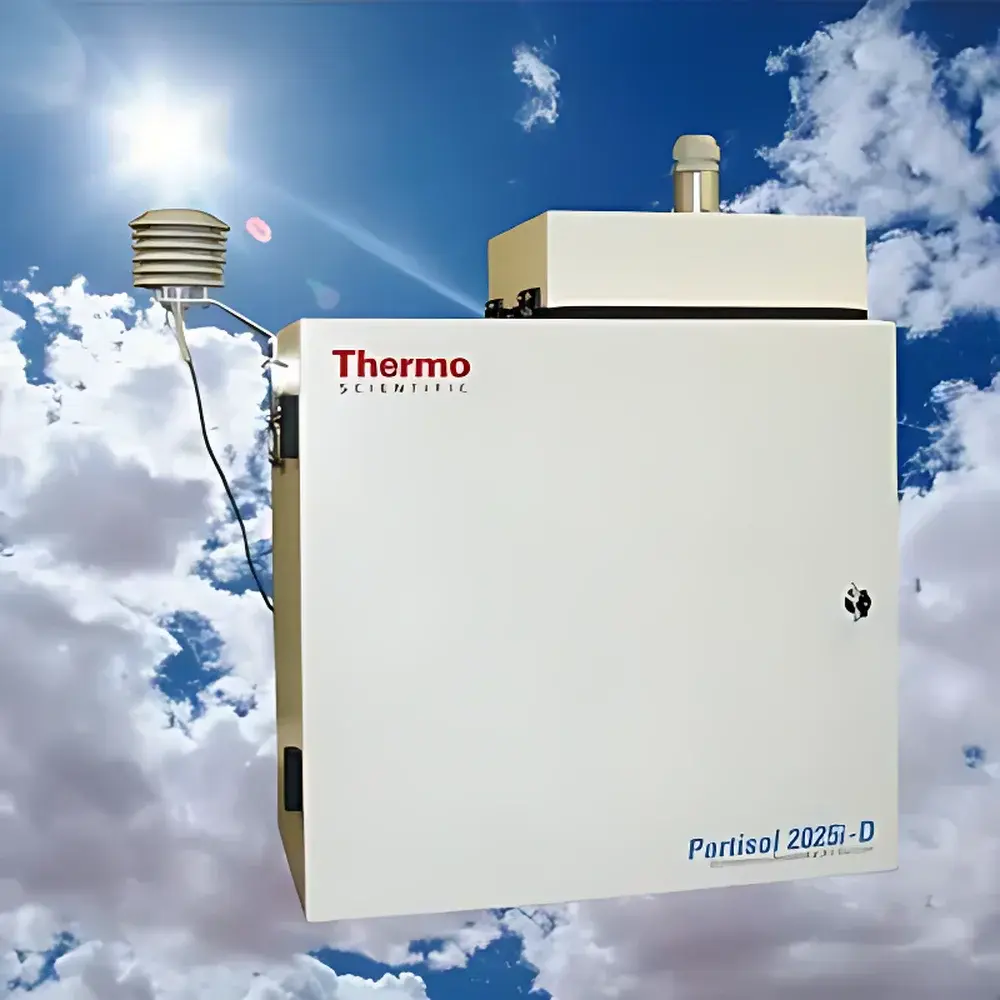
Thermo Scientific Partisol 2015i/2025i-D Dual-Channel Continuous Particulate Matter Sampler
| Brand | Thermo Fisher Scientific |
|---|---|
| Origin | USA |
| Manufacturer Type | Original Equipment Manufacturer (OEM) |
| Import Category | Imported Instrument |
| Model | 2015i/2025i-D |
| Typical Configuration | EPA Reference/Equivalent Method PM₂.₅ and Coarse PM Sampler |
| Flow Control | Mass Flow Controller (MFC) |
| Fine Particle Flow Rate | 15.0 L/min ±2% |
| Coarse Particle Flow Rate | 1.67 L/min ±2% |
| Filter Format | Dual 47 mm membrane filters per sampling cycle |
| Filter Capacity | Up to 16 filter cassettes (32 total filters) |
| Data Logging Interval | 5-minute resolution |
| Internal Memory | 86 days of operational data (5-min intervals) + 32 filter cycle records |
| Communication Interfaces | RS-232, USB 2.0, Ethernet (10/100 Mbps), iPort™ embedded communications module |
| Operating Temperature Range | −40 °C to +50 °C |
| Regulatory Compliance | U.S. EPA Reference Method for PM₂.₅ (40 CFR Part 53), EPA Equivalent Method for PM₂.₅ and Coarse PM (PM₁₀–PM₂.₅), ISO 12103-1, ASTM D1739, EN 12341 |
Overview
The Thermo Scientific Partisol 2015i/2025i-D is a dual-channel, continuous ambient particulate matter (PM) sampler engineered for regulatory-grade monitoring of fine (PM₂.₅) and coarse (PM₁₀–PM₂.₅) fractions in accordance with U.S. Environmental Protection Agency (EPA) reference and equivalent method requirements. Based on the proven i-Series platform, the 2025i-D implements a physical size-segregation approach using an integrated inertial impactor to split the incoming aerosol stream—directing particles <2.5 µm aerodynamic diameter to one 47 mm filter and particles between 2.5 µm and 10 µm to a second parallel filter. This gravimetric sampling architecture ensures traceable mass concentration data aligned with federal reference methods (40 CFR Part 53, Subpart C & E). The system operates unattended for up to 16 consecutive days using automated filter exchange, minimizing field labor while maintaining chain-of-custody integrity through timestamped filter identification and audit-ready metadata logging.
Key Features
- Dual independent flow control via precision mass flow controllers: 15.0 L/min for PM₂.₅ channel and 1.67 L/min for coarse PM channel, each calibrated to ±2% full-scale accuracy.
- i-Series firmware architecture with real-time diagnostics, self-calibration prompts, and configurable alarm thresholds for pressure drop, temperature deviation, and flow error.
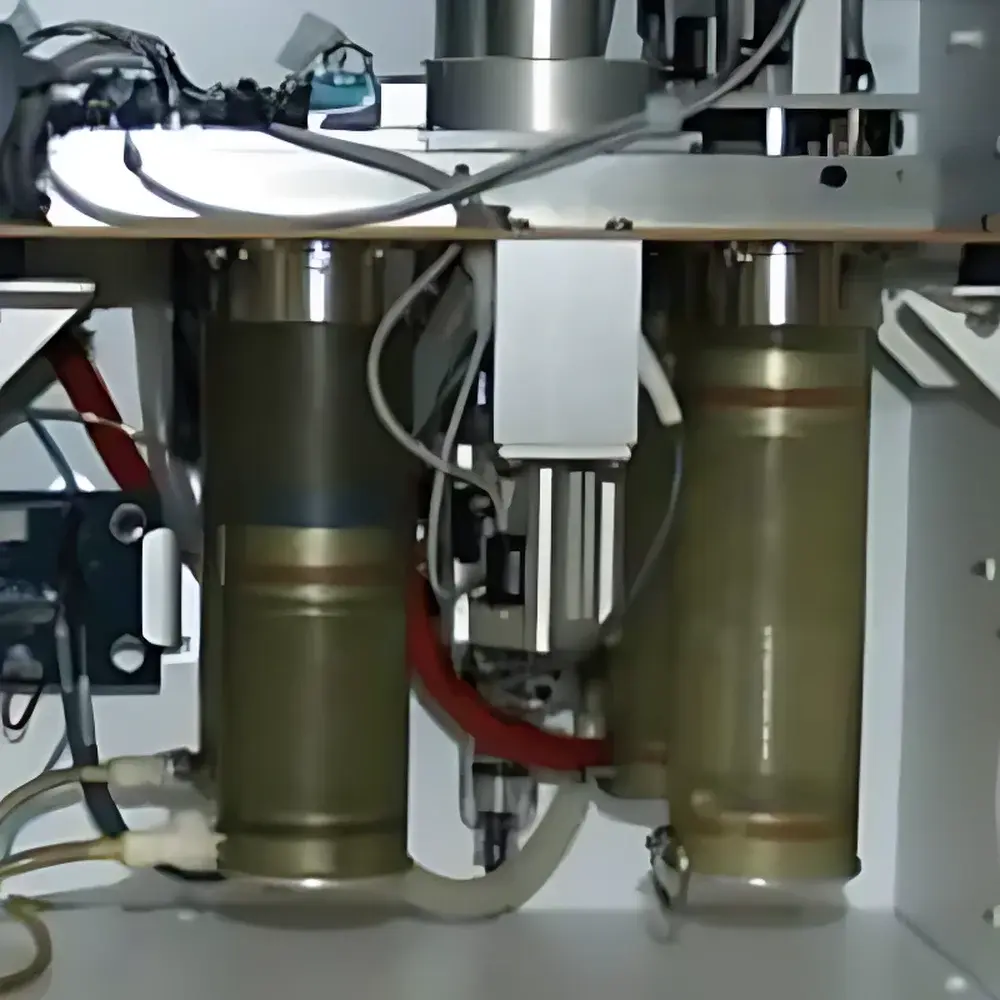
- Modular hardware design featuring field-replaceable vacuum pump assemblies, standardized 47 mm filter holders, and hot-swappable flash memory modules.
- Enhanced human-machine interface (HMI) with backlit monochrome LCD, tactile keypad, and context-sensitive menu navigation supporting multilingual display (English, Spanish, French).
- Robust environmental rating: IP54 enclosure with internal thermal management enabling reliable operation from −40 °C to +50 °C ambient conditions.
- Integrated iPort™ communications engine supporting TCP/IP-based remote access, firmware updates over Ethernet, and secure data retrieval without physical media handling.
Sample Compatibility & Compliance
The Partisol 2025i-D accepts standard 47 mm filter media required by U.S. EPA methods, including Teflon® (2 µm pore) for PM₂.₅ and PM₁₀ gravimetric analysis, Pallflex® TX-40 quartz fiber for organic carbon/elemental carbon speciation, and pre-baked quartz or cellulose ester filters for ion chromatography applications. Each filter cassette is mechanically indexed and uniquely encoded to prevent misalignment during robotic exchange. All operational parameters—including volumetric flow, temperature, barometric pressure, and elapsed sampling time—are logged at 5-minute intervals with NIST-traceable timestamps. Data files conform to EPA-approved formats (e.g., .CSV with header metadata) and support direct ingestion into AQS (Air Quality System) and AirNow platforms. The instrument meets design and performance criteria outlined in 40 CFR Part 53, Subpart C (PM₂.₅ Reference Method) and Subpart E (Equivalent Method for PM₂.₅ and Coarse PM), as well as ISO 12103-1 (road dust standards) and EN 12341 (ambient air—determination of PM₁₀ and PM₂.₅).
Software & Data Management
Data acquisition and instrument control are managed through Thermo Scientific’s i-Series software suite, compatible with Windows-based configuration workstations. The embedded operating system supports GLP-compliant audit trails, including user login history, parameter change logs, calibration event records, and filter exchange timestamps—all digitally signed and non-erasable. Internal storage retains 86 days of 5-minute diagnostic data plus metadata for 32 completed filter cycles. Remote data extraction is enabled via Ethernet or USB, with optional TLS 1.2 encryption for secure transmission to centralized data repositories. Firmware updates are delivered as signed binary packages validated against SHA-256 checksums. The system supports FDA 21 CFR Part 11 compliance when deployed with external identity management (LDAP/RADIUS) and electronic signature workflows.
Applications
- National and regional ambient air quality monitoring networks requiring EPA reference/equivalent method compliance.
- Long-term trend analysis of PM₂.₅ and coarse PM contributions to total PM₁₀ in urban, rural, and near-roadway environments.
- Source apportionment studies leveraging simultaneous collection of chemically distinct fractions on paired filters.
- Method validation and intercomparison campaigns involving collocated reference samplers and optical or beta-attenuation monitors.
- Regulatory enforcement monitoring at industrial fence lines and construction sites under state implementation plans (SIPs).
- Research applications in atmospheric chemistry, health effects epidemiology, and climate modeling where mass-based PM fractionation is essential.
FAQ
What regulatory methods does the Partisol 2025i-D satisfy?
It is certified by the U.S. EPA as an Equivalent Method for simultaneous PM₂.₅ and coarse PM (PM₁₀–PM₂.₅) sampling under 40 CFR Part 53, Subpart E, and functions as a Reference Method for PM₂.₅ under Subpart C when operated per specified protocols.
How is flow calibration performed?
Calibration uses NIST-traceable primary standards (e.g., dry gas meters or critical orifices) and is supported by onboard software routines for single-point and multi-point volume flow verification; results are stored with operator ID and calibration date.
Can the instrument operate without network connectivity?
Yes—the 2025i-D performs fully autonomous sampling, filter exchange, and local data logging independent of Ethernet or USB connections; remote access is optional for supervision and data retrieval.
What maintenance intervals are recommended?
Pump oil replacement every 6 months (or 3,000 operating hours), impactor cleaning after every 8 filter cycles, and annual full-system verification per Thermo Scientific Service Bulletin PM-2025i-D-REV3.
Is the 2015i variant still supported?
The 2015i is a legacy single-channel predecessor; Thermo Scientific maintains extended service support and spare parts availability but recommends the 2025i-D for new deployments due to enhanced communications, expanded memory, and dual-fraction capability.
Related Products







