
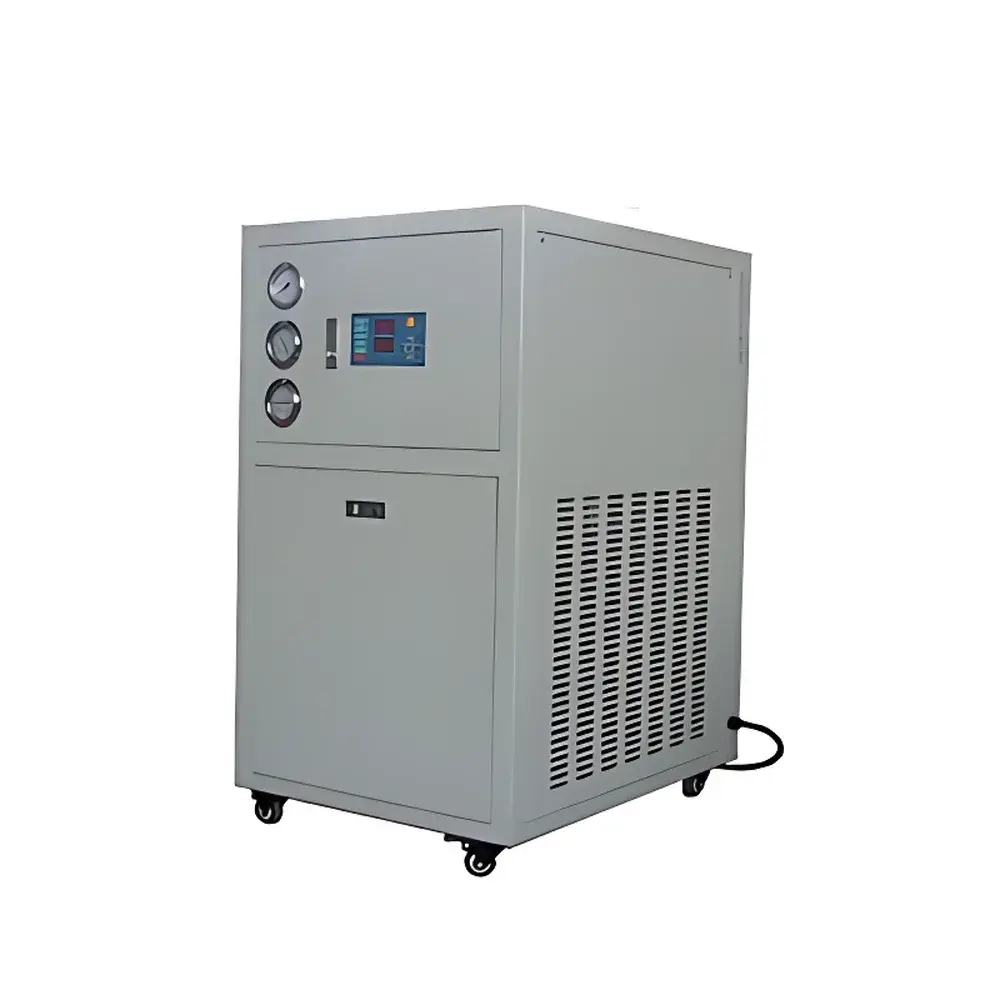
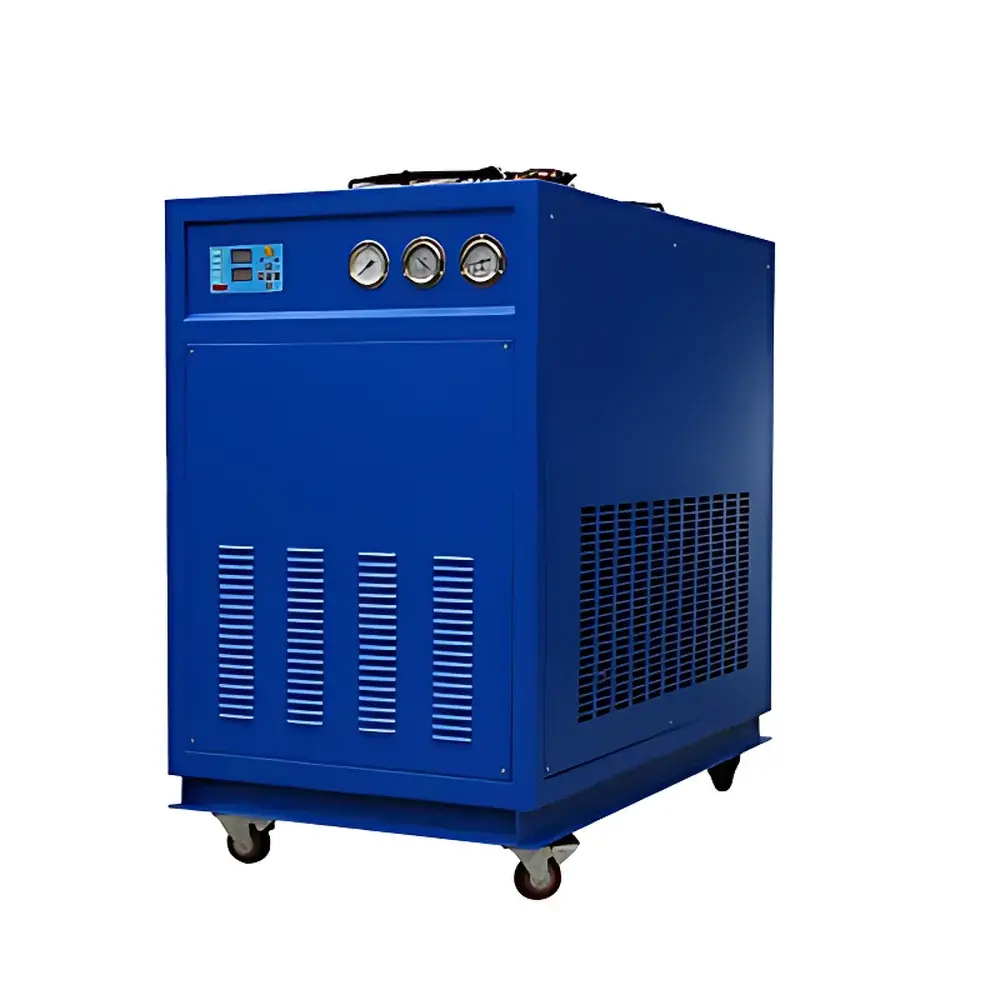
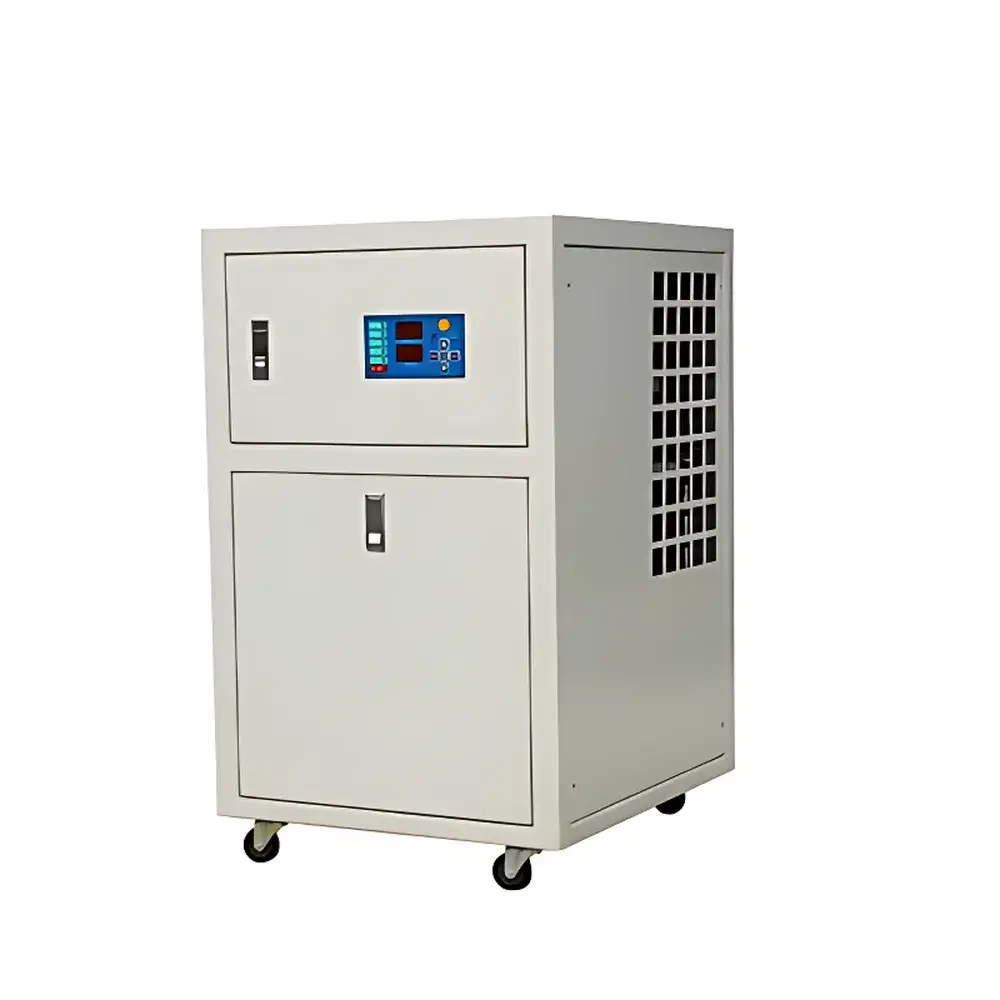
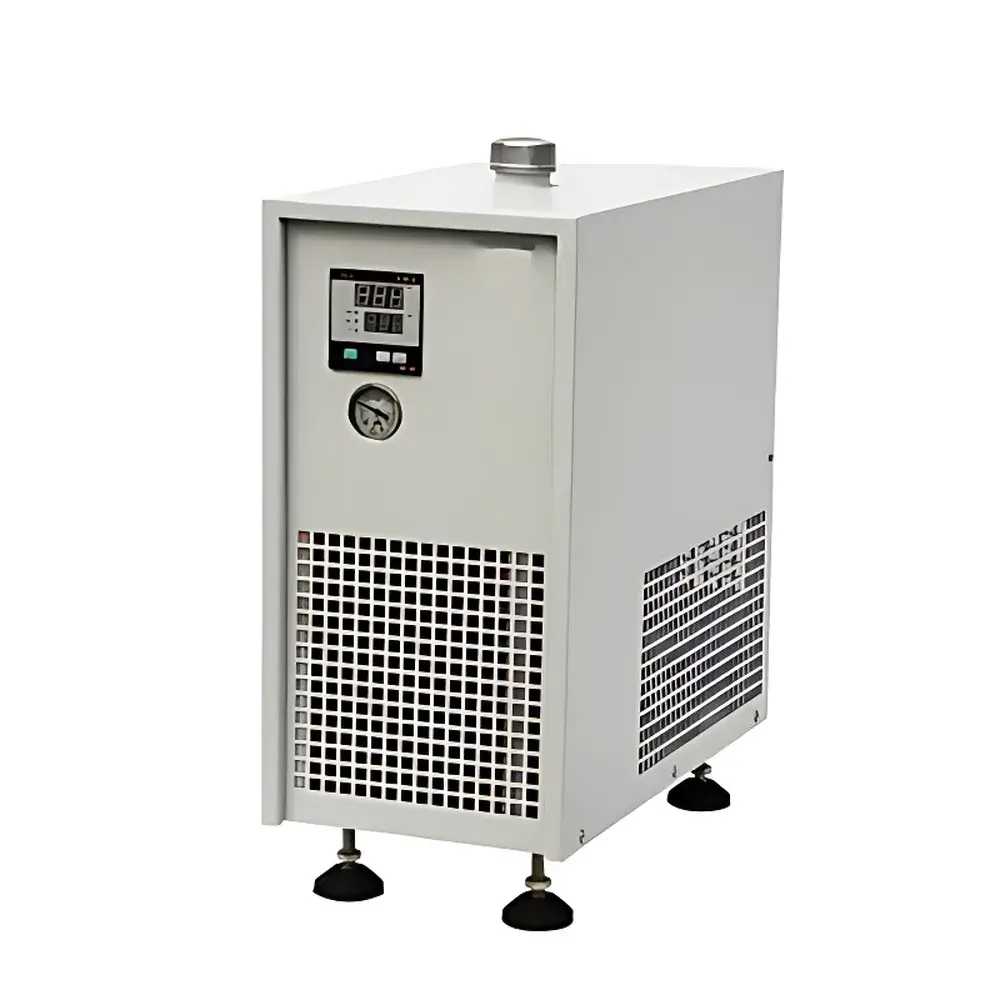
Tianfeng LS-4000W Integrated Circulating Chiller
| Brand | Tianfeng |
|---|---|
| Origin | Shanghai, China |
| Manufacturer Type | Direct Manufacturer |
| Instrument Type | Integrated Unit |
| Cooling Method | Water-Cooled |
| Temperature Control Range | 0–10 °C |
| Refrigeration Capacity | 4.0 kW |
| Temperature Stability | ±0.1 °C |
| Circulation Pump Pressure | 2.0 bar |
| Circulation Flow Rate | 2 L/min |
| Reservoir Volume | 45 L |
| Duty Cycle | Continuous Operation |
| Power Supply | 220 V, 50 Hz |
| Compressor | Scroll Type |
| Safety Protections | Compressor Overheat, Overcurrent, High/Low Pressure, and Overtemperature Protection |
| Enclosure Material | Stainless Steel Reservoir & Pump |
| Controller | Digital PID Temperature Controller (Optional RKC Model Available) |
| Dimensions (L×W×H) | 800 × 600 × 1065 mm |
| Noise Level | Low |
| Compliance | ISO 9001:2000 Certified Manufacturing Process |
Overview
The Tianfeng LS-4000W Integrated Circulating Chiller is a precision-engineered thermal management system designed for stable, continuous cooling of heat-sensitive laboratory and industrial equipment. It operates on a closed-loop refrigeration cycle utilizing a high-efficiency scroll compressor, R410A or R134a refrigerant (model-dependent), and a water-cooled condenser configuration. The unit maintains precise temperature control within the 0–10 °C range with a stability of ±0.1 °C—critical for applications requiring thermal consistency over extended operational periods. Its integrated architecture eliminates external piping complexity while optimizing footprint and mobility in constrained laboratory environments. Unlike batch-cooling alternatives, the LS-4000W supports uninterrupted duty cycles, making it suitable for 24/7 operation in analytical instrumentation, vacuum systems, and high-power laser platforms where thermal drift directly impacts measurement fidelity or process repeatability.
Key Features
- Precision digital PID temperature controller with real-time display of outlet water temperature and system status indicators
- Stainless steel reservoir (45 L capacity) and corrosion-resistant circulation pump ensure long-term fluid integrity and compatibility with deionized or inhibited coolant solutions
- Adjustable flow rate (0–2 L/min) and pressure output (up to 2.0 bar) accommodate varying backpressure requirements across diverse instrument interfaces
- Multi-layer safety architecture: compressor overheat protection, high/low refrigerant pressure monitoring, overcurrent cutoff, and sensor-based overtemperature shutdown
- Low-noise scroll compressor with optimized vibration damping, enabling deployment in acoustically sensitive labs without compromising performance
- Modular electrical design incorporating Siemens, Schneider, or Omron contactors, relays, and circuit protection devices compliant with IEC 61000-4 EMC standards
- Optional RKC temperature controller upgrade available for enhanced setpoint resolution (0.01 °C), programmable ramp-soak profiles, and analog/digital signal outputs
Sample Compatibility & Compliance
The LS-4000W is engineered for direct integration with a broad spectrum of analytical and materials characterization instruments—including graphite furnace atomic absorption spectrometers (GFAAS), inductively coupled plasma optical emission spectrometers (ICP-OES), ICP-mass spectrometers (ICP-MS), X-ray fluorescence (XRF) and X-ray diffraction (XRD) systems, scanning electron microscopes (SEM), and transmission electron microscopes (TEM). Its stable low-temperature output prevents thermal lensing in laser-based tools (e.g., laser ablation, marking, welding) and mitigates thermal expansion-induced misalignment in high-resolution optics and metrology stages. All units are manufactured under an ISO 9001:2000 certified quality management system. While not inherently FDA 21 CFR Part 11 or GLP/GMP validated, the chiller’s deterministic control logic, audit-ready fault logging (via optional controller), and traceable calibration support integration into regulated environments when paired with site-specific validation protocols.
Software & Data Management
The standard digital controller provides local setpoint adjustment, real-time temperature readout, and discrete fault signaling (LED indicators or relay dry-contact outputs). For networked laboratories, optional RS485 Modbus RTU or Ethernet-enabled controllers allow integration into centralized building management systems (BMS) or LIMS platforms. Logged parameters—including outlet temperature, runtime hours, compressor cycling frequency, and alarm history—can be exported via USB or serial interface for trend analysis and preventive maintenance scheduling. When deployed with RKC controllers, users gain access to data-logging capabilities compliant with ALCOA+ principles (Attributable, Legible, Contemporaneous, Original, Accurate, Complete, Consistent, Enduring, Available), supporting audit readiness in pharmaceutical QC/QA workflows.
Applications
Beyond laboratory instrumentation, the LS-4000W serves critical thermal regulation roles in industrial processes: mold temperature control in precision plastic injection molding (reducing warpage and improving surface finish); hydraulic oil cooling in CNC machining centers and coordinate measuring machines (CMMs) to minimize thermal deformation and preserve dimensional accuracy; coolant conditioning for semiconductor wafer processing tools; and thermal stabilization of RF amplifiers and high-speed spindles. In life sciences, it supports controlled cooling during cell lysis, electrophoresis buffer temperature maintenance, and cryo-preparation stages in histology workflows. Its continuous-duty rating and robust construction make it appropriate for both benchtop analytical labs and production-floor environments demanding high availability.
FAQ
What is the recommended inlet water temperature for optimal chiller performance?
For rated 4.0 kW refrigeration capacity, the unit assumes a cooling water inlet temperature ≤30 °C and a maximum temperature rise of 10 °C across the condenser. Higher ambient or inlet temperatures reduce net cooling capacity and increase compressor workload.
Can this chiller operate with deionized water?
Yes—stainless steel wetted parts and non-corrosive seals permit use with deionized, glycol-water mixtures (up to 30% v/v), or corrosion-inhibited aqueous coolants. Conductivity monitoring is advised to prevent galvanic corrosion in mixed-metal instrument loops.
Is remote monitoring supported out-of-the-box?
Basic remote status indication (alarm relay, run signal) is standard. Full telemetry and control require optional communication modules (RS485/Ethernet) and compatible SCADA or LabVIEW drivers.
What maintenance intervals are recommended?
Compressor oil and refrigerant levels should be verified annually; condenser coils cleaned quarterly in dusty environments; and coolant quality (pH, conductivity, bioburden) assessed every six months per ASTM D1121 and ISO 8502-9 guidelines.
Does the unit comply with CE or UL safety directives?
The LS-4000W meets CE marking requirements per EN 61000-6-2 (immunity) and EN 61000-6-4 (emissions). UL certification is available upon request for specific configurations and regional compliance packages.



