
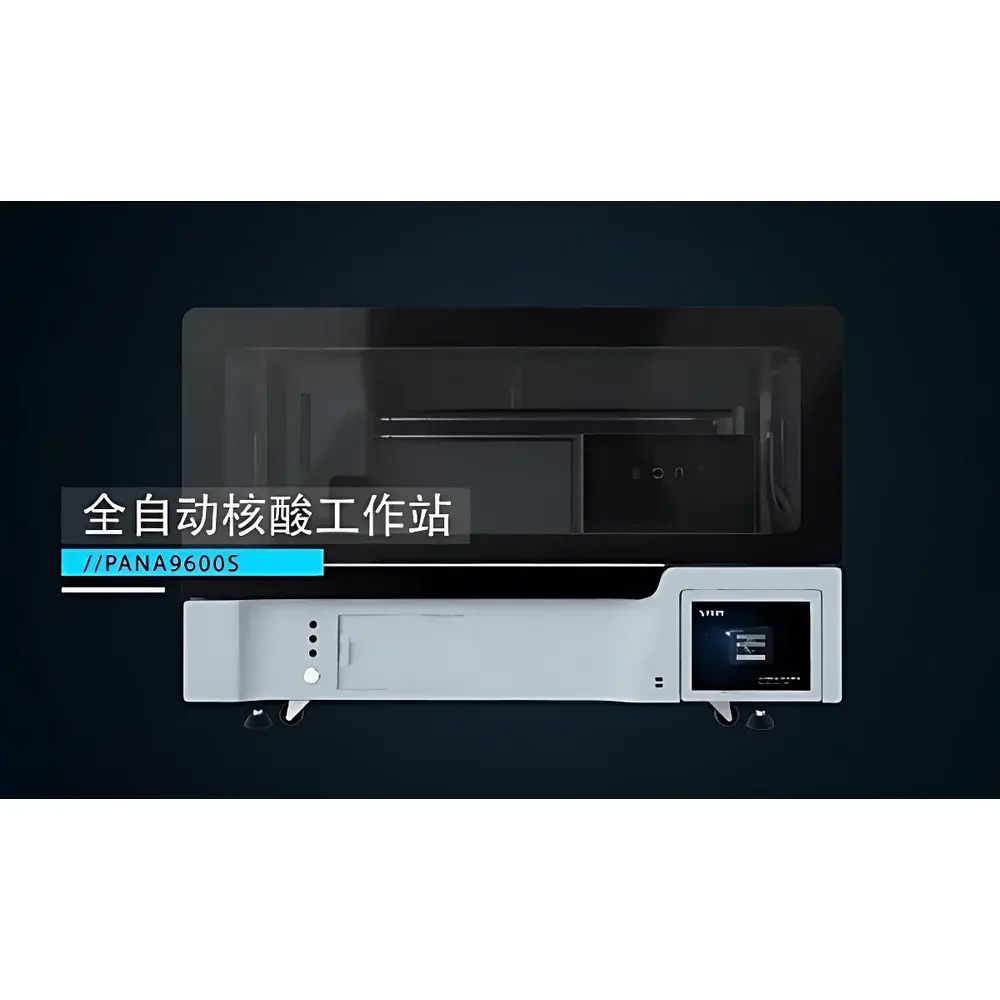
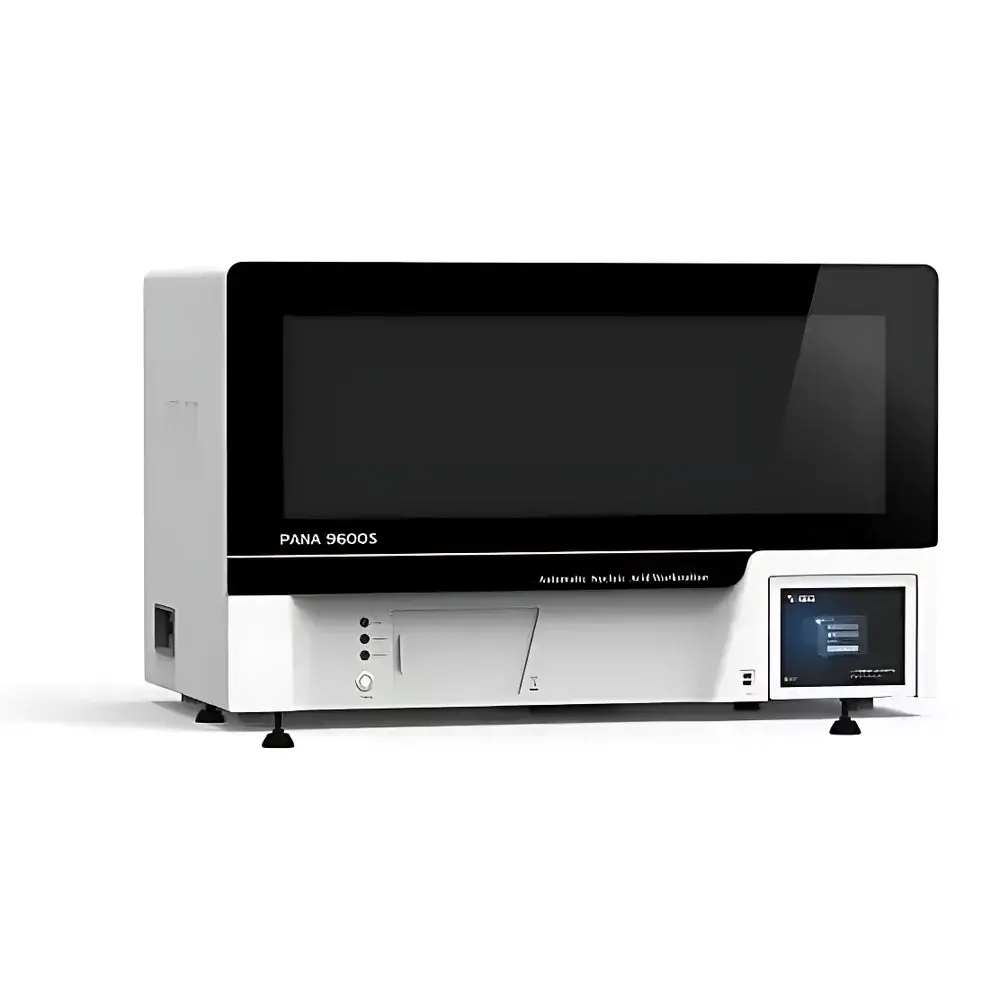
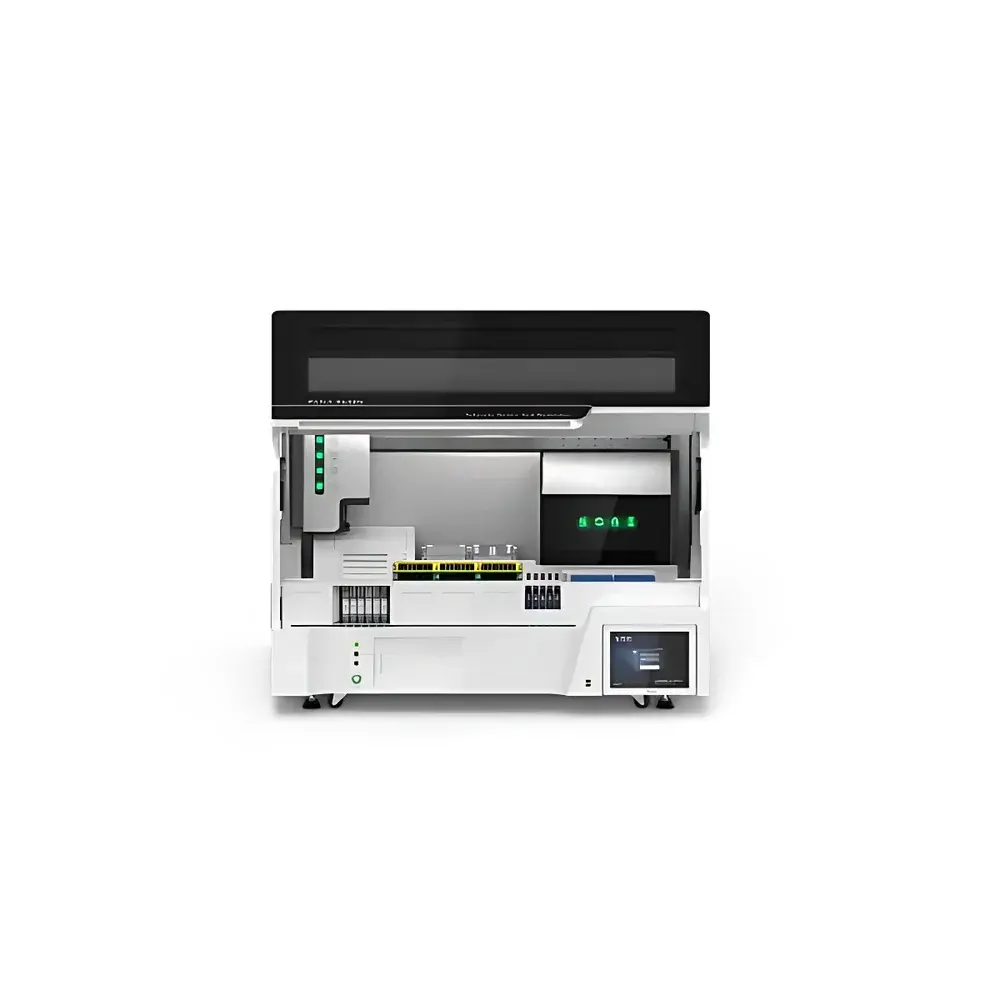
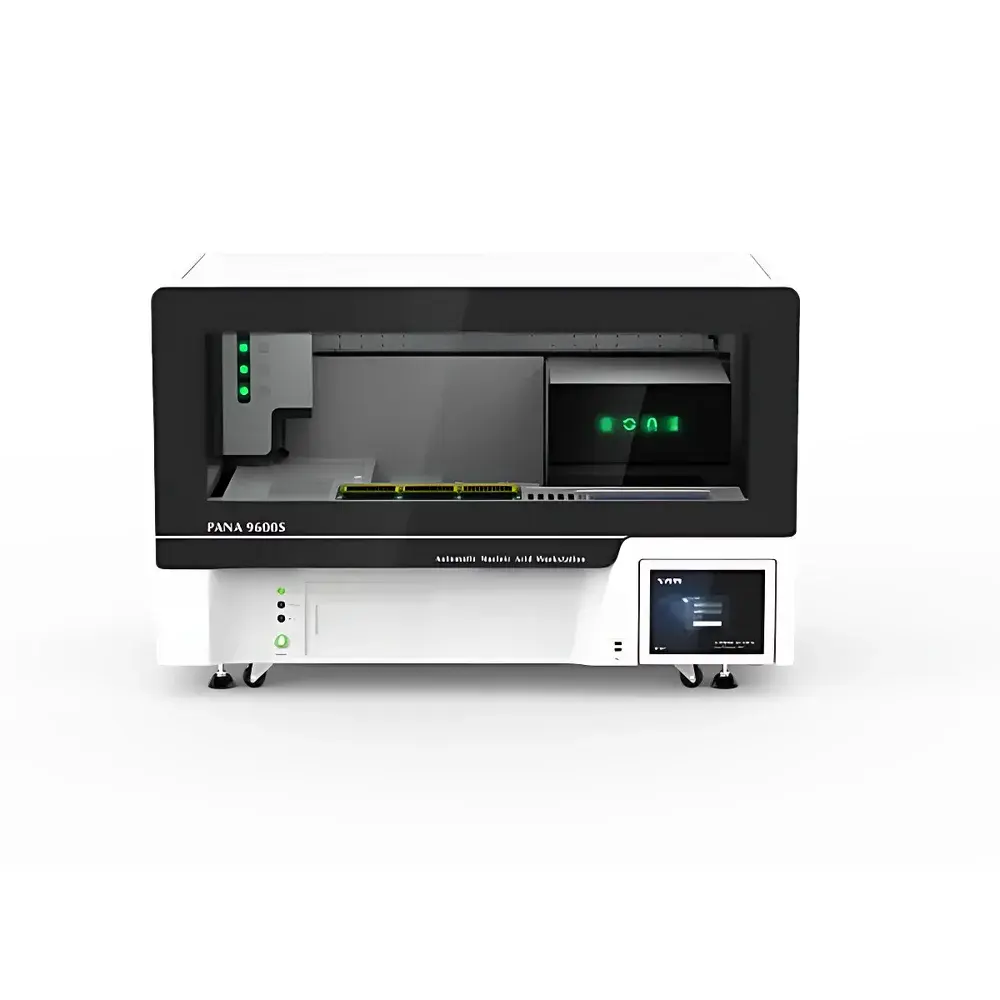
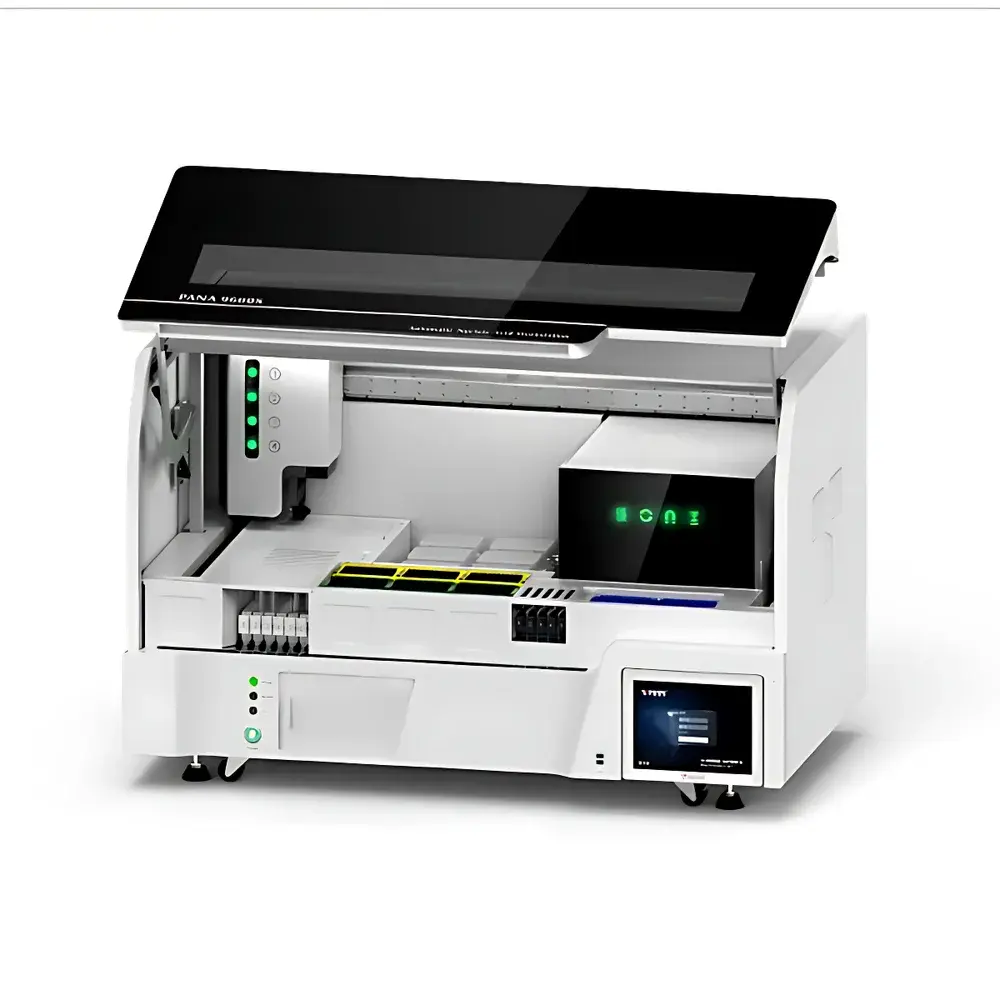
TIANLONG PANA9600S Fully Automated Nucleic Acid Extraction and PCR Setup Workstation
| Brand | TIANLONG |
|---|---|
| Origin | Shaanxi, China |
| Manufacturer Type | Original Equipment Manufacturer (OEM) |
| Country of Origin | China |
| Model | PANA9600S |
| Instrument Type | Magnetic Bead-Based Extraction System |
| Automation Level | Dedicated Fully Automated Platform |
| Throughput | 96 samples per batch |
| Sample Volume Range | 50–1000 µL |
| Processing Time per Batch | ≤15 min for nucleic acid extraction only |
| Sample Types | Whole blood, serum, plasma, swab eluates, urine |
| Principle | Rotational magnetic bead-based nucleic acid isolation with integrated thermal control and pipetting automation |
| Extracted Nucleic Acid Output | Compatible with downstream qPCR, RT-qPCR, and sequencing library preparation |
Overview
The TIANLONG PANA9600S Fully Automated Nucleic Acid Extraction and PCR Setup Workstation is an integrated, CE-registered (for in vitro diagnostic use where applicable) laboratory automation platform engineered for high-fidelity nucleic acid isolation and precise reaction assembly in molecular diagnostics, clinical microbiology, and translational research settings. It implements a patented rotational magnetic bead separation technology (Patent No. ZL201710435931.8), which replaces conventional linear shaking or vortexing with controlled orbital rotation—enhancing binding efficiency, reducing shear-induced degradation, and improving reproducibility across viscous or particulate-rich samples such as whole blood and swab eluates. Unlike modular or semi-automated systems, the PANA9600S consolidates sample registration, tube-to-plate transfer, lysis, binding, washing, elution, and multi-target PCR master mix dispensing into a single enclosed instrument footprint. Its architecture supports end-to-end traceability from primary specimen tube to final PCR-ready plate, minimizing manual intervention while maintaining compliance with ISO 15189, CLIA, and GLP-aligned laboratory workflows.
Key Features
- Rotational magnetic bead mixing mechanism ensures uniform particle suspension and consistent binding kinetics across diverse sample viscosities and volumes (50–1000 µL).
- Integrated dual-function thermal module enables independent temperature control during lysis (up to 120°C) and elution (35–85°C), supporting both DNA and RNA extraction protocols.
- Four-channel positive-displacement pipetting system with capacitive and pressure-sensing liquid level detection ensures accuracy: Er ≤ 2% (≤15 µL), Er ≤ 1.5% (15–50 µL), Er ≤ 1.0% (>50 µL); CV ≤ 3.0%, 1.5%, and 1.2% respectively.
- Automated reagent handling includes pre-packaged extraction kits, on-board proteinase K dilution, and refrigerated (4–15°C) PCR reagent storage with light-shielded compartments.
- Comprehensive contamination control: physically segregated nucleic acid extraction chamber with negative-pressure airflow, directional exhaust (optional external venting), UV-C irradiation in sample, waste, and extraction zones, and drop-capture trays integrated into pipette arm motion paths.
- Full traceability via barcode scanning of sample tubes, deep-well plates, and PCR plates; automatic mapping of “tube → well → assay” positions synchronized with Gentier 96-series real-time PCR instruments.
Sample Compatibility & Compliance
The PANA9600S accepts standard clinical specimen containers—including EDTA/K2EDTA whole blood tubes, serum/plasma separator tubes, 1.5 mL and 2.0 mL microcentrifuge tubes, cryovials, and custom swab collection vials—without requiring secondary transfer. Its flexible tip-loading system accommodates both low-retention and filter tips. The platform is validated for use with TIANLONG’s CE-marked nucleic acid extraction kits (e.g., TLNPA series) and compatible third-party magnetic bead chemistries meeting ISO 20387:2018 biobanking requirements. Data integrity meets FDA 21 CFR Part 11 criteria through audit-trail-enabled software, electronic signatures, and immutable run logs. All firmware and operational software comply with IEC 62304 Class B medical device software standards.
Software & Data Management
The embedded 12-inch industrial touchscreen runs TIANLONG’s proprietary LIMS-integrated control software, supporting HL7 and ASTM E1384 message formats for bidirectional LIS connectivity. Workflow templates are configurable per assay type (e.g., SARS-CoV-2 RT-qPCR, HPV genotyping, or MRSA screening), with built-in validation checkpoints for reagent lot tracking, tip depletion alerts, and carryover risk assessment. Each run generates a PDF-certified report containing timestamps, operator ID, calibration status, error codes, and QC metrics—exportable via USB or network share. Software updates are delivered via secure HTTPS with SHA-256 signature verification, and all configuration changes are logged with user attribution and rollback capability.
Applications
The PANA9600S is deployed in centralized clinical laboratories, public health reference labs, and contract research organizations performing high-volume molecular testing. Typical applications include infectious disease screening (viral/bacterial/fungal nucleic acid detection), oncology biomarker analysis (e.g., EGFR, KRAS mutation panels), transplant monitoring (donor-derived cell-free DNA quantification), and forensic STR profiling. Its ability to concurrently prepare up to 192 reactions (two 96-well plates) from a single 96-sample input enables efficient multiplex assay deployment—reducing inter-run variability and enabling same-day result turnaround in emergency diagnostics.
FAQ
Does the PANA9600S support non-TIANLONG extraction kits?
Yes—provided the kit utilizes standard magnetic bead chemistry and is compatible with 96-well plate format reagents; validation data must be generated per ISO 15189 Section 5.5.3.
Can the instrument be integrated into a larger laboratory automation system (e.g., track-driven LIS)?
Yes—via RS232/RS485 serial interface or TCP/IP Ethernet connection using standardized middleware protocols (e.g., ORU messages).
What maintenance intervals are recommended for the pipetting and magnetic separation modules?
Daily decontamination cycles, weekly tip ejector calibration, and quarterly performance verification using NIST-traceable volume standards and certified reference materials.
Is remote monitoring or troubleshooting supported?
Yes—through optional TIANLONG Remote Assist module with encrypted VNC access and session logging, compliant with HIPAA-compliant network segmentation policies.
How is carryover contamination prevented between batches?
Through sequential air-gap aspiration, post-aspiration tip wiping, UV-C irradiation of internal chambers between runs, and disposable tip usage enforced by software-controlled tip rack management.






