
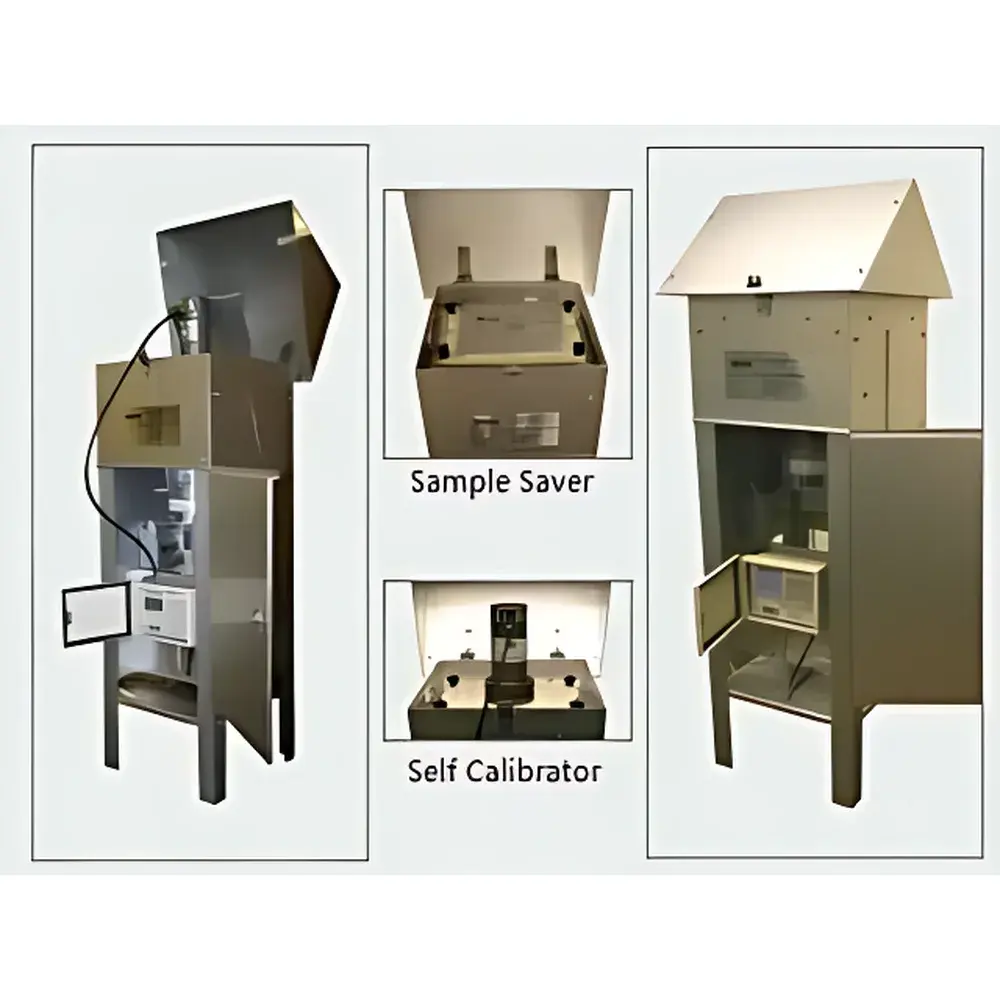
Tisch Environmental TEI PM10/PM2.5/TSP Ambient Air Particulate Sampler
| Brand | TISCH |
|---|---|
| Origin | USA |
| Manufacturer Type | Authorized Distributor |
| Origin Category | Imported |
| Model | TEI |
| Price | Upon Request |
Overview
The Tisch Environmental TEI PM10/PM2.5/TSP Ambient Air Particulate Sampler is a precision-engineered, EPA-compliant ambient air monitoring system designed for regulatory-grade collection of total suspended particulates (TSP), inhalable particulate matter (PM10), and fine particulate matter (PM2.5). Built upon over 70 years of aerosol sampling heritage—since TEI’s first TSP sampler launched in 1954—the instrument adheres strictly to U.S. Environmental Protection Agency (EPA) Standard Operating Procedures (SOPs), particularly those outlined in 40 CFR Part 50, Appendix B. It operates on the principle of isokinetic inertial separation using certified sharp-cut cyclonic or impactor-based inlet assemblies (TSP, PM10, or PM2.5), coupled with gravimetric analysis of mass collected on standardized 8″ × 10″ filter media. Flow control architecture conforms to EPA-defined volumetric (VFC) or mass-based (MFC) configurations, ensuring traceable, metrologically sound sampling under variable ambient temperature and barometric pressure conditions.
Key Features
- Three configurable platform variants: Common (C), Digital (D), and Smart Plus (P)—each fully compliant with EPA 40 CFR 50 Appendix B and ISO 7708 for particle size-selective sampling.
- Smart Plus (P) model integrates an embedded microprocessor-based control unit with automatic flow calibration: users input only the calibration factor; the system executes real-time correction without manual computation.
- Flow stability maintained at ≥99% of setpoint across ambient temperature (−30 °C to +50 °C) and pressure (60–106 kPa) ranges via dynamic adjustment of blower speed and thermal/pressure compensation algorithms.
- Continuous data logging at 5-minute intervals—including instantaneous and rolling 1-hour averages of volumetric flow rate (L/min), ambient temperature (°C), and barometric pressure (kPa)—stored in CSV format on removable SD card.
- Dual-mode flow control options: Volume Flow Control (VFC) configuration (e.g., TE-5070/TE-5070-BL blower + TE-10557 VFC) or Mass Flow Control (MFC) configuration (e.g., TE-5005/TE-5005-BL blower + TE-300-310/TE-300-312 MFC module).
- Integrated status indicators provide real-time alerts for critical events including low-flow deviation (>5%), overdue calibration, filter loading anomalies, and SD card errors.
- Modular mechanical design supports field-swappable components per EPA SOP: TE-6003 continuous flow/pressure recorder, TE-6002 alumina protective housing, TE-3000 8″ × 10″ filter holder assembly, and TE-H series inlet cutpoints.
Sample Compatibility & Compliance
The TEI sampler accepts all EPA-recommended 8″ × 10″ filter media types, including quartz fiber (TE-QMA, TE-QMA-100), cellulose ester (TE-241), and glass fiber (TE-G653 for TSP). Its inlet geometry and flow dynamics are validated against EPA Reference Method PS-1 and Performance Specification PS-2. The system meets requirements for GLP-compliant environmental laboratories and supports audit-ready documentation per 21 CFR Part 11 when paired with validated software workflows. All configurations comply with ISO 12103-1 (A2 test dust), EN 12341 (PM10), and EN 14907 (PM2.5) test protocols for sampler characterization.
Software & Data Management
No proprietary desktop software is required for basic operation. Raw time-series data (flow, T, P) are written directly to FAT32-formatted SD cards in comma-separated values (CSV) format, compatible with Excel, R, Python pandas, and LIMS integration. The Smart Plus (P) variant includes onboard calibration routines traceable to NIST-certified flow standards (e.g., TE-5025HVP calibrator); calibration logs—including date, operator ID, reference flow value, and applied correction factor—are automatically appended to data files. Optional firmware updates are delivered via SD card and support cryptographic signature verification.
Applications
- Regulatory ambient air quality monitoring networks (e.g., State and Local Air Monitoring Stations—SLAMS)
- Long-term trend analysis of PM2.5/PM10 mass concentrations for epidemiological and health impact studies
- Source apportionment campaigns requiring co-located, multi-size-fraction sampling
- Method validation and inter-laboratory comparison exercises under EPA Contract Laboratory Program (CLP) guidelines
- Indoor air quality assessments in occupational health settings where respirable fraction quantification is mandated
- Calibration and verification of optical particle counters (OPCs) and beta attenuation monitors (BAMs)
FAQ
What inlet cutpoints are supported?
TSP (no cutoff), PM10 (EPA-designated WINS impactor or VSCC cyclone), and PM2.5 (EPA-designated U.S. EPA PM2.5 IOM or SCAPS impactor) — all interchangeable via standardized mounting interface.
Is the TEI sampler suitable for unattended remote deployment?
Yes. All models feature lockable enclosures, wide-temperature-rated electronics, and optional solar/battery power interfaces. The Smart Plus (P) variant includes watchdog timers and brownout recovery logic.
How often does the system require calibration?
Per EPA guidance, primary flow calibration is required before each sampling event or every 14 days—whichever occurs first. The Smart Plus (P) model records calibration history and triggers visual alerts when due.
Can I use non-TEI filter media?
Only filters meeting EPA-specified specifications (e.g., 47-mm quartz for IMPROVE network, 8″ × 10″ QMA for FRM) are recommended. Non-certified media may compromise cutpoint performance and gravimetric accuracy.
Does the system meet ISO/IEC 17025 requirements for accredited labs?
Yes—when operated within documented SOPs, with traceable calibration records (e.g., TE-5025HVP + NIST-traceable certificate), and with full metadata logging enabled, the TEI platform satisfies technical requirements for ISO/IEC 17025:2017 Clause 7.7 (Sampling).







