
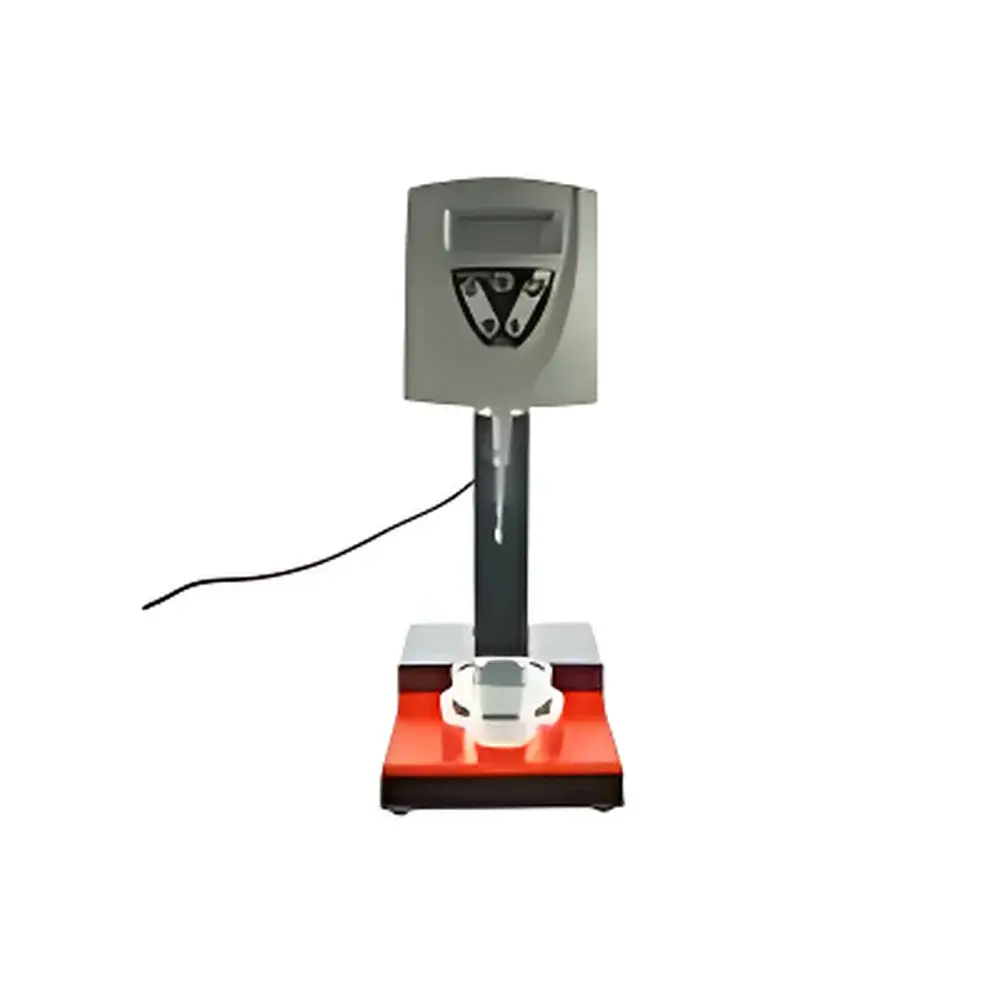
TQC DV1300/SH1349 Krebs Viscometer
| Brand | TQC |
|---|---|
| Origin | Guangdong, China |
| Manufacturer Type | Authorized Distributor |
| Origin Category | Domestic (China) |
| Model | DV1300/SH1349 |
| Pricing | Upon Request |
Overview
The TQC DV1300/SH1349 Krebs Viscometer is a precision-engineered rotational viscometer designed specifically for determining Krebs Units (KU) — a standardized viscosity scale widely adopted in the coatings, inks, and architectural paint industries. Based on the ASTM D562 test method, the instrument measures the torque required to rotate a specially shaped paddle-type spindle (the Krebs spindle) at a fixed speed of 200 rpm in a defined sample volume (typically 1 pint or 473 mL). The resulting KU value correlates directly with the resistance of the material to flow under low-shear conditions, making it especially relevant for quality control and formulation development where sag resistance, leveling behavior, and application consistency are critical performance indicators. Unlike general-purpose rotational viscometers, the DV1300/SH1349 implements a dedicated mechanical and electronic architecture optimized exclusively for Krebs-scale measurement — ensuring high reproducibility, minimal operator dependency, and compliance-ready operation.
Key Features
- ASTM D562–compliant Krebs Unit (KU) measurement with fixed 200 rpm rotational speed and calibrated Krebs spindle geometry
- Dual-mode operation: fully automated test cycle (pre-set wait + measurement duration: 0–99 s) and manual mode for real-time operator control
- Four-line backlit LCD display providing simultaneous readout of KU value, elapsed time, spindle identification, and system status
- Integrated RS232 serial interface for direct data transmission to thermal printers or external PCs — supporting audit-trail–capable documentation per GLP/GMP requirements
- Self-leveling sample adapter blocks included for both 1-pint (473 mL) and ½-pint (236.5 mL) standard containers, ensuring consistent immersion depth and geometry
- Robust yet precision-balanced motor drive system with thermal stability compensation to minimize drift during extended use
- Onboard calibration verification routine accessible via menu navigation — supports traceable performance checks without external standards
Sample Compatibility & Compliance
The DV1300/SH1349 is validated for use with Newtonian and mildly non-Newtonian liquid systems typical of architectural paints, industrial coatings, printing inks, and pharmaceutical suspensions. It accommodates samples in standard ASTM-compliant containers (glass or metal pint cans), with optional adapters available for alternative vessel geometries. The instrument meets the mechanical and procedural specifications outlined in ASTM D562 (Standard Test Method for Viscosity of Paints, Varnishes, Lacquers, and Related Products by Krebs-Stormer Viscometer), as well as ASTM D1131 (for pigment dispersion stability assessment) and ASTM D856 (for comparative viscosity profiling across batches). While not certified to ISO/IEC 17025, its design facilitates integration into laboratories operating under ISO 9001, ISO 14001, or FDA 21 CFR Part 11–aligned environments when paired with validated software and documented SOPs.
Software & Data Management
No proprietary PC software is bundled with the DV1300/SH1349; however, its RS232 interface outputs ASCII-formatted data streams compatible with common laboratory data acquisition platforms (e.g., LabVIEW, MATLAB, or custom SQL-based LIMS). Each measurement packet includes timestamp (if externally synchronized), KU value, spindle ID, test duration, and pass/fail flag based on internal consistency checks. When connected to a thermal printer, the unit generates hard-copy reports containing all parameters required for QC record retention — including operator ID (manually entered), batch number, and environmental notes. For regulated environments, users may implement third-party middleware to enforce electronic signatures, audit trails, and change control — satisfying ALCOA+ (Attributable, Legible, Contemporaneous, Original, Accurate) principles.
Applications
- Quality assurance of architectural and industrial coatings during incoming raw material inspection and final product release
- R&D formulation screening for rheological modifiers (e.g., associative thickeners, fumed silica, cellulose ethers)
- Batch-to-batch consistency monitoring in high-volume paint manufacturing lines
- Stability assessment of pigment dispersions and emulsion-based systems in R&D labs
- Supporting regulatory submissions requiring ASTM D562–referenced viscosity data (e.g., EPA, EU REACH dossiers)
- Teaching laboratories demonstrating standardized viscosity testing methodology per ASTM curriculum guidelines
FAQ
What standards does the DV1300/SH1349 comply with?
It is engineered and verified for full conformance with ASTM D562, and functionally compatible with ASTM D1131 and ASTM D856.
Can the instrument measure viscosity in centipoise (cP) or Pa·s?
No — the DV1300/SH1349 reports exclusively in Krebs Units (KU); conversion to cP requires empirical correlation curves established per material class and is not performed internally.
Is the Krebs spindle included in the standard package?
Yes — one calibrated Krebs spindle (ASTM-compliant geometry) is supplied with each unit.
Does the device support GLP-compliant electronic records?
While the hardware provides timestamped ASCII output via RS232, full GLP compliance depends on the connected data system’s validation status and audit trail implementation.
How often should the instrument be recalibrated?
TQC recommends annual calibration using traceable reference standards; more frequent verification is advised after mechanical shock, spindle replacement, or when out-of-spec results occur during routine control sample testing.
Related Products





