
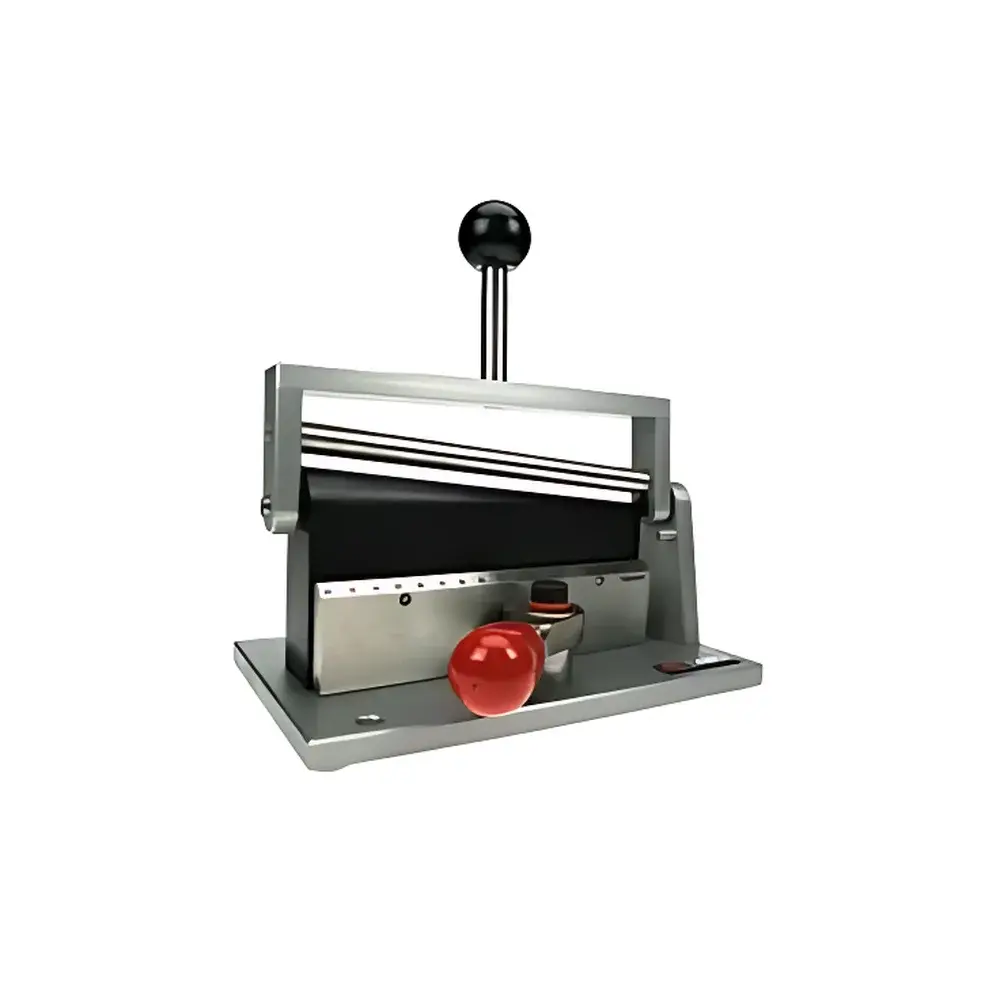
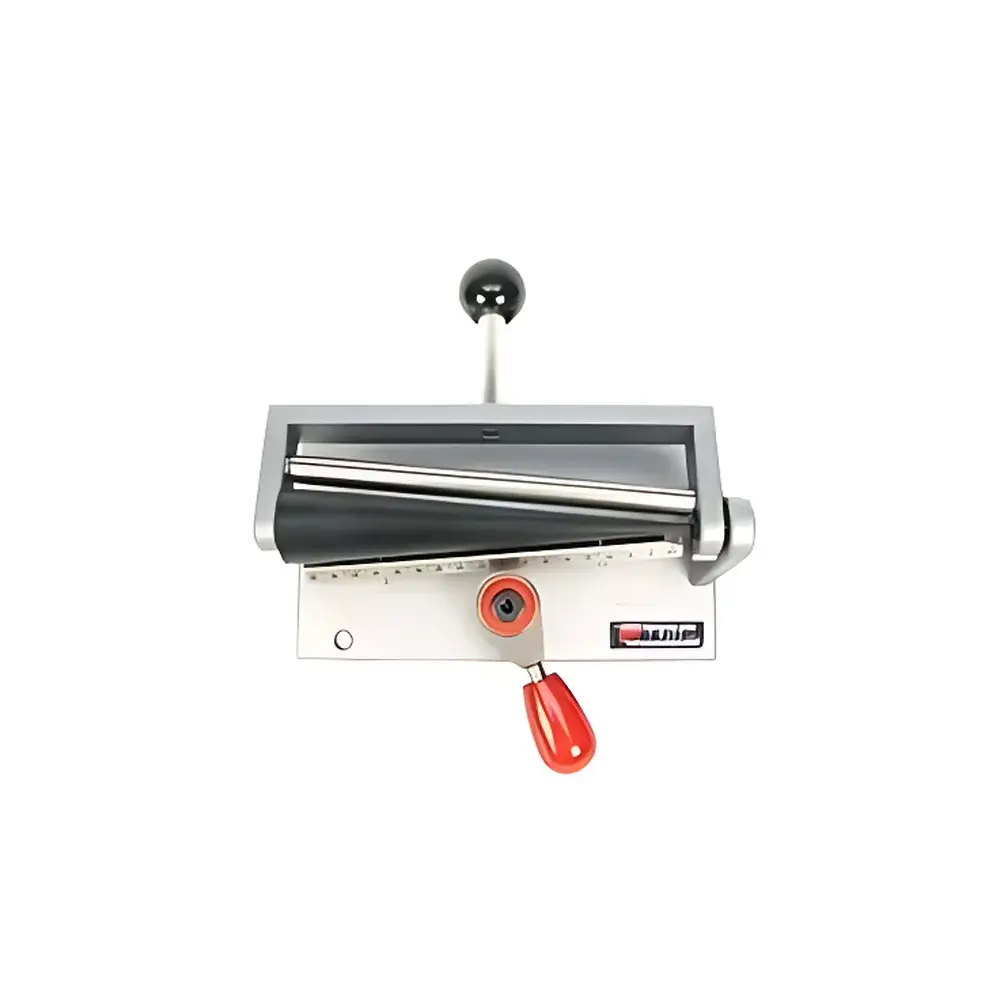
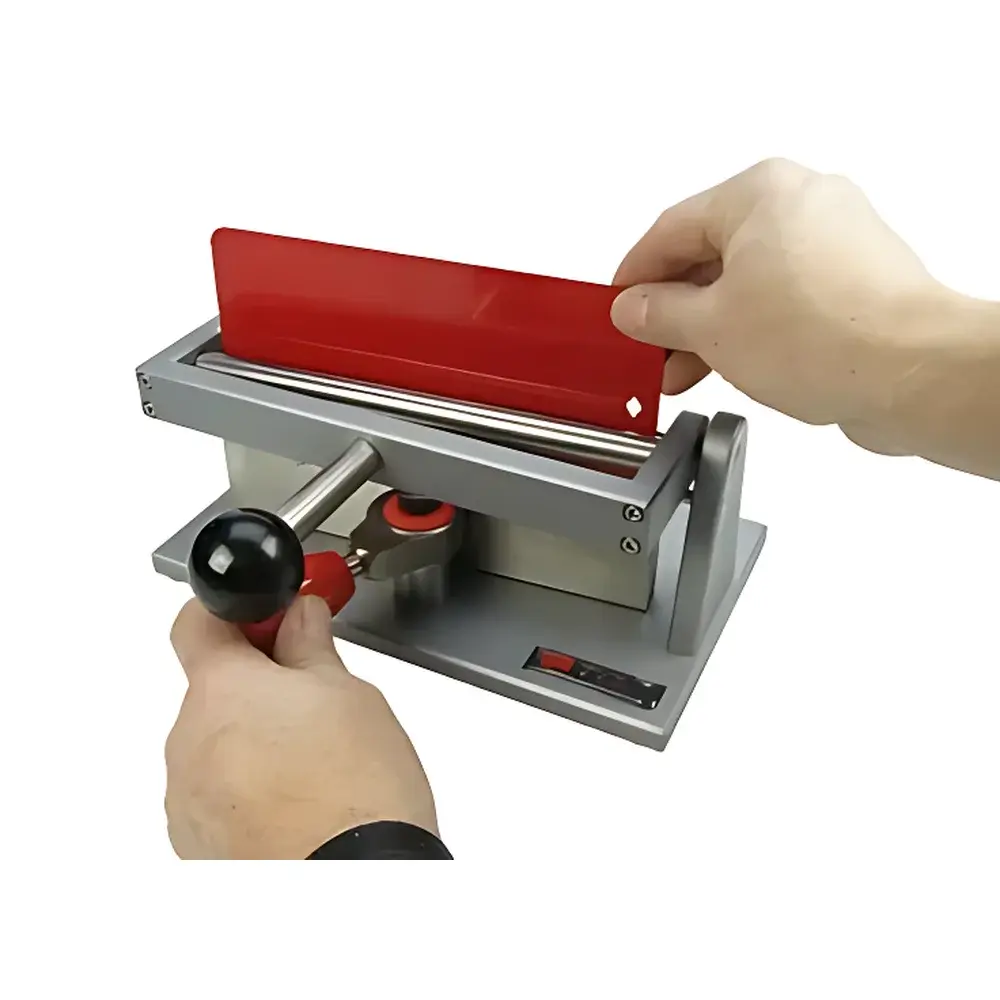
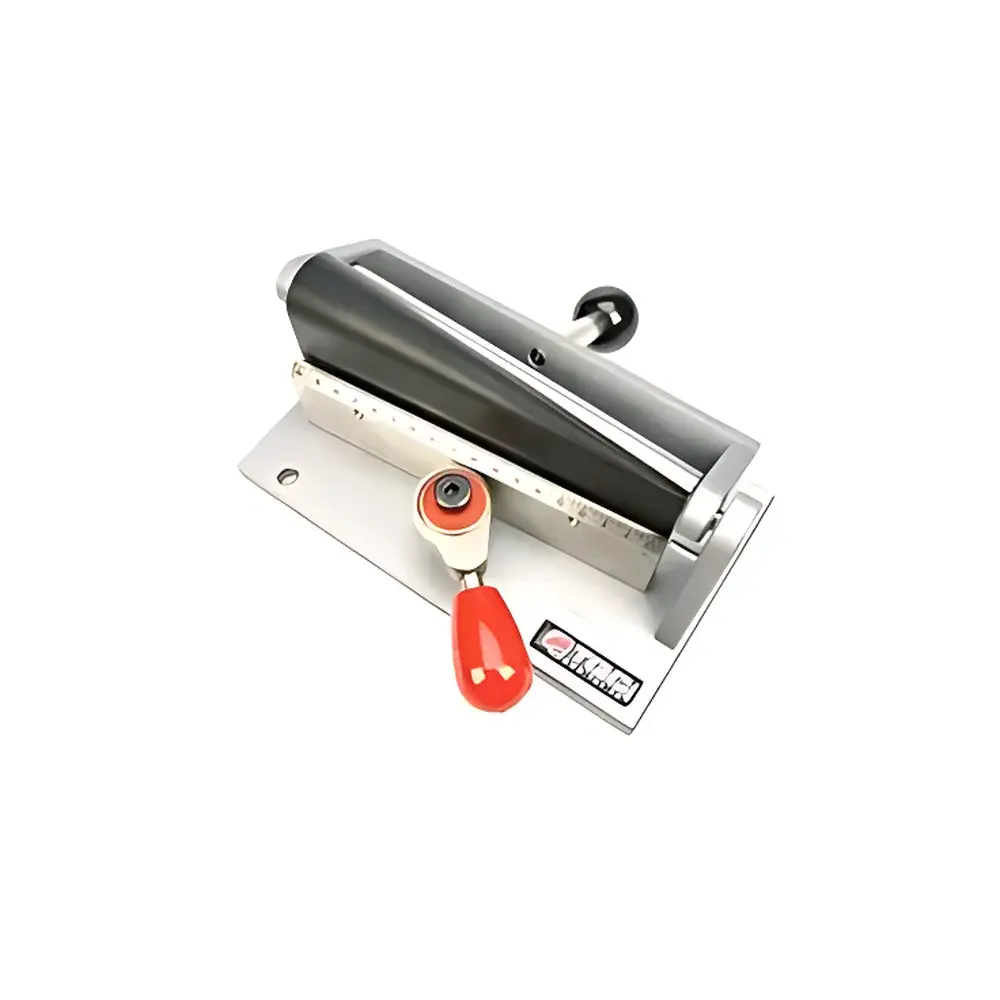
TQC SP1830 Conical Mandrel Bend Tester
| Brand | TQC |
|---|---|
| Origin | Netherlands |
| Model | SP1830 |
| Mandrel Diameter Range | 3.1–38 mm |
| Test Panel Dimensions | 100 × 180 mm |
| Maximum Panel Thickness | 0.8 mm |
| Construction | Anodized Aluminum Alloy Base & Stainless Steel Mandrel Assembly |
| Compliance | ISO 6860, ASTM D522 |
Overview
The TQC SP1830 Conical Mandrel Bend Tester is a precision-engineered mechanical testing instrument designed for evaluating the flexibility, adhesion, and resistance to cracking or delamination of organic coatings—such as paints, varnishes, and lacquers—applied on metallic substrates. It operates on the fundamental principle of controlled plastic deformation: a coated test panel is bent around a conically tapered mandrel under standardized loading conditions, inducing progressive strain across the coating thickness. The resulting failure mode—whether cohesive cracking, interfacial delamination, or edge lifting—is assessed visually or microscopically per internationally recognized pass/fail criteria. This method is particularly sensitive to coating elasticity, crosslink density, and interfacial bond strength, making it indispensable for QC/QA laboratories in automotive OEMs, coil coating facilities, and industrial paint formulation centers.
Key Features
- Conical mandrel geometry with continuous diameter gradient (3.1–38 mm) enables single-pass evaluation of coating performance across multiple strain levels—eliminating the need for discrete mandrels and reducing operator variability.
- Robust structural architecture: base plate fabricated from high-strength anodized aluminum alloy; mandrel shaft and clamping components constructed from corrosion-resistant stainless steel—ensuring long-term dimensional stability and resistance to solvent exposure.
- Ergonomic sample clamping mechanism featuring dual-point lateral alignment and spring-assisted pressure retention—minimizes panel slippage during bending and ensures repeatable positioning relative to the mandrel apex.
- Large-diameter ergonomic handle with optimized moment arm length delivers smooth, low-effort torque application—critical for maintaining consistent bending speed and avoiding shock loading that could mask true coating failure thresholds.
- Calibration-ready design: mandrel taper profile certified to traceable metrological standards; base plate includes reference markings aligned with ISO 6860-defined measurement zones for post-test evaluation.
Sample Compatibility & Compliance
The SP1830 accommodates rigid flat panels measuring 100 mm × 180 mm, with maximum substrate thickness of 0.8 mm—compatible with standard cold-rolled steel, aluminum, and galvanized test panels used in industrial coating qualification. Its mechanical design strictly conforms to the geometric and procedural requirements of ISO 6860:2001 (“Paints and varnishes — Determination of resistance to bending by means of conical mandrel”) and ASTM D522 – 13 (“Standard Test Methods for Mandrel Bend Test of Attached Organic Coatings”). These standards govern mandrel taper angle (typically 2°), surface finish (Ra ≤ 0.4 µm), and allowable deviation in bending force application. The instrument supports GLP-compliant workflows when integrated into documented test protocols, including defined environmental conditioning (e.g., 23 °C ± 2 °C / 50 % RH ± 5 % RH per ISO 3270) prior to testing.
Software & Data Management
The SP1830 is a manually operated mechanical tester and does not incorporate embedded electronics or digital data acquisition. However, its design facilitates seamless integration into regulated laboratory information management systems (LIMS) and electronic lab notebooks (ELN). Test parameters—including panel identification, substrate type, coating formulation batch number, curing conditions, ambient temperature/humidity, and observed failure location/extent—are recorded using standardized templates aligned with ISO/IEC 17025 documentation requirements. For laboratories operating under FDA 21 CFR Part 11 or EU Annex 11, manual test records generated with the SP1830 may be digitized via validated scanning workflows with audit-trail enabled metadata capture. Optional accessories include calibrated reference panels and digital optical comparators for quantitative crack width assessment (per ASTM D714).
Applications
- Automotive OEMs: Qualification of primer-surfacer-topcoat systems on body-in-white panels under simulated forming strain conditions.
- Industrial coil coating lines: In-process verification of coating flexibility after continuous curing and cooling cycles.
- Pigment & resin suppliers: Benchmarking of binder flexibility modifiers (e.g., reactive diluents, flexibilizers) against competitive chemistries.
- Contract testing laboratories: Execution of third-party certification tests for EN 10169, JIS K 5600, or GB/T 6742 compliance reporting.
- Academic research: Correlation studies between coating viscoelastic properties (measured via DMA) and macroscopic bend performance.
FAQ
Does the SP1830 require electrical power or compressed air?
No—the SP1830 is a purely mechanical device requiring no external utilities. All actuation is performed manually via the ergonomic handle.
Can the SP1830 be used for non-metallic substrates such as plastics or composites?
While primarily validated for metal panels per ISO 6860 and ASTM D522, the instrument may be employed for rigid non-metals if substrate thickness and modulus fall within the 0.8 mm / ≥1 GPa operational envelope—though method validation is required per ISO/IEC 17025 Clause 7.2.2.
Is calibration certification provided with the instrument?
TQC supplies a factory-issued dimensional conformity report verifying mandrel taper, surface roughness, and base plate flatness against NIST-traceable references. Full calibration services are available through authorized TQC service centers.
How frequently should the mandrel surface be inspected for wear?
Visual inspection is recommended before each test series; tactile examination for burrs or scratches should occur weekly in high-throughput labs. Surface re-polishing or replacement is advised if Ra exceeds 0.6 µm per ISO 4287.
Are replacement mandrels available for custom diameters outside the 3.1–38 mm range?
TQC offers limited custom mandrel fabrication upon request; however, non-standard geometries invalidate compliance with ISO 6860 and ASTM D522 unless fully re-validated per ISO 17025 Clause 7.7.



