
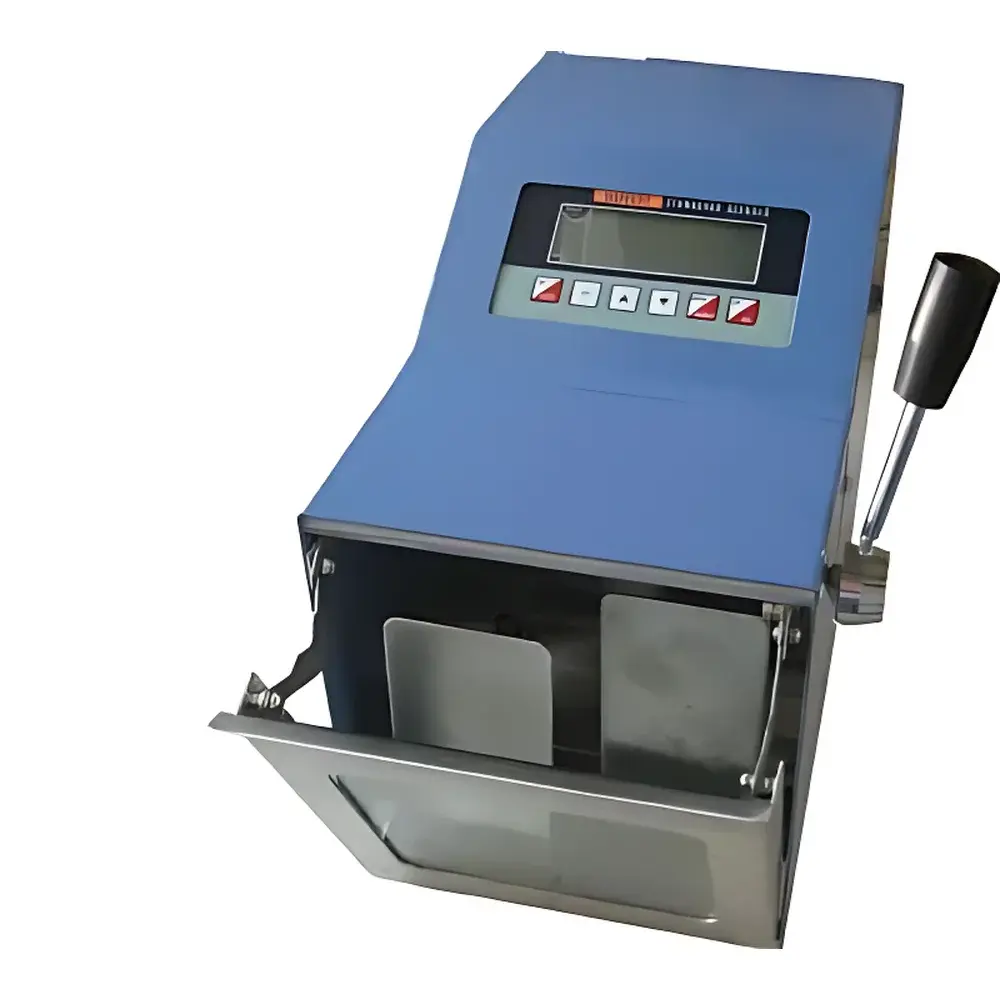
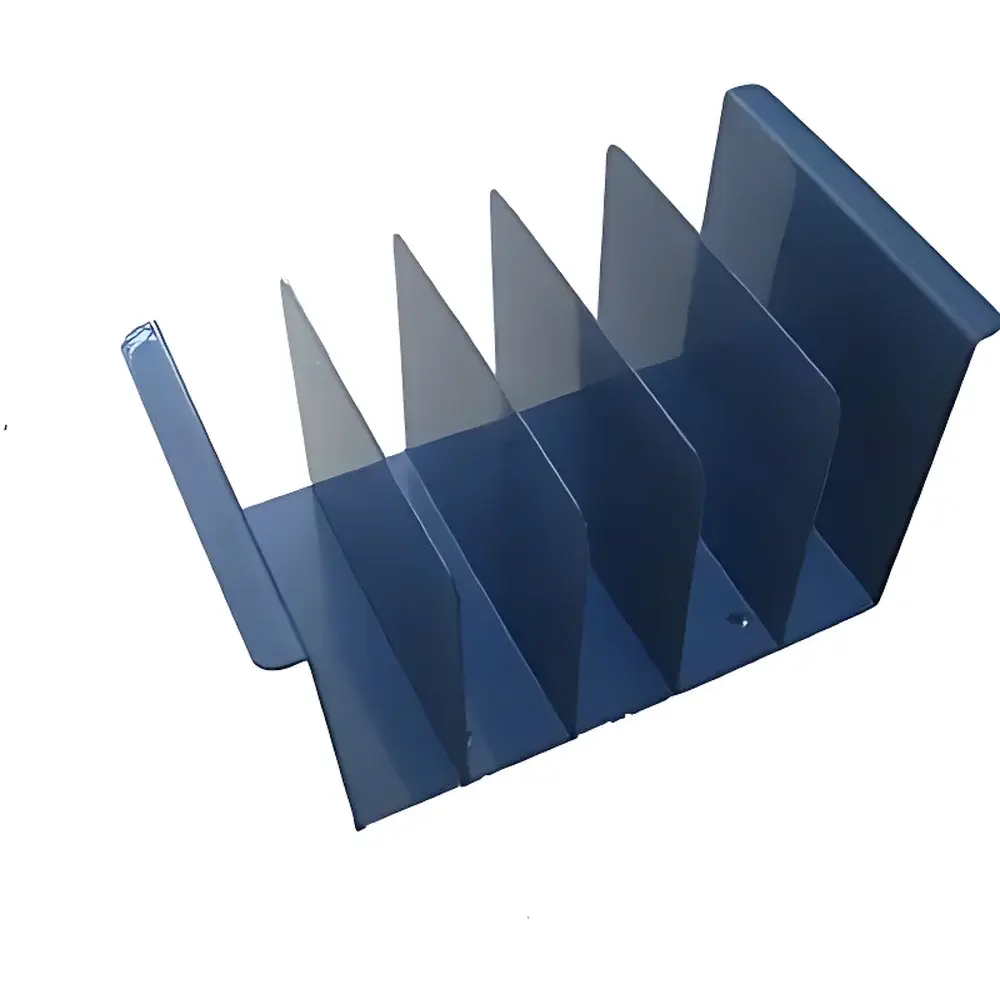
Truelab BM-400HP Pulsed-Action Homogenizer
| Brand | Truelab |
|---|---|
| Origin | Shanghai, China |
| Model | BM-400HP |
| Instrument Type | Pulsed-Action (Stomacher-Type) Homogenizer |
| Dimensions (W×D×H) | 390 × 220 × 310 mm |
| Sample Volume Range | 10–400 mL |
| Temperature Control Range | Ambient to 50 °C |
| Pulsing Frequency | 3–12 pulses/s (adjustable in 0.1 increments) |
| Stroke Length | 0–40 mm (adjustable) |
| Timer Range | 0–100 min (0.1-min resolution) or Continuous Mode |
| UV Sterilization | 254 nm, 5 min per cycle |
| Display | Large LCD with Digital Keypad Interface |
| Power Supply | 220 V / 50 Hz |
| Rated Power | 300 W |
| Net Weight | 21 kg |
| Program Memory | 10 user-defined protocols |
| Safety Features | Auto-stop door interlock, tempered glass viewing window, integrated waste collection tray |
| Construction | Full stainless-steel housing |
| Compliance | Designed for ISO 6887-1, ASTM D5659, and USP <61> microbiological sample preparation workflows |
Overview
The Truelab BM-400HP Pulsed-Action Homogenizer is an engineered solution for standardized, reproducible sample homogenization in microbiological and analytical laboratories. Based on the stomacher principle—where controlled mechanical pulsation applies shear force across a sealed sterile sample bag—the BM-400HP delivers uniform dispersion of microorganisms from solid or semi-solid matrices without thermal degradation or cross-contamination. Unlike rotor-stator or bead-beating systems, this device operates via reciprocating paddle action against flexible polymer bags, preserving microbial viability while maximizing recovery efficiency. Its integrated temperature control (ambient to 50 °C) enables thermally sensitive applications—such as enumeration of psychrotrophic flora or enzyme-stability studies—where maintaining sample integrity during homogenization is critical. The system complies with international standards governing microbiological sample preparation, including ISO 6887-1 (microbiology of food and animal feeding stuffs), ASTM D5659 (standard practice for homogenization of environmental samples), and USP (microbiological examination of nonsterile products). It is widely deployed in food safety labs, pharmaceutical quality control, clinical diagnostics, and environmental testing facilities where regulatory traceability and process consistency are mandatory.
Key Features
- Dual-mode sterilization: Built-in 254 nm UV-C lamp with one-touch activation and programmable 5-minute cycles, ensuring rapid decontamination of the chamber interior between runs
- Precise thermal regulation: PID-controlled heating element maintains setpoint temperature (±1.5 °C accuracy) within the pulsing chamber—critical for studies requiring defined incubation-homogenization coupling
- Adjustable mechanical parameters: Pulse frequency (3–12 Hz, 0.1-Hz increments) and stroke length (0–40 mm) allow optimization for diverse sample types—from soft cheeses and leafy greens to frozen meats and powdered pharmaceuticals
- Full stainless-steel construction (AISI 304): Corrosion-resistant housing meets GLP/GMP facility hygiene requirements and supports routine disinfection with ethanol or quaternary ammonium agents
- Ergonomic access design: Fully articulating front door with wide opening angle facilitates effortless placement and retrieval of sample bags; tempered glass viewport enables real-time monitoring without interrupting operation
- Integrated safety architecture: Electromechanical door interlock halts pulsing instantly upon opening; auto-stop function prevents finger entrapment; leak-proof waste collection tray captures incidental bag breaches
- Digital workflow control: Backlit LCD interface stores up to 10 user-defined protocols—including time, frequency, stroke, temperature, and UV cycle—and supports repeatable execution under audit-ready conditions
Sample Compatibility & Compliance
The BM-400HP accommodates standard ISO-compliant stomacher bags (typically 40 × 60 mm or 80 × 120 mm formats) and accepts volumes from 10 mL to 400 mL. It is validated for use with food matrices (raw meat, poultry, seafood, dairy, produce, baked goods), pharmaceutical dosage forms (tablets, capsules, ointments), clinical specimens (stool, swabs, tissue biopsies), and environmental swabs (surface, air, water filters). All operations align with ISO/IEC 17025 documentation requirements: each run logs timestamp, parameter settings, and operator ID when connected to optional LIMS-compatible data export modules. The instrument’s mechanical design conforms to IEC 61000-6-2 (immunity) and IEC 61000-6-4 (emissions), and its UV subsystem complies with IEC 62471 (photobiological safety). For regulated environments, it supports 21 CFR Part 11–compliant electronic records when paired with validated software extensions.
Software & Data Management
While the BM-400HP operates autonomously via its embedded microcontroller, optional USB or RS-232 connectivity enables integration with laboratory information management systems (LIMS) or custom SCADA platforms. Exported logs include protocol name, start/stop timestamps, actual vs. set temperature profiles, pulse count, and UV activation status—structured in CSV format for traceability. Audit trails meet GLP and GMP expectations: all parameter modifications are time-stamped and attributed to logged-in users. Firmware updates are performed via secure signed binaries; configuration backups can be saved externally for disaster recovery. No cloud dependency or proprietary runtime environment is required—ensuring long-term operational continuity and IT security compliance.
Applications
- Microbial enumeration (aerobic plate count, coliforms, E. coli, Salmonella enrichment) per ISO 6887, FDA BAM, and APHA methods
- Pharmaceutical microbiological testing (USP , , ) including bioburden assessment and preservative efficacy testing
- Clinical specimen processing for culture-based pathogen isolation and MALDI-TOF MS sample prep
- Toxin extraction from food matrices prior to ELISA or LC-MS/MS analysis
- Homogenization of environmental samples (soil, sediment, biofilm scrapings) for qPCR-based microbial community profiling
- Preparation of reference materials and proficiency testing samples under ISO/IEC 17043 guidelines
FAQ
What is the maximum recommended sample volume for optimal microbial recovery?
For consistent homogenization efficiency and minimal shear-induced cell lysis, the manufacturer recommends 25–300 mL of total suspension volume (sample + diluent) in standard 80 × 120 mm stomacher bags.
Can the BM-400HP be used with non-Truelab branded sample bags?
Yes—provided the bags conform to ISO 7218 and ASTM D5659 dimensional and material specifications (e.g., low-permeability polyethylene/polyamide laminates); however, validation of recovery rates is required for regulatory submissions.
Is temperature calibration traceable to NIST standards?
The internal PT100 sensor is factory-calibrated; users may perform field verification using a NIST-traceable probe inserted through the designated port during idle cycles.
How often should the UV lamp be replaced?
The 254 nm low-pressure mercury lamp has a rated service life of 5,000 hours; replacement is recommended after 4,500 hours of cumulative UV exposure or if intensity drops below 85% of initial output (verified with a calibrated radiometer).
Does the BM-400HP support remote monitoring or IoT integration?
Not natively—but with optional serial-to-Ethernet gateways and custom middleware, status signals (run completion, fault codes, temperature deviation alerts) can be routed to enterprise SCADA or building management systems.



