
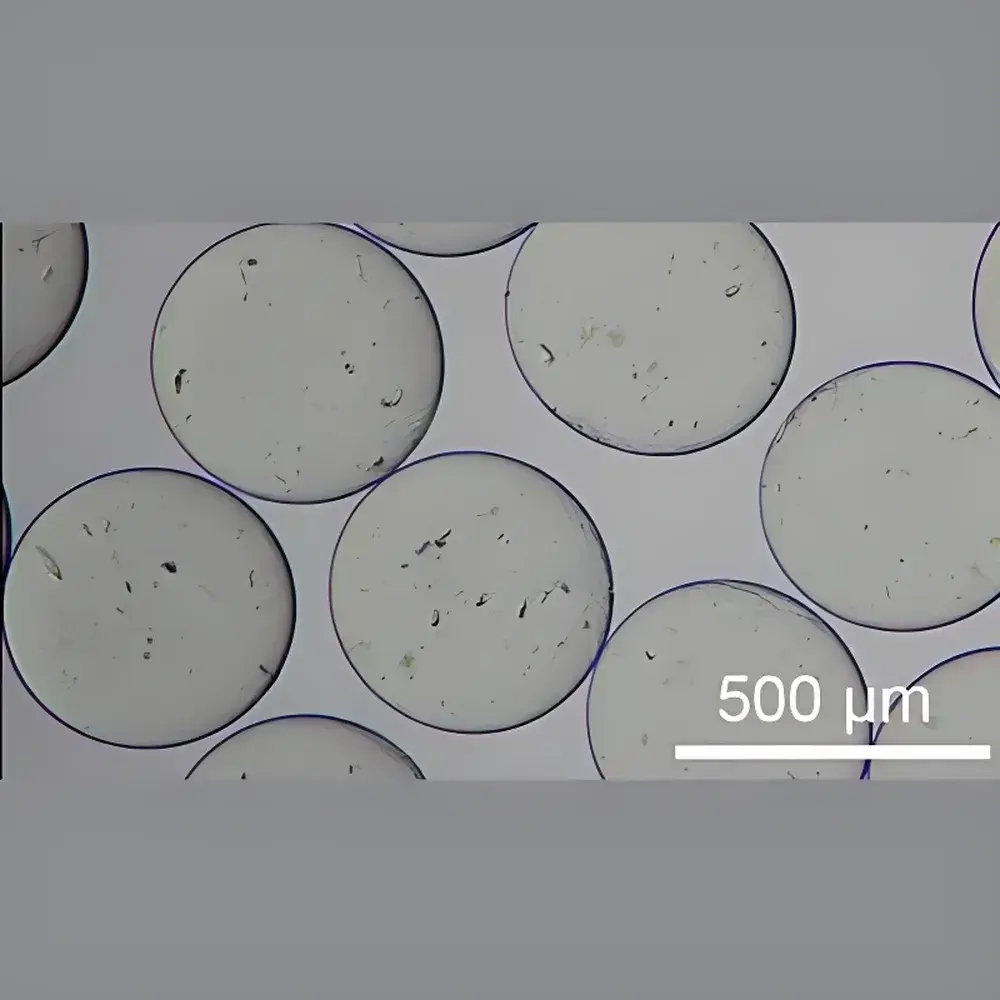
Truelab MBE-1 High-Voltage Electrostatic Electrospray System for Microsphere and Microcapsule Fabrication
| Brand | Truelab |
|---|---|
| Origin | Shanghai, China |
| Model | MBE-1 |
| Power Supply Compatibility | DC high-voltage source (0–30 kV) |
| Syringe Pump Interface | Standard Luer-lock input |
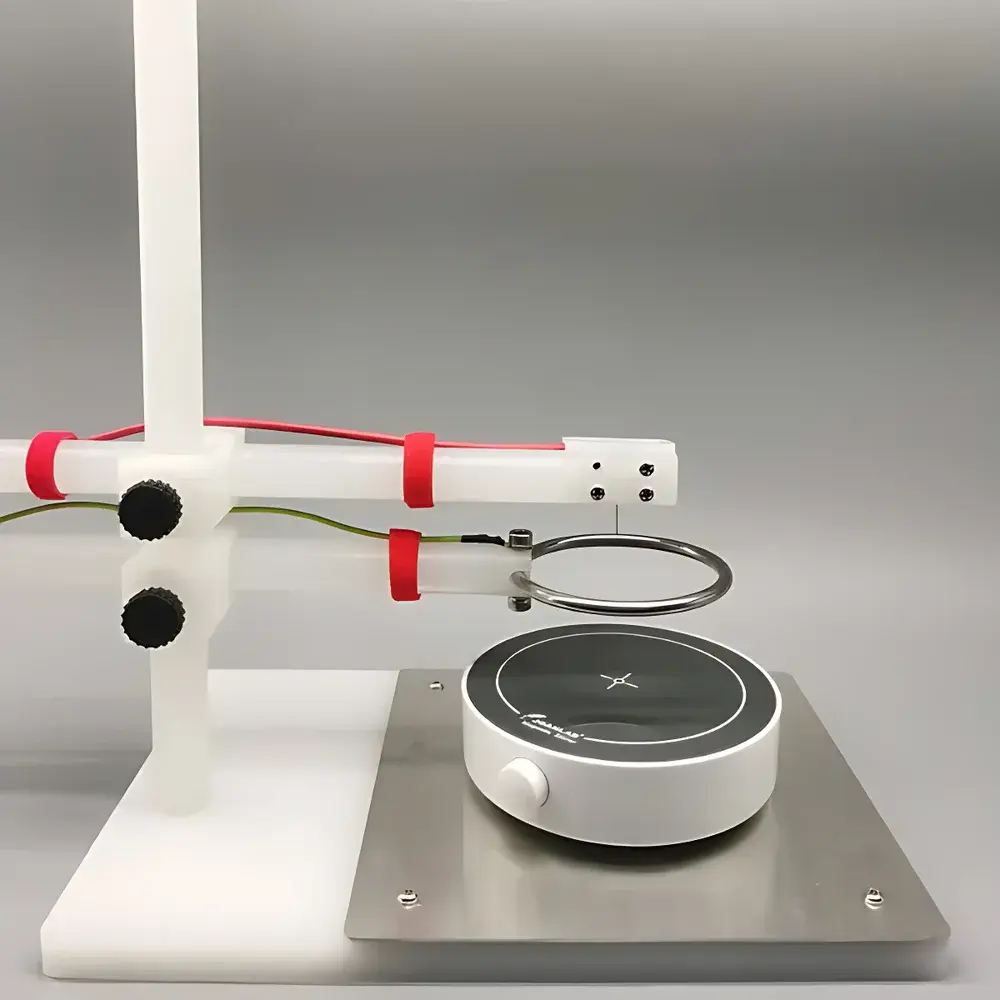
| Grounding Options | Adjustable 6 cm / 8 cm / 10 cm metallic grounding rings |
| Base Dimensions | 300 × 200 mm |
| Structural Material | Polypropylene insulating frame with grounded square metal plate |
| Needle Mounting | X–Z manual translation stage |
| Compatible Nozzle Configurations | Single-, coaxial-, and triaxial needle assemblies |
| Safety Features | Interlocked protective hood, dedicated HV terminal mounting holes, ESD-safe base architecture |
| Regulatory Alignment | Designed to support GLP-compliant process documentation and ASTM D7945-15 (electrospinning/electrospray methodology guidelines) |
Overview
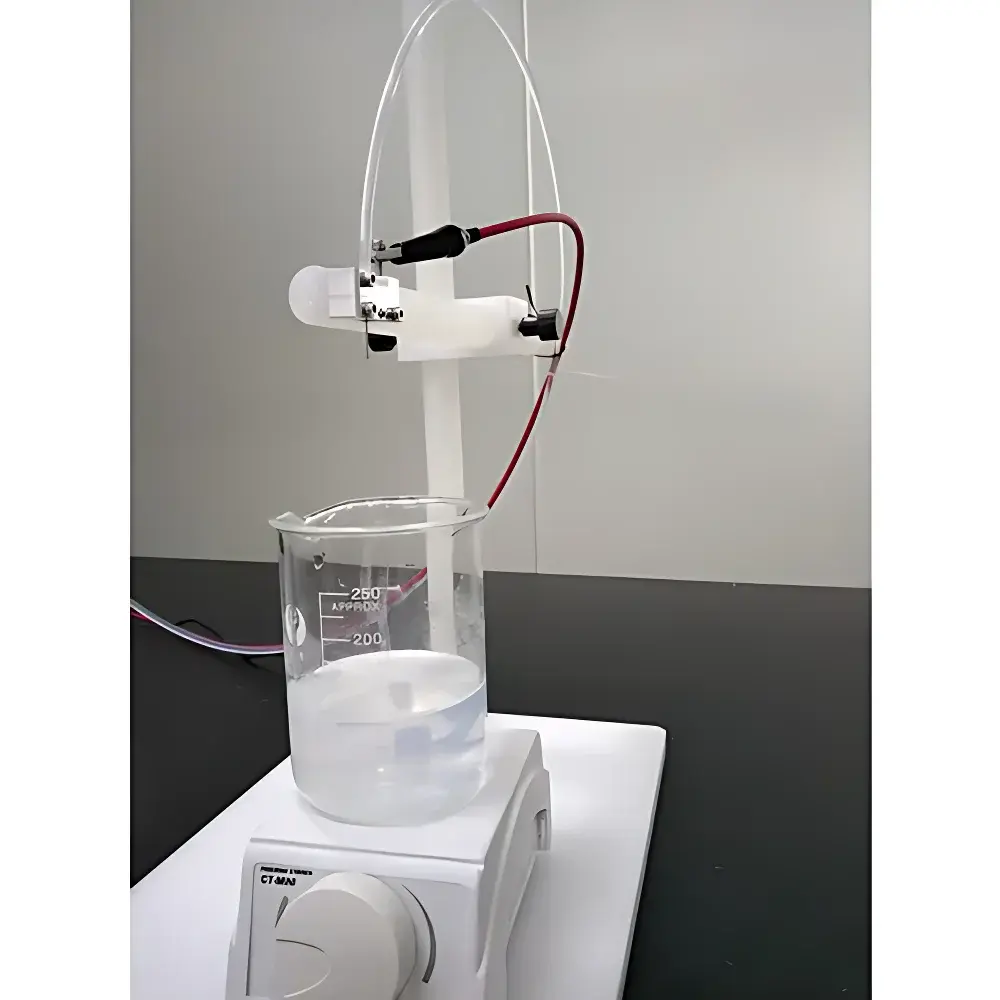
The Truelab MBE-1 is a benchtop electrostatic electrospray system engineered for the controlled fabrication of polymeric microspheres, core–shell microcapsules, and hierarchical nanostructured particles. It operates on the principle of electrohydrodynamic atomization: a conductive polymer or biomacromolecule solution is extruded through a metallic capillary nozzle under precise volumetric flow control; application of a high-voltage DC field (typically 10–25 kV) induces charge accumulation at the meniscus, overcoming surface tension to generate a stable Taylor cone and subsequent jet breakup into monodisperse droplets. These charged droplets travel across a defined working distance toward a grounded collector—such as a Petri dish, rotating drum, or liquid bath—where solvent evaporation or phase separation yields solidified microstructures. Unlike thermal or chemical crosslinking methods, electrospray enables solvent-free or mild-solvent processing, preserving thermolabile payloads including peptides, plasmid DNA, monoclonal antibodies, and primary cell lysates.
Key Features
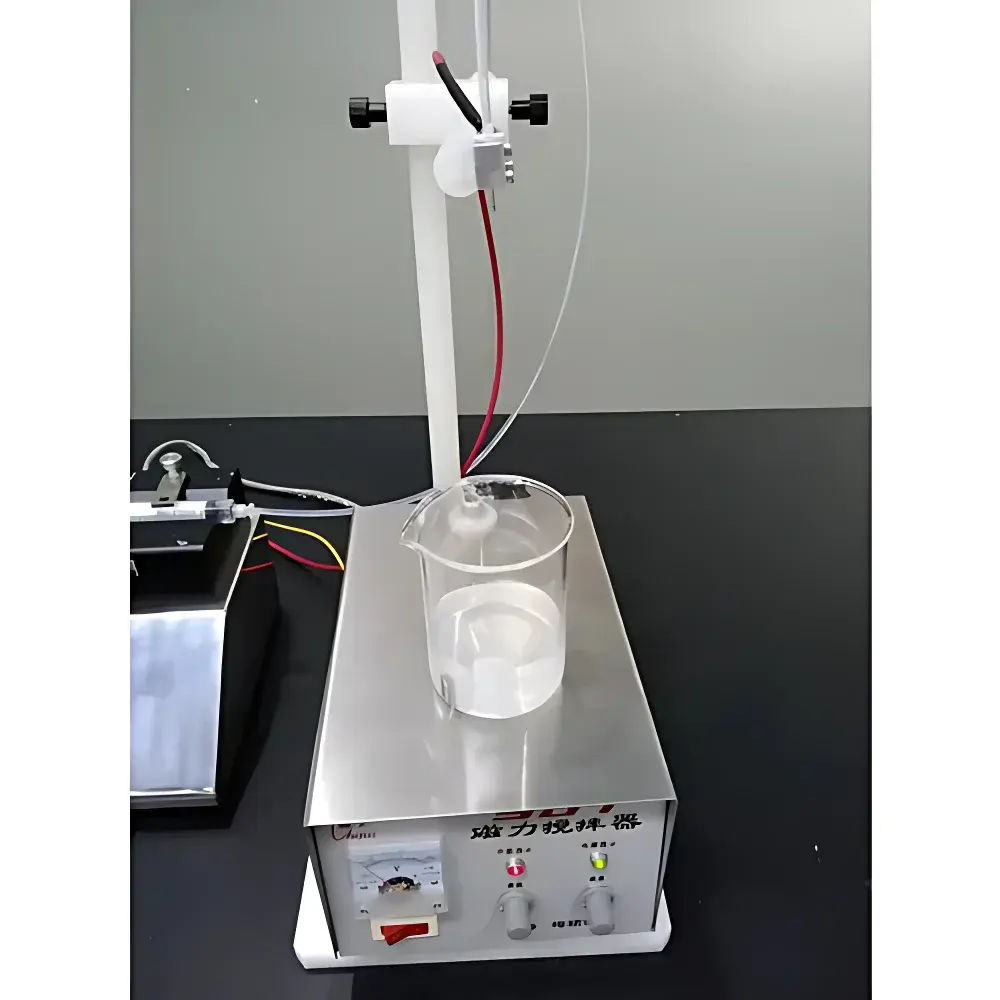
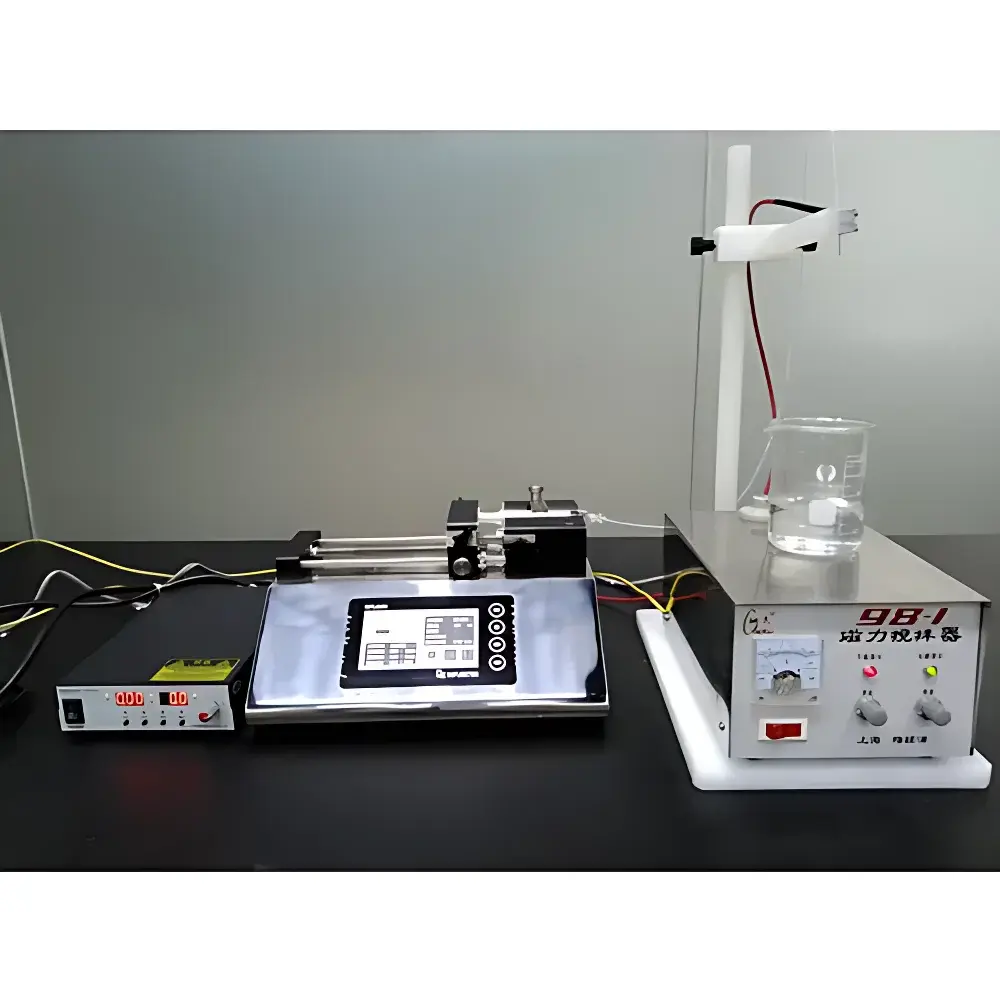
- Modular mechanical architecture compatible with third-party high-voltage power supplies (0–30 kV), syringe pumps (flow range: 0.1–10 mL/h), and magnetic stirrers—enabling flexible integration into existing lab workflows.
- Manually adjustable X–Z translation stage for nozzle positioning, supporting precise control over tip-to-collector distance (5–25 cm range) critical for droplet trajectory stability and particle morphology reproducibility.
- Electrostatically inert polypropylene structural frame with embedded grounded square metal plate (300 × 200 mm), minimizing stray field distortion and ensuring operator safety per IEC 61010-1 requirements.
- Dedicated coaxial and triaxial nozzle holder accommodating standard stainless-steel needles (22–30 G), facilitating fabrication of bilayer, triple-layer, or Janus-type microparticles without hardware modification.
- Interlocked transparent polycarbonate safety hood with HV interlock circuitry, preventing accidental contact during operation and meeting Class II laboratory equipment safety expectations.
- Three interchangeable grounded metallic rings (6 cm, 8 cm, 10 cm diameters) mounted on adjustable vertical posts—enabling empirical optimization of electric field confinement and axial droplet focusing.
Sample Compatibility & Compliance
The MBE-1 supports aqueous, organic, and mixed-solvent systems commonly used in pharmaceutical microencapsulation—including PLGA, chitosan, alginate, PVP, and gelatin solutions (viscosity range: 10–500 mPa·s). It accommodates sterile processing when coupled with laminar flow hoods and autoclavable nozzle components. The system’s open architecture allows full traceability of process parameters (voltage, flow rate, collector distance, ambient RH/temperature), supporting alignment with FDA 21 CFR Part 11 data integrity requirements when paired with compliant software logging. Documentation templates conform to ISO 13485 Annex C for medical device-related particle synthesis and ASTM D7945-15 test method standards for electrospray-based particle generation.
Software & Data Management
While the MBE-1 operates as a hardware platform without embedded firmware, it is fully compatible with industry-standard data acquisition environments. Analog voltage outputs from external HV supplies and syringe pump controllers can be logged via USB DAQ systems (e.g., National Instruments USB-6009) and synchronized using LabVIEW or Python-based scripts. Truelab provides SOP templates and parameter calibration worksheets for establishing repeatable electrospray protocols, including voltage–flow–distance response matrices. All mechanical adjustments are indexed and documented manually or via digital lab notebook integration (e.g., LabArchives, Benchling), enabling audit-ready process records for GLP/GMP-aligned development labs.
Applications
The MBE-1 serves as a foundational tool in translational biomaterials research: sustained-release drug microcarriers for oncology therapeutics; immunomodulatory antigen-loaded microparticles for vaccine delivery; stem-cell-laden hydrogel microgels for 3D bioprinting scaffolds; and contrast-agent-encapsulated microbubbles for ultrasound-mediated targeted therapy. Its capacity for rapid prototyping (85% typical for hydrophobic small molecules), payload retention (≤5% burst release in PBS at 37°C), and aerodynamic diameter control (1–20 µm for pulmonary delivery studies).
FAQ
What voltage range is required for stable electrospray operation?
A DC output of 12–25 kV is typically sufficient for most polymer solutions; optimal voltage depends on solution conductivity, surface tension, and nozzle geometry.
Can the MBE-1 be used under sterile conditions?
Yes—nozzles and collectors may be sterilized via autoclaving or ethanol immersion; the polypropylene frame is compatible with ISO Class 5 cleanroom handling protocols.
Is coaxial electrospray supported out-of-the-box?
Yes—the integrated nozzle mount accepts commercially available coaxial needle assemblies (e.g., NanoNC, IMEDECO) without adapter modification.
How is grounding implemented to ensure field uniformity?
The base-mounted grounded metal plate, combined with adjustable concentric grounding rings, establishes a radially symmetric equipotential boundary that suppresses lateral jet deflection.
What maintenance is required for long-term reliability?
Routine cleaning of nozzle orifices with appropriate solvents and periodic inspection of HV terminal insulation integrity—no scheduled calibration is needed due to its passive mechanical design.




