
Truelab NMS-1 Conjugate Electrospinning and Mechanical Twisting Apparatus for Nanofiber Yarn Fabrication
| Brand | Truelab |
|---|---|
| Origin | Shanghai, China |
| Manufacturer Type | Authorized Distributor |
| Country of Origin | China |
| Model | NMS-1 |
| Price Range | USD 1,400 – 2,800 |
| Funnel Diameter | 60 mm |
| Funnel Speed Range | 0–650 rpm |
| Winding Drum Speed | 0.01–10 rpm |
| Reciprocating Stroke | ≤50 mm |
| Reciprocating Speed | 0.01–10 mm/s |
| Yarn Component Width | 100 mm |
| Max. Yarn Spool Diameter | 100 mm |
| Weight | 4 kg |
| Max. Power Consumption | 45 W |
| Supply Voltage | 24 V DC |
| Operating Temperature | 5–45 °C |
Overview
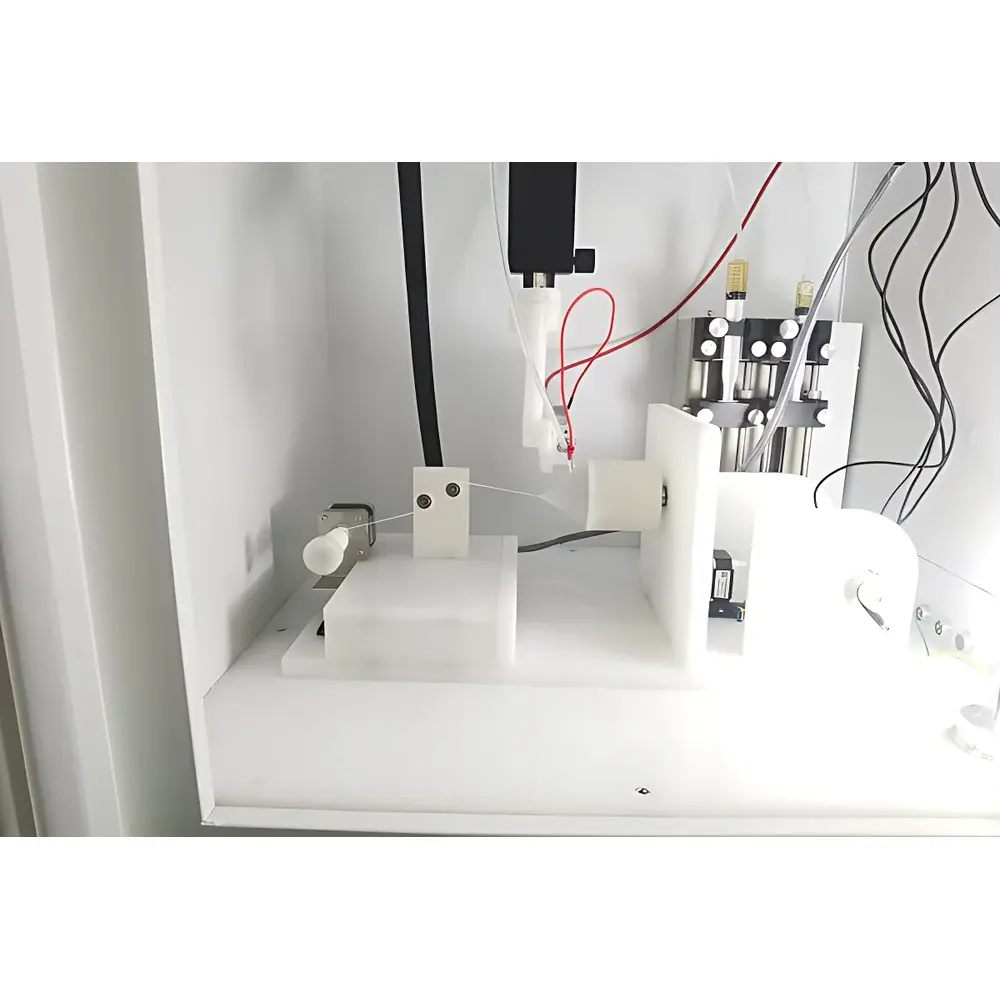
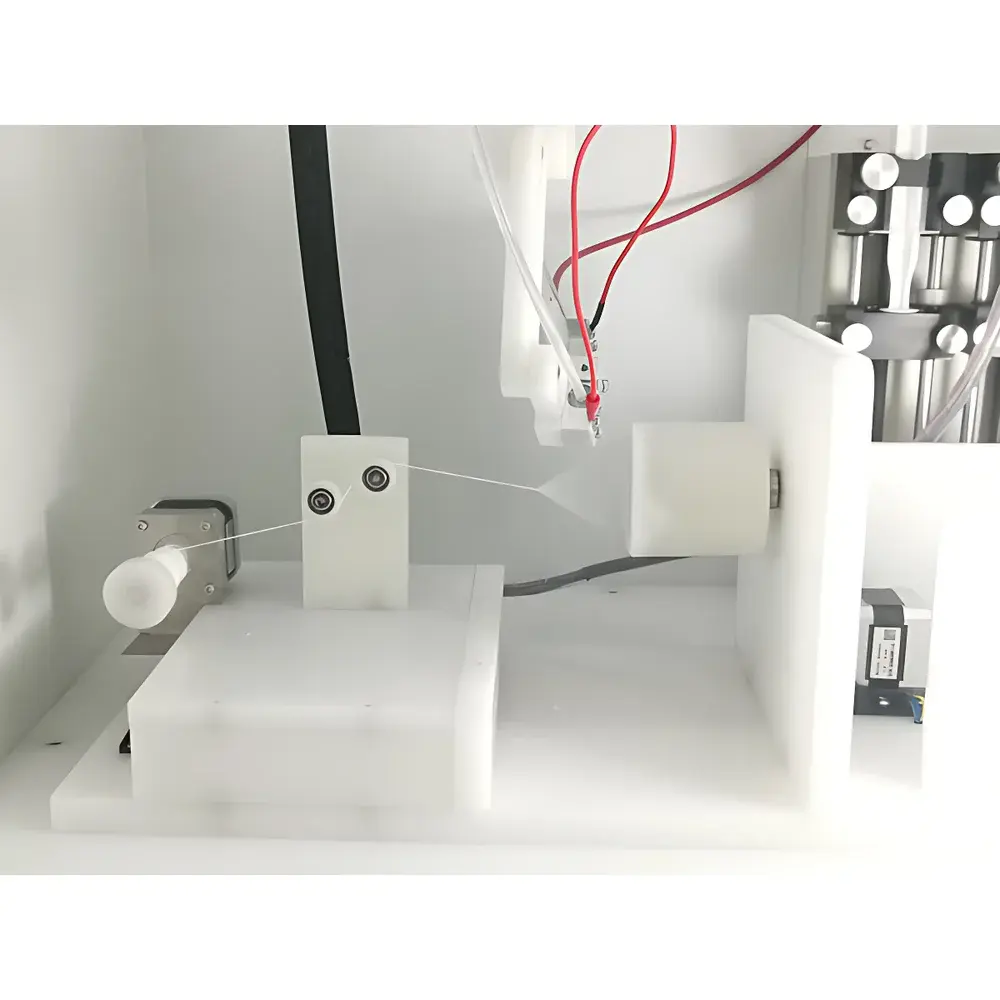
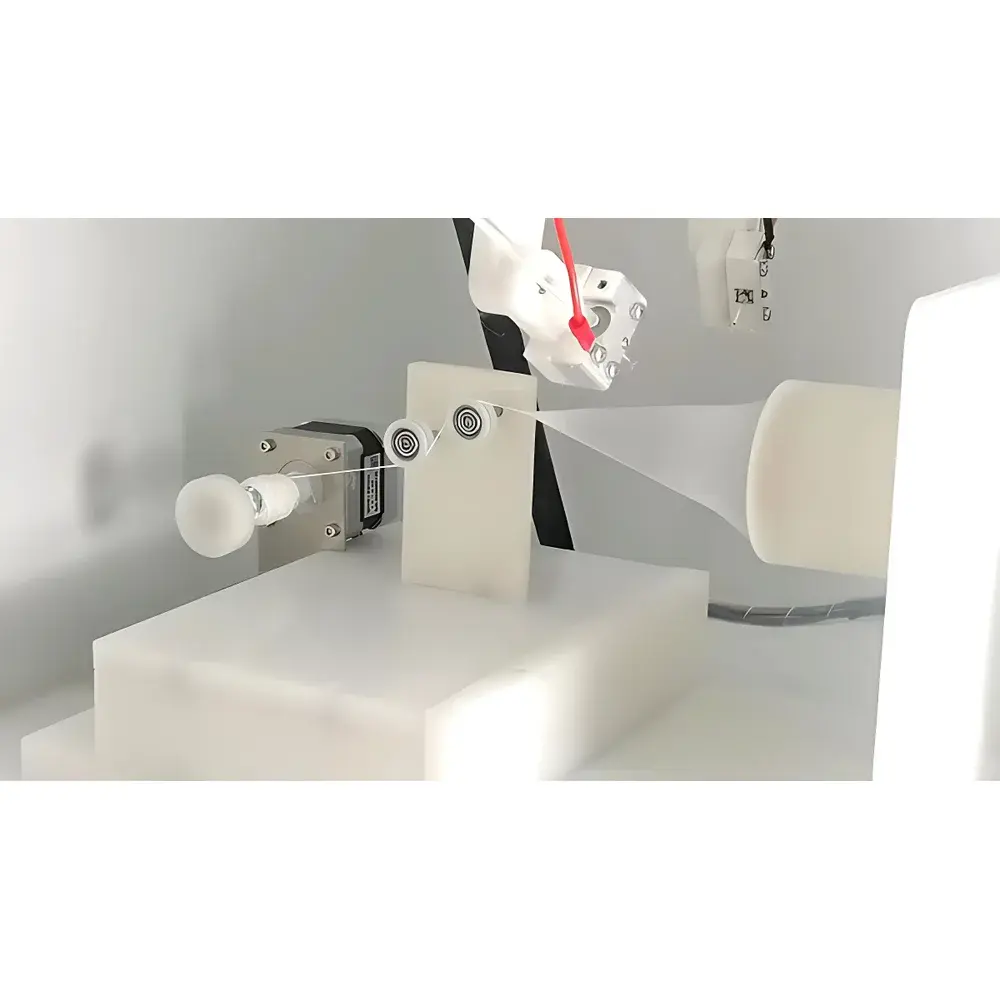
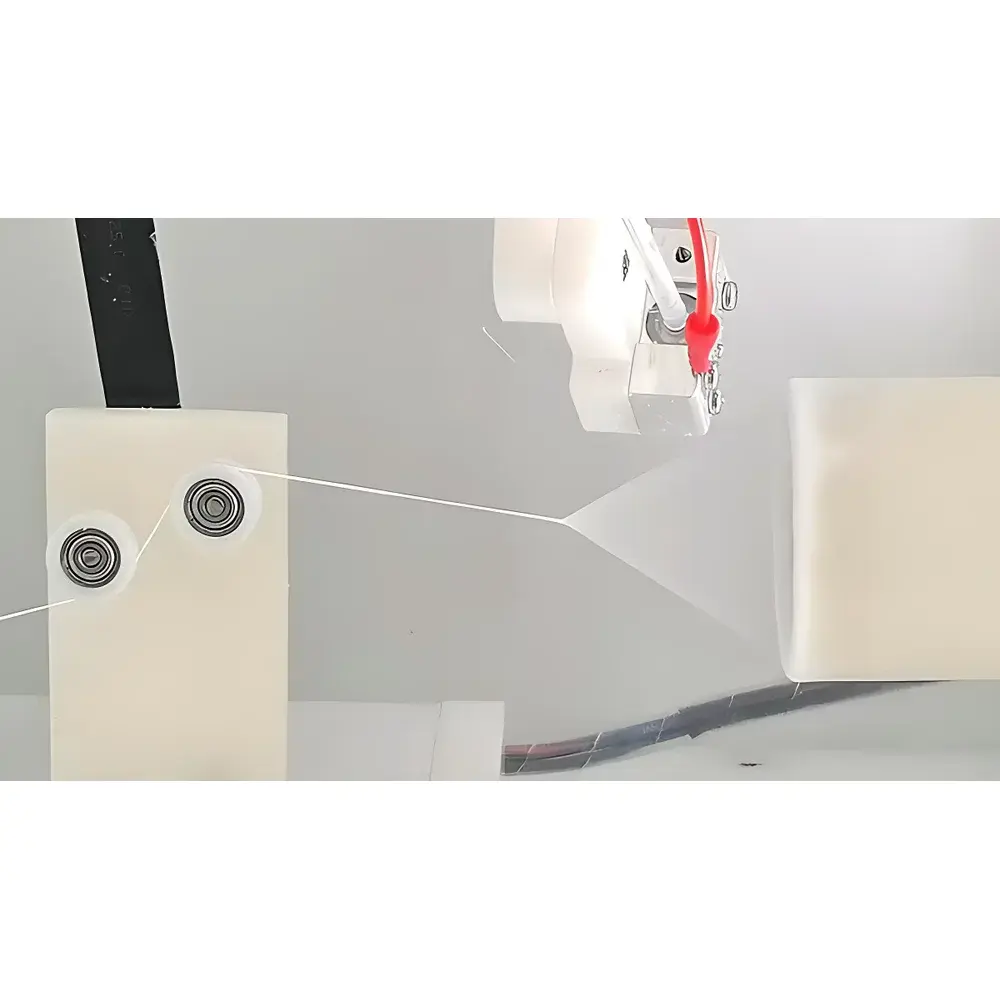
The Truelab NMS-1 Conjugate Electrospinning and Mechanical Twisting Apparatus is a purpose-built laboratory-scale system engineered to fabricate continuous nanofiber yarns via integrated electrohydrodynamic fiber generation and controlled mechanical twisting. Unlike conventional electrospun nonwovens, this apparatus enables the direct conversion of as-spun polymer nanofibers—generated from one or more coaxial or side-by-side spinnerets—into structurally coherent, twist-stabilized yarns in a single process stream. The core principle relies on Coulombic fiber collection at the periphery of a rotating, grounded metal funnel (60 mm diameter), where controlled rotational shear induces torsional alignment and bundling. Subsequent winding under programmable speed and reciprocating motion ensures uniform tension, consistent linear density, and minimized fiber slippage. Designed for compatibility with standard high-voltage electrospinning setups (e.g., needle-based, needleless, or multi-nozzle configurations), the NMS-1 operates as either a standalone post-spinning module or an embedded subsystem within existing electrospinning workstations.
Key Features
- Electrostatically optimized architecture: PP (polypropylene) structural frame provides intrinsic electrical insulation and anti-static surface properties, minimizing field distortion and ensuring stable jet formation during conjugate spinning.
- Modular, tool-free integration: Pre-drilled mounting holes and standardized mechanical interfaces allow rapid coupling with commercial electrospinning platforms (e.g., vertical/horizontal collectors, humidity-controlled chambers, or solvent recovery enclosures).
- Precision-adjustable conjugate nozzle mount: Three-axis manual translation stage (X/Y/Z) enables fine-tuning of spinneret-to-funnel distance (±10 mm resolution) and angular orientation—critical for optimizing fiber deposition geometry and twist initiation efficiency.
- Dual-mode winding system: Motor-driven drum supports independent control of rotational speed (0.01–10 rpm) and linear reciprocation (0.01–10 mm/s, max stroke 50 mm), enabling helical winding patterns and graded yarn packing density.
- Dedicated yarn coating module: Integrated guide rings and quick-release spool holder (max. 100 mm diameter) facilitate continuous core-yarn feeding; the system deposits aligned nanofibers concentrically onto pre-tensioned substrates (e.g., polyester, nylon, or metallic wires), forming hybrid functional filaments.
- Safety-compliant power design: 24 V DC operation with dedicated grounding path for motor assembly, eliminating arc risks in high-field environments and supporting extended unattended operation (tested >72 h continuous duty at 45 W peak load).
Sample Compatibility & Compliance
The NMS-1 accommodates a broad range of electrospinnable polymer solutions—including PVA, PAN, PLGA, TPU, and cellulose acetate—at typical concentrations (8–20 wt%) and solvent systems (e.g., DMF/water, chloroform/acetone, HFIP). It supports both single- and multi-material conjugate configurations using standard Luer-lock or custom-machined nozzles (up to 4 channels). All wetted components are chemically resistant to common organic solvents. While the apparatus itself does not carry CE, UL, or FDA certification, its mechanical and electrical design adheres to IEC 61000-6-3 (EMC emission limits) and ISO 13857 (safety distances for machinery). When deployed in GLP/GMP-aligned labs, the system supports audit-ready documentation protocols—including operator logs, parameter lockout settings, and version-controlled firmware updates (via optional controller unit).
Software & Data Management
The base NMS-1 operates via analog potentiometer controls for funnel speed, winding speed, and reciprocation parameters. For digital integration, Truelab offers an optional microcontroller-based interface (NMS-1-Ctrl v2.1) featuring RS-485 Modbus RTU communication, real-time parameter logging (CSV export), and synchronized triggering with external HV supplies or environmental sensors. Data timestamps comply with ISO/IEC 17025 traceability requirements. Firmware supports user-defined ramp profiles, emergency stop interlocks, and password-protected calibration mode—enabling compliance with FDA 21 CFR Part 11 when paired with validated electronic lab notebook (ELN) systems.
Applications
- Production of hierarchical nanofiber yarns for strain-sensing textiles, where twisted architecture enhances piezoresistive repeatability over 104 cycles.
- Core–shell filament fabrication for controlled drug release: e.g., PLLA core + gelatin–heparin sheath yarns processed under sterile laminar flow.
- Reinforcement of composite preforms: aligned nanofiber yarns wound onto carbon fiber tow prior to resin infusion.
- Functional coating of medical guidewires: continuous nanofiber sheathing improves lubricity and enables localized antimicrobial agent loading.
- Scalable prototyping of filtration media: twisted yarns woven into 2D membranes exhibit tunable pore tortuosity and enhanced dust-holding capacity vs. random mats.
FAQ
Can the NMS-1 be operated inside a glovebox or controlled-atmosphere chamber?
Yes—the 24 V DC power input, compact footprint (W×D×H: 280 × 220 × 310 mm), and absence of internal heat-generating electronics permit safe integration into nitrogen- or argon-purged enclosures.
Is vacuum-compatible mounting hardware available?
Standard M4 threaded inserts are provided; optional stainless-steel vacuum flange adapters (KF-16 and CF-35) can be supplied upon request.
What level of twist coefficient (α) can be achieved?
Measured twist multiplier (TPI, turns per inch) ranges from 50 to 1,200 TPI depending on funnel speed (0–650 rpm), collection distance (50–150 mm), and solution conductivity—empirically validated using ASTM D1445 tensile testing and SEM-based fiber angle quantification.
Does Truelab provide application support for polymer selection and process optimization?
Yes—technical documentation includes 12 validated protocol templates (e.g., PVP nanofiber yarns for wound dressing scaffolds), and engineering support covers rheological matching, voltage–flowrate mapping, and twist-induced crystallinity analysis.
Are spare parts and calibration services available internationally?
All mechanical subassemblies (funnel, guide rings, spool holders) are serialized and stocked in EU and US distribution hubs; annual calibration certificates traceable to NIST standards are offered via authorized service partners.





