
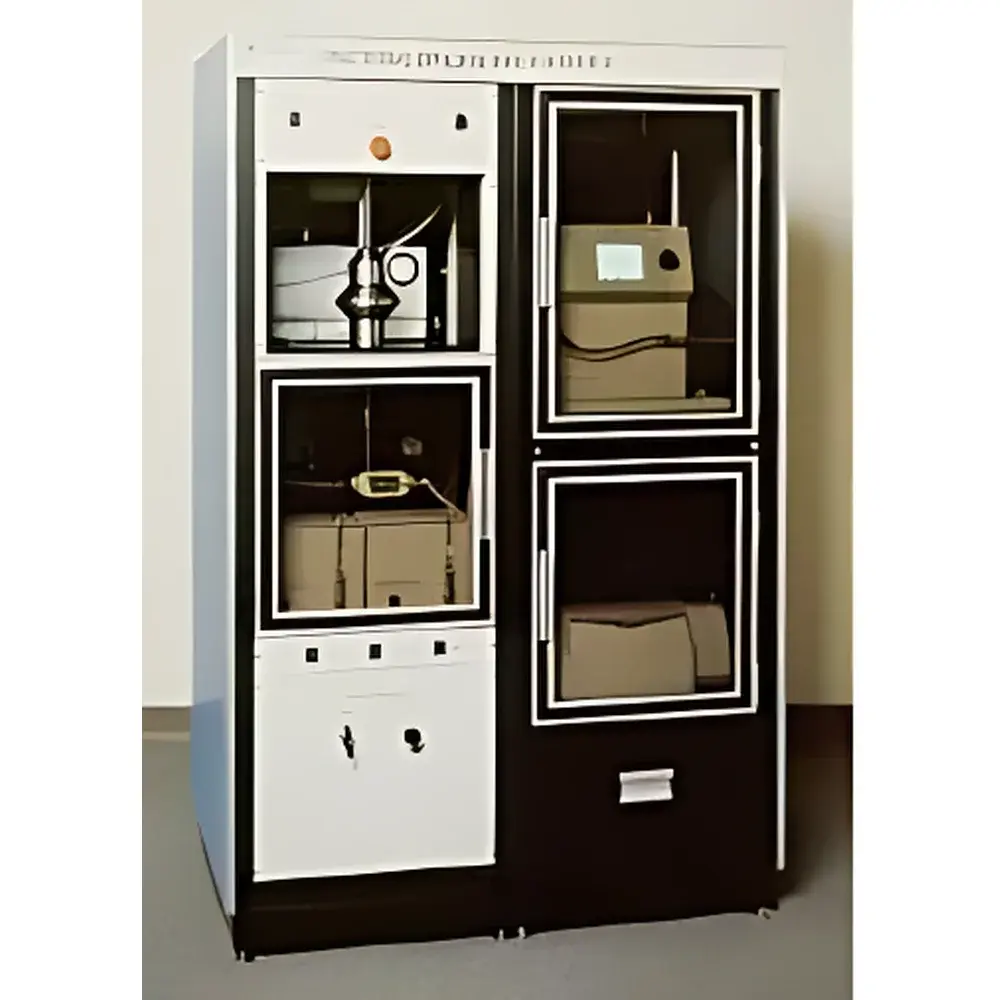
TSI Model 3160 Aerosol Filter Tester for Counting-Scan Method
| Origin | USA |
|---|---|
| Manufacturer Type | Authorized Distributor |
| Origin Category | Imported |
| Model | 3160 |
| Price Range | USD 65,000–130,000 |
| Instrument Type | Aerosol Filter Tester |
Overview
The TSI Model 3160 Aerosol Filter Tester is a precision-engineered instrument designed for the automated, high-sensitivity characterization of high-efficiency particulate air (HEPA) and ultra-low penetration air (ULPA) filters in accordance with EN 1822-1:2019 and ISO 29463-1:2017. It implements the counting-scan method—a gravimetrically traceable, particle-number-based testing protocol—where monodisperse aerosols are generated via electrospray atomization coupled with differential mobility analysis (DMA), enabling rigorous assessment of filter performance at the Most Penetrating Particle Size (MPPS). Unlike optical or photometric methods, the Model 3160 delivers quantitative, size-resolved filtration efficiency data across a defined submicron range (15 nm to 800 nm), supporting both R&D validation and routine quality assurance under GLP-compliant workflows.
Key Features
- Integrated electrospray aerosol generator and DMA-based monodisperse aerosol system capable of producing 12 discrete particle sizes between 15 nm and 800 nm with geometric standard deviation (σg) < 1.3
- Dual calibrated Condensation Particle Counters (CPCs) operating in parallel—one upstream and one downstream—to enable real-time, high-dynamic-range concentration measurement (0.01–1×10⁶ cm⁻³)
- Adjustable test airflow from 5 to 100 L/min, compatible with standardized filter test fixtures per EN 1822 Annex B and ISO 29463-3
- Support for multiple challenge aerosols including NaCl, Di-Octyl Phthalate (DOP), Di-Ethyl-Sebacate (DES), and other non-volatile organic oils
- Onboard MPPS determination algorithm that automatically identifies the particle size exhibiting maximum penetration and computes corresponding efficiency with ±0.001% resolution
- Robust architecture compliant with industrial cleanroom environments (ISO Class 5 or better) and equipped with integrated pressure, temperature, and flow monitoring sensors
Sample Compatibility & Compliance
The Model 3160 accommodates flat-sheet filter media (up to 300 mm × 300 mm), pleated mini-packs, and full-size HEPA/ULPA modules when mounted in certified test housings. It satisfies critical regulatory and industry standards including EN 1822-1 through -5 (2019), ISO 29463-1 through -5 (2017), IEST-RP-CC001.4, and ASTM F3150–18. Data acquisition and reporting meet FDA 21 CFR Part 11 requirements for electronic records and signatures when operated with validated software configurations. All calibration procedures reference NIST-traceable CPCs and DMA transfer standards, ensuring metrological continuity throughout the testing chain.
Software & Data Management
Control and analysis are performed using TSI’s proprietary FilterScan™ v5.x software, a Windows-based application supporting automated test sequencing, real-time efficiency curve generation (Efficiency vs. Particle Size), MPPS interpolation, and pass/fail evaluation against user-defined thresholds. The software maintains full audit trails—including operator ID, timestamp, environmental conditions, and instrument status—with export capability to CSV, PDF, and XML formats. Optional integration with LIMS platforms is supported via OPC UA and RESTful API interfaces. All raw CPC counts, flow readings, and DMA voltage logs are stored locally with SHA-256 hashing for integrity verification.
Applications
- Development and qualification of novel filter media (e.g., nanofiber composites, electrospun membranes, charged electret layers)
- Batch release testing of HEPA/ULPA filters for pharmaceutical isolators, aseptic processing suites, and semiconductor fab cleanrooms
- Filter aging studies involving humidity, temperature cycling, and oil loading protocols
- Validation of filter integrity following installation (as part of commissioning or periodic requalification)
- Root-cause analysis of filter failure modes—including fiber shedding, electrostatic decay, and seal leakage—via localized scan mapping
- Supporting ISO 14644-3 compliance verification for airborne particle concentration control in classified environments
FAQ
What aerosol materials are certified for use with the Model 3160?
NaCl, DOP, DES, PAO-4, and other non-volatile, low-vapor-pressure oils approved under EN 1822 Annex C.
Does the system support MPPS scanning below 20 nm?
Yes—the electrospray/DMA configuration enables stable monodisperse generation down to 15 nm with verified count stability and sizing accuracy.
Can the Model 3160 be used for in-situ filter housing leak testing?
No—it is configured exclusively for laboratory-based filter media or module testing; field leak detection requires complementary tools such as photometers or laser particle counters.
Is calibration traceable to national standards?
All CPCs and flow meters are factory-calibrated against NIST-traceable references, with documented uncertainty budgets provided in the Certificate of Calibration.
How is data security ensured during long-duration tests?
FilterScan™ employs local encrypted storage, automatic backup to network drives, and role-based access control aligned with ISO/IEC 27001 information security frameworks.
Related Products







