
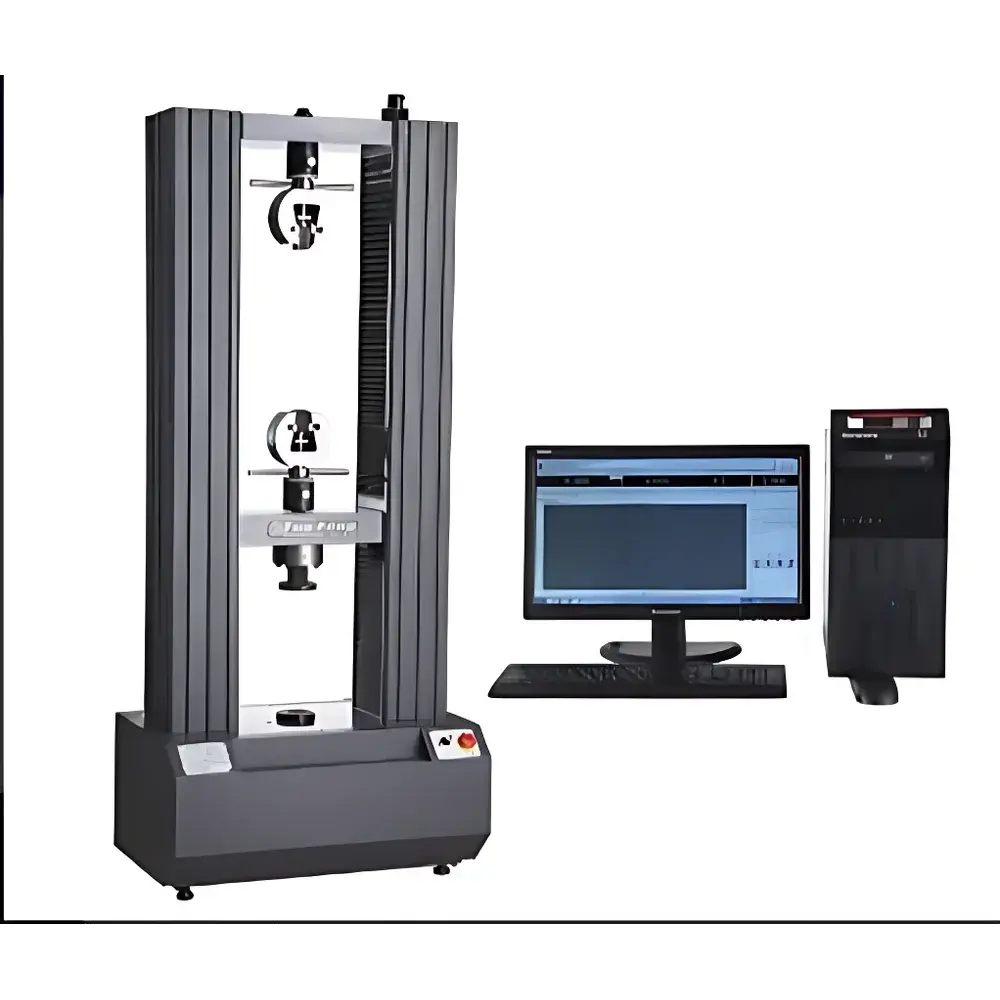
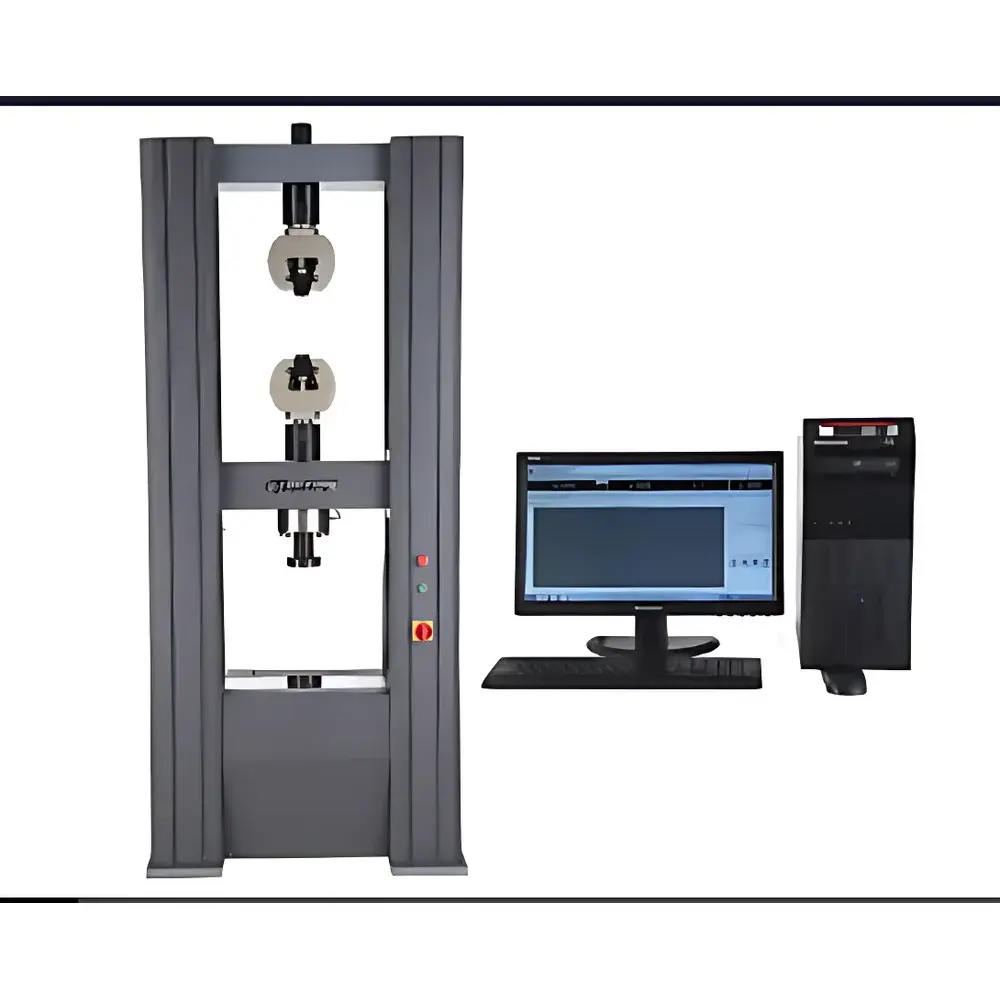
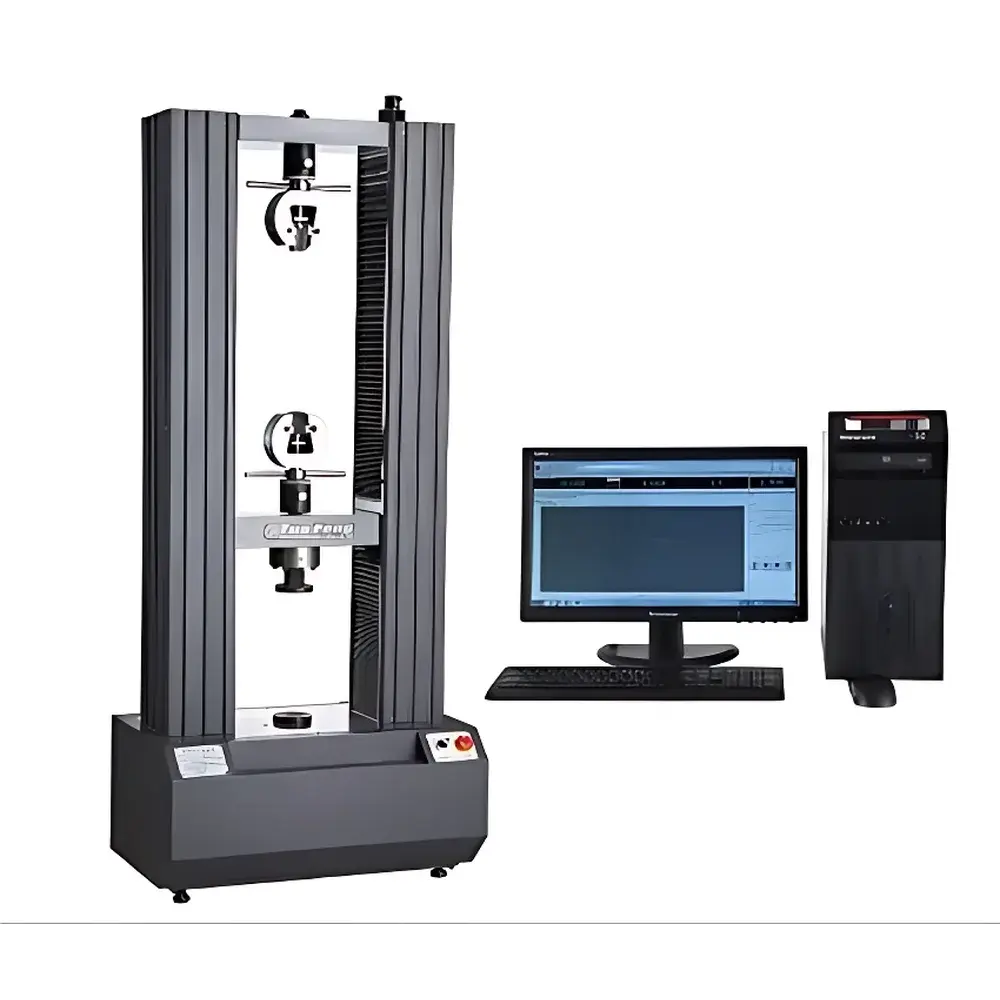
Tuofeng TFW-62 Advanced Electromechanical Tensile Testing Machine
| Brand | Tuofeng |
|---|---|
| Origin | Shanghai, China |
| Manufacturer Type | Direct Manufacturer |
| Instrument Type | Electromechanical Tensile Testing Machine |
| Model | TFW-62 |
| Max Test Load | 100 kN |
| Force Measurement Range | 1 kg to 100 kN (0.2%–100% FS) |
| Force Accuracy | ±0.5% of reading |
| Crosshead Travel | 1000 mm |
| Displacement Resolution | 0.001 mm |
| Control System | PC-based Windows software with multi-mode control (load, displacement, time) |
| Compliance | GB/T 16491–2008, JJG 475–2008, ASTM E4, ASTM E8, ISO 6892-1, DIN 50125, JIS Z 2241, BS EN ISO 6892-1 |
Overview
The Tuofeng TFW-62 Advanced Electromechanical Tensile Testing Machine is a precision-engineered universal testing system designed for static mechanical characterization of metallic, polymeric, composite, and elastomeric materials under uniaxial loading conditions. Based on servo-controlled electromechanical actuation and high-fidelity load-cell transduction, the system implements standardized force-displacement measurement principles in accordance with ISO 6892-1 (tensile testing of metallic materials), ASTM E8/E8M (tension testing of metallic materials), and ASTM D638/D3039 (plastics and composites). Its robust architecture supports full-cycle mechanical property quantification—including tensile strength, yield strength (upper/lower), elongation at break, modulus of elasticity, compressive strength, flexural modulus, tear strength, peel adhesion, and puncture resistance—across research laboratories, quality control departments, and accredited third-party testing facilities.
Key Features
- High-precision dual-range load cell calibrated to ±0.5% of full scale, with effective measurement range from 0.2% to 100% FS—enabling accurate low-force measurements (e.g., thin films, fibers) and high-load structural validation (e.g., reinforced composites, structural alloys).
- Imported AC servo motor coupled with precision ground ball-screw drive system, delivering smooth, backlash-free motion across a wide speed range of 0.001–500 mm/min (infinitely variable, closed-loop controlled).
- Optical encoder-based displacement measurement with 0.001 mm resolution and ±0.005% accuracy, synchronized with real-time load acquisition at up to 1 kHz sampling rate.
- Modular fixture interface accommodating standardized grips (pneumatic, wedge, hydraulic), environmental chambers (optional), extensometers (contact and non-contact), and custom tooling for ASTM D882 (thin plastic film), ISO 527-2 (rigid plastics), or ISO 179 (impact-modified polymers).
- Dual-speed crosshead control (fast jog + fine positioning), programmable return-to-start, electronic limit switches, emergency stop circuitry, and overload protection (auto-shutdown at >110% FS).
- Structural frame rated for 100 kN static load with rigid C-frame design, vibration-damped base, and optional widened test width (up to 600 mm) for large-format specimens.
Sample Compatibility & Compliance
The TFW-62 accommodates specimens ranging from micro-scale polymer filaments (diameter ≥0.1 mm) to macro-scale metal plates (thickness ≤50 mm, width ≤400 mm). It supports standard specimen geometries per ISO 527-2 (Type 1A/1B), ASTM D638 (Type I/V), ASTM D3039 (flat laminates), and GB/T 1040.1–2018 (plastics tensile testing). All mechanical calibrations conform to ISO/IEC 17025 requirements for testing laboratories. The system meets national verification regulations JJG 475–2008 and manufacturing standards GB/T 16491–2008. It is routinely validated against reference standards traceable to NIM (National Institute of Metrology, China) and compatible with external accreditation audits under GLP, GMP, and ISO 9001 frameworks.
Software & Data Management
The embedded Windows-based testing software provides full compliance with FDA 21 CFR Part 11 requirements when configured with user authentication, electronic signatures, and audit trail logging. It supports six primary test modes: constant rate of extension (CRE), constant rate of loading (CRL), constant stress, constant strain, hold-to-load, and cyclic ramp-hold sequences. Real-time plotting includes load–time, load–displacement, stress–strain, and strain–time curves—with overlay capability for comparative analysis of up to 16 datasets. Units are freely convertible between SI, imperial, and metric systems; language options include English, Simplified Chinese, Traditional Chinese, and German. Raw data export is available in CSV, Excel (.xlsx), and XML formats. Software updates are provided free-of-charge for the lifetime of the instrument, with version history and change logs maintained per ICH Q5E guidelines.
Applications
This system serves as a core analytical platform in polymer science labs evaluating thermoplastic melt strength, elastomer hysteresis, biodegradable film degradation kinetics, and fiber-reinforced composite interlaminar shear. In aerospace QA/QC, it validates titanium alloy sheet formability and carbon-fiber prepreg tensile anisotropy. Automotive suppliers use it for rubber bushing compression set analysis, brake pad shear stability, and battery separator tensile integrity. Construction material labs apply it to geotextile tensile rupture, concrete reinforcement bond strength, and adhesive joint peel performance. Academic institutions deploy it for teaching fundamental mechanics of materials concepts—including Hooke’s law verification, necking onset detection, and ductile-to-brittle transition assessment.
FAQ
What international standards does the TFW-62 support out-of-the-box?
It natively supports test method templates for ASTM E8, ASTM D638, ISO 6892-1, ISO 527-2, DIN 50125, JIS Z 2241, and GB/T 1040.1–2018—with customizable parameter presets and report formatting.
Can the system be integrated into a LIMS or MES environment?
Yes—via OPC UA or TCP/IP API interfaces, enabling bidirectional data exchange with laboratory information management systems (LIMS) and manufacturing execution systems (MES) compliant with ISA-95 Level 2 architecture.
Is third-party calibration certification included with purchase?
A factory calibration certificate traceable to NIM standards is supplied. Optional UKAS-accredited calibration (per ISO/IEC 17025) and on-site verification services are available upon request.
What extensometer options are compatible?
Standard configurations include clip-on axial extensometers (50 mm gauge length, ±0.5% accuracy) and non-contact video extensometers (sub-pixel resolution, 0.002 mm precision) for brittle or high-temperature applications.
Does the software meet regulatory requirements for pharmaceutical packaging testing?
When deployed with 21 CFR Part 11-compliant configuration (role-based access, audit trail, electronic signature), it satisfies USP , ISO 11607-1, and ASTM F88/F904 for seal strength and peel testing of sterile barrier systems.



