
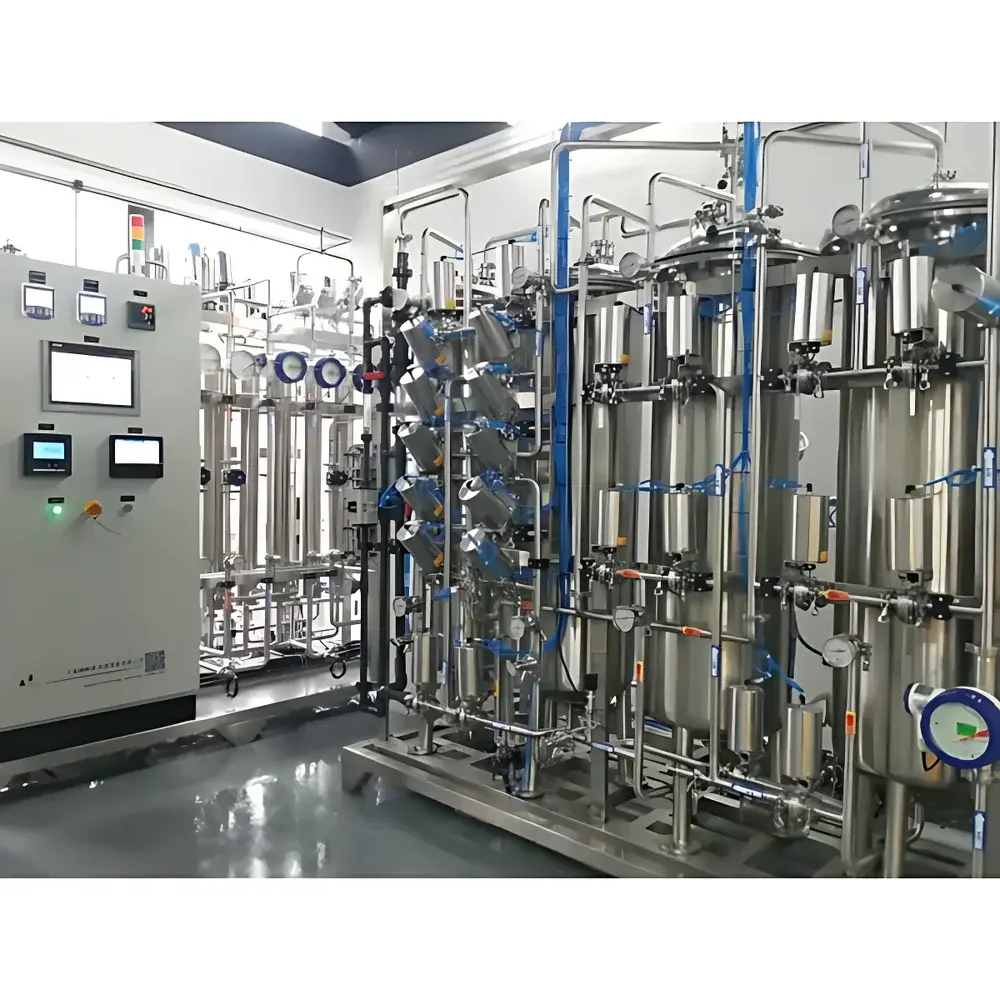
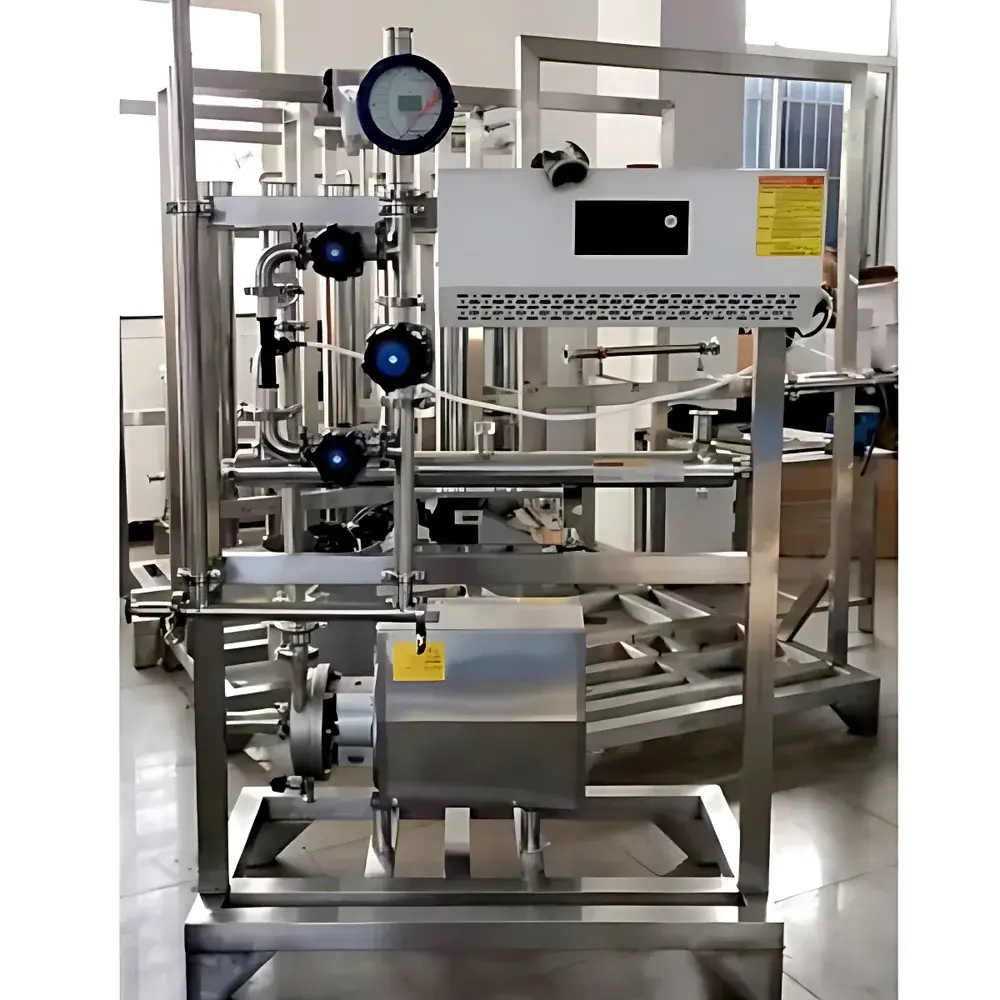
ULUPURE UPT-II-LB/LEB-G GMP-Compliant Purified Water System
| Brand | ULUPURE |
|---|---|
| Origin | Sichuan, China |
| Manufacturer Type | Direct Manufacturer |
| Country of Origin | China |
| Model | UPT-II-LB-G / UPT-II-LEB-G |
| Purified Water Grade | Pharmacopeial Grade (Chinese Pharmacopoeia 2020, YY/T 1244–2014) |
| Resistivity | ≥10 MΩ·cm @ 25 °C |
| Conductivity | ≤0.1 µS/cm @ 25 °C |
| Production Capacity | 250 / 500 / 1000 L/h |
| Feed Water | Municipal tap water (TDS < 200 ppm, residual chlorine ≤ 0.05 mg/L, pressure 1.5–5 bar, temperature 5–45 °C) |
| Pretreatment | Multi-media filter + activated carbon filter + softener with regeneration |
| Core Process | Dual-stage reverse osmosis (RO) ± optional EDI module |
| Sterilization Options | UV lamp (254 nm), ozone injection, or hot water (80 °C) / pure steam sanitization |
| Storage Tank | Electropolished 316L stainless steel, ASME BPVC Section VIII compliant, welded with orbital TIG, passivated and certified |
| Control System | PLC-based HMI with touch interface, real-time parameter logging, alarm history, and audit trail capability |
Overview
The ULUPURE UPT-II-LB/LEB-G is a fully integrated, GMP-compliant purified water (PW) generation and distribution system engineered for pharmaceutical, biotechnology, and in vitro diagnostic (IVD) manufacturing environments. It adheres to the stringent quality and operational requirements defined in the Chinese Pharmacopoeia (2020 Edition), YY/T 1244–2014 (for IVD reagent preparation), and aligns with international expectations for water system validation under Annex 1 (EU GMP), FDA Guidance for Industry (2004), and ISO 22716. The system employs a validated, multi-barrier approach: pretreatment removes particulates, chlorine, hardness, and organics; dual-stage RO achieves >99% dissolved ion rejection; optional electrodeionization (EDI) further refines resistivity to ≥10 MΩ·cm; and final distribution incorporates continuous recirculation with sanitary design, thermal or chemical sanitization, and real-time conductivity/resistivity monitoring. All wetted components are constructed from electropolished ASTM A240 316L stainless steel, with orbital TIG welding, helium leak testing, and documented passivation per ASTM A967.
Key Features
- Automated PLC-HMI control architecture with password-protected user levels, event-driven sequencing, and full operational traceability
- Real-time online monitoring of critical parameters: conductivity (µS/cm), resistivity (MΩ·cm), flow rate (L/min), pressure (bar), temperature (°C), UV intensity (mW/cm²), and ozone concentration (ppm)
- RO membrane auto-flush cycles at startup, shutdown, and scheduled intervals to inhibit scaling and biofilm formation
- Integrated safety interlocks: low feed pressure, high inlet TDS, pump overtemperature, tank overflow, and power failure recovery with automatic reset and alarm logging
- Sanitary distribution loop with ≥0.5 m/s minimum velocity, zero dead legs, sloped piping (≥0.5%), and spray ball-equipped storage tanks
- Configurable sanitization protocols — hot water (80 °C for ≥60 min), ozone (0.1–0.5 ppm residual), or pure steam — each with validated hold times and temperature/pressure profiles
- Energy-efficient design with variable-frequency drives (VFDs) on main pumps, optimized heat recovery in hot-water loops, and low-power UV lamps
- Comprehensive alarm management: visual/audio alerts, SMS/email notifications (via optional gateway), and categorized fault codes with troubleshooting guidance
Sample Compatibility & Compliance
This system is designed exclusively for the production of pharmacopeial-grade purified water intended for non-sterile pharmaceutical manufacturing processes — including active pharmaceutical ingredient (API) washing and extraction, oral liquid formulation, topical product dilution, equipment cleaning (CIP), and component rinsing. It is not intended for Water for Injection (WFI) or sterile process support. All materials of construction comply with USP Plastics (〈661〉), EP 3.1.11, and FDA 21 CFR 177. Its design, installation, qualification (IQ/OQ/PQ), and documentation package support compliance with GMP Annex 15, EU GMP Chapter 4, and WHO TRS 970 Annex 4. Full validation deliverables — including URS, FDS, DQ/IQ/OQ/PQ protocols and reports, weld logs, surface roughness certificates (Ra ≤ 0.8 µm), and microbial/electrochemical test records — are provided upon commissioning.
Software & Data Management
The embedded control software supports 21 CFR Part 11 compliance through electronic signatures, role-based access control, immutable audit trails, and secure data archiving. All process data — including sensor readings, alarm events, sanitization cycles, and maintenance logs — are timestamped, encrypted, and exportable in CSV or PDF format. Trend analysis tools enable long-term performance assessment of RO flux decline, conductivity drift, and sanitizer efficacy. Optional cloud connectivity allows remote monitoring via secure TLS-encrypted web portal, with configurable dashboards for facility managers and QA personnel. Data retention complies with GLP/GMP record-keeping requirements (minimum 5 years).
Applications
- Preparation of excipients and solvents for oral, topical, and ophthalmic dosage forms
- Rinsing of stainless-steel vessels, filling lines, and filtration housings in non-sterile manufacturing
- Final rinse water for medical device cleaning prior to packaging
- Feed water for WFI generation systems (when coupled with additional distillation or nanofiltration)
- Process water for herbal extract concentration and purification
- Reagent preparation in clinical laboratories and IVD manufacturing per YY/T 1244–2014
- Cleaning validation studies requiring documented water quality consistency
FAQ
Does this system meet FDA or EU GMP requirements for purified water?
Yes — while regulatory acceptance depends on site-specific validation, the UPT-II-LB/LEB-G’s design basis, material specifications, control architecture, and documentation framework are fully aligned with FDA CGMP (21 CFR Parts 210/211), EU GMP Annex 1 and Annex 15, and ICH Q5C guidelines.
Can the system be upgraded to produce Water for Injection (WFI)?
No — this is a purified water system only. WFI requires distillation or alternative validated methods meeting USP Water for Injection monograph criteria (e.g., still-based or compressed-gas-assisted vapor compression). Integration with a separate WFI generator is possible via dedicated feed connection.
What is the expected service life of RO membranes under typical operating conditions?
With proper pretreatment, regular sanitization, and feedwater monitoring, RO membranes typically achieve 3–5 years of service life. The system includes automated flush routines and pressure differential alarms to maximize membrane longevity.
Is ozone destruct required in the return loop?
Yes — if ozone sanitization is selected, catalytic carbon or UV-based ozone destruction must be installed in the return line prior to the storage tank to ensure residual ozone <0.02 ppm, preventing corrosion and maintaining microbial control integrity.
How is system calibration and sensor verification performed?
All conductivity/resistivity sensors are factory-calibrated and include built-in verification using NIST-traceable reference solutions. On-site calibration checks are supported via HMI-accessible calibration menus, with records automatically logged to the audit trail.



