VELP RESPIROMETRIC Sensor System 6 for Aerobic Biodegradation Testing of Plastics
| Brand | VELP |
|---|---|
| Origin | Italy |
| Model | Respirometric Sensor System 6 |
| Pressure Range | 500–2000 hPa |
| Sensor Count | 6 |
| Test Vessel Capacity | 1000 mL |
| Data Acquisition Interval | 10 min – 48 h |
| Test Duration | 1–180 days |
| Stirrer Speed Control | 6-digit digital setting with lock function |
| Sensor Power | 2 W |
| Battery Type | CR2430 |
| Sensor Dimensions | 50 × 70 × 70 mm |
| Sensor Weight | 80 g |
| Stirrer Unit Dimensions | 230 × 51.5 × 370 mm |
| Stirrer Unit Weight | 1.75 kg |
| Ingress Protection | IP54 (EN 60529) |
| Safety Compliance | IEC/EN 61010-1 |
| Databox™ Capacity | up to 48 sensors (8 systems × 6 sensors) |
| Connectivity | USB (RESPIROSoft™) or optional Wi-Fi (Ermes™ Cloud Platform) |
| Software | RESPIROSoft™ v5.x with audit trail, method templates, report generation, and battery-level monitoring |
Overview
The VELP RESPIROMETRIC Sensor System 6 is a purpose-built, ISO 14851- and ISO 17556-compliant instrumentation platform engineered for standardized aerobic biodegradability assessment of plastic materials in aqueous media. It operates on the principle of manometric respirometry: as microbial consortia metabolize test substrates under controlled aerobic conditions, oxygen is consumed and CO₂ is produced; the latter is chemically trapped by sodium hydroxide (NaOH) or barium hydroxide [Ba(OH)₂] in the headspace of sealed 1000 mL test vessels. This CO₂ absorption induces a measurable pressure drop within the closed system, which the high-stability electronic pressure sensor detects with sub-mbar resolution. The resulting pressure-time profile is directly proportional to cumulative CO₂ evolution—and thus, to the extent of biodegradation—enabling quantitative determination of biodegradation percentage relative to theoretical CO₂ yield (ThCO₂). Unlike optical or electrochemical methods, this pressure-based approach eliminates interference from turbidity, color, or ionic strength variations common in complex leachate or slurry-based assays.
Key Features
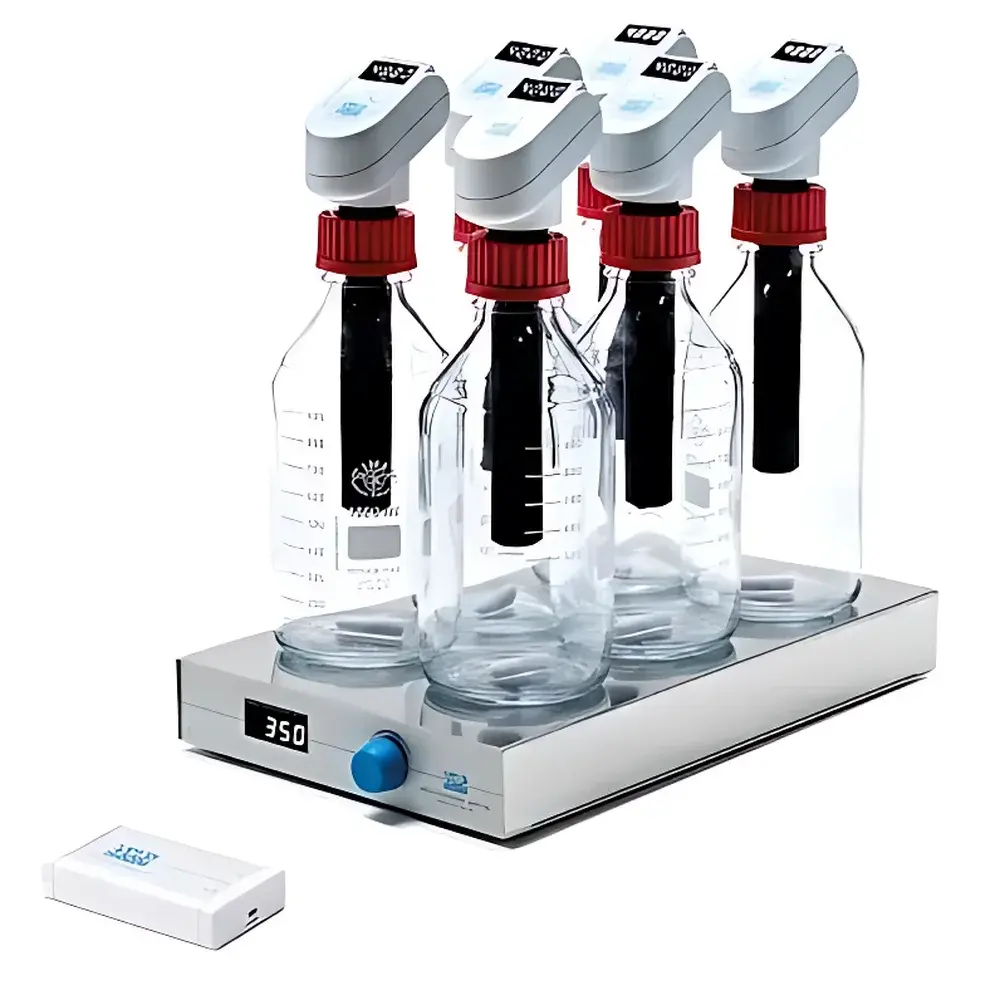
- Six independent, mercury-free electronic pressure sensors (500–2000 hPa range), each integrated into a compact, IP54-rated housing (50 × 70 × 70 mm; 80 g) for stable operation inside incubators or environmental chambers.
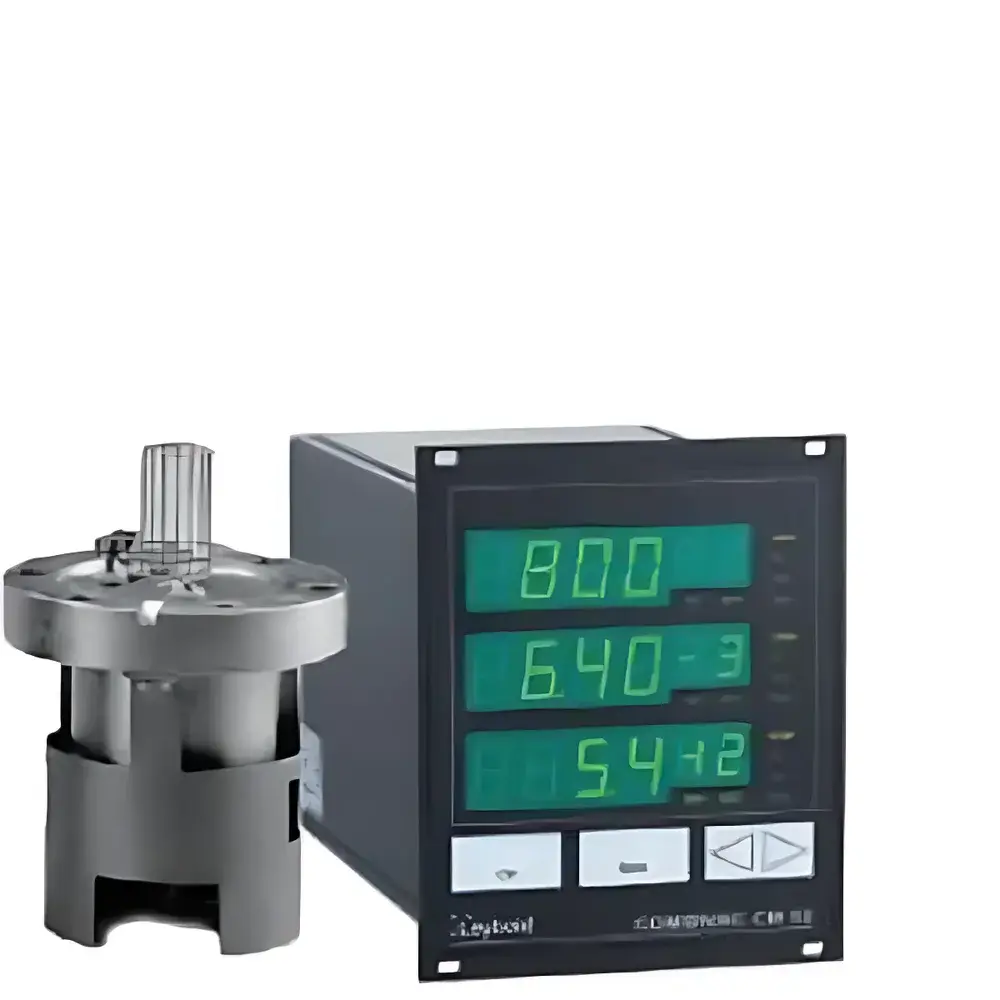
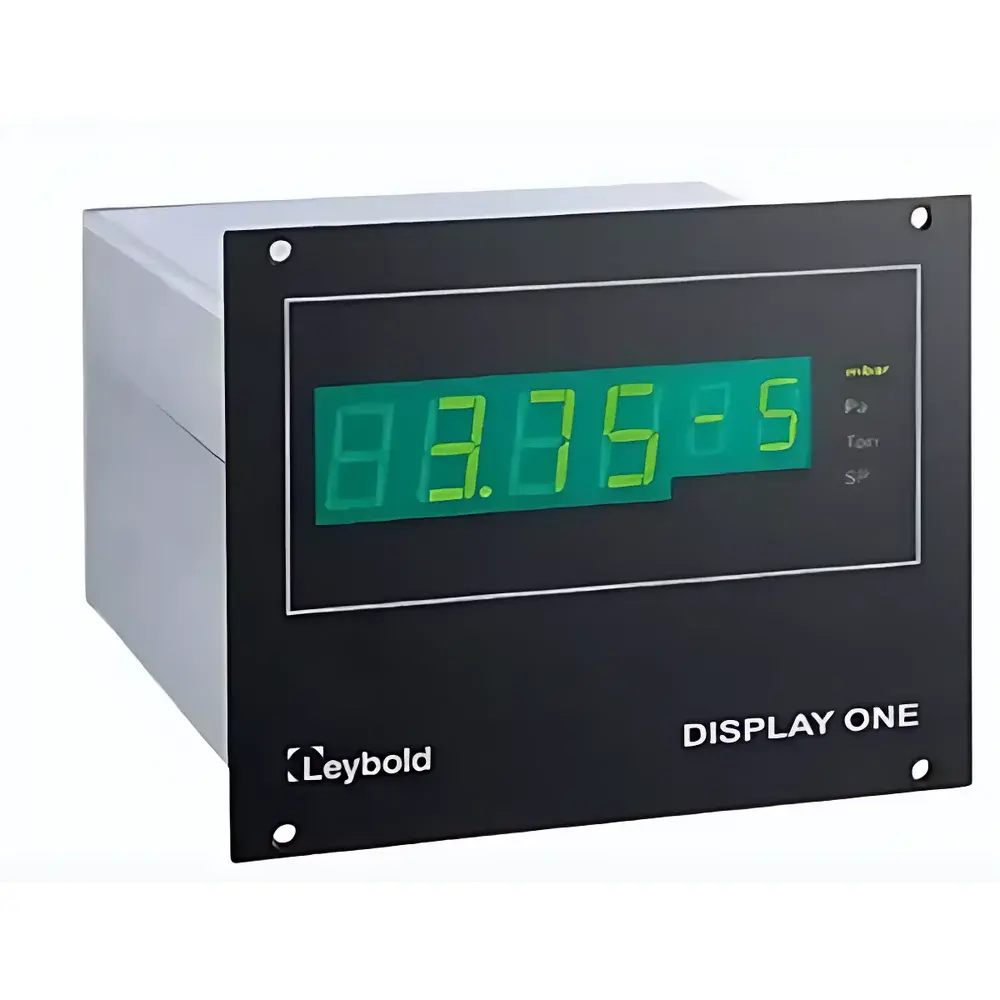
- Dual-button interface with 4-digit LED display enables rapid setup without external software—ideal for GLP-aligned routine testing where instrument accessibility must be minimized during long-term runs.
- Digital MULTISTIRRER 6 unit provides precise, lockable agitation control (6-digit speed setting) across all six vessels, ensuring uniform suspension of particulate plastics and consistent mass transfer—critical for reproducible O₂ diffusion kinetics per ASTM D5338 Annex A2.
- Databox™ module supports simultaneous wireless acquisition from up to 48 RESPIROMETRIC sensors (i.e., eight System 6 units), eliminating manual vessel opening and preserving sterile/anaerobic integrity during extended tests (up to 180 days).
- RESPIROSoft™ software (v5.x) delivers full 21 CFR Part 11–ready functionality: user-defined method templates, automatic battery-level alerts, configurable data logging intervals (10 min to 48 h), real-time curve overlay, and exportable PDF/CSV reports with metadata stamping (operator ID, timestamp, vessel ID, calibration log reference).
Sample Compatibility & Compliance
The system accommodates a broad spectrum of polymeric test materials—including virgin polymers, additive-containing formulations (e.g., pro-oxidants, starch blends, PHA/PLA composites), and microplastic suspensions—in compliance with OECD 301F, ISO 14851 (aqueous medium), and ISO 17556 (soil medium, when adapted with appropriate inoculum and moisture control). Each 1000 mL borosilicate glass test bottle is fitted with gas-tight septa and a dedicated CO₂ absorbent chamber. Sensor electronics meet IEC/EN 61010-1 safety requirements for laboratory equipment operating in temperature-controlled environments (typically 20–25 °C). All firmware and software modules undergo annual verification per ISO/IEC 17025 Clause 5.9.1 for measurement traceability.
Software & Data Management
RESPIROSoft™ serves as the central analytical engine, supporting concurrent monitoring of multiple degradation experiments with synchronized time bases. It implements automated baseline correction, drift compensation algorithms, and ThCO₂ normalization against blank-corrected controls. Audit trails record every parameter change, report generation event, and user login—fully compliant with FDA 21 CFR Part 11 Subpart B for electronic records and signatures. Optional Ermes™ Cloud integration extends functionality via secure HTTPS endpoints: remote dashboard access, SMS/email alerting upon threshold breaches (e.g., pressure deviation >5 hPa/hr), and role-based permissions for multi-site collaboration. Data persistence is ensured through local storage (sensor flash memory + PC hard drive) plus redundant cloud backup.
Applications
This system is routinely deployed in R&D laboratories evaluating biodegradation kinetics of novel bio-based polymers, regulatory submission packages for EN 13432 or ASTM D6400 certification, comparative lifecycle assessments of conventional vs. biodegradable packaging, and ecotoxicological screening of degradation intermediates. Its robustness supports studies under varied inoculum sources—including activated sludge, compost leachate, marine sediment elutriates, and defined microbial consortia—while maintaining metrological integrity across inter-laboratory trials coordinated under CEN/TC 261 or ISO/TC 61/SC 5 working groups.
FAQ
What standards does the RESPIROMETRIC Sensor System 6 support?
It is validated for ISO 14851, ISO 17556, OECD 301F, and ASTM D5338 methodologies.
Can the system operate unattended for 180 days?
Yes—CR2430 coin-cell batteries provide >12 months of standby life; Databox™ enables continuous logging without physical intervention.
Is calibration traceable to national standards?
Each sensor ships with a factory calibration certificate referenced to NIST-traceable pressure standards; field recalibration is supported via RESPIROSoft™.
How is data integrity ensured during long-term tests?
Triple-layer redundancy: local sensor memory, PC-resident RESPIROSoft™ archive, and encrypted Ermes™ cloud sync with SHA-256 hashing.
Does the system comply with GLP requirements?
Yes—full audit trail, electronic signature support, method versioning, and instrument qualification documentation are included in the delivery package.