
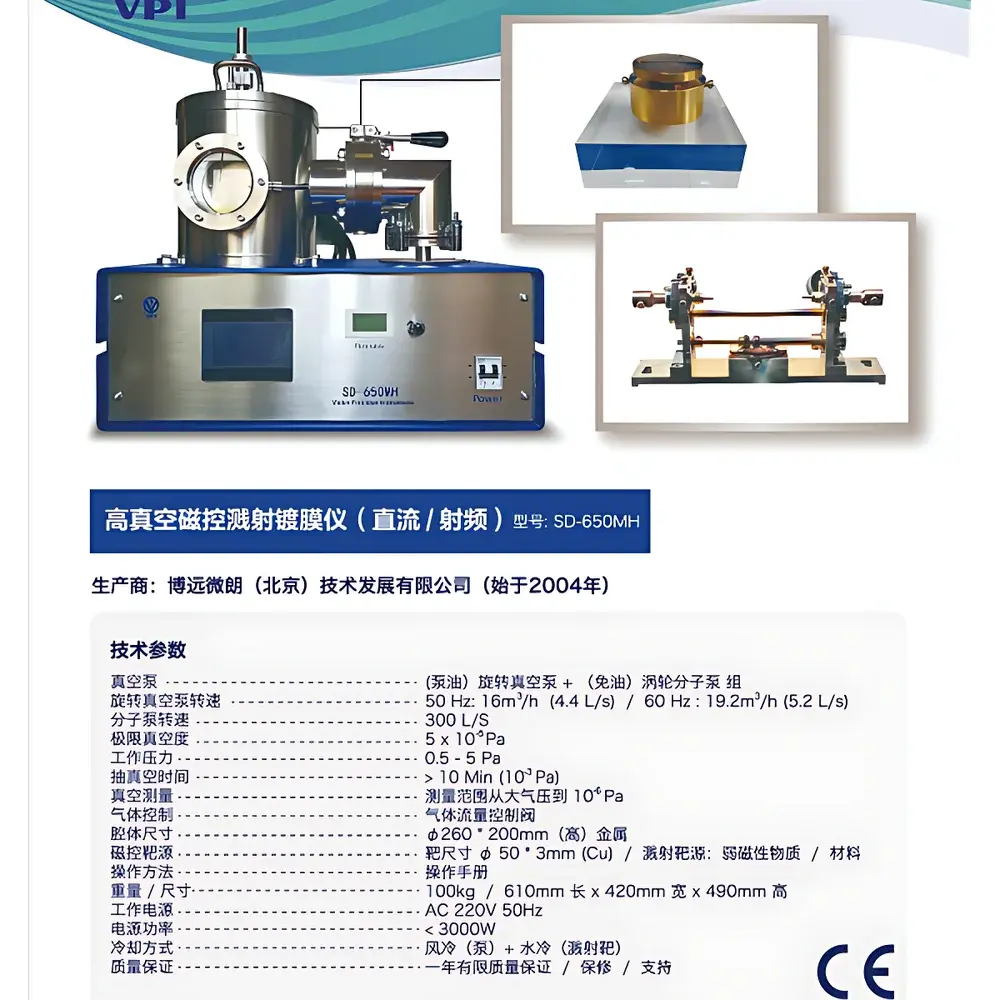
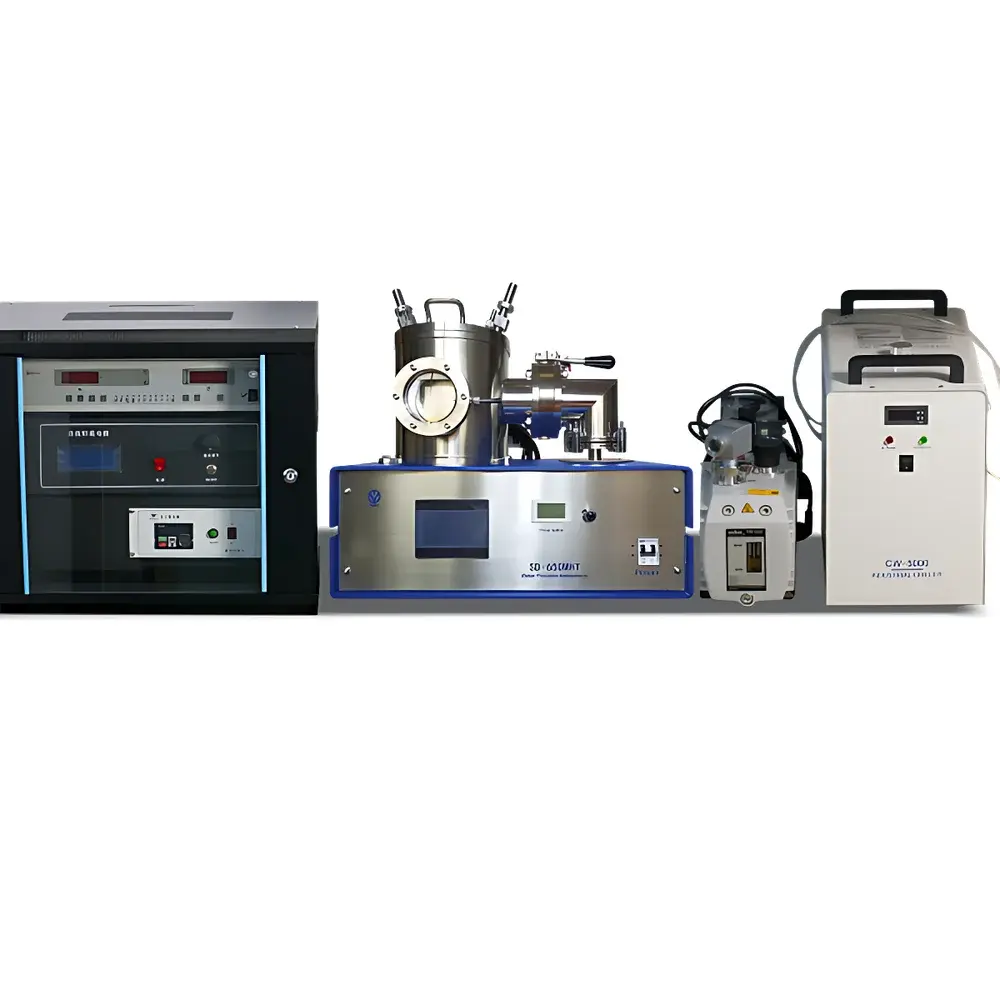
VPI SD-650MH High-Vacuum Magnetron Sputtering Coater
| Brand | VPI (Beijing Boyuan Weinano Technology Co., Ltd.) |
|---|---|
| Origin | Beijing, China |
| Model | SD-650MH |
| Vacuum Chamber | Ø260 mm × 270 mm (external), Ø210 mm × 270 mm (internal) |
| Ultimate Vacuum | 5×10⁻⁵ Pa |
| Turbo Molecular Pump | 300 L/s |
| Foreline Pump | 4 L/s with anti-backstreaming solenoid valve & oil mist filter |
| DC Power Supply | 0–600 V / 0–1.6 A |
| Sputtering Rate | 0–200 nm/min |
| Target Diameter | 50 mm |
| Integrated Thickness Monitor | 0–6000 nm, resolution 0.001 nm/s |
| Gas Control | Electromagnetic + manual mass flow valves for Ar and other inert gases |
| Compliance | Designed for GLP-aligned thin-film R&D environments |
Overview
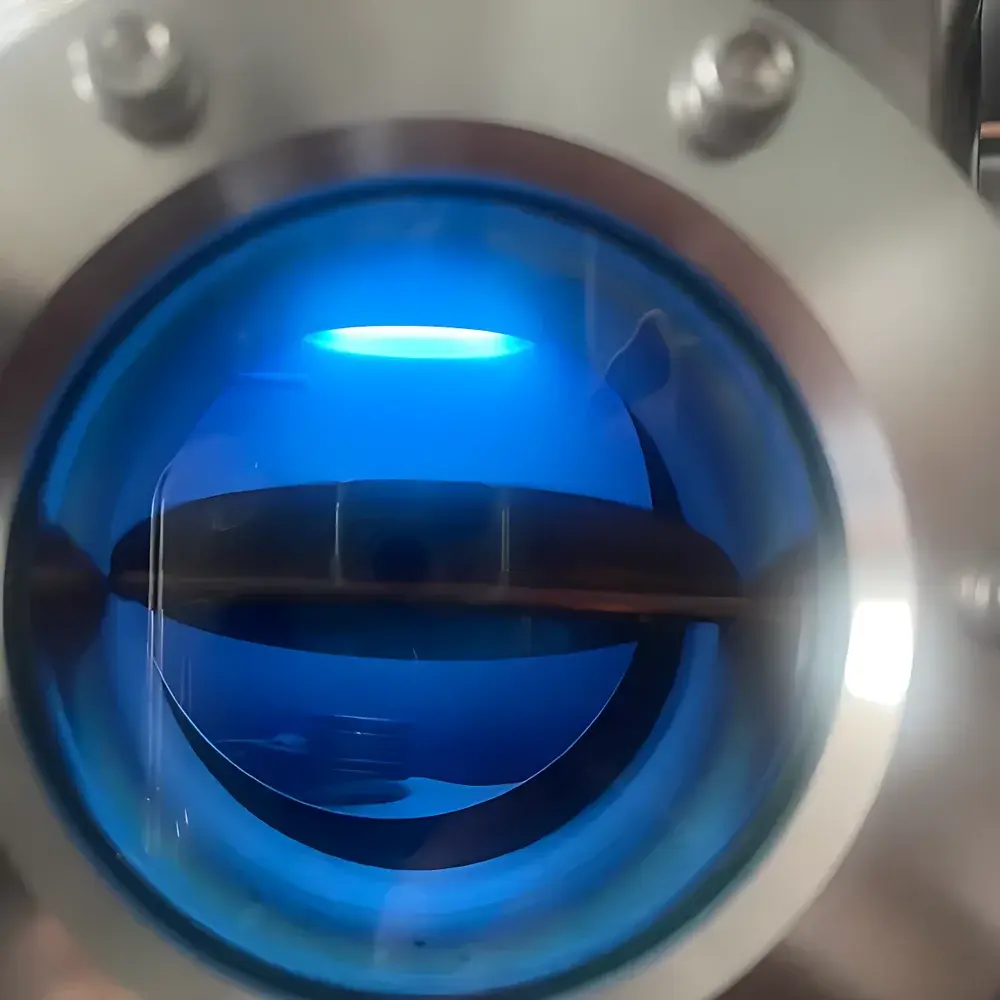
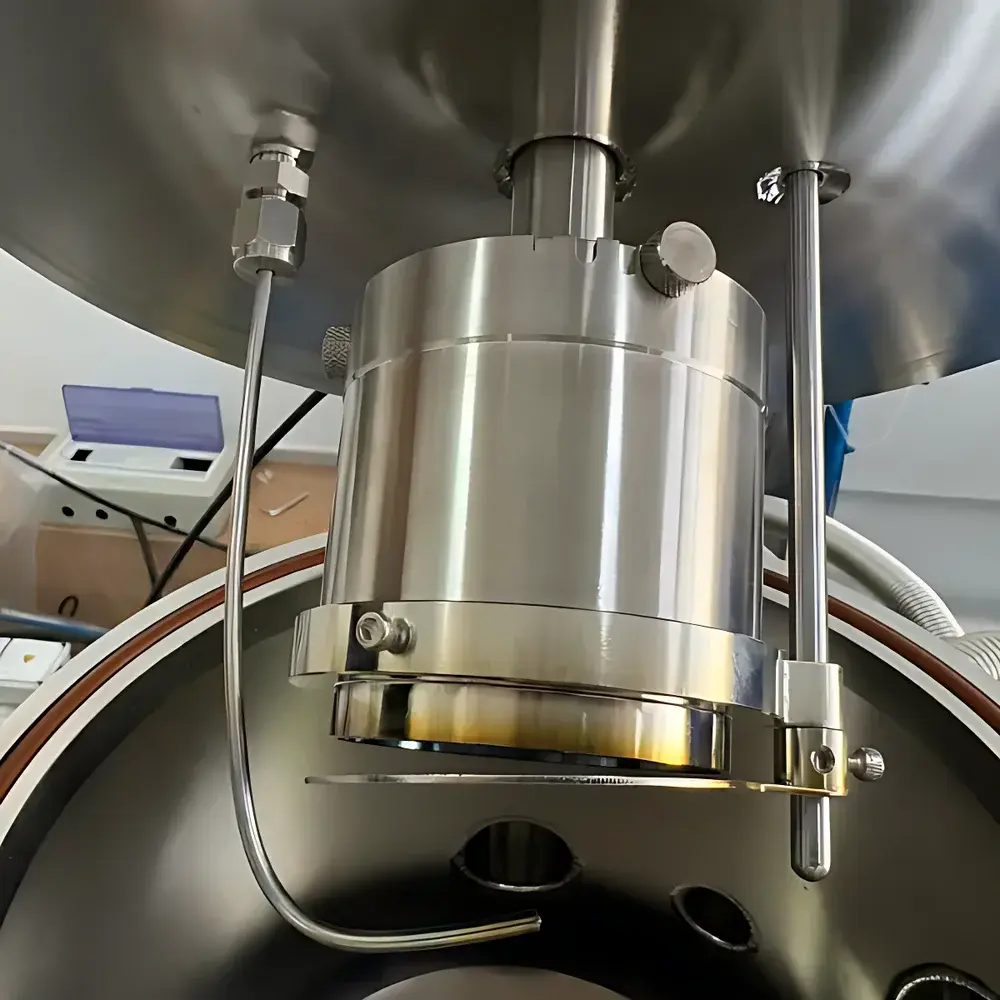
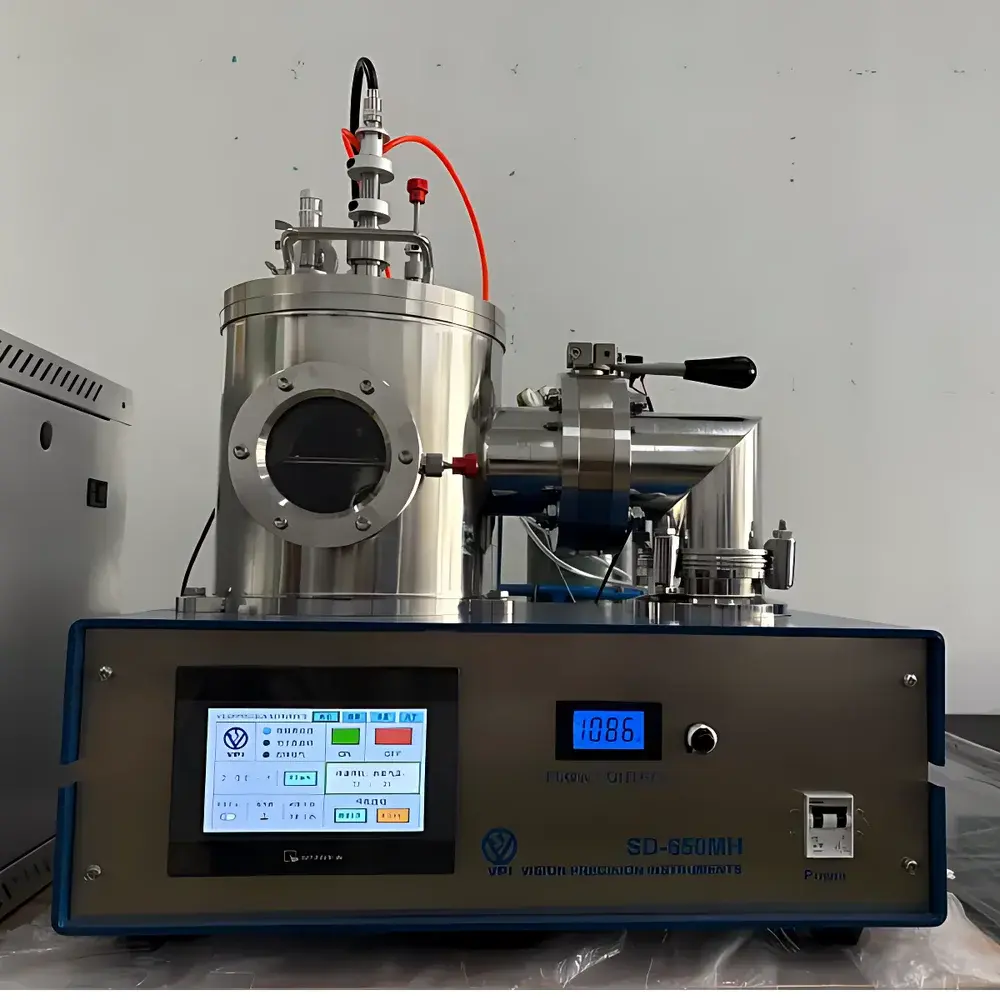
The VPI SD-650MH is a compact, high-vacuum magnetron sputtering coater engineered for precision thin-film deposition in academic and industrial research laboratories. It operates on the principle of magnetron-enhanced glow discharge sputtering: under controlled low-pressure inert gas (typically argon), a plasma is generated between cathode (target) and anode (chamber wall). Confined by permanent magnets behind the target, electrons follow extended cycloidal trajectories—increasing ionization efficiency while minimizing substrate heating. This enables uniform, low-temperature deposition of conductive, semiconducting, dielectric, and functional oxide films onto temperature-sensitive substrates—including polymers, biological specimens, and pre-fabricated microstructures. With a footprint of only 610 mm × 420 mm and total height of 490 mm, the SD-650MH is uniquely designed for benchtop integration without compromising vacuum integrity or process reproducibility.
Key Features
- High-integrity metal vacuum chamber (stainless steel, Ø260 mm × 270 mm external; Ø210 mm × 270 mm internal; volume ≥9.3 L) with multiple CF-35 and KF-25 standard ports for future expansion (e.g., RF matching network, residual gas analyzer, or substrate biasing).
- Dual water-cooled magnetron head (50 mm diameter), configurable for DC or RF sputtering; compatible with ferromagnetic targets (Fe, Ni, Co alloys) and insulating materials (Al₂O₃, SiO₂, PTFE) when paired with optional RF generator.
- Integrated 300 L/s turbo-molecular pump backed by a 4 L/s dry-scroll forepump with anti-backstreaming solenoid valve and multi-stage oil mist filtration—achieving ≤5×10⁻⁵ Pa base pressure within 10 minutes (≤5×10⁻⁴ Pa typical operating pressure).
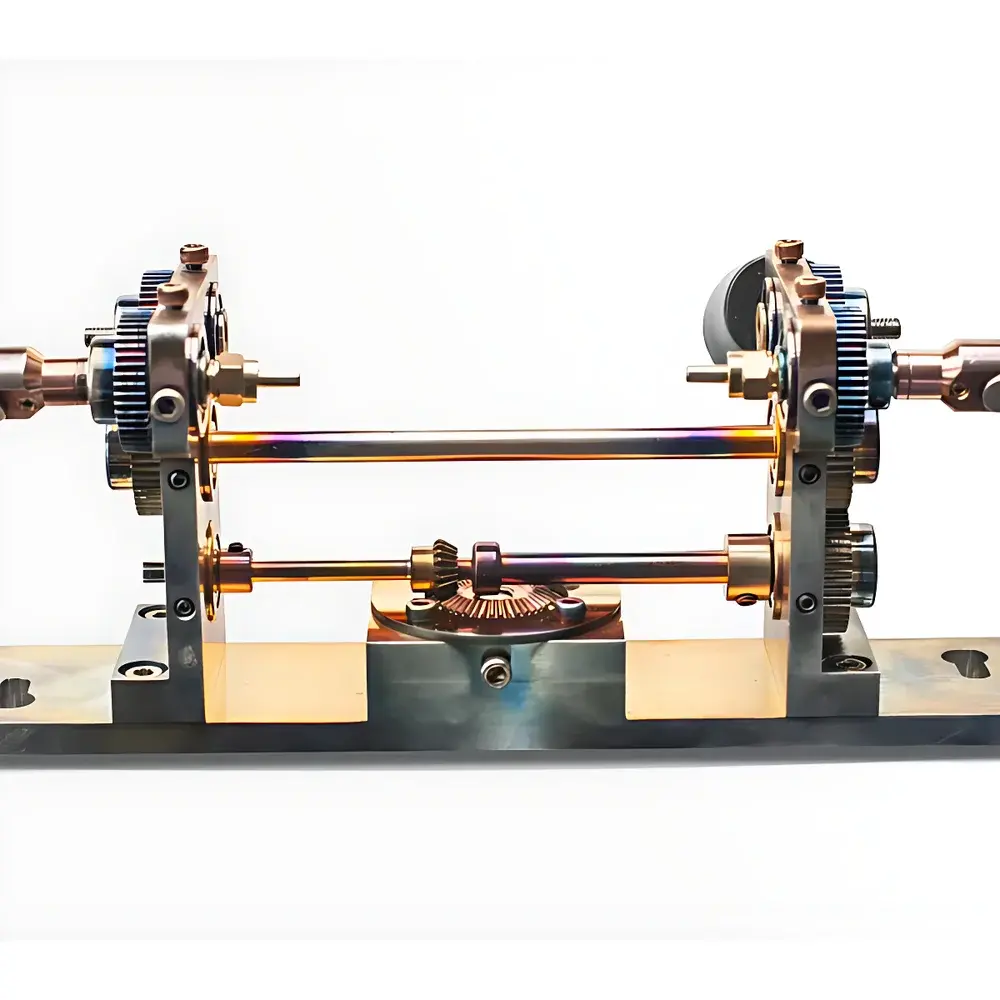
- Motorized rotating sample stage (Ø200 mm) with programmable horizontal rotation and ±20° spherical tilt, accommodating up to twelve standard 12.7 mm SEM stubs or custom wafers ≤Ø150 mm—ensuring exceptional film thickness uniformity (±1% over Ø50 mm area).
- VPI-developed touchscreen control interface with real-time monitoring of vacuum level, power parameters, gas flow, deposition time, and in-situ film thickness (0–6000 nm, 0.001 nm/s resolution); all critical settings password-locked and logged for auditability.
- Self-contained recirculating chiller unit maintaining stable target temperature during extended runs—extending target life and preventing thermal drift in deposition rate.
Sample Compatibility & Compliance
The SD-650MH supports a broad spectrum of substrate geometries and materials: rigid wafers (Si, glass, quartz), flexible foils (PET, PI), TEM grids, and irregularly shaped samples mounted on SEM stubs. Its low-substrate-temperature operation (<60 °C under typical DC conditions) permits coating of heat-labile organics, biomaterials, and polymer-based sensors. The system adheres to fundamental engineering standards for vacuum equipment (ISO 27886, ASTM F2435), and its programmable parameter logging, user-access controls, and timestamped operation records support compliance with GLP and preliminary GMP documentation requirements. While not FDA 21 CFR Part 11-certified out-of-the-box, the architecture allows integration with third-party electronic lab notebook (ELN) systems via RS-232/USB-serial protocols for full traceability.
Software & Data Management
The embedded VPI control firmware provides deterministic sequencing of vacuum pump-down, gas introduction, plasma ignition, power ramping, and endpoint termination. All operational parameters—including voltage, current, pressure, flow rate, rotation speed, tilt angle, and real-time thickness—are recorded at user-defined intervals (100 ms–10 s) and exported in CSV format. The system supports dual-user authentication levels (operator and administrator), with session-based lockout and automatic log-off after inactivity. Audit trails capture operator ID, timestamp, parameter changes, and alarm events—facilitating root-cause analysis and method validation per ISO/IEC 17025 guidelines.
Applications
- Preparation of conductive coatings (Au, Pt, Cr, Cu) for SEM/TEM sample characterization.
- Deposition of transparent conductive oxides (ITO, AZO) for optoelectronic device prototyping.
- Fabrication of magnetic multilayers (Co/Pt, Fe/Cr) for spintronics studies.
- Growth of dielectric barrier layers (SiO₂, Al₂O₃) in MEMS packaging and sensor passivation.
- Controlled synthesis of ferroelectric thin films (PZT, BTO) for memory and actuator research.
- Functionalization of biomedical surfaces (Ti, hydroxyapatite) for implant compatibility studies.
FAQ
What vacuum level can the SD-650MH achieve, and how long does pump-down take?
The system reaches ≤5×10⁻⁵ Pa under clean, baked conditions. From atmospheric pressure, it achieves ≤5×10⁻⁴ Pa in ≤10 minutes—verified using a calibrated Bayard-Alpert gauge and capacitance manometer.
Is RF sputtering supported natively?
The base configuration includes DC power only. An optional integrated RF generator (13.56 MHz, 300 W, auto-matching network) is available as a field-upgradable module—enabling deposition of insulating targets without arcing.
Can the system be used for reactive sputtering (e.g., TiN, SiO₂)?
Yes. The dual-valve gas control system supports precise mixing of Ar with reactive gases (N₂, O₂, CH₄) via mass flow controllers. Reactive process recipes can be saved and recalled via the touchscreen interface.
What maintenance is required for long-term reliability?
Routine maintenance includes quarterly inspection of O-rings, annual replacement of forepump oil (if applicable), biannual calibration of vacuum gauges, and periodic cleaning of target shields and chamber walls using non-abrasive stainless-steel-compatible solvents.
Does the system comply with electromagnetic compatibility (EMC) standards for laboratory use?
The SD-650MH meets CE marking requirements per EN 61326-1 (measurement/control lab equipment) and EN 55011 (industrial RF emission limits), ensuring safe co-location with sensitive analytical instrumentation.



