
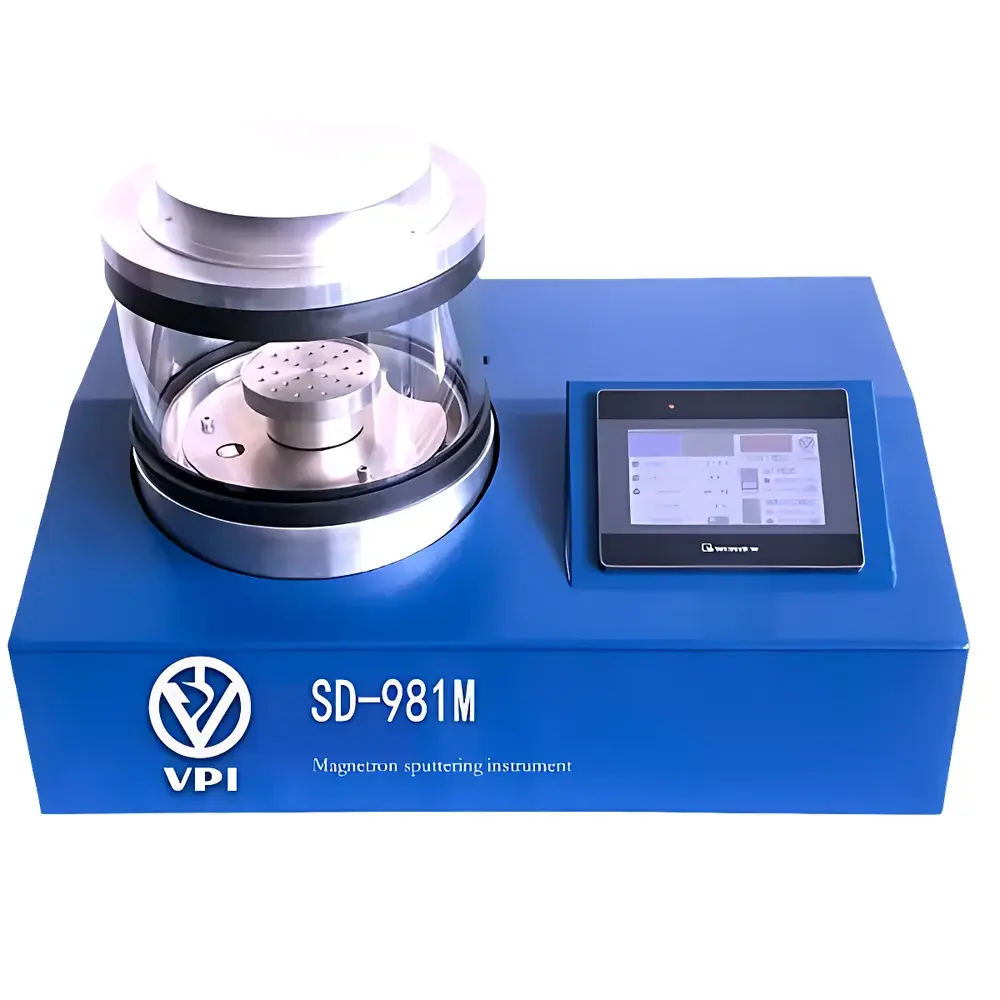
VPI SD-981M Magnetron Ion Sputter Coater for SEM Sample Preparation
| Brand | VPI |
|---|---|
| Origin | Beijing, China |
| Model | SD-981M |
| Target Material | Gold (Au), 50 mm diameter |
| Target Thickness | 0.1 mm |
| Control Mode | Automatic & Manual |
| Chamber Dimensions | 180 mm (Ø) × 130 mm (H) |
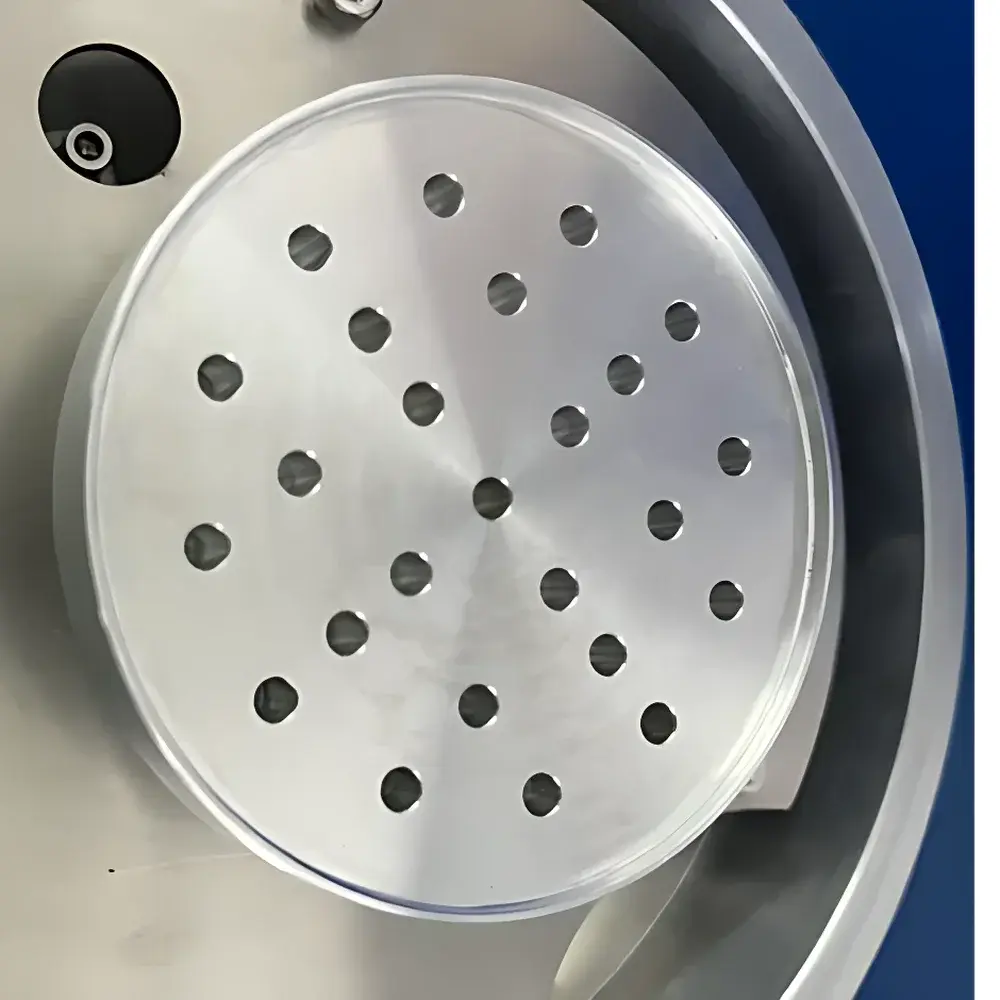
| Sample Stage Diameter | 70 mm |
| Sputtering Gases | Multiple configurable (Ar, Au/Ar mix, etc.) |
| Vacuum Range | Adjustable 2–15 Pa (base vacuum ≤1 Pa) |
| Sputtering Current | 0–50 mA (adjustable) |
| Timer Range | 0–600 s (digital) |
| Deposition Rate | 0–60 nm/min |
| Pumping System | VRD-8 rotary vane pump |
| Power Supply | 220 V, 50 Hz |
| Rated Power | 100 W |
| Vacuum Gauge | Pirani sensor |
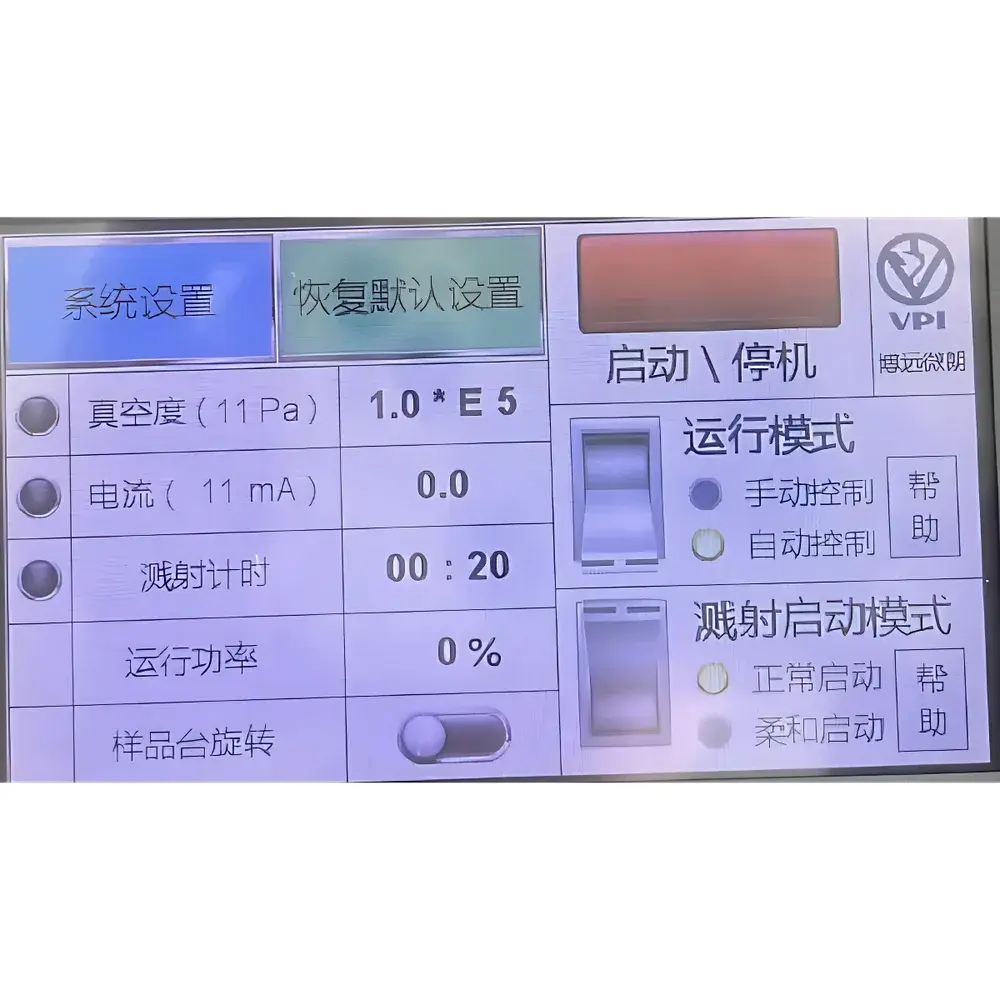
| Touchscreen Interface | 4-inch VPI HMI |
Overview
The VPI SD-981M Magnetron Ion Sputter Coater is a benchtop thin-film deposition system engineered specifically for high-fidelity conductive coating of non-conductive or beam-sensitive specimens prior to scanning electron microscopy (SEM) analysis. Unlike conventional DC diode sputter coaters, the SD-981M employs a permanent-magnet-enhanced magnetron configuration, which confines plasma near the target surface and significantly increases ionization efficiency at lower operating pressures (2–15 Pa). This enables uniform, low-energy, low-heat deposition—critical for preserving delicate microstructures in polymers, biological tissues, soft composites, and nanoscale thin films. The system achieves stable gold (Au) film thickness control in the sub-5 nm to >100 nm range with reproducible grain morphology and minimal substrate heating (<5 °C rise during standard 60-s runs), making it suitable for routine lab use in materials science, life sciences, geology, and failure analysis laboratories.
Key Features
- Magnetron sputtering architecture with optimized magnetic field geometry for enhanced plasma confinement and improved target utilization efficiency
- Dual-mode operation: fully automated protocol-driven sputtering and manual real-time parameter override for experimental flexibility
- Two-stage sputter initiation: “Normal Start” for standard conductive coatings and “Gentle Start” mode that ramps current gradually—reducing thermal shock and arcing on insulating or fragile substrates
- Programmable vacuum regulation: integrated pressure feedback loop enables automatic gas inlet control to maintain setpoint pressure throughout deposition, eliminating manual needle-valve adjustments and ensuring consistent film nucleation
- Configurable user interface: switchable between streamlined single-task mode and advanced multi-parameter HMI (Human-Machine Interface) with VPI firmware—supporting recipe storage, parameter logging, and system diagnostics
- Optional motorized rotating sample stage (70 mm Ø) for improved coating uniformity across irregular or multi-sample configurations
- Robust borosilicate glass chamber (180 mm Ø × 130 mm H) with quick-release O-ring seal and front-loading access for rapid sample exchange and visual process monitoring
Sample Compatibility & Compliance
The SD-981M accommodates a broad spectrum of specimen geometries and material classes, including but not limited to ceramic powders, polymer films, freeze-fractured biological sections, carbon nanotube arrays, and semiconductor wafers up to 70 mm in diameter. Its low-power, low-temperature magnetron design minimizes charging artifacts and structural degradation—particularly beneficial for heat-labile samples such as hydrogels or lipid bilayers. The system complies with IEC 61000-6-3 (EMC emission standards) and IEC 61010-1 (safety requirements for electrical equipment for measurement, control, and laboratory use). While not certified under ISO/IEC 17025, its repeatable deposition performance supports GLP-aligned documentation workflows when paired with external calibration standards and audit-trail-enabled lab information systems.
Software & Data Management
Operation is managed via a dedicated 4-inch resistive touchscreen running VPI’s proprietary embedded HMI firmware. All critical parameters—including sputtering time, current, pressure setpoint, gas type, and stage rotation status—are logged locally with timestamped entries. Exportable CSV reports (via USB port) include full session metadata for traceability. The firmware supports up to 20 user-defined protocols with parameter locking options, facilitating SOP adherence in regulated environments. Though natively non-networked, the system’s digital I/O interface allows integration into centralized lab automation platforms for remote status polling and event-triggered notifications (e.g., end-of-cycle alert).
Applications
- Routine gold coating of insulating specimens for high-resolution secondary electron imaging in field-emission SEM (FE-SEM)
- Preparation of TEM grid replicas and cross-sectional lift-outs requiring ultra-thin, pinhole-free metal layers
- Deposition of conductive interlayers for X-ray energy-dispersive spectroscopy (EDS) quantification on heterogeneous samples
- Controlled metallization of microfluidic devices and MEMS components for electrical testing
- Research-scale fabrication of model electrodes and catalytic thin films using alternative targets (e.g., Pt, Pd, Cr, Ir—subject to optional target holder upgrade)
FAQ
What target materials are compatible with the SD-981M?
The standard configuration includes a 50 mm diameter, 0.1 mm thick gold (Au) target. With optional target holders and revised shielding, users may install Pt, Pd, Cr, Ir, or Al targets—subject to verification of sputter yield, thermal conductivity, and chamber compatibility.
Is the system compliant with FDA 21 CFR Part 11 for electronic records?
No—the SD-981M does not provide electronic signature capability, audit trail encryption, or role-based access control required for Part 11 compliance. However, raw log exports can be incorporated into validated LIMS or ELN platforms meeting those requirements.
Can the SD-981M operate with gases other than argon?
Yes. The mass-flow-controlled gas inlet supports Ar, N₂, O₂, and mixed-gas formulations (e.g., Ar/Au sputter gas blends), enabling reactive sputtering or tailored film stoichiometry where applicable.
What maintenance is required for long-term stability?
Routine maintenance includes quarterly cleaning of the chamber interior and target shield, annual replacement of the VRD-8 pump oil, and biannual calibration of the Pirani gauge against a reference standard. No consumables beyond targets and pump oil are required.
Does the system support thickness monitoring during deposition?
No real-time quartz crystal microbalance (QCM) or optical monitoring is integrated. Film thickness is inferred from calibrated time–rate curves established per target age and chamber condition; users are advised to validate initial runs with profilometry or TEM cross-sectioning.



