
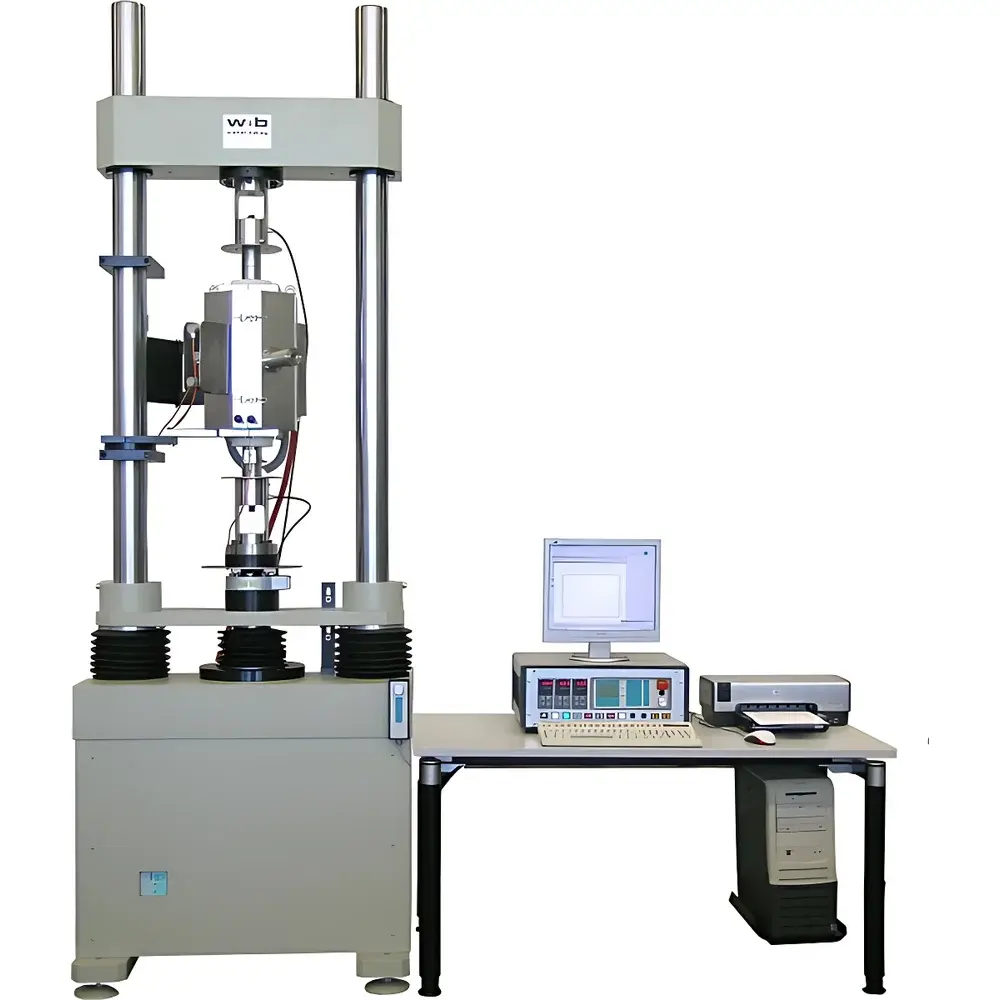
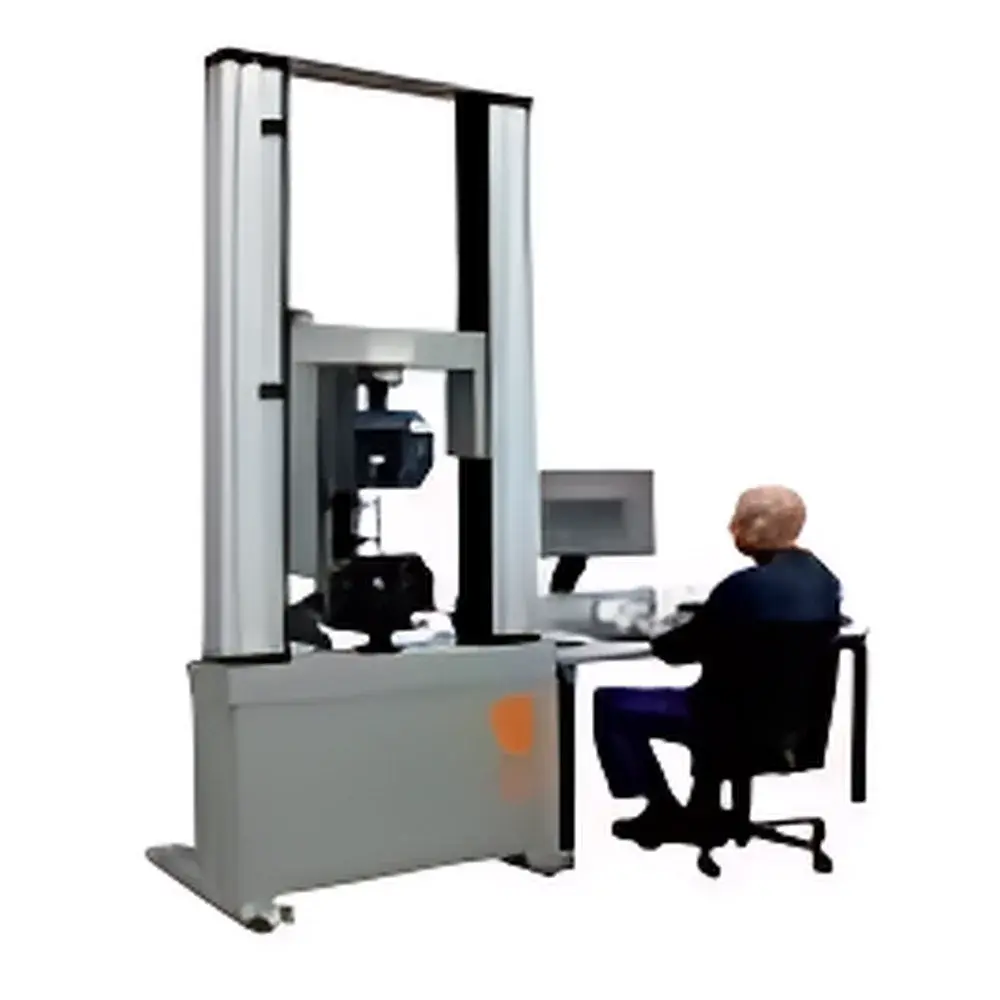
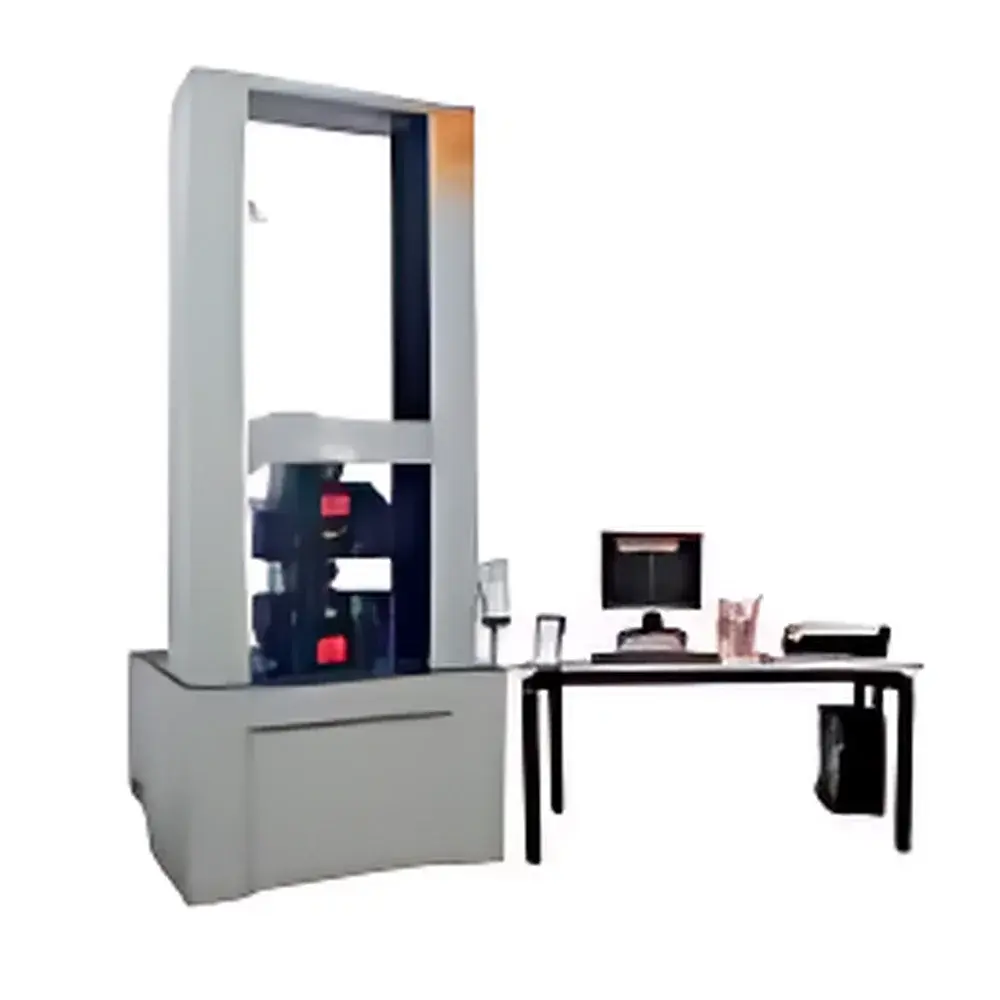
W+B LFM Series Universal Testing Machine
| Brand | W+B |
|---|---|
| Origin | Switzerland |
| Model | LFM |
| Type | Electromechanical Universal Testing Machine |
| Force Range | 1–600 kN (configurable by sub-series: LFM-L: 1–20 kN |
| LFM | 10–125 kN |
| LFM-H | 150–600 kN) |
| Construction | Desktop (LFM-L) / Floor-standing (LFM & LFM-H) |
| Drive System | High-response AC brushless servo motor with high starting torque |
| Guidance | Precision-ground preloaded ball screws, zero-backlash transmission, heavy-duty column guidance with beam alignment calibration |
| Test Modes | Tension, Compression, Bending, Peel, Shear, and Zero-Crossing (Load Reversal) Testing |
| Noise Level | Low (<65 dB(A)) |
| Compliance | Designed for ASTM E4, E8, E9, E21, ISO 6892-1, ISO 7500-1, ISO 178, ISO 527, EN 10002-1, and GB/T 228.1 |
Overview
The W+B LFM Series Universal Testing Machine is an electromechanical materials testing system engineered for precision force measurement and controlled displacement across a broad spectrum of mechanical characterization applications. Based on the fundamental principles of Hooke’s Law and quasi-static load application, the LFM platform delivers traceable, repeatable, and metrologically robust mechanical property data—including tensile strength, yield point, modulus of elasticity, elongation at break, compressive yield stress, flexural modulus, and peel adhesion. Its modular architecture supports three distinct force capacity tiers—LFM-L (1–20 kN), LFM (10–125 kN), and LFM-H (150–600 kN)—each optimized for specific specimen geometries, material stiffness classes, and industrial compliance requirements. The system integrates a high-bandwidth, brushless AC servo drive with digital closed-loop control, enabling dynamic load ramping, constant-rate displacement, and load-controlled hold sequences with sub-millisecond response time and <±0.5% full-scale accuracy per ISO 7500-1 Class 0.5.
Key Features
- Precision mechanical architecture: Preloaded ball screws, hardened ground columns, and zero-backlash transmission ensure geometric stability and minimal deflection under load—critical for accurate stress-strain curve reconstruction.
- Modular force capacity design: Interchangeable load cells (calibrated to ISO 376) and configurable crosshead travel allow seamless adaptation from thin polymer films (LFM-L) to structural steel coupons (LFM-H).
- Zero-crossing capability: Full bidirectional force control enables true compression-tension cycling, essential for fatigue pre-conditioning, hysteresis analysis, and viscoelastic recovery studies.
- Low-noise operation: Optimized motor-gear coupling and vibration-damped base construction maintain acoustic emissions below 65 dB(A), supporting integration into shared laboratory environments.
- Thermal-stable frame design: Cast iron and structural steel components minimize thermal drift during extended test sequences—particularly critical for creep and relaxation protocols.
Sample Compatibility & Compliance
The LFM Series accommodates specimens ranging from 0.1 mm-thick polymer foils and biomedical sutures to 50 mm-diameter metal rods and composite laminates up to 300 mm in length. Standard fixtures include wedge-action grips for metals, pneumatic clamps for elastomers, bend supports per ISO 178, peel fixtures compliant with ASTM D903, and custom jaw inserts for wire, textile yarns, and pharmaceutical blister packs. All configurations meet mechanical verification requirements per ISO 7500-1 and calibration traceability to national standards (e.g., NIST, PTB). The system supports GLP/GMP-aligned workflows through optional audit trail logging, electronic signatures, and user-access controls compliant with FDA 21 CFR Part 11.
Software & Data Management
W+B’s proprietary TestXpert II software provides real-time acquisition, synchronized multi-channel data logging (load, displacement, extensometer, temperature), and automated report generation per ASTM/ISO templates. Raw data is stored in open ASCII or HDF5 format for third-party analysis (MATLAB, Python, Origin). The software includes built-in modules for modulus calculation (tangent, secant, chord), yield determination (0.2% offset, automatic inflection), and statistical batch analysis across multiple specimens. Optional integration with LIMS via OPC UA ensures traceability across enterprise QA/QC systems.
Applications
- Quality assurance of incoming raw materials (e.g., aluminum extrusions, carbon fiber prepreg, medical-grade silicone tubing)
- R&D validation of thermoplastic elastomers, biodegradable films, and battery electrode coatings
- Regulatory submission testing for ISO 10993-12 (biocompatibility mechanical evaluation) and IEC 60601-1 (medical device mechanical safety)
- Process validation of weld integrity, adhesive bond strength, and crimp joint reliability in automotive and aerospace supply chains
- Teaching laboratories requiring ISO/ASTM-compliant instruction on stress-strain fundamentals and fracture mechanics principles
FAQ
What standards does the LFM Series comply with for force calibration?
The system meets ISO 7500-1 Class 0.5 requirements, with optional factory calibration certificates traceable to PTB (Germany) or NIST (USA). Load cells are certified per ISO 376 Annex A.
Can the LFM-H series perform compression tests on concrete cylinders?
Yes—when equipped with a 600 kN load cell, rigid platens, and spherical seating per ASTM C39, the LFM-H supports standard concrete compressive strength testing up to 400 mm height specimens.
Is extensometer integration supported across all LFM models?
All models accept both clip-on and non-contact video extensometers (e.g., W+B VEM-200), with hardware-triggered synchronization and automatic gauge length recognition.
Does the system support cyclic loading protocols for fatigue pre-testing?
Yes—the zero-crossing architecture and high-bandwidth servo control enable symmetric tension-compression cycles at frequencies up to 5 Hz, with programmable waveform shapes (sine, triangle, trapezoidal) and dwell periods.
How is data integrity ensured during long-duration creep tests?
TestXpert II implements redundant local storage, automatic power-fail recovery, and timestamped audit logs with SHA-256 hash verification for all raw data files—meeting ALCOA+ principles for regulated environments.



