
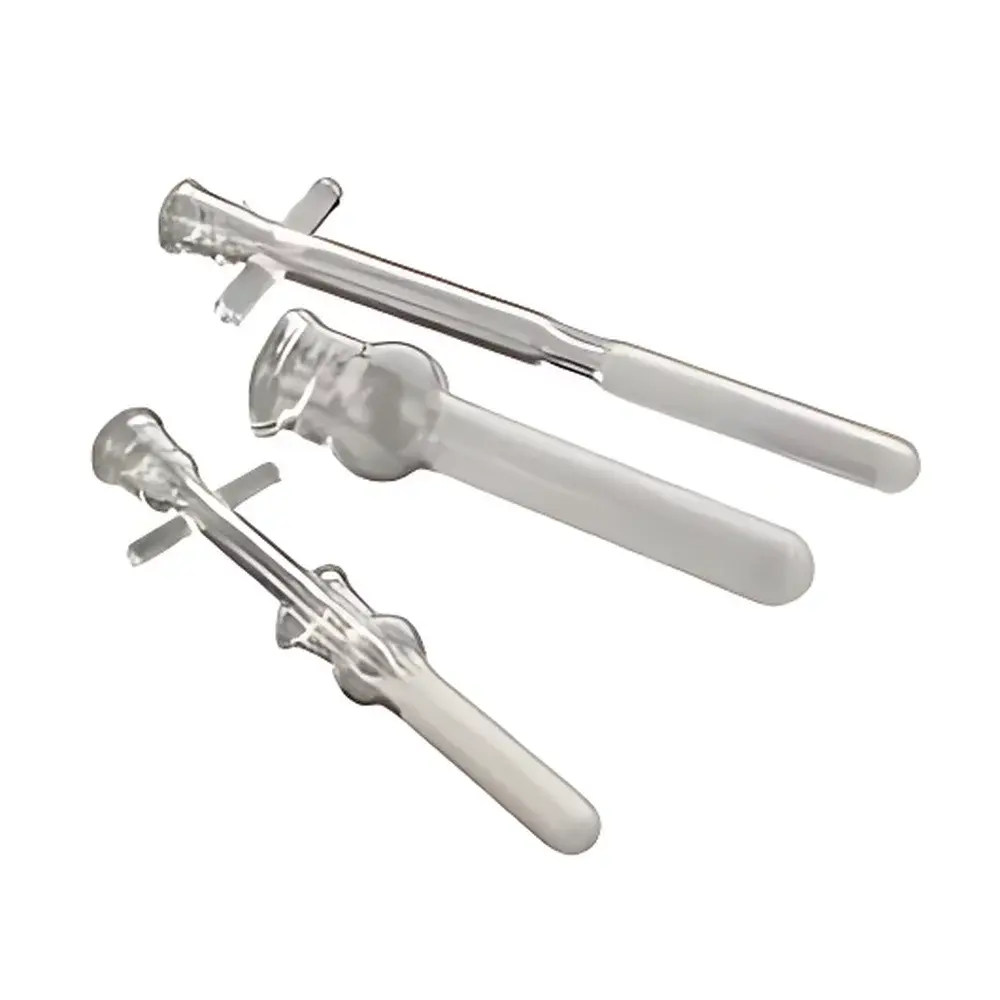
WHEATON Tenbroeck-Style Tissue Grinder, Model 357422 by SOCOREX
| Brand | SOCOREX |
|---|---|
| Origin | USA |
| Manufacturer Type | Authorized Distributor |
| Origin Category | Imported |
| Model No. | 357422 |
| Instrument Type | Mechanical Homogenizer (Dounce-Style) |
| Grinding Clearance | 0.09–0.16 mm |
| Material | Wheaton 33 Low-Extractable Borosilicate Glass |
| Sterilization | Autoclavable (121°C, 20 min) |
| Handle | Hollow, Ice-Filled for Thermal Management |
| Available Volumes | 1–40 mL |
| Compliance | USP <661.1>, ISO 8536-1 |
Overview
The WHEATON Tenbroeck-Style Tissue Grinder (Model 357422), distributed by SOCOREX and manufactured in the USA, is a precision-engineered mechanical homogenizer designed for reproducible, low-shear disruption of soft biological tissues—including liver, heart, and intestinal samples—under controlled thermal conditions. Based on the classical Dounce principle, this device operates via a tight-fitting pestle rotating within a cylindrical glass mortar, generating controlled shear forces through axial motion and defined clearance. The hollow, ice-filled handle actively dissipates frictional heat during manual or motor-assisted grinding, preserving labile cellular components (e.g., membrane receptors, enzymatic activity, RNA integrity) and minimizing protein denaturation. Constructed from Wheaton 33 borosilicate glass—a USP -compliant, low-extractable material—the unit withstands repeated autoclaving (121°C, 20 min, saturated steam) without dimensional drift or surface degradation, ensuring long-term calibration stability and compatibility with GLP/GMP workflows requiring documented sterilization cycles.
Key Features
- Thermally regulated operation: Integrated hollow handle accepts standard ice cubes to maintain sample temperature below 4°C during extended grinding sessions.
- Precision-machined clearance: Fixed gap between pestle and mortar wall (0.09–0.16 mm) ensures consistent shear rate across batches—critical for quantitative subcellular fractionation and organelle isolation.
- USP and ISO 8536-1 compliant materials: Wheaton 33 borosilicate glass exhibits negligible leachables, eliminating interference in downstream assays (e.g., ELISA, qPCR, mass spectrometry).
- Autoclave-ready design: Fully assembled units tolerate standard laboratory sterilization protocols without seal failure or joint loosening.
- Modular sizing: Six volume configurations (1–40 mL) enable scalability—from single-cell suspensions to whole-tissue homogenates—without cross-contamination risk when used with dedicated sets.
- Ergonomic geometry: Cylindrical mortar profile and balanced pestle weight reduce operator fatigue during repetitive manual homogenization.
Sample Compatibility & Compliance
This grinder is validated for use with mammalian soft tissues (liver, spleen, brain cortex, thymus, intestinal mucosa), cultured adherent cells (after trypsinization), and plant callus tissue. It is not recommended for fibrous, calcified, or highly viscous samples (e.g., skeletal muscle, bone, collagen gels). All glass components meet USP for extractables profiling and ISO 8536-1 for pharmaceutical-grade glass containers. The device supports compliance with FDA 21 CFR Part 11 when integrated into electronic lab notebook (ELN) workflows documenting homogenization parameters (time, strokes, temperature logs). No lubricants or coatings are applied—eliminating contamination pathways in proteomics or metabolomics pipelines.
Software & Data Management
As a manually operated, non-electronic instrument, the Tenbroeck-style grinder does not incorporate onboard firmware or digital interfaces. However, its operational parameters—grinding duration, stroke count, ice replenishment intervals, and pre/post-grind temperature readings—are fully documentable in structured SOPs and audit-trail-capable ELNs. Laboratories implementing GxP-compliant processes routinely log these variables alongside batch numbers, operator IDs, and QC verification of pestle-mill clearance using certified gauge pins (traceable to NIST SRM 2191a). SOCOREX provides calibration verification templates aligned with ISO/IEC 17025 internal audit requirements.
Applications
- Preparation of nuclear and mitochondrial fractions from fresh tissue biopsies.
- Isolation of intact synaptosomes from rodent brain homogenates.
- Generation of single-cell suspensions for flow cytometry and scRNA-seq library prep.
- Extraction of labile transcription factors (e.g., NF-κB, HIF-1α) requiring cold, low-shear lysis.
- Homogenization of frozen tissue sections prior to lipidomics analysis (avoiding solvent-induced phase separation).
- Downstream compatibility with commercial kits for RNA stabilization (e.g., QIAGEN RNeasy, Zymo Quick-RNA).
FAQ
Can this grinder be used with corrosive lysis buffers (e.g., 8 M urea, 1% SDS)?
Yes—Wheaton 33 glass demonstrates full chemical resistance to common denaturants and detergents at room temperature; however, prolonged exposure to hot alkaline solutions (>60°C, pH >12) is not recommended.
Is pestle-to-mortar clearance adjustable?
No—clearance is factory-set and fixed at 0.09–0.16 mm per model; adjustment would compromise shear consistency and invalidate validation data.
What is the maximum recommended grinding duration per sample?
For optimal viability and yield, limit continuous manual grinding to ≤90 seconds per 1 mL of tissue suspension; intermittent cooling (ice rest ≥30 sec every 20 strokes) is mandatory.
Does SOCOREX supply NIST-traceable calibration certificates?
Calibration verification tools (e.g., certified gap gauges) are available separately under SOCOREX P/N CAL-GAP-012; formal certificates require third-party metrology lab engagement per ISO/IEC 17025.
Can the unit be cleaned in an ultrasonic bath?
Yes—glass components tolerate aqueous ultrasonic cleaning (≤40 kHz, 5–10 min); avoid organic solvents that may degrade silicone O-rings in optional sealing caps.





