
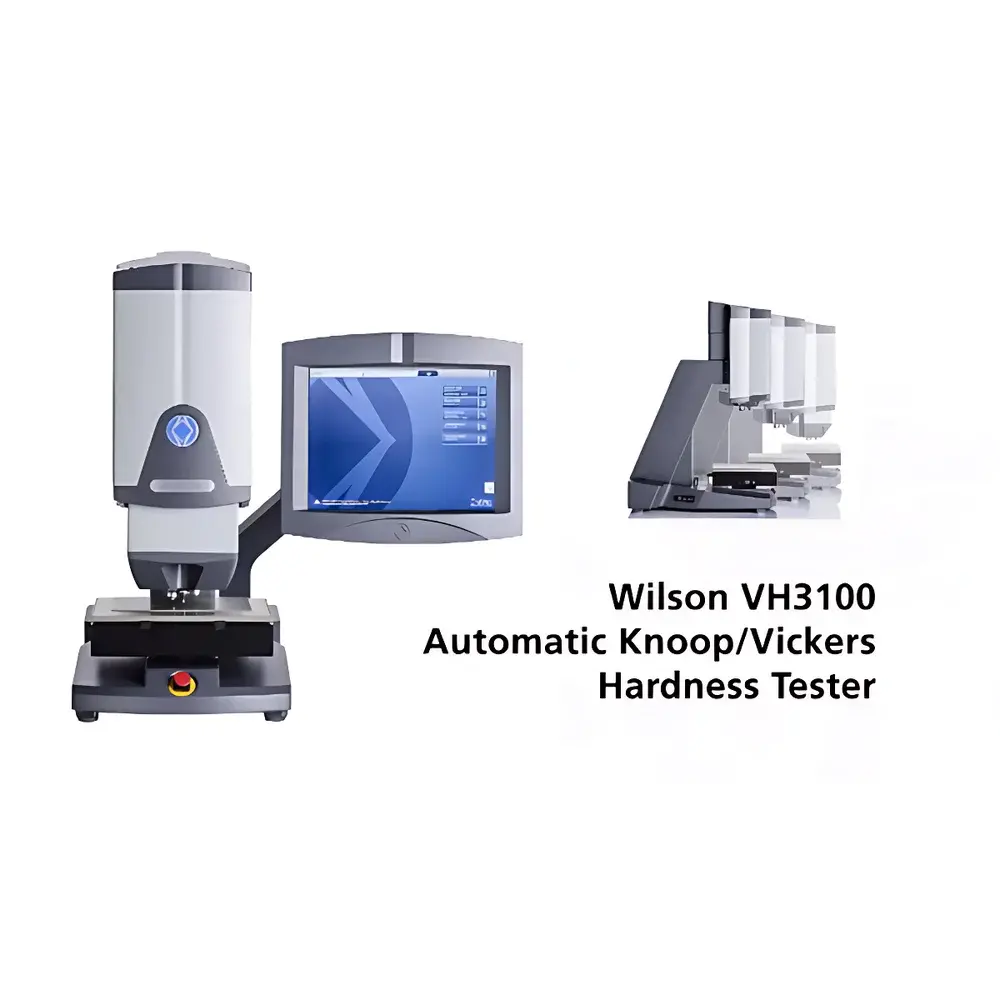
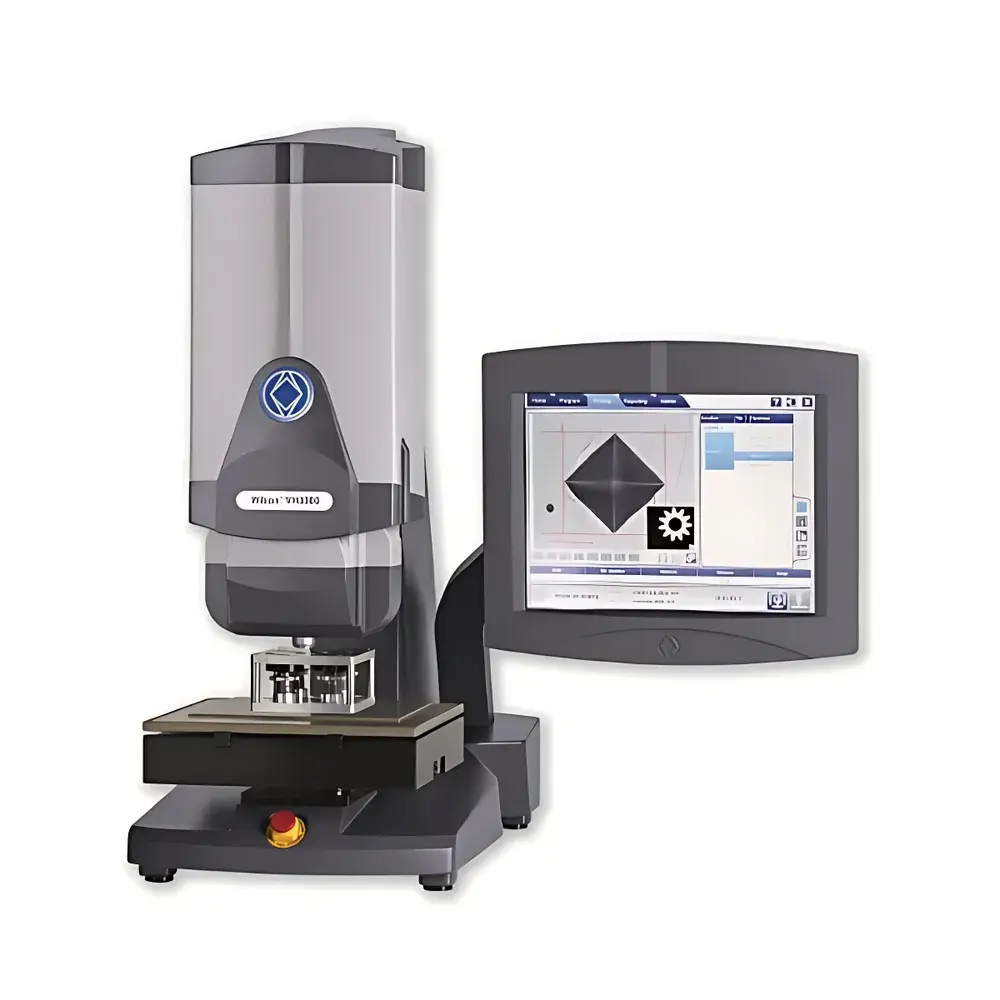
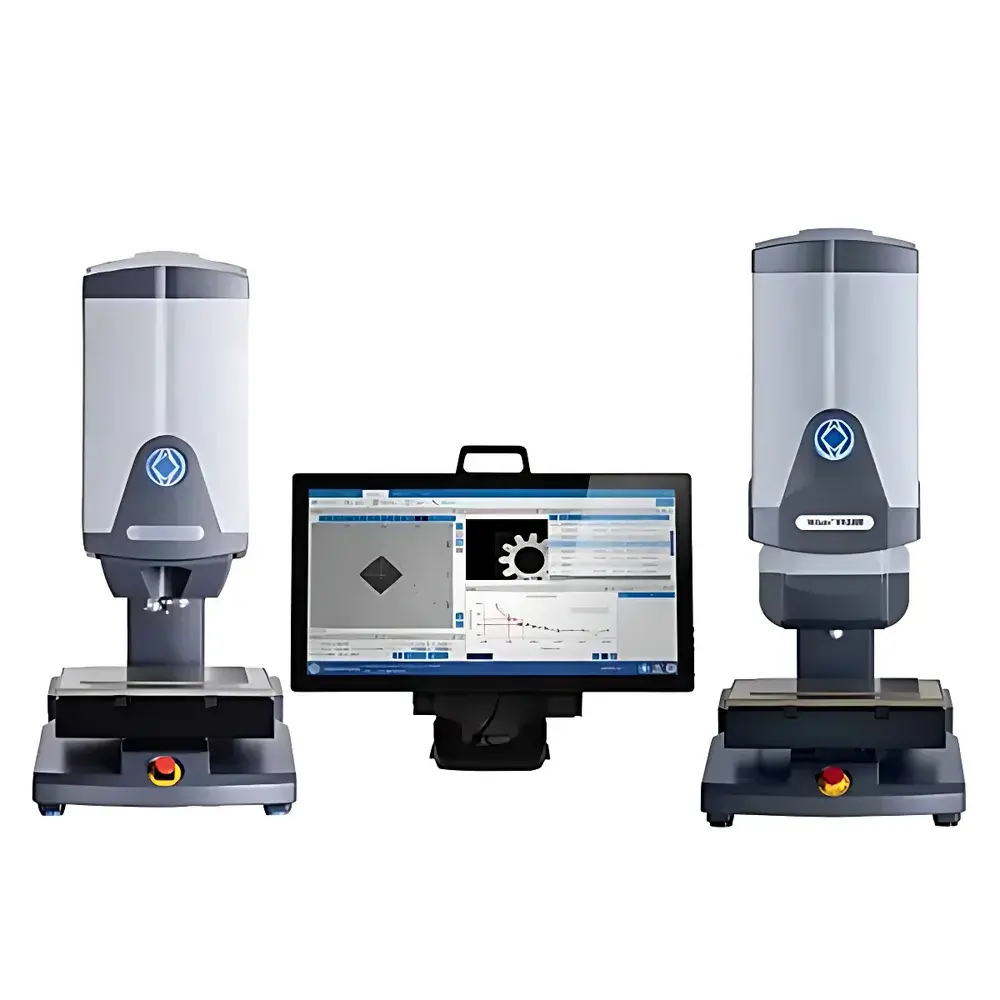
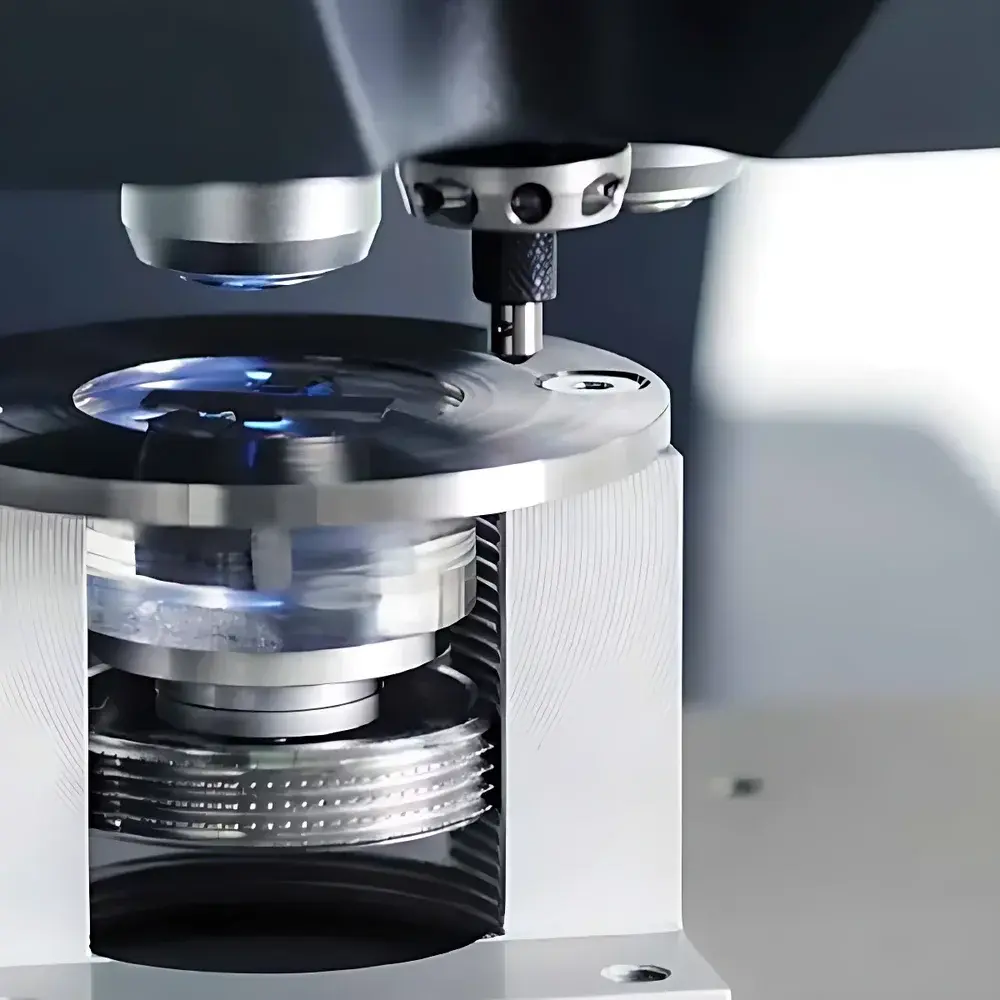
Wilson VH3300 Fully Automated Vickers/Knoop Hardness Tester
| Brand | Wilson Hardness |
|---|---|
| Origin | USA |
| Manufacturer | Wilson Instruments (A Buehler Company) |
| Model | VH3300 |
| Test Force Range | 0.01–50 kgf (0.1–490.3 N) |
| Measurement Range | 10–100 HV/HK |
| Testing Height × Depth | 105/155 mm (H) × 175 mm (D) |
| Turret | 6-position, supporting up to 3 indenters and 3 load cells simultaneously |
| Objective Lenses | Configurable 3-position turret |
| Standard Indentation Scales | HV0.01–HV50, HK0.01–HK2 |
| Compliance | ISO 6507-1, ISO 4545-1, ASTM E384, ASTM E92 |
Overview
The Wilson VH3300 is a fully automated, high-precision Vickers and Knoop hardness testing system engineered for macro-, micro-, and nano-scale indentation analysis in research laboratories, quality control environments, and advanced materials development facilities. Based on the fundamental principle of diamond pyramid indentation under controlled static load—followed by optical measurement of diagonal lengths—the VH3300 delivers traceable, repeatable hardness values across an exceptionally broad force range (0.01–50 kgf). Its modular architecture integrates dual-load-cell capability, motorized 6-position turret, and intelligent motion control to support both standardized compliance testing and custom multi-force test sequences. Designed and manufactured in the USA by Wilson Instruments—a Buehler company—the system meets stringent international metrological requirements while enabling seamless integration into GLP/GMP-regulated workflows.
Key Features
- Wide Dynamic Load Range: Supports forces from 0.01 kgf (0.1 N) to 50 kgf (490.3 N) via interchangeable load cells (10 N, 100 N, 500 N options), enabling unified macro-Vickers (HV1–HV50), micro-Vickers (HV0.01–HV0.5), and Knoop (HK0.01–HK2) testing on a single platform.
- Intelligent 6-Position Turret: Simultaneously accommodates up to three diamond indenters (Vickers and/or Knoop) and three calibrated load cells—eliminating manual changeovers and minimizing setup-induced variability.
- Collision Avoidance System: Real-time monitoring of Z-axis motion detects physical obstructions during approach or indentation; triggers immediate stop to protect indenter tips, objective lenses, and sample integrity—critical for unattended operation and high-value specimens.
- Auto-Focus Algorithm: Achieves reliable focus from ≥30 mm working distance with sub-micron repeatability; employs adaptive edge-detection and contrast optimization for heterogeneous surfaces (e.g., carbides, PVD coatings, case-hardened steels).
- Adaptive Illumination Control: Dynamically adjusts LED intensity and angle based on surface reflectivity and topography—ensuring consistent image contrast across diverse materials including polished metals, sintered ceramics, and thin-film coatings.
- Touch-Optimized Workflow: Requires only four touchscreen interactions to launch a preconfigured test sequence—reducing operator training time without compromising configurability for expert users.
Sample Compatibility & Compliance
The VH3300 accommodates specimens up to 155 mm in height (with extended column option) and 175 mm in depth, supporting standard metallographic mounts, large forgings, turbine blades, and coated components. Its mechanical stability and thermal mass minimize drift during extended test runs. The system complies with ISO 6507-1 (Vickers hardness), ISO 4545-1 (Knoop hardness), ASTM E384 (microindentation), and ASTM E92 (macrohardness), and supports audit-ready documentation per FDA 21 CFR Part 11 when configured with DiaMet’s electronic signature and audit trail modules. All hardness values are traceable to NIST-certified reference blocks and calibrated per ISO/IEC 17025-accredited procedures.
Software & Data Management
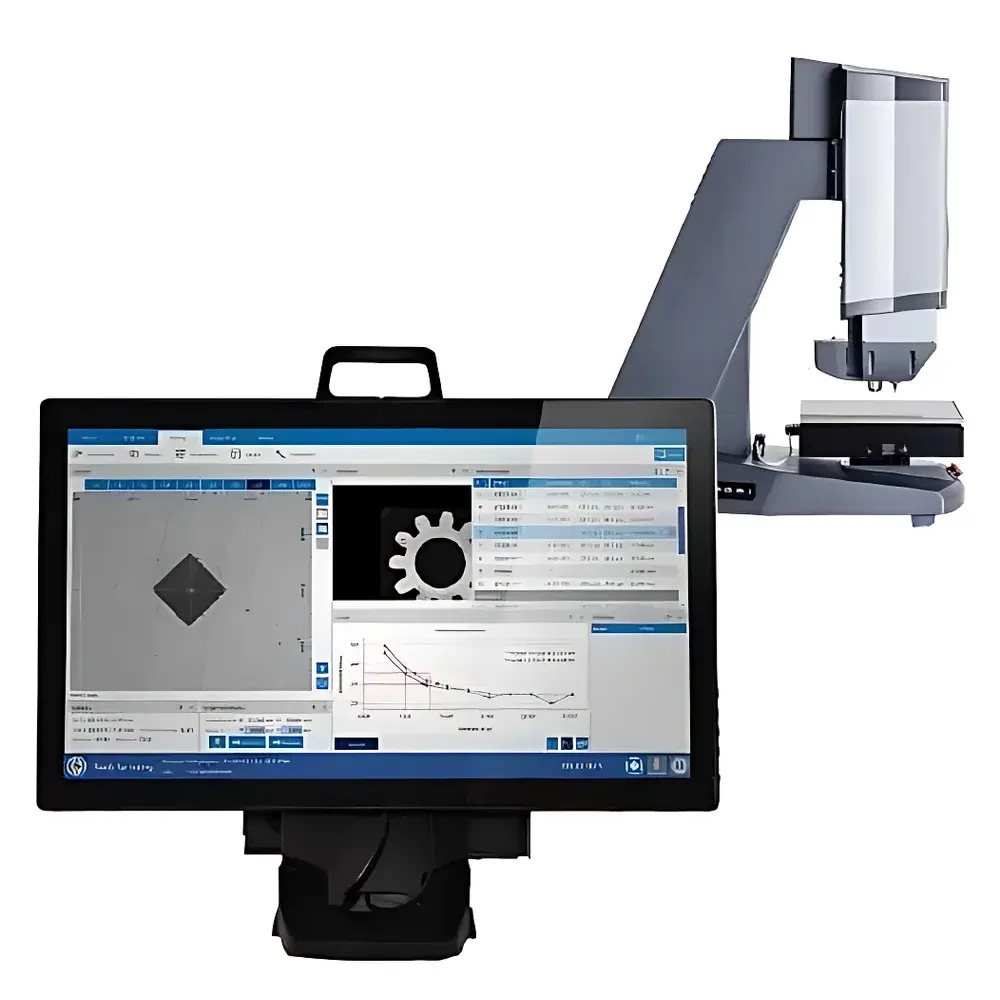
DiaMet™ software provides a unified interface for method development, execution, and reporting. Its graphical program editor allows creation of multi-step protocols—including variable loads, dwell times, grid patterns, and mixed HV/HK scales—with real-time video overlay for precise indentation placement preview. Automatic indentation measurement uses sub-pixel edge detection algorithms validated against certified reference images; manual override and symmetry validation (for Knoop anisotropy assessment) are available. Results are stored in a relational database with full metadata (operator ID, timestamp, environmental conditions, calibration logs). Export formats include PDF (with customizable templates), Excel (.xlsx), and direct printer output. Data integrity is ensured via role-based access control, electronic signatures, and immutable audit trails compliant with GLP and GMP requirements.
Applications
- Quality assurance of heat-treated aerospace alloys (e.g., Ti-6Al-4V, Inconel 718)
- Case depth profiling of carburized or nitrided steel components
- Mechanical property mapping of additive-manufactured parts
- Hardness gradient analysis across weld zones and dissimilar metal joints
- Thin-film and coating evaluation (e.g., DLC, CrN, AlTiN) using low-force Knoop testing
- Research on brittle ceramics, composites, and intermetallics where crack propagation must be minimized
- Calibration lab services requiring ISO/IEC 17025-compliant hardness certification
FAQ
What standards does the VH3300 support for hardness testing?
The system fully implements ISO 6507-1 (Vickers), ISO 4545-1 (Knoop), ASTM E384 (microhardness), and ASTM E92 (macrohardness), with optional validation packages for ISO/IEC 17025 and FDA 21 CFR Part 11 compliance.
Can the VH3300 perform both Vickers and Knoop tests without hardware reconfiguration?
Yes—the 6-position turret supports simultaneous mounting of Vickers and Knoop indenters, and DiaMet software enables automatic tool selection within a single test program.
Is remote monitoring or unattended operation supported?
The collision avoidance system, auto-focus reliability, and DiaMet’s queue-based scheduling enable overnight and weekend testing cycles with minimal supervision.
How is measurement uncertainty managed in automated mode?
DiaMet applies ISO 14644-1–aligned uncertainty estimation models that incorporate pixel resolution, lens distortion correction, and statistical repeatability data from daily verification blocks.
Does the system support third-party LIMS or MES integration?
Yes—via OPC UA and RESTful API interfaces, allowing bidirectional data exchange with laboratory information management systems and enterprise manufacturing execution platforms.



