WinDENDRO Tree-Ring Analysis System (Basic, Standard & Density Editions)
| Brand | Regent Instruments |
|---|---|
| Origin | Canada |
| Model | WinDENDRO Basic, Standard, Density Editions |
| Scanner Compatibility | STD 4800LA (4800 dpi), LA 2400 (2400 dpi) |
| Minimum Resolvable Feature Size | 0.005 mm (STD 4800LA), 0.011 mm (LA 2400) |
| Max Scan Area | 216 × 280 mm (STD 4800LA), 300 × 430 mm (LA 2400) |
| Image Formats Supported | TIFF, JPEG, JPEG2000, PNG, BMP |
| TWAIN Compliance | Yes |
| Gray Levels | Up to 16-bit (Density Edition only) |
| Color Channel Selection | Yes (Density Edition only) |
| Calibration Support | Reference-based spatial calibration from digital photographs |
| Software Architecture | Windows-native, CPU/GPU-accelerated image segmentation and ring detection algorithms |
Overview
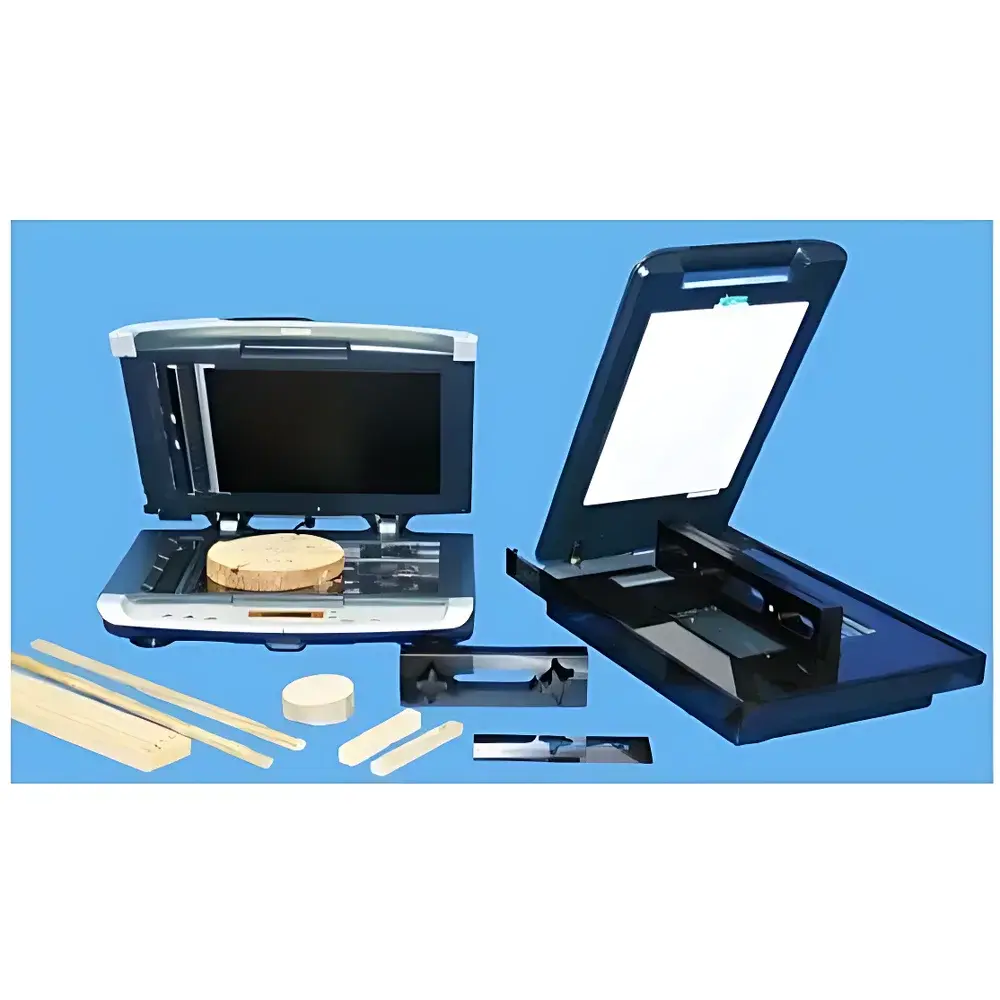
The WinDENDRO Tree-Ring Analysis System is a specialized digital dendrochronological workstation engineered for high-precision measurement and quantitative analysis of tree-ring features in wood samples. Developed by Regent Instruments in Quebec, Canada, the system implements pixel-level grayscale intensity profiling combined with adaptive edge-detection algorithms to objectively identify annual growth boundaries—enabling reproducible quantification of ring width, earlywood/latewood differentiation, sapwood transition zones, and relative wood density profiles. Unlike manual or semi-automated caliper-based methods, WinDENDRO operates on digitized images acquired via flatbed scanners (e.g., STD 4800LA or LA 2400), X-ray film digitizers, or calibrated digital cameras—providing traceable, audit-ready data essential for cross-dating, climate reconstruction, forest ecology modeling, and long-term ecological monitoring programs.
Key Features
- Three-tiered software architecture: Basic Edition (ring-width-only), Standard Edition (earlywood/latewood width, sapwood delineation, multi-path analysis), and Density Edition (16-bit grayscale density profiling, blue-light reflectance calibration, color-channel-aware segmentation)
- Multi-directional path definition: Supports vertical, horizontal, arbitrary-angle, segmented, and sibling paths—critical for analyzing irregular or eccentric cores
- Robust boundary detection: Algorithms incorporate tangent alignment to ring contours, gap-skipping logic for cracks or missing sections, and iterative reanalysis workflows for quality control
- Scanner-agnostic image ingestion: Fully compliant with TWAIN standard; supports spatial calibration using embedded reference objects in photographic acquisitions
- Background illumination normalization: Advanced background subtraction routines compensate for non-uniform lighting across large-area scans—particularly important for field-collected cores imaged under variable conditions
- Batch processing engine: Standard and Density Editions support concurrent analysis of up to 16 image files with user-defined metadata tagging and sortable export (ascending/descending chronological order)
Sample Compatibility & Compliance
WinDENDRO is validated for use with both disk cross-sections and increment cores (up to 36 cm length). The system accommodates standard dendroecological sample preparation protocols—including air-drying, surface sanding, and optional blue-light reflectance calibration for density estimation in the absence of X-ray densitometry equipment. All editions comply with ISO 13972:2015 (Dendrochronology — Requirements for measurement and reporting) and support GLP-aligned documentation through timestamped analysis logs, operator ID fields, and version-tracked processing parameters. Density Edition output meets ASTM D143-22 Annex A4 requirements for optical density correlation with specific gravity in softwood species.
Software & Data Management
Data generated by WinDENDRO are stored in structured CSV and XML formats compatible with R (dplR package), MATLAB, and Python (pandas/numpy ecosystems). The optional XLSTEM post-processing module enables standardized visualization—including age-dependent growth curve fitting, basal area increment modeling, and volume estimation via taper function integration. All editions maintain full audit trails: every measurement includes embedded timestamps, software version identifiers, scanner model/driver metadata, and user-specified calibration coefficients. For regulated environments (e.g., IPCC-related paleoclimate archives or FDA-registered botanical research), the system supports 21 CFR Part 11-compliant electronic signatures when deployed with validated Windows domain authentication and encrypted local storage.
Applications
- Climate–growth response modeling using standardized ring-width indices (RWI) aligned with NOAA/NCEI instrumental records
- Density-based reconstruction of past temperature extremes (e.g., latewood density as proxy for July–August mean temperature)
- Forest disturbance chronology: Fire scar dating, insect outbreak tracking, and windthrow event sequencing via abrupt ring-width reductions
- Long-term carbon sequestration assessment through multi-decadal biomass accumulation curves derived from radial growth series
- Validation of terrestrial biosphere models (e.g., LPJ-GUESS, ORCHIDEE) using observed interannual growth variability across elevation gradients
- Herbarium and wood anatomy database curation with machine-readable morphometric descriptors (e.g., earlywood vessel lumen area, latewood cell wall thickness proxies)
FAQ
Is WinDENDRO suitable for field deployment?
No—WinDENDRO is a laboratory-based analytical platform requiring stable AC power, controlled ambient lighting, and a dedicated Windows workstation meeting minimum i7/16GB RAM/SSD specifications.
Can WinDENDRO process images from smartphone cameras?
Yes—if the image includes a known-size calibration target (e.g., millimeter scale bar) and is saved in lossless TIFF or PNG format with sufficient resolution (≥1200 dpi equivalent at sample scale).
What distinguishes the Density Edition from Standard Edition?
Only the Density Edition supports 16-bit grayscale analysis, blue-light reflectance calibration against known-density standards, color-channel selection for spectral optimization, and background-gradient correction algorithms required for quantitative density profiling.
Does WinDENDRO support automated cross-dating between multiple samples?
Yes—the Standard and Density Editions include integrated COFECHA-compatible correlation modules for statistical synchronization of ring-width series across sites or individuals.
Are scanner hardware components included with the software license?
No—scanners (STD 4800LA or LA 2400), core mounting fixtures, blue-light calibration rulers, and XLSTEM are optional accessories sold separately.
Related Products