
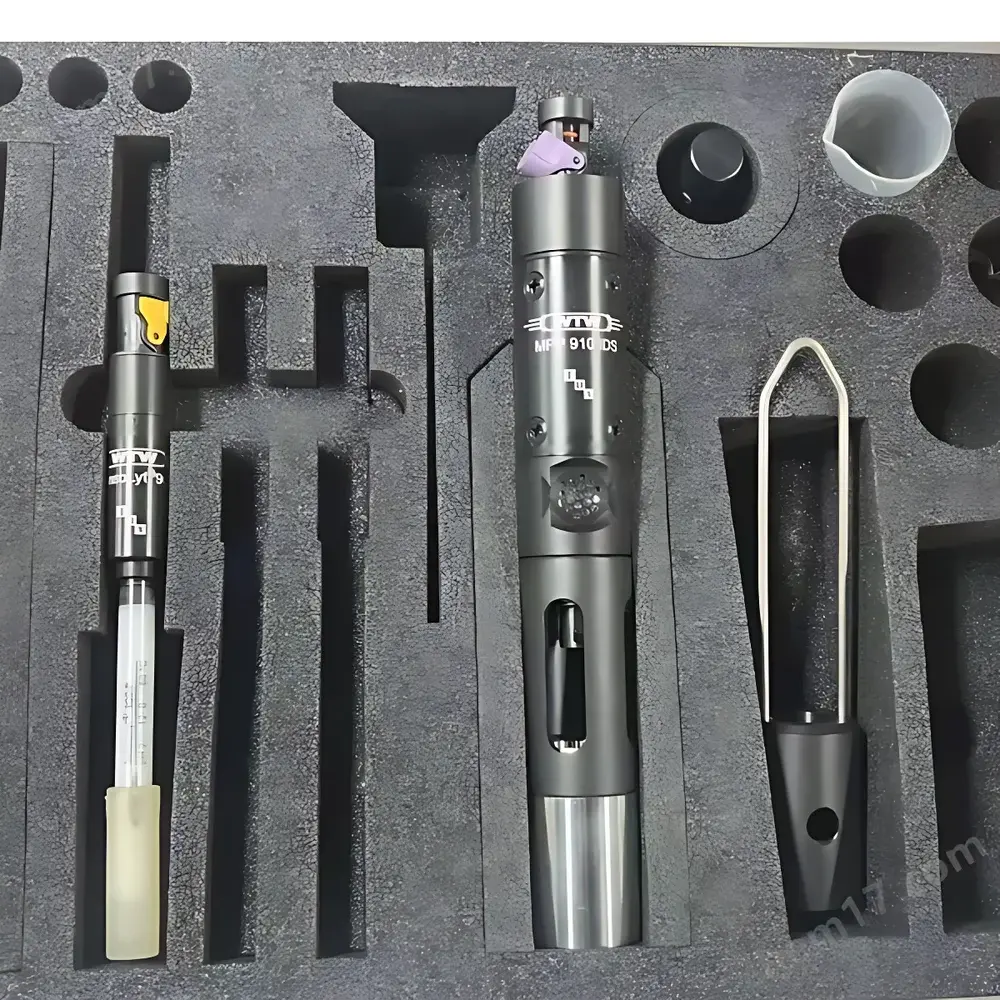
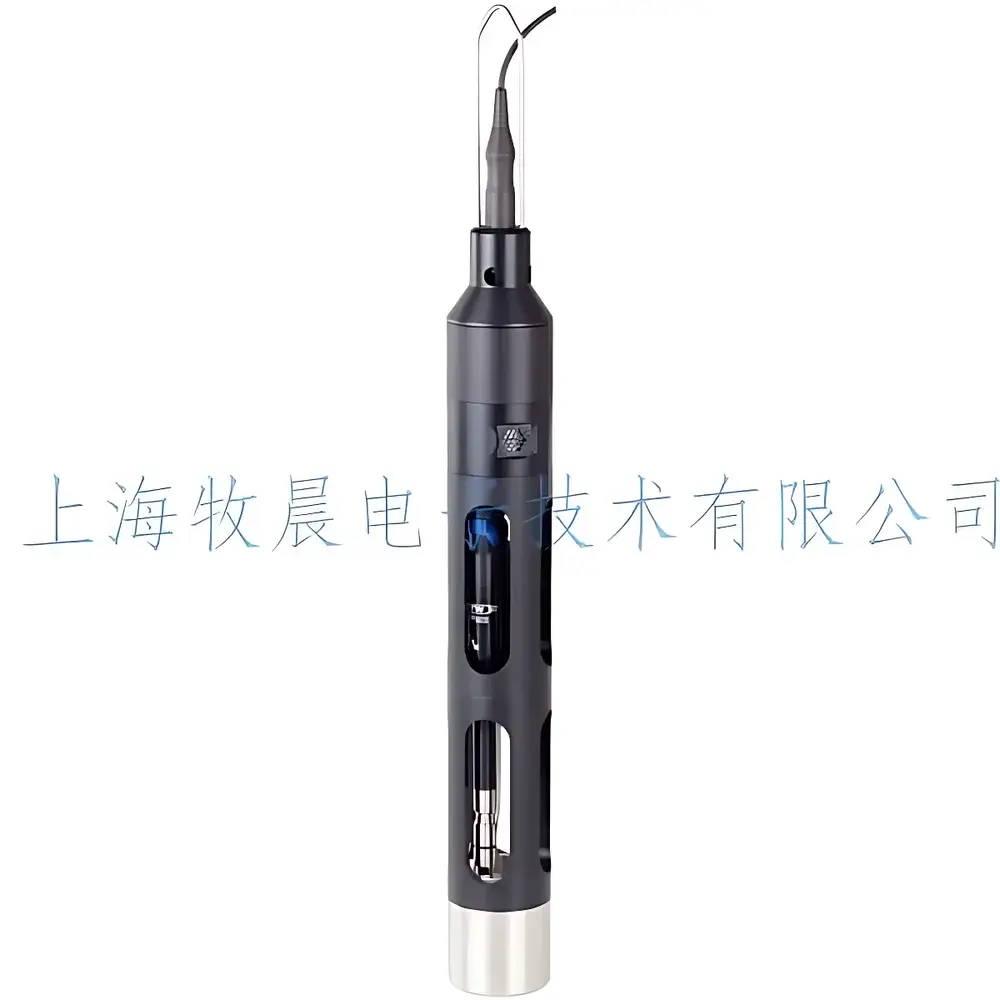
WTW MPP 910/930 IDS Submersible Multiparameter Depth Sensor
| Brand | WTW |
|---|---|
| Origin | Germany |
| Model | MPP 910/930 |
| Detection Principle | Electrochemical & Piezoresistive Pressure Transduction |
| Measured Parameter | Depth (Hydrostatic Pressure) |
| Depth Range | 0.50–100 m |
| Resolution | 0.05 m |
| Accuracy | ±0.25 m |
| Pressure Rating | 10 bar |
| Housing Material | Titanium Alloy (MPP 930), POM + Stainless Steel (MPP 910) |
| IP Rating | IP68 |
| Temperature Compensation | Integrated RTD for density- and air pressure-corrected depth calculation |
| Electrode Channels | 1 (MPP 910) or 3 (MPP 930) |
| Compatible Instrument Platform | WTW Multi 3430 with IDS Digital Interface |
| Cable Length Options | 1.5–100 m (field-replaceable) |
Overview
The WTW MPP 910/930 IDS Submersible Multiparameter Depth Sensor is an engineered solution for high-fidelity, in-situ hydrostatic depth profiling in freshwater and marine environments. Based on piezoresistive pressure transduction with integrated Pt1000 temperature sensing, the sensor delivers depth measurements corrected for local atmospheric pressure and water density—critical for accurate vertical stratification analysis in lakes, reservoirs, estuaries, and coastal monitoring networks. Unlike analog depth probes, the MPP series employs WTW’s Intelligent Digital Sensor (IDS) protocol, ensuring digital signal integrity, automatic sensor identification, and plug-and-play compatibility with the Multi 3430 handheld or benchtop multimeter. The core measurement principle relies on hydrostatic pressure (P = ρ·g·h), where real-time temperature-derived density (ρ) and barometric input eliminate systematic errors common in uncorrected pressure-to-depth conversion. Designed for long-term deployment or rapid vertical profiling, the probe operates across a validated range of −5 °C to 50 °C and withstands continuous immersion at depths up to 100 m (10 bar), meeting ISO 7027 for turbidity-capable variants and ASTM D1293/D3370 for pH/conductivity applications when paired with respective IDS electrodes.
Key Features
- Integrated piezoresistive pressure sensor with factory-calibrated temperature compensation (Pt1000 RTD) for density- and barometric-corrected depth output
- Dual-model architecture: MPP 910 (single-channel, 40 mm diameter, 0.9 kg) optimized for narrow-bore wells (≥2″); MPP 930 (triple-channel, 70 mm diameter, 3.0 kg) supporting simultaneous pH, ORP, conductivity, and dissolved oxygen measurement
- Titanium alloy (MPP 930) or corrosion-resistant POM/stainless steel (MPP 910) housing rated IP68 and pressure-tested to 10 bar
- Quick-lock waterproof IDS connector enabling hot-swappable electrode integration and field cable replacement (1.5–100 m options)
- Digital signal transmission eliminates noise, drift, and grounding issues associated with analog cabling over extended lengths
- Onboard memory stores calibration history, serial number, and firmware version—accessible via Multi 3430 or LabX software
Sample Compatibility & Compliance
The MPP 910/930 is validated for use in natural waters including oligotrophic lakes, eutrophic reservoirs, brackish estuaries (up to 70 psu salinity), and municipal intake channels. Its pressure sensor conforms to IEC 61298-2 for industrial pressure transducers, while electrochemical modules meet ISO 10523 (pH), ISO 7888 (conductivity), ISO 5814 (dissolved oxygen), and EN 27888 (ORP). When deployed with Multi 3430, full audit trails—including operator ID, timestamp, GPS metadata (via optional Bluetooth module), and raw sensor diagnostics—are generated in compliance with GLP and FDA 21 CFR Part 11 requirements. All IDS electrodes are CE-marked and RoHS-compliant; titanium housings pass ASTM B348 Grade 2 corrosion testing per ASTM G46 for seawater exposure.
Software & Data Management
Data acquisition and configuration are managed through WTW’s LabX® software (Windows-based) or the embedded interface of the Multi 3430. LabX supports automated depth profiling workflows, multi-layer parameter correlation (e.g., DO vs. depth vs. temperature), and export to CSV, Excel, or LIS-compatible formats. Each IDS sensor logs its own calibration certificate (including date, standard used, and deviation values), accessible without physical disassembly. Firmware updates are delivered via USB or SD card, preserving calibration constants during revision cycles. For networked deployments, the Multi 3430 can buffer up to 10,000 data points with time-stamped depth tags, synchronized to NTP servers when connected to Wi-Fi-enabled gateways.
Applications
- Vertical profiling of thermal, chemical, and biological gradients in deep lakes and reservoirs (e.g., metalimnion mapping, hypolimnetic oxygen depletion studies)
- Regulatory compliance monitoring under EU Water Framework Directive (WFD) Annex V and US EPA Method 160.1 for stratified water column assessment
- Intake structure inspection and sediment scour evaluation in hydropower and drinking water facilities
- Calibration reference for acoustic Doppler current profilers (ADCPs) and autonomous underwater vehicles (AUVs)
- Long-term moored deployments using WTW’s CR1000-compatible data loggers with IDS-to-SDI-12 adapters
FAQ
Does the MPP 910/930 require manual barometric correction during field use?
No—the sensor includes an internal barometer or accepts external barometric input via the Multi 3430, enabling real-time air pressure compensation for all depth calculations.
Can the MPP 930 simultaneously measure pH, conductivity, and dissolved oxygen at the same depth point?
Yes—its three independent IDS channels support concurrent, time-synchronized acquisition from SensoLyt® 900-P (pH), TetraCon® 925-P (conductivity), and FDO® 925-P (optical DO) sensors.
Is the pressure sensor linearized and temperature-compensated across the full 0.5–100 m range?
Yes—factory calibration includes 15-point pressure verification across −5 °C to 50 °C, with polynomial compensation applied in firmware.
What is the maximum recommended cable length for maintaining IDS signal integrity?
Up to 100 m using shielded, twisted-pair IDS cable (AS IDS/100); signal degradation is negligible due to differential digital signaling.
Are replacement electrodes and pressure modules user-serviceable?
Electrodes are fully field-replaceable via the IDS interface; however, pressure sensor recalibration requires WTW-certified service centers per ISO/IEC 17025.







