
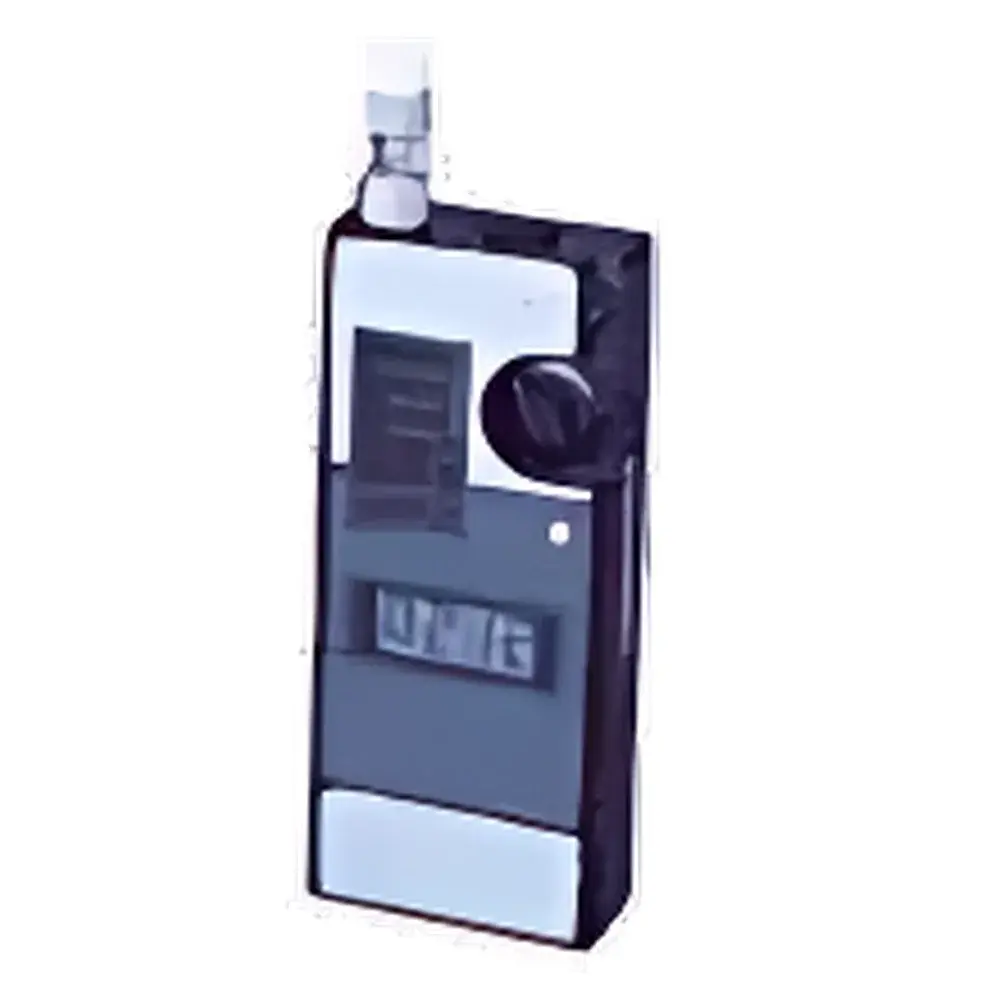
XP-329F Automatic Suction-Type Odor Analyzer
| Origin | Japan |
|---|---|
| Manufacturer Type | Authorized Distributor |
| Origin Category | Imported |
| Model | XP-329F |
| Pricing | Available Upon Request |
Overview
The XP-329F Automatic Suction-Type Odor Analyzer is a portable, field-deployable instrument engineered for objective quantification of odor intensity in ambient air and localized emission sources. Unlike subjective olfactometry, this device employs semiconductor gas-sensing technology to deliver repeatable, instrument-based odor strength indices—expressed numerically on a 0–2000 scale—enabling comparative assessment across time, location, or treatment conditions. Its core measurement principle relies on resistance modulation of high-sensitivity tin oxide (SnO₂)-based thin-film semiconductor sensors upon exposure to volatile organic compounds (VOCs) and inorganic odorants such as ammonia (NH₃) and hydrogen sulfide (H₂S). The integrated micro-air pump ensures consistent sample aspiration at a defined flow rate, minimizing operator-dependent variability and supporting standardized sampling per ISO 16000-28 and ASTM D6974 guidelines for odor screening.
Key Features
- Automatic suction sampling via built-in micro-diaphragm air pump, eliminating manual bagging or passive diffusion limitations
- Digital LCD display with real-time odor intensity readout (0–2000 range) and peak-hold function for transient odor event capture
- Three sensor variants optimized for distinct odor classes: general odor (XP-329), H₂S-specific (XP-329S), and NH₃-selective (XP-329N); the XP-329F uses the ultra-sensitive lead oxide (PbO)-enhanced SnO₂ thin-film sensor platform
- Dual power operation: four AA alkaline batteries (DC 6 V) for field mobility, plus optional AC adapter for lab or continuous monitoring use
- Battery life indicator with audible/visual low-power alert; typical runtime exceeds 10 hours under standard sampling duty cycles
- Analog output interface (0–200 mV DC) compatible with strip chart recorders, data loggers, or SCADA systems for long-term trend analysis
- Compact ergonomic housing (84 × 190 × 40 mm), lightweight design (~550 g), and IP54-rated enclosure suitable for indoor and sheltered outdoor deployment
Sample Compatibility & Compliance
The XP-329F is validated for qualitative-to-semiquantitative odor intensity assessment in non-explosive, non-corrosive environments. It responds to a broad spectrum of odor-active compounds—including aldehydes, amines, mercaptans, and nitrogenous heterocycles—with heightened sensitivity toward ammonia and low-molecular-weight sulfur species. While not certified for regulatory compliance per EN 13725 (dynamic olfactometry), it serves as a robust pre-screening tool aligned with EPA Method TO-15 screening logic and Japanese JIS Z 8806 odor evaluation protocols. Operating temperature range (0–40 °C) and humidity tolerance (≤85% RH, non-condensing) ensure reliability in municipal wastewater facilities, food processing plants, composting sites, and HVAC maintenance inspections. Calibration verification is performed using certified reference gases or standardized odor reference materials traceable to NIST SRMs where applicable.
Software & Data Management
The XP-329F operates as a standalone analog-output instrument without embedded firmware or proprietary software. However, its 0–200 mV DC analog output enables seamless integration into third-party data acquisition platforms supporting IEEE 1451.2 or Modbus RTU protocols. When paired with compliant logging hardware (e.g., Campbell Scientific CR1000X or HOBO UX120), users can generate timestamped odor intensity time-series datasets with audit-ready metadata. For GLP/GMP-aligned workflows, external recording systems may be configured with electronic signatures, user access controls, and 21 CFR Part 11-compliant audit trails—though the analyzer itself does not store or process data internally.
Applications
- Pre-compliance odor screening at landfill perimeter monitoring points and leachate treatment units
- Routine odor source identification in rendering facilities, poultry farms, and anaerobic digesters
- Verification of odor control system efficacy (e.g., biofilter or chemical scrubber performance)
- Occupational hygiene assessments in confined-space entry scenarios involving potential NH₃ or H₂S accumulation
- Educational demonstrations of gas sensor response kinetics and odor threshold concepts in environmental engineering curricula
- Baseline odor mapping prior to industrial site redevelopment or zoning applications
FAQ
Is the XP-329F certified for regulatory odor reporting under EN 13725 or US EPA standards?
No. It is intended for indicative screening and comparative monitoring—not definitive compliance measurement. Dynamic olfactometry remains the mandated method for legal odor concentration reporting.
Can the sensor be recalibrated in the field?
Field recalibration is not supported. Users must perform zero-point verification using clean air and confirm response stability against certified reference standards at accredited service centers.
What is the expected sensor lifetime under typical operational conditions?
Sensor functional life averages 18–24 months when operated within specified temperature/humidity limits and protected from silicone vapors, halogenated solvents, and heavy particulate loading.
Does the device meet intrinsic safety (ATEX/IECEx) requirements for hazardous locations?
No. It is not rated for Class I, Division 1 or Zone 0/1 environments. Use only in non-classified areas.
Is there firmware update capability or Bluetooth/Wi-Fi connectivity?
No. The XP-329F is an analog-dedicated instrument with no digital communication interfaces or upgradable firmware.
Related Products







