
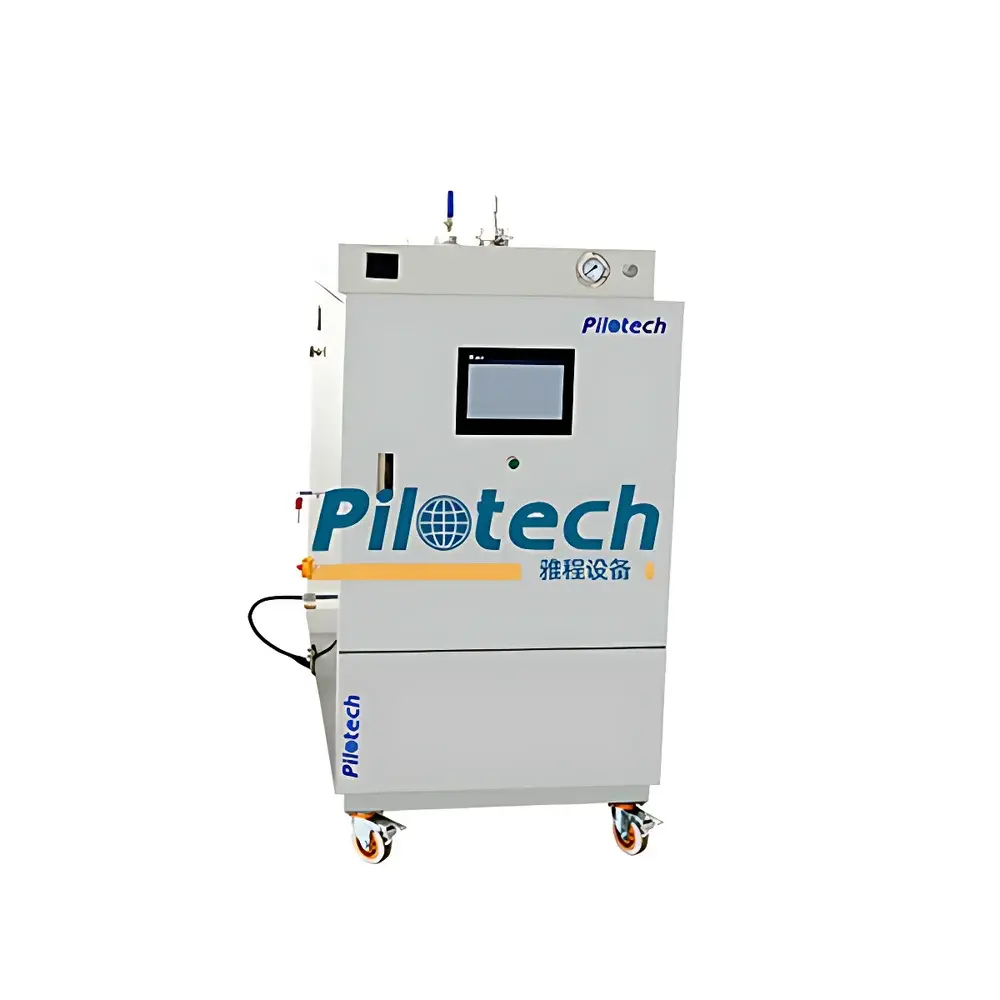
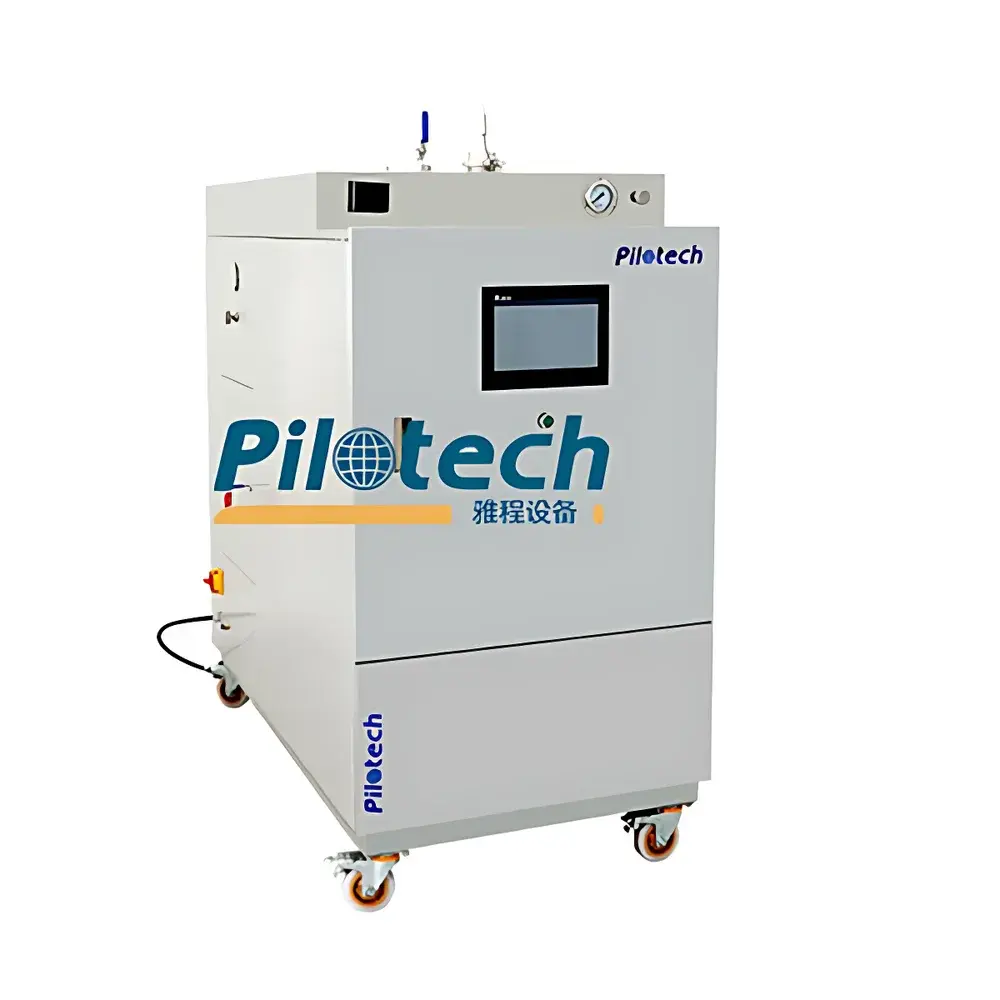
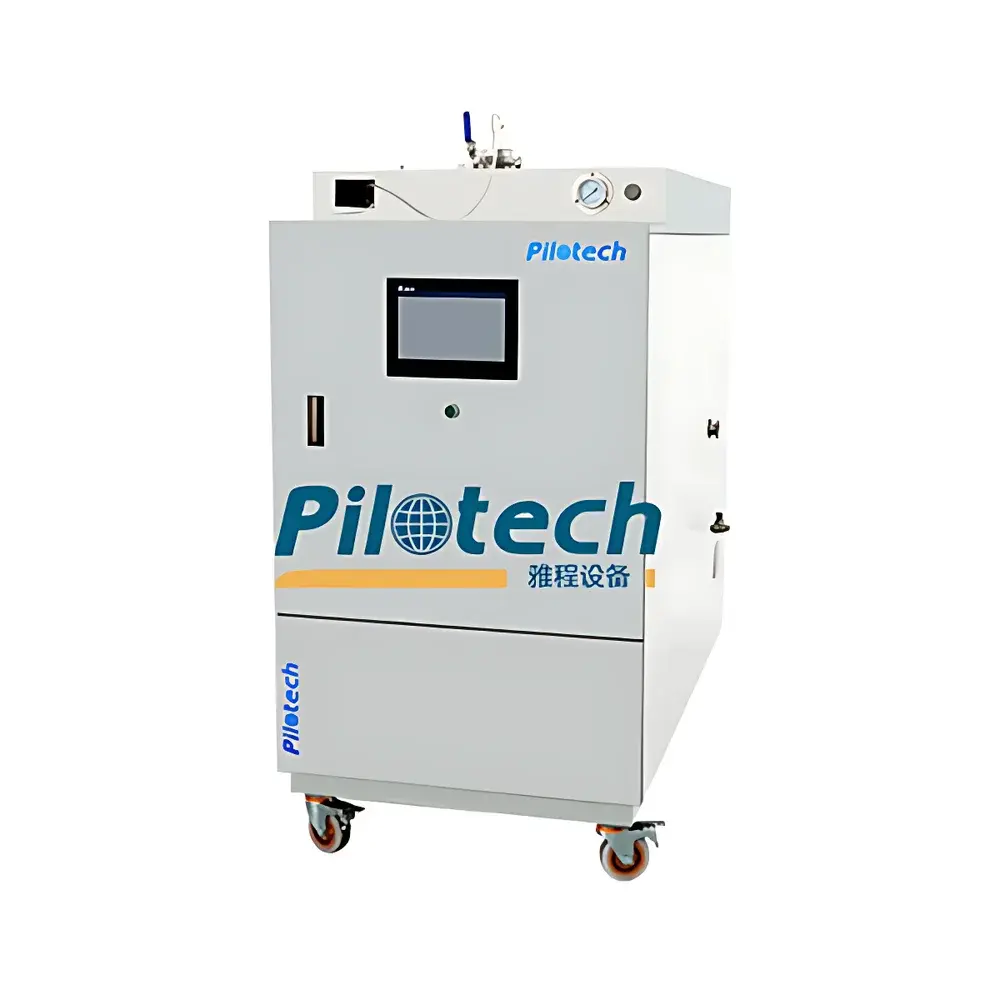
Yacheng YC-01 Laboratory Spray Freeze Dryer
| Brand | Yacheng / PILOTECH |
|---|---|
| Origin | Shanghai, China |
| Manufacturer Type | Direct Manufacturer |
| Product Category | Domestic |
| Model | YC-01 |
| Instrument Type | Benchtop Spray Freeze Dryer |
| Application Scope | Research & Development Laboratories |
| Maximum Batch Capacity | 3 L per cycle |
| Spray Freezing Throughput | 300–2500 mL/h |
| Collection Efficiency | ≥98% (based on 15% dextrin solution) |
| Control System | PLC with 10-inch color touchscreen |
| Construction Material | SUS304 stainless steel |
| Integrated Refrigeration | Built-in compressor (no external chiller required) |
| Power Supply | 220 V AC, 3 kW |
| Heating Method | Radiant heating with programmable temperature control |
| Vacuum Interface | Standard KF-25 port |
| Compressed Air Inlet | Integrated |
| Footprint | ~1 m² |
| Mobility | Equipped with casters |
Overview
The Yacheng YC-01 Laboratory Spray Freeze Dryer is an integrated benchtop system engineered for the controlled production of ultra-porous, high-surface-area lyophilized powders from heat-sensitive liquid formulations. Unlike conventional freeze dryers—where bulk freezing precedes primary drying—the YC-01 implements a sequential spray-freezing-then-sublimation process: liquid feedstock is atomized into fine droplets via precision nozzles, rapidly frozen upon contact with a cryogenic environment (typically liquid nitrogen-cooled zone), and subsequently dried under vacuum via radiative heating. This approach yields discrete, spherical ice microgranules with uniform morphology, enabling exceptional reconstitution kinetics, low aggregation tendency, and preservation of labile biomolecules—including proteins, enzymes, vaccines, and probiotics. The system operates on fundamental principles of cryo-atomization and vacuum sublimation thermodynamics, making it particularly suited for pharmaceutical formulation development, nutraceutical R&D, and advanced material synthesis where particle architecture directly impacts functional performance.
Key Features
- Integrated cryo-atomization module with adjustable nozzle geometry and gravity-fed droplet trajectory through a liquid nitrogen–cooled freezing zone
- PLC-controlled 10-inch color touchscreen interface displaying real-time parameters: condenser temperature, chamber vacuum level (measured via capacitance manometer), and radiant heater surface temperature
- Self-contained refrigeration architecture—no external chiller or cryogen circulation system required
- SUS304 stainless steel construction compliant with ISO 14644-1 Class 7 cleanroom-compatible surface finish and corrosion resistance
- Center-aligned spray gun design ensuring symmetrical droplet dispersion and minimized wall deposition
- Motorized lift mechanism for bottom-mounted product collector, facilitating rapid powder recovery with ≥98% collection efficiency (validated using 15% w/v dextrin model solution)
- Programmable radiant heating profile supporting ramp-hold-dwell cycles for optimized secondary drying without thermal degradation
- Modular vacuum interface (KF-25) compatible with standard laboratory vacuum pumps and optional residual gas analyzers
- Compact footprint (~1 m²) with industrial-grade casters for flexible placement in biosafety cabinets or laminar flow hoods
Sample Compatibility & Compliance
The YC-01 accommodates aqueous and organic solvent-based solutions, suspensions, and colloidal dispersions with viscosities up to 500 cP (measured at 25°C). It supports formulations containing stabilizers (e.g., trehalose, mannitol), polymers (e.g., PVP, HPMC), and biological actives—including monoclonal antibodies, mRNA-LNPs, and live bacterial cultures. All wetted parts meet USP Class VI biocompatibility requirements. The system’s operational log, parameter setpoints, and event timestamps are recorded with audit-trail capability, aligning with GLP documentation standards and supporting 21 CFR Part 11 readiness when paired with validated electronic record software. While not certified as GMP-compliant out-of-the-box, its design adheres to core ISO 22000 and ISO 13485 foundational controls for equipment used in regulated R&D environments.
Software & Data Management
The embedded control firmware logs all critical process variables at 1-second intervals to internal non-volatile memory, exportable via USB to CSV format. Users may define up to 20 customizable drying protocols, each storing nozzle pressure, feed rate (via calibrated peristaltic pump), freezing zone dwell time, vacuum ramp rate, and heating profile. Optional Ethernet connectivity enables remote monitoring through Modbus TCP protocol, allowing integration into centralized lab informatics platforms. Data integrity safeguards include write-protected configuration files, password-protected parameter modification, and timestamped operator login records—facilitating traceability during method transfer or regulatory submissions.
Applications
- Development of inhalable dry powder formulations with aerodynamic diameter <5 µm for pulmonary delivery
- Rapid generation of stable vaccine powder intermediates without cold-chain dependency
- Preparation of enzyme-loaded microparticles for controlled-release diagnostics
- Production of porous ceramic precursors and metal-organic framework (MOF) composites
- Stabilization of probiotic strains in food-grade excipients for shelf-stable functional foods
- High-throughput screening of lyoprotectant matrices using fractional factorial DOE protocols
FAQ
What types of solvents are compatible with the YC-01?
Aqueous buffers, ethanol/water mixtures, and low-boiling-point organics (e.g., acetone, ethyl acetate) may be processed—provided vapor pressure and flash point allow safe operation under vacuum. Chlorinated solvents and highly viscous glycerol-based systems are not recommended.
Can the YC-01 be used for sterile processing?
The unit itself is not autoclavable or SIP-capable; however, it may be installed inside a Class II biosafety cabinet or isolator for aseptic powder handling post-drying. Sterility assurance requires downstream validation.
Is liquid nitrogen consumption monitored or controlled?
LN₂ flow is manually regulated via needle valve; consumption is not metered by default but can be integrated with external mass flow controllers upon request.
What maintenance is required for long-term reliability?
Monthly inspection of O-rings, quarterly calibration of vacuum sensor and temperature probes, and annual replacement of compressor oil and desiccant filter are recommended per the maintenance schedule provided in the technical manual.
Does the system support IQ/OQ documentation packages?
Yes—Yacheng provides configurable Installation Qualification (IQ) and Operational Qualification (OQ) templates aligned with ASTM E2500 and ISO/IEC 17025 guidelines, subject to site-specific verification activities.



