
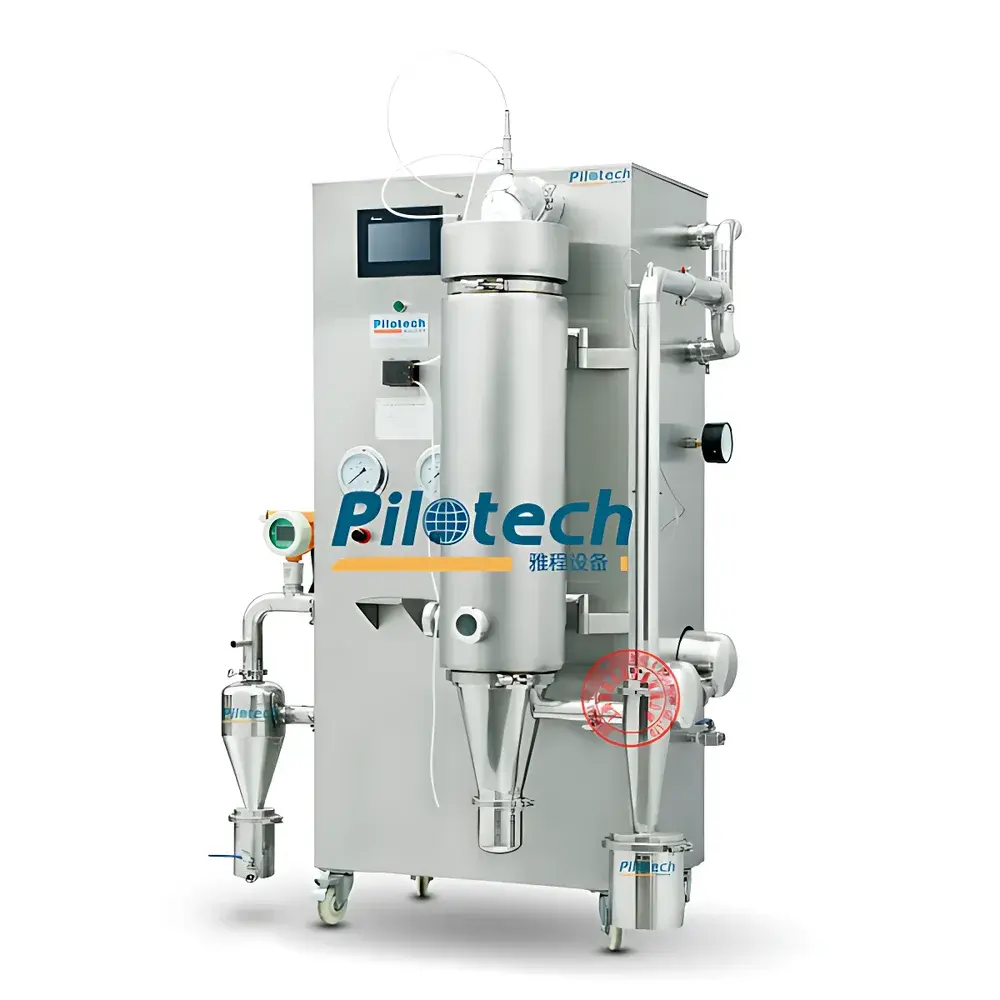
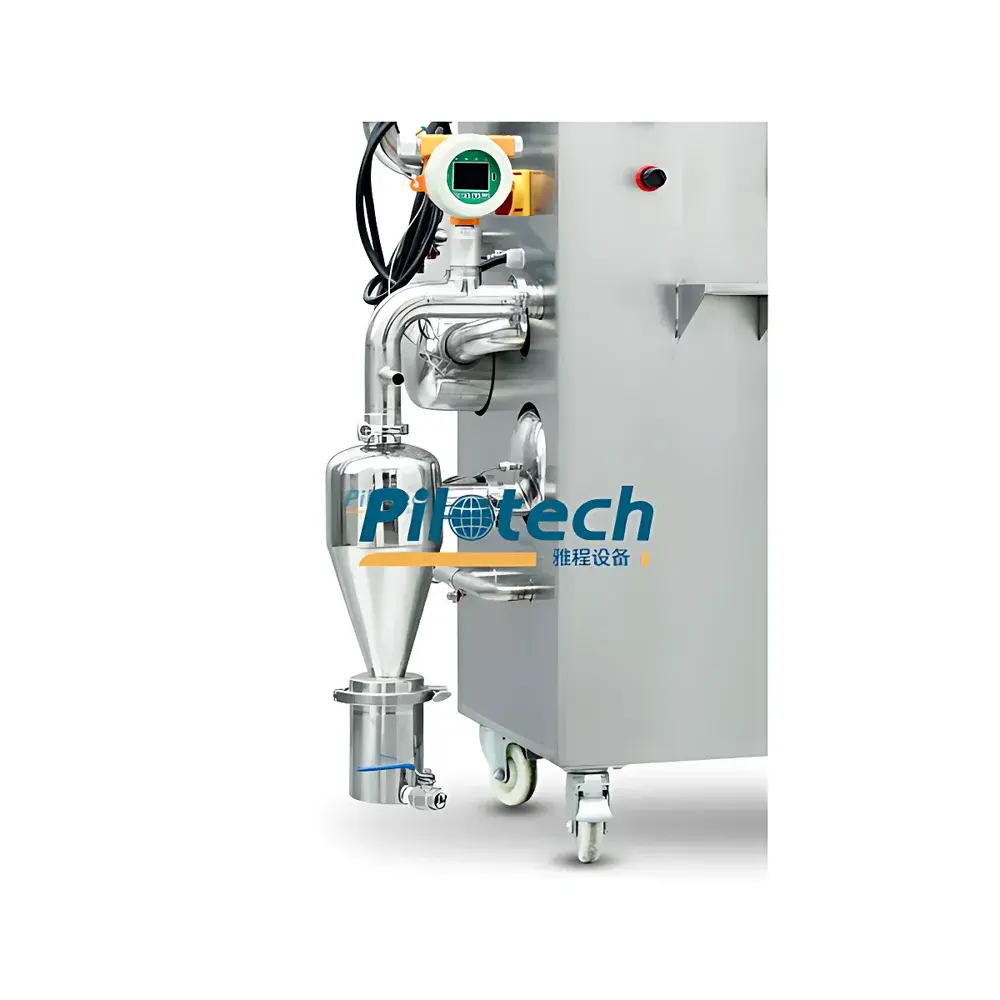
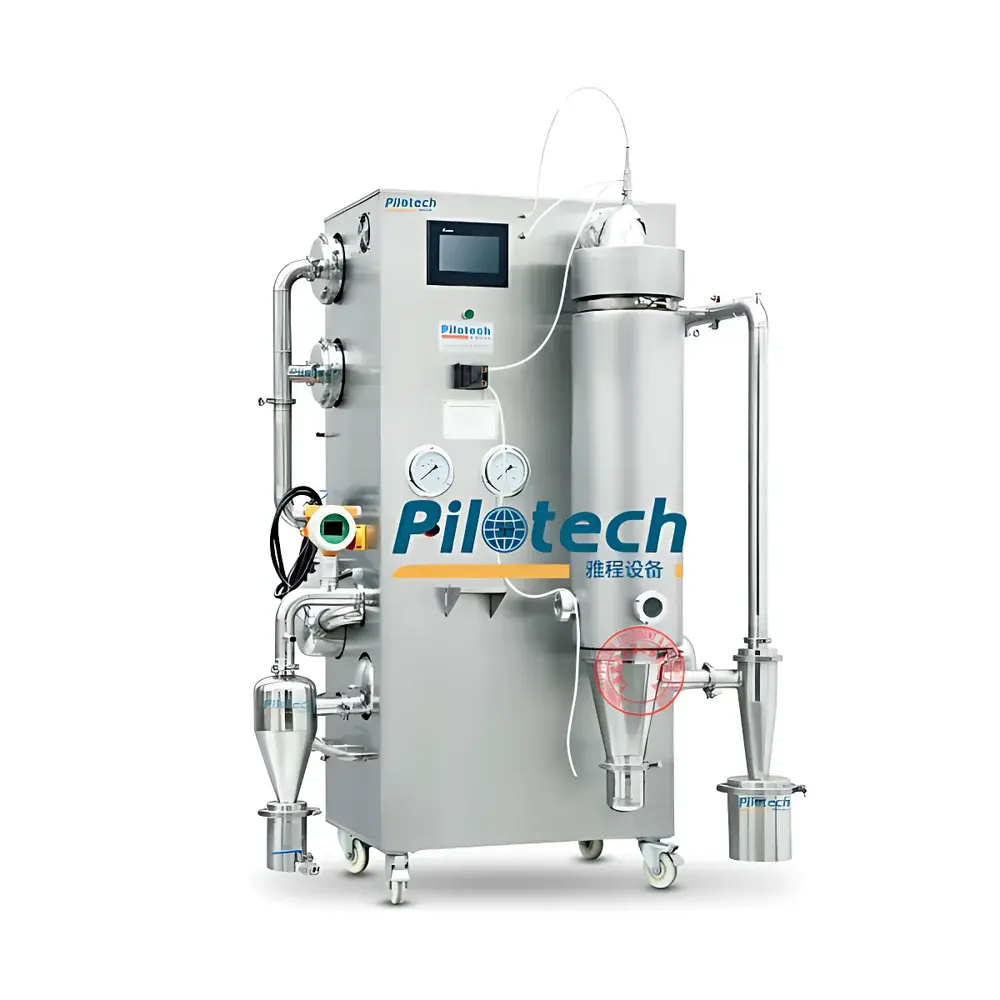
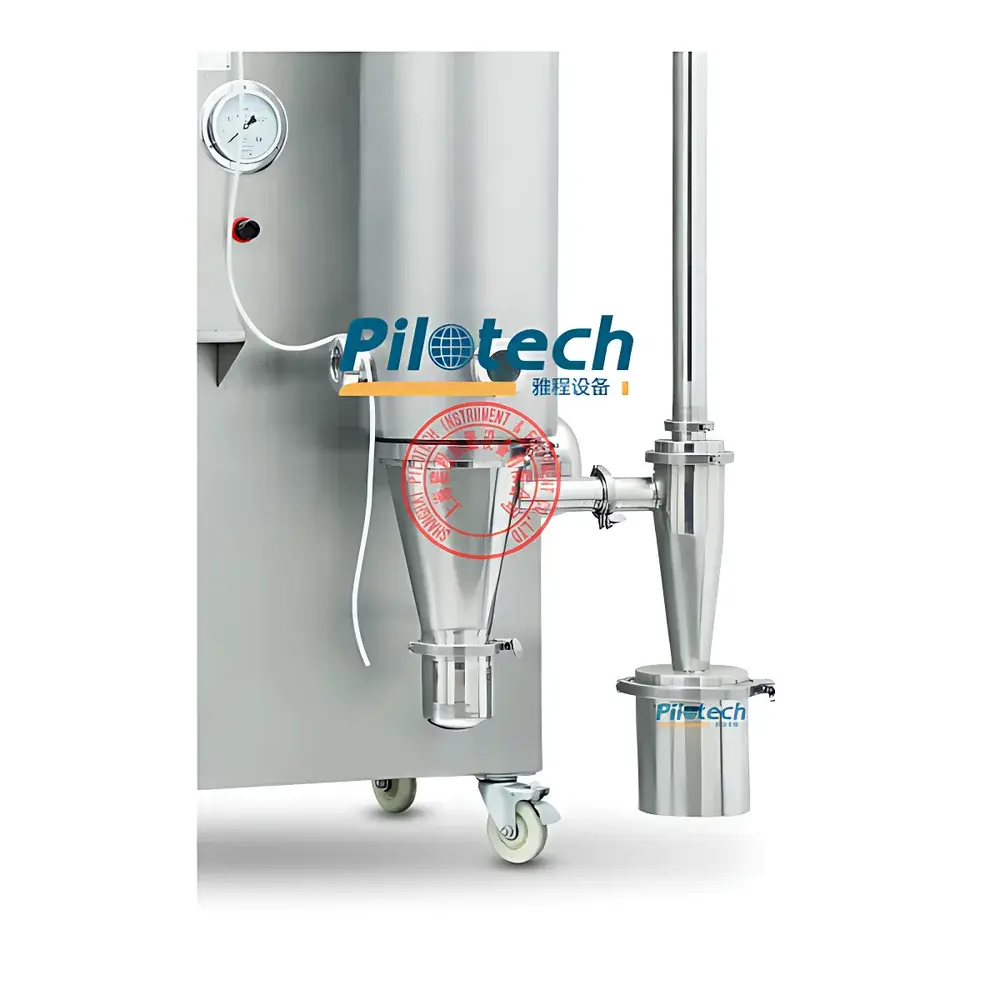
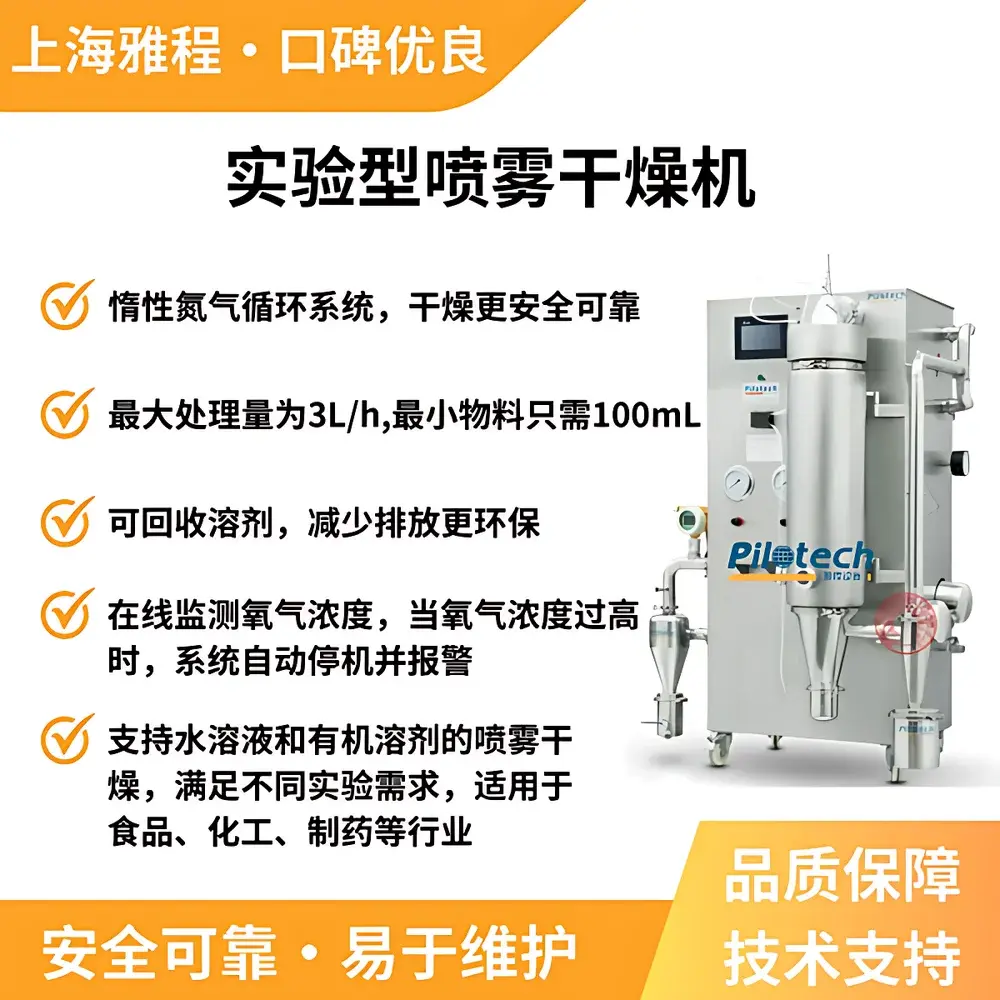
Yacheng YC-018A Closed-Loop Organic Solvent Spray Dryer
| Brand | Yacheng / PILOTECH |
|---|---|
| Origin | Shanghai, China |
| Manufacturer Type | OEM Manufacturer |
| Country of Origin | China |
| Model | YC-018A |
| Sample Phase Compatibility | Liquid mixtures (aqueous & organic solvent-based) |
| Max Feed Rate | 3000 mL/h |
| Inlet Air Temperature Range | Ambient to 200 °C |
| Particle Size Output | 1–80 µm |
| Oxygen Monitoring Threshold | Auto-shutdown at ≥2.5% O₂ |
| Nitrogen Recirculation System | Integrated with condensate recovery |
| Optional | Low-temperature chiller compatibility (for solvents with bp < 60 °C) |
Overview
The Yacheng YC-018A Closed-Loop Organic Solvent Spray Dryer is an engineered laboratory-scale drying system designed for the safe, precise, and reproducible conversion of heat-sensitive liquid formulations—particularly those containing flammable or toxic organic solvents—into free-flowing microparticulate powders. Unlike conventional open-loop spray dryers that discharge solvent-laden exhaust into the environment, the YC-018A operates on a fully sealed nitrogen recirculation principle grounded in inert gas processing thermodynamics. The process begins with atomization of the feed solution via a concentric nozzle, followed by rapid convective drying in a controlled, oxygen-depleted chamber using preheated nitrogen. Dried particles are separated by cyclonic force and collected in a sealed glass vessel, while solvent-saturated nitrogen passes through a refrigerated condenser where vapors are liquefied and recovered. The residual nitrogen is reheated and reintroduced into the drying loop, minimizing gas consumption and eliminating atmospheric emissions. This architecture ensures compliance with Class I Division 1 explosion-proof requirements per IEC 60079-0 and supports GLP/GMP-aligned workflows where traceability, solvent accountability, and oxidation control are critical.
Key Features
- Inert gas closed-loop operation with real-time oxygen concentration monitoring (0–25% range); automatic emergency shutdown triggered at ≥2.5% O₂
- PLC-based control system with 7-inch color touchscreen interface supporting multilingual navigation (English default), parameter logging, and event-driven alarm history
- Concentric dual-channel nozzle assembly with adjustable vertical positioning—prevents wall impingement, ensures radial symmetry of spray plume, and enables optimization of droplet residence time
- Integrated nitrogen heating, cooling, and recirculation sub-systems including high-efficiency plate-type heat exchanger and cryogenic condenser (−20 °C to +10 °C operating range)
- PID-controlled inlet temperature regulation with ±2 °C accuracy across 40–200 °C range; compatible with low-boiling solvents (e.g., acetone, ethanol, ethyl acetate) via optional external chiller coupling
- Self-contained solvent recovery unit achieving >95% condensation efficiency for common C1–C4 organics under standard operating conditions
- Corrosion-resistant stainless-steel wetted parts (AISI 316L) and EPDM/FKM-sealed pneumatic components rated for continuous exposure to chlorinated, aromatic, and polar aprotic solvents
- Minimum sample requirement of 100 mL; scalable throughput up to 3000 mL/h with linear flow control via programmable peristaltic pump (0.1–99.9 rpm)
Sample Compatibility & Compliance
The YC-018A accommodates aqueous, alcoholic, ketonic, ester-based, and chlorinated solvent systems—including but not limited to methanol, dichloromethane, tetrahydrofuran, and dimethyl sulfoxide—provided vapor pressure and thermal stability permit atomization and rapid desolvation. It is routinely deployed for drying biologics (peptides, monoclonal antibody fragments), enzymatic suspensions, nanoemulsions, polymer nanoparticles, and active pharmaceutical ingredients (APIs) requiring strict oxidative protection. The system conforms to ISO 22000 food safety prerequisites and supports FDA 21 CFR Part 11-compliant data integrity when paired with validated electronic logbook software. All electrical enclosures meet IP54 ingress protection standards, and nitrogen supply lines incorporate redundant pressure relief valves compliant with ASME B31.3 process piping code.
Software & Data Management
The embedded controller records time-stamped operational parameters—including inlet/outlet temperatures, nitrogen flow rate, O₂ concentration, pump speed, and nozzle purge frequency—at user-defined intervals (1–60 s). Raw datasets export directly to CSV or Excel format via USB port. Optional Ethernet connectivity enables remote supervision through Modbus TCP or OPC UA protocols. Audit trails include operator login IDs, parameter modification timestamps, and system fault codes—all retained for ≥12 months without manual intervention. Firmware supports firmware version locking, digital signature verification, and configurable password policies aligned with Annex 11 and ALCOA+ principles.
Applications
- Rapid screening of excipient compatibility in amorphous solid dispersion development
- Stabilization of labile biomolecules (e.g., CRISPR-Cas ribonucleoproteins, mRNA-LNPs) under anaerobic conditions
- Production of inhalable dry powder formulations with aerodynamic diameter control (MMAD 1–5 µm)
- Solvent recovery validation studies for green chemistry process intensification
- Scale-down modeling of industrial spray drying processes per ASTM E2500-13 guidance
- Encapsulation of volatile oils and nutraceuticals without thermal degradation or oxidation
FAQ
What solvents are compatible with the YC-018A?
Commonly used solvents include ethanol, methanol, acetone, isopropanol, ethyl acetate, dichloromethane, and tetrahydrofuran. Solvent selection must consider flash point, vapor pressure at operating temperature, and chemical compatibility with wetted materials.
Can the system handle viscous solutions or suspensions?
Yes—feed viscosity up to 500 cP is supported using the standard 1.5 mm nozzle; optional nozzles (0.5–2.0 mm) allow adaptation to higher viscosities or targeted particle size distributions.
Is nitrogen consumption minimized during extended runs?
Nitrogen loss is restricted to minor leakage and purge events; typical makeup volume is <5 L/min over 8-hour operation, enabling multi-day unattended drying with standard 50-L dewar supply.
How is particle morphology controlled?
Morphology is modulated via inlet temperature, feed rate, atomization gas pressure, and nozzle-to-collector distance—all independently adjustable and logged in real time.
Does the system support IQ/OQ documentation?
Factory-issued IQ/OQ templates compliant with GAMP5 v6 are provided; installation qualification includes leak testing, temperature mapping, and O₂ sensor calibration verification.



